Ana Megawati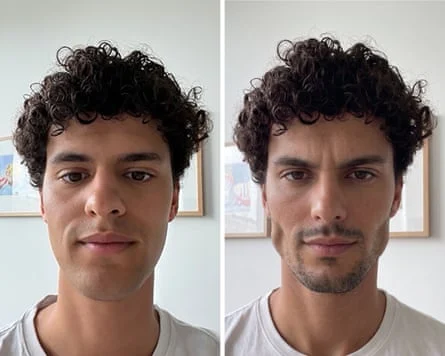
The burgeoning capabilities of artificial intelligence, particularly in image generation and enhancement, are creating a new frontier of challenges for the cosmetic surgery industry. What began as filters and minor digital touch-ups on social media platforms has rapidly evolved into sophisticated AI chatbots capable of rendering highly detailed, "beautified" versions of individuals, complete with suggested surgical interventions. This technological leap, while impressive, is now fostering a significant disconnect between digital fantasy and anatomical reality, placing unprecedented strain on medical practitioners and potentially harming patient psychology.
The Influx of AI-Generated Ideals
Leading the alarm are prominent figures within the profession. Dr. Nora Nugent, a respected cosmetic surgeon based in Tunbridge Wells and the current president of the British Association of Aesthetic Plastic Surgeons (BAAPS), has observed this phenomenon firsthand. Her offices, like those of many colleagues across the UK, are increasingly frequented by clients clutching AI-generated photographs of themselves, images that present an impossibly perfected visage. These clients arrive with a firm, yet false, expectation that the flawless results depicted in these digital creations are genuinely achievable through surgical means.
"I can only predict an increase, given the rate AI has been incorporated into every aspect of life," Dr. Nugent stated, underscoring the pervasive nature of this technological shift. The speed at which AI tools have become accessible and sophisticated means that this trend is not merely a fleeting fad but a fundamental reshaping of how individuals perceive and pursue aesthetic improvement.
Clients, having used AI chatbots to generate their ideal faces, are now presenting surgeons with demanding briefs: flawless, poreless skin, impossibly sharp and sculpted cheekbones, perfectly refined noses, and near-perfect facial symmetry. These are standards that, in the realm of human anatomy and surgical precision, are not only extraordinarily time-consuming and prohibitively expensive to attempt but, in many cases, are physically unattainable.
The Chasm Between Pixels and Physiology

The fundamental difference lies in the medium. AI operates at a pixel level, controlling every minute detail with absolute precision. Dr. Alex Karidis, a prominent surgeon practicing in west London, highlights this crucial distinction. "Surgery certainly doesn’t work on that microscopic detailed level," he explains. A surgeon manipulates living tissue, bone, and cartilage, which possess inherent limitations in elasticity, healing, and structural integrity. The human body is not a canvas of editable pixels; it is a complex biological system governed by natural laws and individual variations.
This disparity fuels patient disappointment. While AI can flawlessly smooth a complexion, sharpen a jawline, or subtly alter an eye shape with a few clicks, real-world surgical outcomes are always subject to biological processes. Healing times, scarring, individual responses to anesthesia, and the natural aging process all contribute to results that, while often transformative and satisfying, can never mimic the absolute perfection of a digital rendering.
The Psychological Imprint of Perfected Images
Surgeons Nugent and Karidis both emphasize the profound psychological effectiveness of these AI-generated images. They don’t just present an ideal; they actively define and reinforce clients’ aesthetic aspirations long before they ever step into a consultation room. "Once you see an image, it’s wired into you," Dr. Nugent observed, capturing the indelible mark these perfected images leave on the human psyche. Dr. Karidis concurred, describing AI images as being "seared" into patients’ minds, noting that his colleagues have been "inundated" by patients bringing them in.
This psychological phenomenon can be particularly potent. Humans are highly visual creatures, and an image, especially one portraying an enhanced version of oneself, can create a powerful emotional connection and a sense of entitlement to that ideal. The brain processes these images as attainable goals, making it difficult for individuals to accept the physical limitations or the inherent risks and costs associated with real-world surgical procedures. This often leads to frustration and a deep sense of dissatisfaction when reality inevitably falls short of the digital fantasy.
Limitations of Surgical Outcomes and Human Variability
Beyond the technical impossibility of replicating pixel-perfect alterations, surgeons are also keen to underscore that cosmetic surgery outcomes are far from guaranteed. Each patient is unique, with distinct anatomical structures, genetic predispositions, and healing capacities. "The patient has to understand that there is human variation in how they heal, how they age and what can be done," Dr. Nugent explained. She frequently reiterates to her patients, "it’s not limitless what I can do in surgery. Neither of us control everything." This crucial message, often lost amidst the allure of AI-perfection, forms the cornerstone of ethical medical practice.
The Specifics of AI’s Aesthetic Defaults
The "AI face" phenomenon is also characterized by certain consistent aesthetic defaults that AI algorithms tend to apply. Dr. Julian de Silva, a renowned Harley Street cosmetic surgeon, points out the prevalence of hyper-symmetry. AI can effortlessly correct minute discrepancies, such as one eye being a few millimeters higher than the other, in a digital image. However, as Dr. de Silva succinctly puts it, "rearranging pixels is not the same as rearranging anatomy." Correcting such a subtle asymmetry in real life is often impossible because the position of the eyes is "actually set in bone, and your brain sits behind the orbits. You cannot safely change the position of the orbits." This highlights the fundamental difference between digital manipulation and complex biological structures.
Furthermore, Dr. de Silva notes that when AI edits a client’s photo, it frequently defaults to widely accepted, often Eurocentric, beauty ideals. For women, this typically includes a V-shaped jawline, a sweeping "ogee curve" along the cheekbones (a gentle S-shaped curve from the outer eye to the cheek hollow), and an overall heart-shaped face. For men, the algorithms often generate broader, more angular jawlines, lower eyebrows, and fuller upper eyelids, aligning with prevailing masculine aesthetic trends. While these features are considered desirable by many, AI’s uniform application of them can erase individual uniqueness and promote a homogenized standard of beauty that is neither realistic nor healthy.
Ethical Quandaries: AI-Generated "Before & After" Videos
A more troubling dimension of this trend, also highlighted by Dr. Julian de Silva, is the growing concern over clinicians potentially sharing AI-generated surgery results on social media. These "before and after" transformations, designed to showcase astonishingly effective outcomes, might themselves be digitally enhanced or entirely fabricated by AI. This practice represents a profound breach of ethical conduct, misleading potential patients and undermining the integrity of the medical profession.
Dr. de Silva recounted a recent experience: "I remember looking at one of these last week and I looked at it over and over." He described a video in which a patient appeared to have been made to look 30 years younger. "And then the third time I watched it, I could see… the hands had six fingers." This subtle, yet glaring, anatomical error is a hallmark of AI-generated imagery, which, despite its sophistication, can still produce uncanny anomalies. Such deceptive practices not only erode patient trust but also create a dangerously unrealistic benchmark for what surgery can achieve, setting up individuals for inevitable disappointment and potential psychological distress.
A Personal Journey Through AI’s Aesthetic Promises
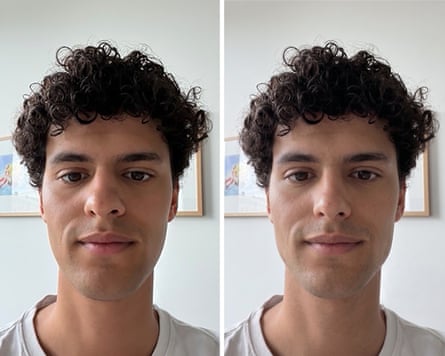
To better comprehend the scope of this phenomenon, a Guardian journalist embarked on a personal experiment, asking an AI agent to recommend cosmetic procedures and generate images for Dr. Karidis’s review. The journey through increasingly dramatic AI alterations provided a stark illustration of the digital-to-reality gap.
Initially, the journalist prompted the chatbot for "some enhancements" to a photo. The AI responded with recommendations for a rhinoplasty and septoplasty, aiming to "refine the nasal tip and straighten the bridge." It also suggested "a subtle blepharoplasty [eyelid lift] and brow refinement." Dr. Karidis’s assessment of these initial changes was that they were "relatively modest" and the blepharoplasty "barely noticeable." However, even for these subtle alterations, he estimated the cost to be around £25,000, immediately highlighting the significant financial investment required for even minor surgical adjustments.
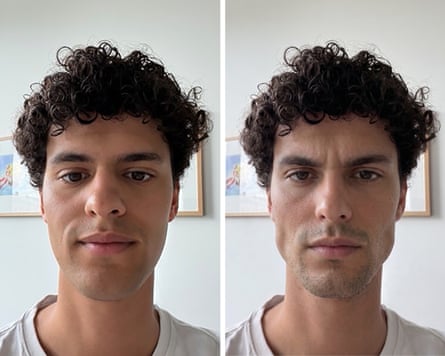
The journalist then requested "hunter eyes and a more masculine face." The AI’s response was a cascade of more aggressive procedures: chin implants, buccal fat removal, infraorbital augmentation, another blepharoplasty, facial stubble grafts, and several other interventions. At this point, Dr. Karidis’s reaction shifted to concern. "This is where things start to get a bit silly," he commented, noting that the AI-generated image appeared to have given the journalist "someone else’s eyes." He deemed the chin implant "unnecessary" and warned that buccal fat removal, a procedure to hollow out the cheeks, would likely lead to regret later in life as the face naturally becomes more gaunt with age. For this suite of procedures, Dr. Karidis estimated the cost would "easily be £100,000-plus," emphasizing that even then, the real-world result "still probably wouldn’t look anything like this, not to mention you’d be exposed to potential significant side-effects and recovery."
Pushing the AI further, the journalist instructed it to "Make me look like more of a chad" – a slang term for an archetypal, hyper-masculine ideal. The AI obliged with an even more extensive list: a neck lift, brow lift, two types of custom implant, and full ablative laser resurfacing to create "perfectly even, fresh skin." The resulting images prompted an even stronger reaction from Dr. Karidis: "This is where things start to look scary." He pointed out "whopping great big dents along your jawline angle," speculating that "chunks of tissue have been removed." He also noted inconsistencies in the AI’s descriptions versus the visual output, stating, "As to neck lift and brow lift, that’s frankly untrue. I don’t see any evidence of any lifting in these areas. Tissues like the eyebrows seem to have been lowered rather than lifted. Your original complexion looks much better than this." This final interaction dramatically underscored the AI’s tendency towards extreme, unrealistic, and potentially harmful recommendations when pushed to its limits, creating a disturbing vision that is medically unfeasible and aesthetically dubious.
Broader Implications and the Path Forward
The emergence of "AI face" presents a multifaceted challenge with far-reaching implications for individuals, the medical community, and societal beauty standards.
Patient Mental Health: One of the most significant concerns is the potential exacerbation of body dysmorphia and other mental health issues. When individuals are constantly exposed to and can easily generate idealized versions of themselves, the gap between their perceived reality and this digital perfection can widen dramatically. This can lead to increased anxiety, depression, and an insatiable pursuit of unattainable aesthetic goals, ultimately diminishing self-esteem rather than enhancing it. Surgeons face the difficult task of managing these heightened expectations, often requiring extensive psychological screening and counselling to ensure patients have realistic motivations and understandings.
Strain on the Industry: The influx of clients with AI-generated images increases consultation times, as surgeons must dedicate considerable effort to educate patients on the limitations of surgery and manage unrealistic expectations. This diverts resources from actual medical procedures and places additional pressure on practitioners. Furthermore, the ethical dilemma of potentially turning away patients who are fixated on impossible ideals is a growing concern, as is the risk of malpractice suits should surgical outcomes, however successful, fail to match a patient’s AI-fueled fantasy. Professional bodies like BAAPS are already exploring guidelines for addressing this new challenge, emphasizing patient education and ethical communication.
Regulatory and Ethical Challenges: The rapid advancement of AI outpaces current regulatory frameworks. There is a pressing need for clear guidelines on the responsible use of AI in aesthetic medicine, particularly concerning marketing, patient consultations, and the ethical implications of using AI-generated imagery. Regulators may need to consider rules around disclaimers for AI-altered images used in promotional materials by clinics and the mandatory education of patients about the difference between digital renderings and surgical possibilities. The potential for AI to create fake "before and after" photos necessitates robust verification processes and severe penalties for deceptive practices.
Societal Beauty Standards: AI algorithms, often trained on vast datasets of existing images, tend to perpetuate and even amplify prevailing beauty standards. This can lead to a homogenization of aesthetic ideals, pushing individuals towards a narrow definition of beauty that overlooks diversity and natural variation. Younger generations, growing up with pervasive AI filters and enhancement tools, may develop an increasingly skewed perception of reality, further fueling the demand for artificial perfection. This could have long-term societal consequences, impacting self-image, cultural diversity, and mental well-being on a broad scale.
Technological Evolution and Responsible AI: While AI currently poses significant challenges, its future development could also offer solutions. Future iterations of AI might be designed with ethical considerations built-in, perhaps offering more realistic simulations, incorporating warnings about unattainable results, or even providing tools that help patients understand the risks and limitations of procedures. The onus will be on developers to create responsible AI and on the medical community to engage with these technologies critically, guiding their implementation in a manner that prioritizes patient safety and well-being over superficial perfection.
In conclusion, the rise of "AI face" marks a pivotal moment in the intersection of technology and human aspiration. While offering fascinating glimpses into potential aesthetic futures, it also casts a long shadow of unrealistic expectations and potential psychological harm. Bridging the gap between digital fantasy and anatomical reality will require concerted efforts from plastic surgeons, technology developers, regulators, and the public, all striving for a future where aesthetic enhancement is pursued with realism, safety, and a deep respect for the human condition. The current challenge serves as a potent reminder that the human body, with its inherent complexities and beautiful imperfections, cannot be edited with the same ease as a digital image.