
 Ronny Sianturi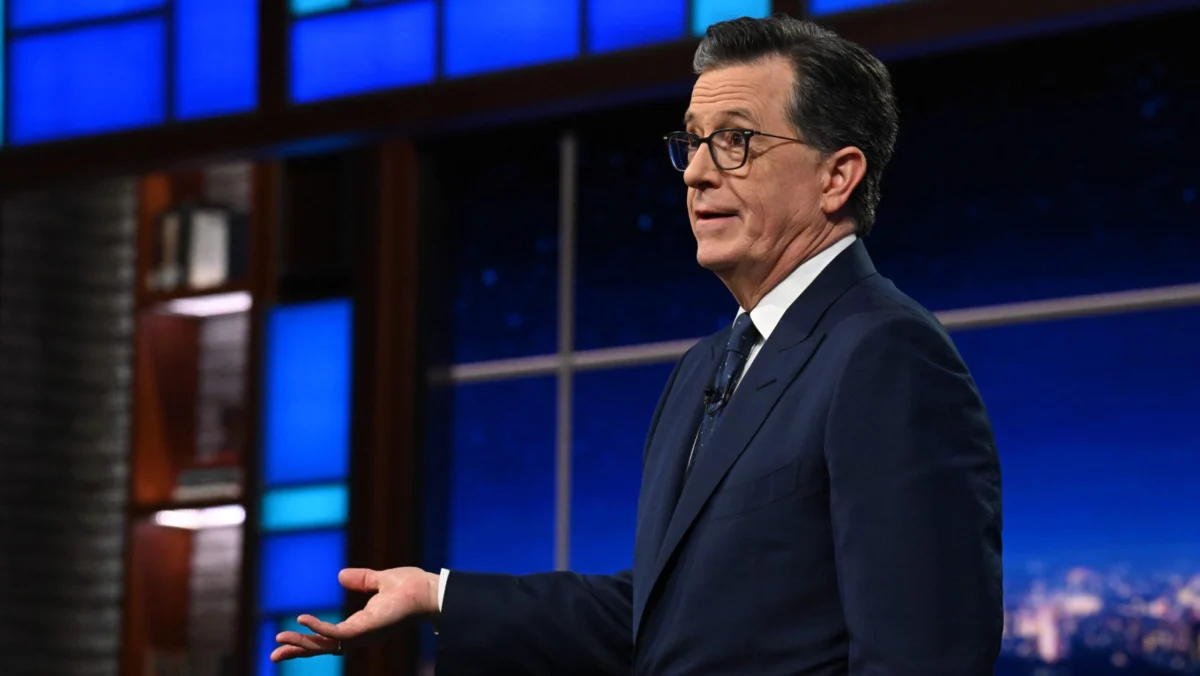
Nine months after Stephen Colbert officially announced the impending conclusion of his tenure on CBS’s The Late Show, the acclaimed host presided over the final broadcast of the iconic late-night program. The emotional farewell saw musical legend Paul McCartney as the evening’s sole guest, a choice Colbert playfully described as the culmination of his long-held aspiration to host his "white whale" guest, only to joke that the appearance was nearly derailed by a papal "cancellation" due to inadequate dressing room snacks. The episode marked the end of an era, bringing to a close a significant chapter in late-night television history that began with Colbert’s transition from Comedy Central’s The Colbert Report to CBS in 2015.
A Celebratory Farewell, Rooted in the Everyday
Colbert, known for his sharp wit and engagement with the contemporary national conversation, opened his final monologue with a reflection on the show’s journey. He revealed that the initial plan for the finale was a "huge special" but acknowledged a shift in perspective: "every episode is special." This sentiment underscored his decision to approach the last show not as an extravagant event, but as a continuation of the program’s core mission. "The best way to celebrate is to do a normal show and talk about the national conversation," he stated, setting a tone that would weave humor, poignant reflection, and a touch of surrealism throughout the evening.
The monologue itself, a staple of Colbert’s Late Show, featured his signature blend of topical humor and observational commentary. However, a notable departure from recent years was its relative lightness on direct political satire, particularly concerning former President Donald Trump, who had been a frequent target during Colbert’s tenure. While the host has consistently used his platform to dissect political developments with incisive critique, the final monologue offered a more generalized approach, focusing on broader societal observations. The most pointed, albeit veiled, reference to the political climate emerged during Colbert’s conversation with Paul McCartney. When McCartney recalled the heavy makeup applied to The Beatles during their appearances on The Ed Sullivan Show, leading to a "bright orange" appearance, Colbert quipped, "That’s very popular in certain circles," adding, "that’s where it started." This subtle nod acknowledged the visual branding associated with certain political figures without explicit naming, reflecting a nuanced approach to his final political commentary.
The monologue was further enlivened by a series of surprise cameos from prominent figures in the audience, including Bryan Cranston, Paul Rudd, and Tim Meadows, adding a layer of familiar camaraderie and star power that has long been a hallmark of The Late Show. These guest appearances underscored the show’s deep connections within the entertainment industry and served as a fond farewell from colleagues and friends.
The "White Whale" and the Power of the Unexpected
The anticipated appearance of Pope Francis, a long-standing guest Colbert had expressed a fervent desire to host, was humorously thwarted. A running gag throughout the monologue involved the "Meanwhile" segment, which highlighted audience members believing they were the intended final guest. This segment culminated in Colbert’s earnest introduction of the Pope, only to be informed by a crew member that His Holiness was refusing to emerge from his dressing room due to a snack dispute. A visual gag depicted an arm in papal vestments tossing hot dogs into the hallway, signaling the Pope’s humorous "cancellation."
It was in this moment of comedic anticlimax that Paul McCartney made his entrance, casually inquiring, "What about me?" McCartney, a legendary figure in music history, presented Colbert with a framed photograph of The Beatles performing on The Ed Sullivan Show, a symbolic gesture connecting the past and present of iconic television performances. His presence provided a poignant and fitting conclusion to the show’s musical legacy.
A Rupture in the Continuum: Surrealism and Solidarity
The interview with McCartney was soon interrupted by a more surreal development. Colbert, citing "technical difficulties," stepped away from the interview and discovered a "giant interdimensional wormhole" backstage, as explained by astrophysicist Neil DeGrasse Tyson, who appeared in another cameo. Tyson’s explanation offered a meta-commentary on the show’s cancellation, suggesting that the co-existence of a highly-rated show being canceled created a "rift in the comedy-variety talk continuum" that threatened to destroy all of late-night television.
This fantastical element paved the way for a remarkable gathering of late-night hosts. Jon Stewart, alongside the "Strike Force Five" team—John Oliver, Seth Meyers, Jimmy Kimmel, and Jimmy Fallon—appeared to offer Colbert advice on navigating this existential threat to their profession. Stewart’s counsel emphasized resilience, urging Colbert to embrace the challenges and "walk through" the uncertainty. The collective presence of these influential figures highlighted a sense of solidarity within the late-night television community, a community that has faced significant shifts and challenges in recent years. Their reminders of Colbert’s past resilience, particularly through periods like the 2016 election and the COVID-19 pandemic, served as a powerful endorsement of his enduring impact.
Despite the hosts’ temporary efforts to banish the wormhole, it returned with greater force, engulfing the Ed Sullivan Theater, its audience, the band, and Colbert himself. The surreal narrative continued with a performance by Elvis Costello and Jon Batiste, followed by Colbert and McCartney leading the Late Show band in a rendition of The Beatles’ "Hello, Goodbye." In a final, symbolic act, McCartney extinguished the lights, and the wormhole consumed the entire theater, leaving behind only a snow globe replica on the New York City sidewalk, playing the Late Show theme song, as Colbert’s dog, Benny, was heard off-camera.
A Legacy of Connection and "Truthiness"
The episode opened with a heartfelt message from Colbert to his audience, both in the theater and watching at home. He described The Late Show as a "joy machine," acknowledging the immense effort required to produce thousands of episodes. He emphasized that the show’s longevity and success were rooted in the shared joy of creation, stating, "the thing is if you choose to do it with joy, it doesn’t hurt as much when your fingers get caught in the gears." Colbert lauded his dedicated staff, highlighting the strong bonds forged over the years, and drew a parallel to the inception of The Colbert Report in 2005.
Reflecting on his early days, Colbert recalled introducing the concept of "truthiness" and his initial vow to "feel the news at you." He contrasted this with his mission on CBS, where he and his team aimed to "feel the news with you." This subtle but significant shift underscored the evolution of his approach, moving from a more performative critique to a shared experience of navigating current events. "We love doing this show for you, but what we really love is doing this show with you," he concluded, encapsulating the reciprocal relationship he cultivated with his audience.
The Shadow of Controversy and Future Endeavors
The announcement in July that CBS would conclude The Late Show after the 2025-2026 season, as reported by The Hollywood Reporter, was officially attributed to "purely financial decisions" and the challenging linear television landscape, with parent company Paramount stating the move was "not related in any way to the show’s performance, content or other matters." However, this explanation has been met with widespread speculation regarding underlying reasons for the cancellation.
Colbert, a vocal critic of former President Donald Trump, had previously expressed concerns about CBS parent company Paramount’s settlement of a lawsuit filed by Trump. This settlement, reportedly amounting to $16 million, followed a 60 Minutes interview with Trump’s 2024 election opponent, Kamala Harris. The timing of this settlement, and the subsequent broadcast license renewal, fueled theories that Colbert’s outspokenness may have played a role in the network’s decision. Trump himself celebrated the news of the cancellation on his Truth Social platform, stating, "I absolutely love that Colbert got fired. His talent was even less than his ratings. I hear Jimmy Kimmel is next."
In his own reflections, particularly in an exit interview with The Hollywood Reporter, Colbert acknowledged the narrative surrounding his departure. He noted that the network’s actions, including the payment to the Trump administration despite legal counsel reportedly advising against it, reinforced a perception of the network being "knee-bending." He suggested that his cancellation, regardless of the official reason, "reinforced a narrative that CBS already had a nimbus of knee-bending that they had created around themselves."
Regarding reports that The Late Show was losing $40 million annually, a figure Colbert has addressed with humor, he expressed surprise to THR, stating the figure "came as a surprise." This suggests a potential discrepancy between reported financial figures and the show’s actual financial standing, adding another layer to the ongoing discussion about the cancellation’s true impetus.
Looking ahead, Colbert is set to embark on new creative ventures. The avid J.R.R. Tolkien enthusiast will co-write an upcoming installment of the Lord of the Rings franchise, a move that aligns with his well-known passion for the fantasy world. While he has emphasized a desire to focus on concluding The Late Show before fully committing to future projects, he has also indicated an intention to collaborate with his long-time creative partners, hinting at the possibility of "doing something else together." Colbert has also shared that he has already begun receiving scripts and envisions "creating another show," demonstrating a continued desire to remain in front of the camera.
The immediate future for Colbert and his family involves attending his brother’s wedding in Washington D.C., following a busy period that also included celebrating his son’s college graduation. The conclusion of The Late Show marks not an end, but a transition for one of television’s most influential comedic voices, leaving behind a legacy of insightful commentary, genuine connection, and a unique brand of humor that defined a decade of late-night television.








