Kang Muslim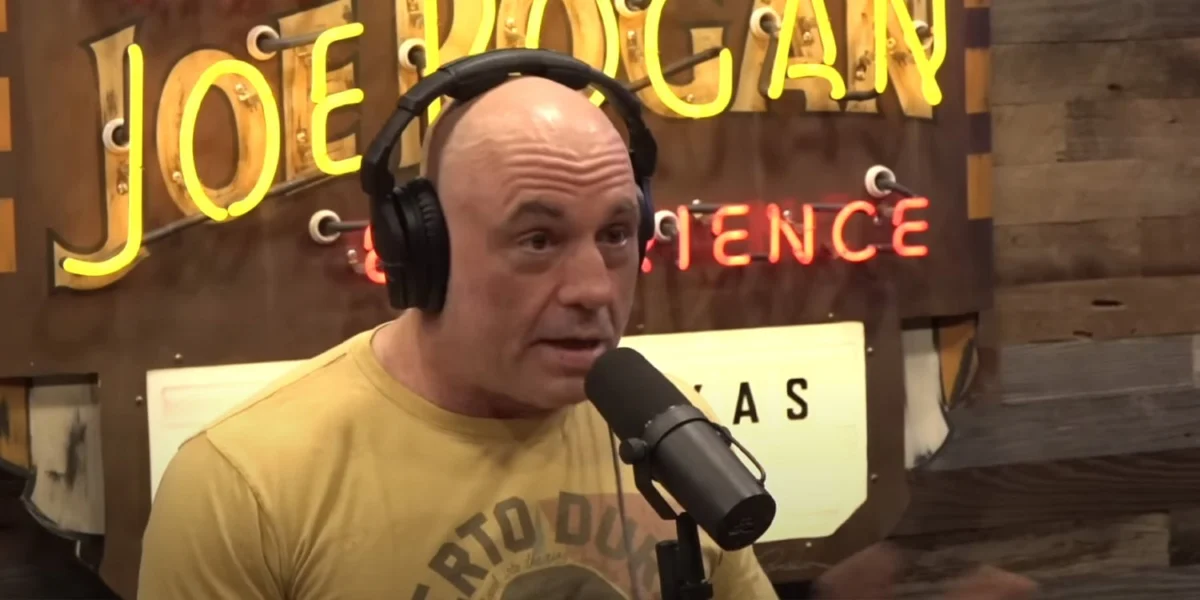
The digital transformation of the American media landscape has fundamentally altered the pathways through which political influence is exerted, moving away from centralized news desks toward decentralized, long-form audio platforms. A comprehensive new study from researchers at the University of Pennsylvania highlights this shift, revealing that listenership of "The Joe Rogan Experience" (JRE) has become a primary predictor of voting behavior in the 2024 presidential election. The research, published as a preprint in APSA Preprints, indicates that even after controlling for a vast array of demographic and ideological variables, consumption of Rogan’s content remains one of the most significant indicators of support for Donald Trump.
The study, led by communication researcher Huma Rasheed, underscores a phenomenon known as "total politics," where traditionally apolitical or entertainment-focused spaces become saturated with civic and policy-oriented discourse. By analyzing fifteen years of episode transcripts and cross-referencing that data with a nationally representative survey, the research team has mapped the evolution of a program that began as a platform for comedians and mixed martial arts enthusiasts into a cornerstone of American political culture.
The Evolution of a Cultural Powerhouse: 2009–2024
To understand the current political weight of "The Joe Rogan Experience," the researchers conducted a longitudinal analysis of the show’s history. Since its inception in December 2009, the program has undergone a dramatic thematic metamorphosis. Initially, the podcast was characterized by "locker room talk," crude humor, and discussions centered on the entertainment industry. However, the data reveals a steady decline in these themes, replaced by an increasing focus on social, political, and philosophical issues.
The timeline of this shift is particularly notable around 2016, coinciding with the rise of populist movements globally and the first presidential campaign of Donald Trump. During this period, the podcast began to pivot toward topics such as free speech, government overreach, and foreign policy. By 2020, the program had moved from the periphery of cultural commentary to the center of the national conversation, particularly regarding public health policies and election integrity.
The researchers applied computational text models to 2,175 episode transcripts to identify forty-five distinct topics, which were then grouped into six major thematic domains: personal narratives, social and political issues, comedy, fitness and combat sports, conspiracy theories, and wildlife. Their findings suggest that personal storytelling—the sharing of intimate life experiences by both the host and his guests—serves as the "narrative bridge" that allows the show to transition seamlessly from lighthearted banter to complex political debate.
Computational Analysis and the "Total Politics" Framework
The University of Pennsylvania team utilized latent Dirichlet allocation (LDA) algorithms to process the massive volume of transcript data. This methodology allowed them to observe how specific topics clustered together over time. One of the most significant findings was the inductive grouping of vaccine-related discussions within the "fitness and combat sports" cluster rather than the "public health" or "policy" clusters.
This framing is critical to understanding the show’s influence. By discussing medical interventions through the lens of physical optimization and athletic performance, the program bypasses traditional public health messaging. This approach aligns with Rogan’s frequently stated view that individual health and fitness are primary defenses against illness, a stance that resonated with a segment of the population skeptical of government mandates during the COVID-19 pandemic.
Furthermore, the researchers identified a resurgence in "speculative science" and "conspiracy theory" clusters after 2016. Topics involving extraterrestrial life, ancient civilizations, and theoretical physics became increasingly popular. While these subjects might seem disconnected from electoral politics, the study suggests they foster a general skepticism toward "establishment" narratives, creating a psychological environment where non-traditional political messaging can take root.
Statistical Correlation with the 2024 Presidential Election
While the thematic analysis provided context, the core of the study’s impact lies in its survey of 1,600 American adults conducted in early 2025. The survey sought to quantify the relationship between media consumption and voting choices. The results were stark: approximately 10% of the sample identified as occasional or regular JRE listeners, and this group skewed heavily toward the 18-to-34-year-old male demographic.
The researchers employed a rigorous regression model to isolate the effect of listening to the podcast. They controlled for:
- Past voting behavior (specifically the 2020 election).
- Party identification (Republican, Democrat, Independent).
- Standard demographics (age, gender, income, education).
- Consumption of traditional media (Fox News, CNN, MSNBC, major newspapers).
- General interest in government affairs.
Even with these variables accounted for, listening to "The Joe Rogan Experience" emerged as the second-strongest predictor of a vote for Donald Trump in 2024, surpassed only by whether the individual had voted for Trump in the previous election cycle. The predictive power of the podcast exceeded that of traditional indicators like evangelical status or specific income brackets.
The Role of Authenticity and Parasocial Relationships
The study explores why a podcast host exerts such significant influence compared to traditional news anchors or political pundits. The answer lies in the "parasocial" nature of the medium. Podcasts, particularly those that are unscripted and run for several hours, allow for a perceived intimacy between the host and the listener.
Rogan’s "everyman" persona and his willingness to engage in long-form, often wandering conversations create a sense of authenticity that is absent from the highly produced segments of cable news. For many listeners, Rogan is viewed not as a media gatekeeper, but as a trusted proxy who asks the questions they themselves would ask. This trust reduces the listener’s natural skepticism, making them more receptive to the political leanings or endorsements shared on the platform.
The 2024 election cycle saw this dynamic reach its zenith when Donald Trump appeared on the program for a three-hour interview just days before the election. This appearance was widely viewed by political strategists as a move to consolidate the "bro vote"—younger men who are often disengaged from traditional political channels but are highly active in digital and podcasting spaces. Focus groups mentioned in the study corroborated this, with undecided voters noting that the informal setting made the candidate appear more "normal" and "relatable."
Reactions and Broader Implications for the Media Landscape
The findings of the Rasheed et al. study have sparked a broader debate among media theorists and political scientists regarding the "fragmented media landscape." For decades, political messaging was funneled through a few major networks and publications. Today, a single podcast can command an audience that rivals or exceeds the prime-time viewership of major news networks.
Critics of this shift argue that the lack of editorial oversight and fact-checking on long-form podcasts can lead to the spread of misinformation. Conversely, proponents suggest that these platforms offer a necessary alternative to what they perceive as the narrow ideological constraints of legacy media.
The "politicization of apolitical spaces" implies that there are no longer "safe havens" from civic discourse. When a show about comedy and cage fighting becomes a decisive factor in a presidential election, it suggests that the boundaries between entertainment and governance have effectively dissolved. This presents a challenge for political campaigns, which must now navigate a landscape where cultural influence is just as valuable as policy expertise.
Limitations and the Path Forward for Research
As the study was published as a preprint, it has not yet undergone the full rigors of formal peer review. The authors acknowledge several limitations, most notably the distinction between correlation and causation. While JRE listenership strongly predicts a Trump vote, the data cannot definitively prove that the podcast caused individuals to change their minds. It is possible that individuals with an existing predisposition toward populism or anti-establishment views are simply more likely to be drawn to Rogan’s content.
To establish a causal link, future researchers would need to employ longitudinal panel studies or experimental designs that track shifts in opinion over time in response to specific podcast episodes. Additionally, the study focused primarily on the U.S. context; however, the "Rogan model" of independent, long-form media is being replicated globally, suggesting that this trend is a feature of the modern internet era rather than a uniquely American phenomenon.
Despite these caveats, the research provides a critical framework for understanding how the "Manosphere" and the "Intellectual Dark Web" have moved from the digital fringe to the political mainstream. As traditional institutions continue to see a decline in public trust, the influence of figures like Joe Rogan is likely to grow, further cementing the role of the podcast as the new "town square" of American democracy.
The study, titled "From Punchlines to Politics: The Joe Rogan Experience as a Case Study of the Politicization of Apolitical Spaces in the U.S.," was co-authored by a multidisciplinary team including Huma Rasheed, Liam Cuddy, Brooke Molokach, Jiwon Nam, Scarlett Feuerstein, R. Lance Holbert, and Dannagal G. Young. It stands as one of the most comprehensive attempts to date to quantify the electoral impact of the "new media" ecosystem.