
 Ferry Irwandi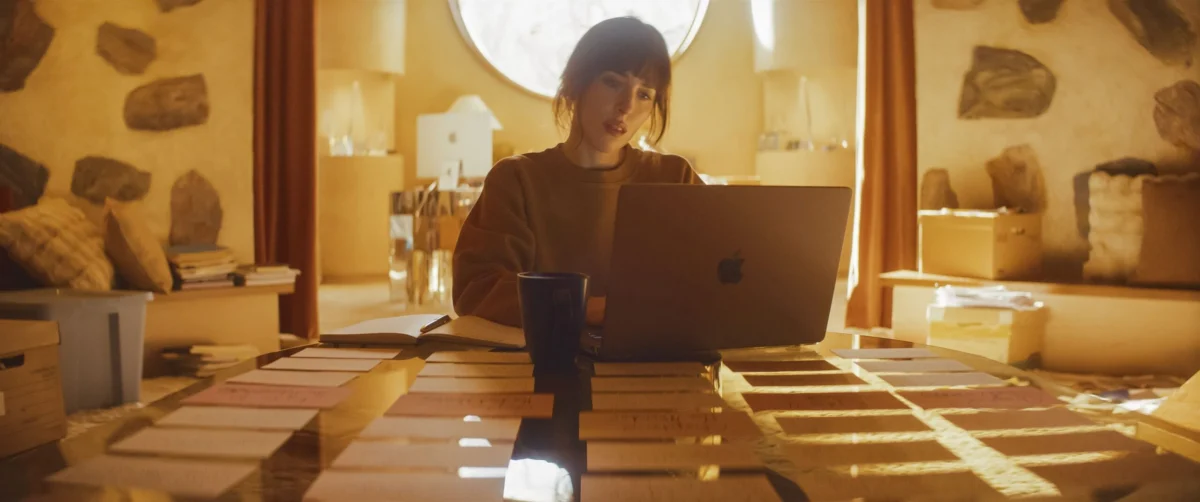
The cinematic adaptation of Colleen Hoover’s New York Times bestselling psychological thriller Verity has captured significant public attention, driven by its star-studded cast featuring Anne Hathaway as the enigmatic title character and Dakota Johnson as struggling ghostwriter Lowen Ashleigh. While the narrative ostensibly transports audiences to the isolated, heavily wooded landscape of rural Vermont, the production’s actual footprint spans a meticulously curated network of locations across New York State. Through the combined efforts of location manager Elizabeth Krekel and production designer Amy Williams, the film constructs a tangible, atmospheric world that serves as more than a mere backdrop—the physical spaces function as active participants in the unfolding psychological drama.
The Evolution from Page to Screen: Adapting Colleen Hoover’s Masterpiece
Colleen Hoover’s literary work has long been celebrated for its visceral emotional beats and abrupt, shocking narrative turns. When Amazon Content Services greenlit the film adaptation, the creative team faced the formidable challenge of translating a deeply interior novel into a visual medium without sacrificing the oppressive, claustrophobic dread that defines the source material.
The story centers on Lowen Ashleigh, a financially strapped author who accepts a lucrative proposition to complete the remaining volumes of a successful book series authored by Verity Crawford, who has been rendered incapacitated following a severe accident. Relocating to the Crawford family estate, Lowen moves in with Verity’s husband, Jeremy Crawford—portrayed by Josh Hartnett—only to uncover a private, unpublished autobiography penned by Verity herself. This manuscript reveals harrowing, deeply disturbing revelations about the family’s past, plunging Lowen into an escalating spiral of psychological terror and moral ambiguity.

In the original text, the physical architecture of the Crawford home is left largely to the reader’s imagination. This creative ambiguity presented both an opportunity and an obstacle for the production design team. Williams noted the initial apprehension regarding how fans of the novel would react to the cinematic interpretation of the estate, as many readers traditionally visualize more conventional, rustic New England architecture. However, the decision to pivot toward a stark, modern aesthetic ultimately defined the visual identity of the film.
Scouting the Ominous: The Search for the Crawford Estate
Rather than establishing principal photography in actual Vermont locales, the production scouting team scoured Westchester County and surrounding regions for a structure that could convey a sense of modern menace and architectural isolation. The search concluded with the discovery of the "Beckoning Path" house located in Armonk, New York.
Originally designed by Danish sculptor and designer Jens Quistgaard, the sprawling property functions in reality as a private wellness retreat complete with swimming facilities and a tai chi studio. Its sharp, angular geometry and prominent V-shaped windows—a coincidental and fortuitous nod to the protagonist’s name—provided the ideal visual motif for a narrative built around deception and hidden truths.
The integration of the Armonk property required extensive collaboration between the production crew and the private homeowner. To achieve the lived-in, literary atmosphere demanded by the script, the art department constructed temporary interior walls and incorporated elaborate floor-to-ceiling bookshelves. While certain areas, such as the home’s operational kitchen, were utilized on-site, other critical spaces—most notably Verity’s home office—were meticulously reconstructed on a controlled sound stage in New York.

Constructing Verity’s Lair: Design Choices and Character Psychology
The design of Verity Crawford’s writing studio represents a masterclass in character-driven set architecture. Developed with direct input from director Michael Showalter and lead actress/producer Anne Hathaway, the space was engineered to project a specific psychological profile.
According to production statements, the creative team aimed for an aesthetic that was simultaneously "womb-like, feminine, and glammy," blending the trappings of a high-end Hollywood sanctuary with the calculated containment of a villain’s stronghold. The room features a dominant color palette of rich pinks, selected specifically to complement Hathaway’s skin tone under dramatic lighting conditions, alongside an abundance of reflective surfaces. The integration of floor-to-ceiling mirrors that pivot to reveal concealed bookcases underscores the thematic concealment and structural duplicity central to Verity’s character.
A Chronological Tour of New York Filming Locations
The production’s multi-season shooting schedule utilized a diverse array of urban and suburban settings across Manhattan, Brooklyn, Queens, and Westchester County.
1. The Opening Act: Brooklyn’s Literary Hub
The film opens in New York City, where Lowen Ashleigh attempts to secure her footing as an author. The scene depicting Lowen reading an excerpt of her work in a bookstore back room was filmed on location at Books Are Magic, an independent bookstore situated in the Carroll Gardens neighborhood of Brooklyn. While visitors will not find any titles authored by the fictional Lowen Ashleigh on the shelves, the operational store serves as a prominent community fixture and stocks works by Colleen Hoover.

2. Midtown Escalation and the Inciting Incident
Following a promising communication from her literary agent, Corey—played by Ismael Cruz Córdova—Lowen travels to Midtown Manhattan for a high-stakes meeting at the corporate headquarters of Hachette Book Group. En route, she witnesses a fatal vehicular collision at the intersection of Park Avenue and East 41st Street, mere blocks from Grand Central Terminal.
The production team deliberately selected this high-traffic thoroughfare to capture the chaotic momentum of the city, despite the logistical challenges posed by urban congestion and media attention. Following the accident, Lowen enters the Hachette offices wearing an oversized button-up shirt provided by Jeremy Crawford. The publishing house granted the production unprecedented access to its actual corporate facilities, where set dressers augmented the environment with framed book jackets featuring fictional titles by Verity Crawford. Eagle-eyed viewers can also spot author Colleen Hoover making a cameo appearance as the office receptionist.
3. Culinary Backdrops in Queens
The narrative briefly shifts to dining establishments within the outer boroughs to ground the characters in authentic New York geography. A business meeting between Lowen and her literary agent was filmed at Rolo’s, a popular neighborhood restaurant in Ridgewood, Queens, known for its wood-fired specialties.
Later in the narrative, as romantic tensions escalate between Lowen and Jeremy, the characters celebrate Lowen’s birthday at Zum Stammtisch, a historic Bavarian restaurant located in Glendale, Queens. Although the corresponding scene in the novel takes place in an Italian eatery, the production team utilized the historic German pub due to its proximity to their sound stage. The authenticity of the location extended even to the background crew, with the film’s director of photography briefly appearing on camera as a waiter dressed in traditional lederhosen.

4. Historical Flashbacks in the Financial District
To contextualize the complex history shared by Verity and Jeremy, the film incorporates flashback sequences detailing their initial meeting. These scenes were captured at Laissez Faire, an upscale cocktail lounge situated within the historic Beekman Hotel in Manhattan’s Financial District. The venue’s distinctive architectural layout, which includes a discreet back-alley exit, provided the necessary spatial logic for the characters to make a swift, clandestine departure into a waiting limousine.
Industry Implications and Audience Reception
The strategic choice to anchor the psychological thriller within recognizable, highly textured New York locations reflects a broader industry trend toward location-based authenticity combined with controlled studio intervention. By utilizing real architectural landmarks—ranging from a Danish modernist retreat in Armonk to corporate publishing offices in Manhattan—the filmmakers bypassed the generic aesthetics common to soundstage-only thrillers, grounding an otherwise heightened narrative in a tangible, geographically accurate reality.
As marketing campaigns continue to roll out ahead of the film’s wide release, industry analysts anticipate robust box-office performance driven by the massive existing readership of Hoover’s literary catalog, combined with the star power of Hathaway and Johnson. Through meticulous location management and thoughtful interior design, the production has successfully translated a modern literary phenomenon into a visually striking cinematic experience, ensuring that the dark, winding corridors of the Crawford estate will leave a lasting impression on audiences in dark theaters nationwide.









