
 Reynand Wu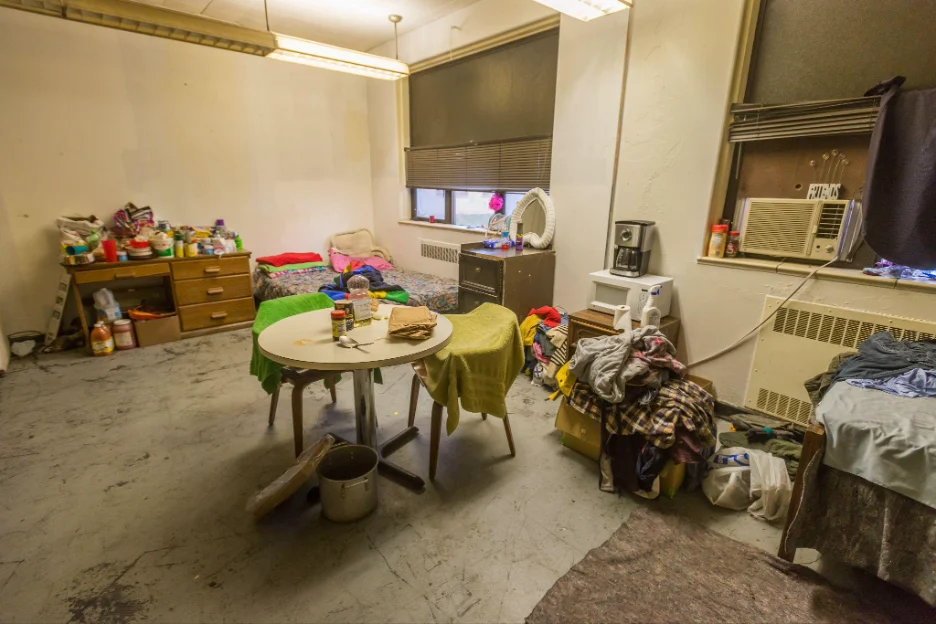
Migrant labor is the bedrock of American agriculture, an indispensable and constant force that fuels the nation’s food supply. Yet, the essential workforce behind this vital industry remains largely hidden, their struggles often confined to the peripheries of public consciousness. This invisibility is not merely social; it is profoundly spatial, a deliberate consequence of housing structures and placements designed to isolate, control, and silence. Employers frequently site worker housing in remote locations—tucked behind vast groves, far from main roads, or on private land secured by locked gates. These inaccessible sites are difficult for workers to reach without employer assistance, and even harder to leave, effectively creating a system of dependence that extends beyond the workday.
The Hidden Reality: Spatial Segregation and Dehumanizing Conditions
The narratives of countless migrant workers paint a stark picture of life in these secluded dormitories. As recounted by a paralegal working with an immigration law firm in Metro Detroit, migrant workers, often toiling six or seven days a week in extreme heat across fields and orchards, return to shared accommodations devoid of basic privacy, comfort, or dignity. These dormitories frequently feature communal bathrooms, often sparse kitchens, and tightly packed quarters with shared beds. The physical environment itself, characterized by narrow beds, small windows, and insufficient personal space, as documented in photographs from agricultural regions across North Carolina and California, serves as a powerful testament to a system that prioritizes control over human well-being. These images, depicting rows of identical cabins, are more than mere documentation; they are irrefutable evidence of an architectural strategy that systematically marginalizes the very people sustaining the agricultural economy.
This spatial segregation is not an accidental byproduct of economic necessity but a fundamental element of a broader labor strategy. When housing is directly controlled by the employer, every grievance becomes a significant risk. Speaking out against poor conditions or unfair practices can lead not only to job loss but also to immediate homelessness and the terrifying prospect of forced deportation, especially for undocumented workers or those on precarious visas. This inherent power imbalance, embedded within the very design of their living spaces, severely limits worker autonomy and fosters an environment of fear and silence. The fewer choices an individual possesses, the more susceptible they become to control and exploitation.
Historical Context of Agricultural Labor and Housing
The current state of migrant worker housing is deeply rooted in the historical evolution of agricultural labor in the United States. From the Dust Bowl migrants of the Great Depression, famously documented by Dorothea Lange, whose powerful photographs captured families living in temporary, often squalid, shelters, to the mid-20th century’s Bracero Program, the reliance on a transient, vulnerable workforce has consistently been accompanied by substandard living conditions. The Bracero Program (1942-1964), which brought millions of Mexican farmworkers to the U.S. under temporary contracts, often saw workers housed in barracks-style camps with minimal amenities, frequently far from towns. While regulations existed, enforcement was often lax, setting a precedent for the challenges seen today.
Today, the H-2A temporary agricultural visa program allows U.S. employers to bring foreign nationals to the U.S. to fill temporary agricultural jobs. A key requirement of the H-2A program is that employers must provide housing to workers at no cost, or a housing allowance if suitable housing is not available. However, "suitable" often equates to meeting minimum legal standards, which, as many advocates argue, are woefully inadequate for fostering a healthy and dignified living environment. The program, while intended to address labor shortages, has also been criticized for creating a highly dependent workforce, susceptible to exploitation due to their tied employment and housing.
Regulatory Framework and Enforcement Challenges
Federal and state regulations exist to govern migrant farmworker housing. The Occupational Safety and Health Administration (OSHA) mandates specific standards for temporary labor camps, including requirements for sleeping facilities, cooking and eating areas, sanitation, and water supply. Many states also have their own additional regulations, often enforced by departments of health or labor. For example, some states require permits and regular inspections for migrant labor camps.
Despite these regulations, enforcement remains a significant challenge. Key issues include:
- Limited Resources: Regulatory agencies often lack the personnel and funding to conduct thorough and frequent inspections of all agricultural housing sites, many of which are remote.
- Worker Fear of Retaliation: Workers are often hesitant to report violations due to fear of losing their jobs, being evicted, or facing deportation. This fear is exacerbated by the employer’s control over both employment and housing.
- Transient Nature of Work: The seasonal and mobile nature of agricultural work makes it difficult for agencies to track and inspect housing consistently.
- Minimum Standards vs. Dignified Living: The "minimum legal standard" often falls far short of what would be considered decent, humane, or healthy living conditions. Buildings might meet the letter of the law but still lack privacy, adequate space, or essential amenities like reliable heating/cooling, or robust pest control.
- Hidden Locations: The very remoteness of many housing sites makes them less visible to inspectors and the public, further hindering oversight.
The Sociological Lens: Power, Space, and Control
Sociology offers a critical framework for understanding that this situation transcends mere "bad housing structure"; it represents a profound structural problem. Conflict theory, a foundational sociological perspective, posits that society develops and changes through struggles over power and resources. In the context of migrant labor, this struggle is acutely visible in the organization and design of worker housing. The control over space becomes a powerful resource wielded by employers, enabling them to maintain a compliant and cost-effective workforce.
Building on this, the work of Henri Lefebvre, particularly his concept of "the production of space," is highly relevant. Lefebvre argued that space is not a neutral container but is actively "socially produced." This means that physical spaces are shaped by those who hold the authority and power to determine how people live, work, and interact within them. This production is rarely driven by considerations of comfort, fairness, or optimal function for all inhabitants. Instead, the arrangement and social production of space inherently reflect the interests of those in control. The shape of a room, the distance between houses, the layout of a dormitory—none of these are random. They are deliberate reflections of power relationships, designed to enforce a particular social order and maintain existing hierarchies. Migrant housing, therefore, is not just shelter; it is a tool for social reproduction of labor relations.
Similarly, Michel Foucault’s insights into how institutions utilize architecture to enforce discipline and control resonate deeply with the design of migrant housing. In his seminal work, "Discipline and Punish," Foucault demonstrated how prisons, schools, and hospitals employ specific architectural forms (like the panopticon) to create environments where individuals feel constantly monitored, leading to self-discipline and conformity. Migrant dorms, though lacking overt bars or guards, achieve a similar effect. The architecture itself, designed to meet only the bare minimum legal standards—standards often barely exceeding those for a prison cell in terms of space and amenities—dehumanizes residents. This dehumanization is a subtle yet potent form of control, eroding a sense of personal worth, privacy, and agency, thereby making collective action or dissent far less likely.
Firsthand accounts corroborate these sociological theories. A worker’s description of his bunk being so close to another that he could hear every breath of the man above him perfectly illustrates the eradication of personal space and privacy. His wife’s report of strict rules regarding visitors, meals, and noise, and their inability to live together despite being married, underscores the profound lack of autonomy. The pervasive feeling of being monitored and the pervasive fear to speak out highlight how these "homes" are fundamentally not the workers’ own, but rather an extension of their employer’s control. The system ensures this lack of ownership, both literally and figuratively.
Economic Imperatives and Human Costs
The economic rationale for this system is straightforward: minimizing labor costs and maintaining a pliable workforce. The U.S. agricultural sector relies heavily on low-wage labor, and providing inexpensive, employer-controlled housing is often seen as a cost-effective way to secure this workforce. Migrant workers contribute an estimated tens of billions of dollars to the U.S. economy annually, yet they remain among the lowest-paid workers, often earning wages that make independent, dignified housing unaffordable. For example, in 2022, the average hourly wage for agricultural workers was significantly lower than the national average across all occupations. The precarious legal status of many workers, combined with the H-2A visa’s tied employment, further entrenches this economic vulnerability.
However, the human cost of this system is immense. Beyond the lack of privacy and dignity, poor housing conditions are direct determinants of adverse health outcomes. Overcrowding facilitates the rapid spread of infectious diseases, inadequate sanitation leads to gastrointestinal illnesses, and lack of proper heating or cooling can exacerbate respiratory problems and heat stress. Mental health is also severely impacted by isolation, lack of autonomy, constant fear of reprisal, and the absence of a stable, comfortable home environment. These health disparities are compounded by limited access to healthcare, language barriers, and the fear of interacting with authorities.
Advocacy and Calls for Change
Numerous advocacy organizations, legal aid groups, and academic researchers are actively working to expose and address these systemic issues. Groups like the Farmworker Justice, National Center for Farmworker Health, and various state-level farmworker associations provide legal aid, health services, and advocate for stronger protections and improved living and working conditions. They push for increased funding for enforcement, more robust housing standards, and policies that grant workers greater autonomy and protection against retaliation. Researchers like Joey Colby Bernert, who brings a background in social work and public health, emphasize the need to apply intersectional and feminist theoretical lenses to understand the complex structural determinants of health and well-being among migrant populations.
These efforts highlight the need for a multi-faceted approach:
- Increased Transparency and Oversight: Regular, unannounced inspections of labor camps by independent bodies, with mechanisms for anonymous reporting by workers.
- Stronger Legal Protections: Expanding anti-retaliation provisions and ensuring access to legal representation for workers.
- Improved Housing Standards: Moving beyond minimum legal standards to embrace housing criteria that promote health, privacy, and dignity.
- Worker Empowerment: Supporting worker organizations and collective bargaining rights to give workers a voice in their living and working conditions.
- Public Awareness: Educating consumers about the conditions under which their food is produced, fostering demand for ethically sourced agricultural products.
Broader Implications for Society
The sociological perspective provides us with the precise language to name what is occurring: this is not merely a housing crisis, but an integral and deliberate labor strategy. These migrant camps are not temporary accidents or unfortunate oversights; they are, in many instances, long-term, calculated solutions to a problem that society has, thus far, largely chosen to ignore. The invisibility of migrant workers and their living conditions allows the system to perpetuate itself, shielded from public scrutiny and accountability.
As scholars, citizens, and consumers, it is imperative that we actively bring these designed inequalities to light. We cannot effectively change what we do not acknowledge or fully comprehend. The conditions endured by migrant agricultural workers represent a critical human rights issue and a fundamental flaw in the U.S. food system. Addressing these systemic issues requires a concerted effort to dismantle the architecture of control, empower workers, and ensure that those who feed the nation are afforded the basic dignity, respect, and humane living conditions they unequivocally deserve. The future of American agriculture, and indeed its ethical foundation, hinges on this recognition and subsequent action.







