
 Johny Marice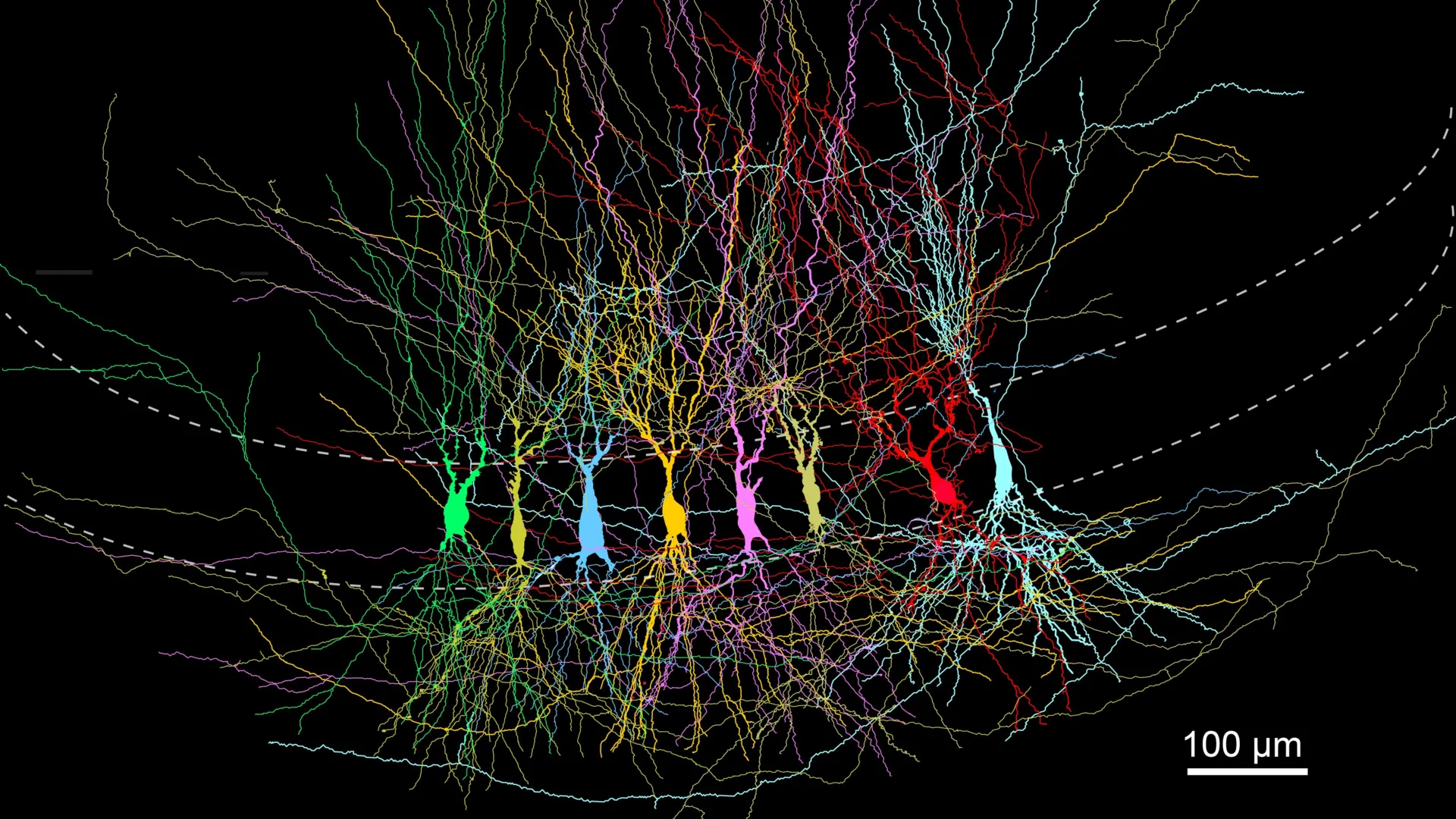
The intricate architecture of the human brain, particularly the hippocampus, a region vital for memory formation and spatial navigation, has long been a subject of intense scientific inquiry. New research spearheaded by Professor Peter Jonas at the Institute of Science and Technology Austria (ISTA) offers a compelling glimpse into the developmental trajectory of the hippocampus, challenging long-held notions and suggesting a more dynamic and pre-programmed initial state. The study, published in the prestigious journal Nature Communications, delves into how a fundamental neural network within the hippocampus, composed of CA3 pyramidal neurons, undergoes its crucial post-natal maturation, presenting evidence that leans towards a "tabula plena" – a full slate – rather than a "tabula rasa" – a blank slate.
Unraveling the Mystery of Neural Development: Tabula Rasa vs. Tabula Plena
The debate of nature versus nurture, often framed by the philosophical concepts of "tabula rasa" and "tabula plena," has permeated various scientific disciplines, including developmental biology. The "tabula rasa" concept posits that individuals are born without built-in mental content, with all knowledge and personality being shaped by experience. Conversely, "tabula plena" suggests that individuals are born with a predetermined set of characteristics and predispositions. In the context of brain development, this translates to the enduring question of whether neural circuits are largely sculpted by genetic blueprints or are extensively molded by environmental stimuli and sensory input.
The ISTA research team, under the leadership of Professor Jonas, applied this conceptual framework to the hippocampus. Their objective was to meticulously observe and analyze the internal transformations of its neural networks during the critical period following birth. The prevailing assumption in neuroscience has often leaned towards a developmental process where neural connections gradually form and strengthen based on experience. However, the findings from the Jonas lab suggest a departure from this intuitive model, indicating that the hippocampus might begin its post-natal journey in a state of dense connectivity, which is subsequently refined through a process of elimination.
The Hippocampus: A Nexus of Memory and Spatial Cognition
Before delving into the specifics of the research, it is essential to understand the profound significance of the hippocampus. This seahorse-shaped structure, nestled deep within the temporal lobe of the brain, is a cornerstone of cognitive function. It plays an indispensable role in consolidating information from short-term to long-term memory, a process that underpins our ability to learn, recall past events, and build a coherent sense of self. Furthermore, the hippocampus is a critical component of the brain’s internal navigation system, enabling us to form mental maps of our surroundings and to orient ourselves in space. Damage to the hippocampus can lead to profound amnesia, rendering individuals unable to form new memories, a condition famously exemplified by patient H.M.
The research specifically focused on the CA3 region of the hippocampus, a key player in memory recall and pattern completion. CA3 pyramidal neurons are known for their intricate interconnections and their remarkable capacity for synaptic plasticity – the ability of neural connections to change in strength over time, a fundamental mechanism for learning and memory. This plasticity allows the brain to adapt and store vast amounts of information, but the precise developmental mechanisms that establish the foundational network for this plasticity have remained a subject of active investigation.
A Chronology of Discovery: Tracing Neural Network Development
The study, conducted by ISTA alumnus Victor Vargas-Barroso under Professor Jonas’s supervision, involved a comprehensive investigation of mouse brains at three distinct developmental stages. These stages were carefully chosen to represent key periods of neural maturation:
- Early Post-Natal Development (Days 7-8): This stage represents the initial period after birth, when the brain is rapidly developing and establishing fundamental neural circuits.
- Adolescence (Days 18-25): This phase is characterized by significant synaptic refinement and maturation of neural networks as the organism transitions towards adulthood.
- Adulthood (Days 45-50): This stage signifies a more established and mature neural architecture, reflecting the culmination of developmental processes.
To meticulously examine the functional aspects of these developing neural networks, the researchers employed a sophisticated suite of experimental techniques. The patch-clamp technique, a cornerstone of electrophysiology, allowed them to measure the minuscule electrical currents flowing through individual neurons and their synaptic connections. This technique was applied with exceptional precision, targeting specific cellular compartments such as presynaptic terminals (the junctions where neurons transmit signals) and dendrites (the branched extensions that receive signals).
Complementing the electrophysiological recordings, the team utilized advanced imaging techniques, including confocal microscopy, to visualize the intricate structures of neurons and their connections in three dimensions. Furthermore, laser-based optogenetic methods were employed to precisely activate or inhibit specific neural pathways. This allowed the researchers to study the activity of individual neural connections and to probe the functional consequences of their developmental state.
The Surprising Revelation: From Dense and Random to Refined and Efficient
The results of this rigorous investigation yielded a surprising and counterintuitive finding. Contrary to the expectation that neural networks might start sparse and gradually become denser with new connections forming, the CA3 network in the developing hippocampus exhibited an inverse pattern.
At the earliest stage of development (days 7-8), the CA3 network was found to be exceptionally dense, characterized by a high number of synaptic connections that appeared largely randomly distributed. This suggests an initial phase of overproduction of connections, forming a highly interconnected but perhaps inefficient web.
As the mouse brains matured into adolescence and adulthood, a remarkable transformation occurred. The density of connections within the CA3 network significantly decreased. However, this reduction in density was accompanied by a striking increase in organization and efficiency. The remaining connections became more precise, strategically placed, and functionally optimized.
Professor Jonas elaborated on the significance of this discovery, stating, "This discovery was quite surprising. Intuitively, one might expect that a network grows and becomes denser over time. Here, we see the opposite. It follows what we call a pruning model: it starts out full, and then it becomes streamlined and optimized." This observation directly challenges the "tabula rasa" model of neural development, suggesting that the brain begins with an abundance of potential connections that are subsequently selectively eliminated.
The Evolutionary Advantage of an Initially "Full Slate"
The research team is actively exploring the underlying reasons for this "pruning" model of hippocampal development. Professor Jonas proposes a compelling hypothesis rooted in the functional demands of the hippocampus. He suggests that an initial state of exuberant connectivity may be crucial for facilitating rapid and efficient neuronal communication. The hippocampus, tasked with integrating diverse streams of sensory information – sights, sounds, smells, and contextual cues – into coherent and lasting memories, faces a formidable challenge.
"That’s a complex task for neurons," Professor Jonas explained. "An initially exuberant connectivity, followed by selective pruning, might be exactly what enables this integration." By starting with a highly interconnected network, neurons are predisposed to form connections with a wide range of other neurons. This broad connectivity could accelerate the process of finding and establishing appropriate pathways for information processing.
If the brain were to operate under a strict "tabula rasa" model, where neurons begin with no pre-existing connections, the initial phase of development would involve neurons actively searching for and establishing connections. This process of discovery and formation could be considerably slower and less efficient, potentially hindering the rapid integration of information essential for early learning and memory. The "full slate" model, with its subsequent pruning, suggests a more proactive approach: establish a rich network first, then refine it based on functional relevance.
Broader Implications for Understanding Brain Development and Disorders
The findings have significant implications for our broader understanding of brain development, learning, and the etiology of neurological and psychiatric disorders.
1. Refined Models of Learning and Memory: This research suggests that learning and memory are not solely about adding new information to a blank canvas but also about the sophisticated process of refining and optimizing existing neural architectures. The brain’s ability to efficiently discard unnecessary connections is as crucial as its ability to form new ones.
2. Insights into Developmental Disorders: Many neurodevelopmental disorders, such as autism spectrum disorder and schizophrenia, are characterized by alterations in synaptic connectivity and neural circuit development. Understanding the typical developmental trajectory of structures like the hippocampus, particularly the balance between synapse formation and elimination, could provide new avenues for investigating the underlying mechanisms of these conditions. For instance, aberrant pruning processes have been implicated in some psychiatric disorders.
3. Therapeutic Strategies: A deeper understanding of the "full slate" and pruning model might inform the development of novel therapeutic interventions. If developmental processes are found to be misregulated, targeted interventions aimed at modulating synaptic plasticity or pruning could potentially offer new treatment strategies.
4. Evolutionary Perspective: The observed developmental strategy hints at an evolutionary advantage. The ability to quickly establish a functional network that can integrate complex information would have been a significant benefit for early organisms, enabling faster adaptation and survival.
Future Directions and Ongoing Research
The ISTA team’s work is not an endpoint but rather a significant stride forward in a complex scientific journey. Future research will likely focus on several key areas:
- Identifying the Molecular Mechanisms of Pruning: Understanding the specific genes, proteins, and cellular signals that orchestrate the selective elimination of synapses is a critical next step.
- Investigating the Role of Experience: While the study suggests an initial pre-programmed state, the precise influence of early sensory experiences on the pruning process remains an area for further exploration. How do specific environmental inputs guide which connections are retained and which are eliminated?
- Comparing Across Brain Regions and Species: Investigating whether this "full slate" to refined network developmental pattern is a universal principle across different brain regions and species, or if it is specific to the hippocampus and rodent models.
- Longitudinal Studies: Extending the temporal scope of these studies to observe the development of neural networks over even longer periods could provide further insights into the dynamic nature of brain maturation.
In conclusion, the groundbreaking research from Professor Peter Jonas and his team at ISTA fundamentally reshapes our understanding of how the hippocampus develops. By providing compelling evidence that this vital brain region’s neural networks begin as a dense and interconnected "full slate" that is subsequently refined through pruning, the study offers a more nuanced and sophisticated view of neural development. This work not only deepens our appreciation for the complexity of the brain but also opens new avenues for research into learning, memory, and the intricate origins of neurological function and dysfunction. The journey from a dense, somewhat random network to a precisely tuned, efficient one underscores the remarkable adaptive and organizational capabilities of the developing brain.








