
 Reynand Wu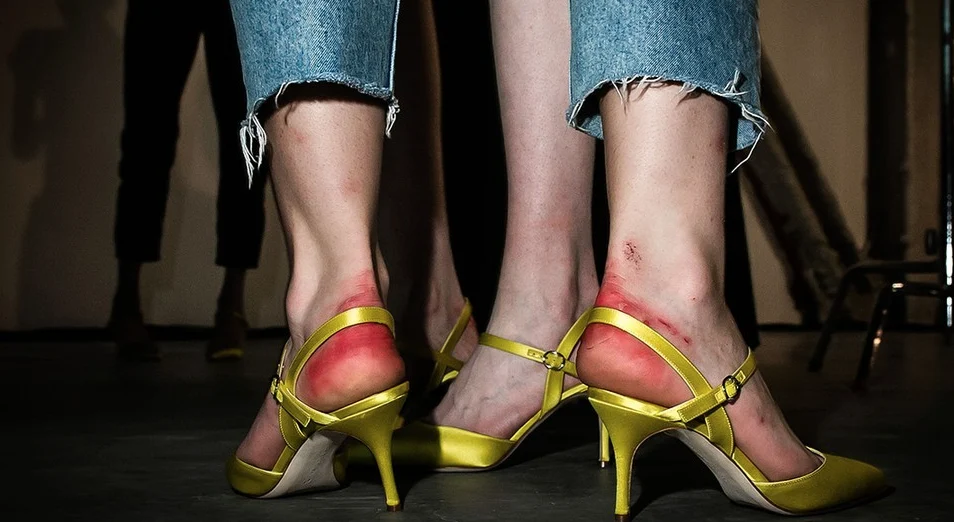
A recent photograph captured by documentary photographer Dina Litovsky has reignited a long-standing debate within the fashion industry regarding the physical toll of runway modeling. The image, which depicts a model’s feet visibly inflamed and strained while confined within restrictive, high-fashion slingback heels, has circulated widely across social media platforms, garnering over 500,000 likes and thousands of comments. The discourse surrounding the image highlights a widening divide between the aesthetic demands of high fashion and the increasing public scrutiny of labor conditions for those who embody the industry’s ideals. This viral moment is not an isolated incident but rather the latest chapter in a decades-long chronicle of physical sacrifice required to maintain the visual standards of the global fashion elite.
A Chronology of Physical Tolls in the Runway Industry
The history of runway modeling is punctuated by moments where the internal realities of the industry clash with its external polish. While Litovsky’s recent photograph serves as a contemporary touchstone, the issue has been a recurring point of contention for decades. In 2012, during the Louis Vuitton show at Paris Fashion Week, the industry faced significant backlash after photographs emerged showing models with severely battered, bruised, and blistered feet. These images drew widespread condemnation from health professionals and labor advocates, who argued that the shoes provided by major fashion houses often prioritized architectural innovation over human anatomy.
Throughout the 2000s and 2010s, various incidents involving runway falls—often attributed to unwearable footwear—brought the issue into the spotlight. Notable examples include the 1993 Naomi Campbell fall at Vivienne Westwood, which, while iconic in fashion history, underscored the inherent risks of navigating high-friction surfaces in towering platforms. Despite these documented dangers, the industry has historically been slow to implement standardized safety regulations for footwear, often citing "creative vision" as the primary driver for design choices.
The Dynamics of Agency and Professional Status
The question of why models continue to wear footwear that causes visible physical distress is rooted in the precarious nature of the profession. According to industry insiders and labor analysts, a model’s willingness to perform in uncomfortable or dangerous conditions is often conflated with their "professionalism." For models who have not yet reached the status of supermodel, refusing to wear a specific pair of shoes can carry significant career risks.
Industry hierarchies dictate that low-status models—those just beginning their careers or lacking the bargaining power of established stars—are the most vulnerable to these pressures. In the competitive environment of Fashion Week, where hundreds of models compete for a limited number of slots, the ability to "suffer for the art" is often coded as a marker of reliability and dedication. This culture of endurance is reinforced by the industry’s pervasive use of contortionist poses in high-fashion editorial photography, where models are expected to hold unnatural positions for extended periods. When professionalism is measured by one’s threshold for pain, the result is an environment where the health of the individual is systematically devalued in favor of the aesthetic product.
Sociological Implications: Beauty as an Aesthetic Labor
The commodification of the model’s body has been studied extensively by sociologists, most notably by Ashley Mears in her seminal ethnography, Pricing Beauty. Mears argues that the fashion industry operates on a system where models function as "aesthetic laborers." In this role, their bodies are not merely vessels for clothing but are the primary raw material of the industry. These ideals, which prioritize a specific look, are not static; they are prescriptive, shaping cultural expectations of how individuals should appear and behave in broader society.
The "beauty is pain" narrative serves as a powerful mechanism for maintaining these standards. By framing physical discomfort as a necessary sacrifice for aesthetic success, the industry creates a barrier that justifies the exploitation of the laborer. This phenomenon extends beyond the catwalk and into the daily lives of consumers. In her essay "Always Be Optimizing," cultural critic Jia Tolentino explores how this logic has migrated into the wellness industry. Tolentino notes that the pursuit of a "sculpted" or "toned" body through grueling exercise regimes mirrors the runway’s demands. In both spheres, the pain of the process is obscured by the promise of achieving a culturally mandated ideal. When these practices are rebranded as "self-care," the underlying structural pressures—which are often rooted in narrow definitions of gender, race, and class—are effectively hidden.
Data and Public Reaction
The viral reaction to the Litovsky image reflects a shift in consumer consciousness. Organizations such as the Model Alliance have long campaigned for better working conditions, citing that models are often treated as independent contractors without the legal protections afforded to traditional employees. Recent data indicates that the public is increasingly sensitive to the behind-the-scenes realities of the entertainment and fashion sectors.
While fashion houses have not issued formal apologies for specific instances of restrictive footwear, some brands have begun to incorporate more ergonomically sound options into their collections, acknowledging the changing climate. However, these changes are often driven by market trends—such as the rise of "athleisure" and comfort-focused footwear—rather than a top-down mandate to protect model health. The tension remains: the industry requires "extreme" visuals to maintain its aura of exclusivity, yet those visuals are increasingly being scrutinized through the lens of ethical labor practices.
Broader Impact: The Normalization of Suffering
The implications of this discourse are profound. If the fashion industry continues to normalize the physical degradation of its workers, it perpetuates a societal standard where the value of a person is inextricably linked to their ability to conform to aesthetic expectations, regardless of the personal cost.
The "aesthetic labor" performed by models is, in many ways, the tip of the iceberg. As social media platforms amplify these images, the feedback loop between industry standards and consumer behavior tightens. When a runway image of bruised feet is shared by major cultural institutions and influencers, it validates the idea that suffering is a legitimate price to pay for beauty. This, in turn, influences the expectations placed on ordinary individuals, reinforcing the cycle of "optimization" that Tolentino and others have critiqued.
Conclusion: Moving Toward a Sustainable Future
The controversy surrounding the viral photos of models’ feet serves as a necessary intervention in the fashion industry’s internal culture. While the artistic output of Fashion Week is a global phenomenon, the methods used to achieve that output are currently under intense, and arguably overdue, inspection.
For the industry to evolve, it must decouple professional competence from physical endurance. This would require systemic changes, including the implementation of industry-wide safety standards for footwear and a shift in the power dynamics that currently force models to choose between their physical well-being and their professional livelihoods. Until then, the images captured by photographers like Dina Litovsky will continue to serve as uncomfortable, yet essential, reminders that the "beauty" presented on the runway is frequently built upon a foundation of structural, physical, and societal pain. The path forward involves a critical re-evaluation of what constitutes a "successful" aesthetic, moving away from a model of exploitation and toward one that respects the human personhood of the individuals who bring these designs to life.







