Layla Zulfa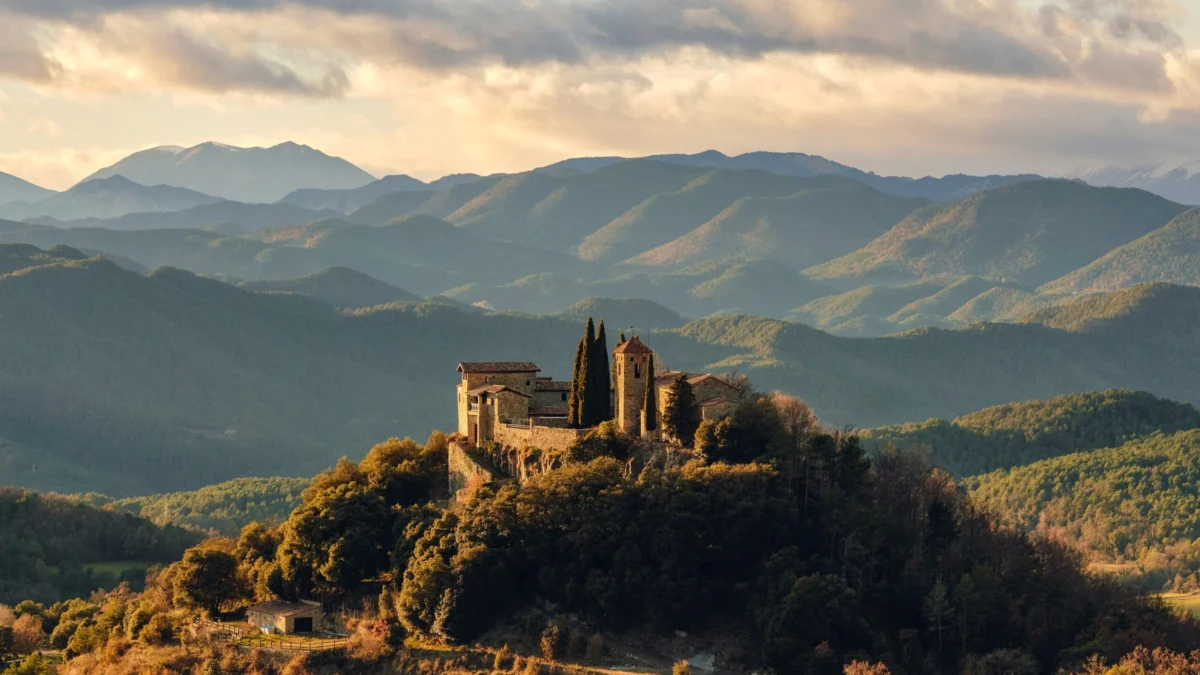
The landscape of global tourism has undergone a fundamental shift over the past decade, moving away from standardized hospitality models toward a paradigm where the accommodation itself serves as the primary destination. This phenomenon, often categorized as architectural tourism, has been significantly accelerated by digital platforms that allow private owners to showcase structurally unique and historically significant properties to a global audience. No longer merely a place to sleep, the modern short-term rental is increasingly viewed as an immersive cultural and aesthetic experience. From the rugged tundra of Iceland to the lush rainforests of Brazil, a new class of "experiential stays" is redefining how travelers engage with geography, history, and design.
The Rise of the Experiential Economy in Travel
The transition toward unique architectural stays is backed by significant market data. According to industry analysts, the global short-term rental market was valued at approximately $109 billion in 2022 and is projected to expand at a compound annual growth rate (CAGR) of 11.2% through 2030. A driving force behind this growth is the "experiential economy," where consumers prioritize unique, shareable experiences over material goods. In response to this demand, platforms like Airbnb have redesigned their search algorithms to prioritize "Categories," such as "Design," "Castles," "Arctic," and "Treehouses," allowing architecturally significant homes to bypass traditional location-based searches.
This shift has created a lucrative niche for property owners who invest in high-concept design or the restoration of historical landmarks. For the traveler, these sites offer a rare opportunity to inhabit spaces designed by master architects like Frank Lloyd Wright or to live within the walls of a 10th-century fortification, experiences previously reserved for the ultra-wealthy or institutional curators.
Masterworks of Organic and Mid-Century Architecture
Perhaps the most prestigious tier of the architectural rental market involves homes designed by celebrated architects. In Phoenix, Arizona, the Norman Lykes House stands as a testament to the final creative period of Frank Lloyd Wright. This property is one of only 14 circular homes designed by the master of organic architecture. Constructed to mimic the curves of the surrounding desert mountains, the house features overlapping circles and mahogany-clad walls that create a seamless flow between interior and exterior spaces.
Similarly, Javier Senosiain’s "Quetzalcoatl’s Nest" in Naucalpan de Juárez, Mexico, represents the pinnacle of organic architecture. Inspired by the work of Antoni Gaudí and Frank Lloyd Wright, Senosiain designed this apartment complex to snake through a 1.2-acre private park like a bejeweled serpent. The structure eschews traditional right angles in favor of soft, undulating contours, forcing the human inhabitant to yield to the natural topography of the land. These properties function as living museums, providing guests with a tactile understanding of architectural theories that emphasize harmony between human habitation and the natural world.
Nordic Innovation and High-Latitude Retreats
In Northern Europe and Canada, architectural innovation is frequently driven by the need to balance aesthetic minimalism with extreme environmental conditions. The "Birdbox" in Gaular, Norway, exemplifies the "tiny house" movement adapted for the rugged fjords. Accessible only by a 45-minute hike from the Langeland Ski Resort, this minimalist structure features a signature key-shaped portal that frames the landscape, offering a high-altitude experience that prioritizes isolation and natural light.
The Scandinavian influence extends to the Swedish Archipelago, where the Landet Cabin in Västerljung showcases the region’s commitment to "Lagom"—the philosophy of "just the right amount." This cabin utilizes custom cabinetry, red tile accents, and large glass panes to create a sense of expansive space within a small footprint. In Canada, the Lagöm Cabin in La Jacques-Cartier sits 500 meters above sea level, utilizing floor-to-ceiling windows to provide 360-degree views of the Quebec wilderness. These structures demonstrate a regional trend toward sustainable, low-impact tourism that leverages modern design to enhance the appreciation of remote natural vistas.
Historical Preservation and the Repurposing of Heritage Sites
A significant segment of the unique rental market involves the adaptive reuse of historical structures. This allows for the preservation of heritage sites through private enterprise. In the Catalonian countryside of Spain, the 10th-century Llaés Castle offers a Romanesque experience that dates back over a millennium. With eight bedrooms and views of the Pyrenees, the castle has been maintained to preserve its fortified character while providing modern comforts.

In France, the 12th-century apartment in Saint Paul de Vence offers a different kind of historical immersion. Once the home of poet and screenwriter Jacques Prévert, the space features vaulted ceilings and a tunneled entrance, blending medieval masonry with Provençal charm. Moving further south to Morocco, the traditional Riad in Marrakesh showcases the intricate tilework, grand columns, and courtyard-centric design typical of North African architecture. These properties provide a level of historical authenticity that modern hotels struggle to replicate, allowing travelers to "time travel" through the medium of their accommodation.
Integration with Indigenous Culture and Rugged Landscapes
As global travel becomes more conscious of cultural impact, there is a growing demand for stays that honor indigenous traditions and ecological sensitivity. In Coconino County, Arizona, the "Kyo’ob" at Shash Diné offers a "glamping" experience on Navajo land. The destination is designed to educate visitors on Navajo culture and traditions while providing a high-design sanctuary for stargazing and desert exploration.
Similarly, the Turf Farmhouse in the Highlands of Egilsstaðir, Iceland, serves as a functional museum. These earthen homes were historically essential for survival in Iceland’s harsh climate, and the rental provides an off-grid experience lit by candlelight and heated by wood stoves. In South Africa, the Dwarriega Off-Grid Cottage at the foothills of the Langeberg mountain range emphasizes luxury through simplicity. These properties represent a move toward "slow travel," where the lack of modern distractions like television or high-speed internet is marketed as a premium feature rather than a deficiency.
The Impact of "Whimsical" and Non-Linear Design
Beyond historical and organic movements, a sub-sector of "whimsical" architecture has gained traction, particularly in the United States. The "Bloomhouse" in Austin, Texas, often referred to as a "giant seashell unicorn," was designed by University of Texas architecture students seeking to escape the "oppression" of straight lines. Its meringue-like fireplace and sinuous wood accents challenge the logic of modern residential construction.
In Belgium, the Garden Pavilion in Tervuren utilizes a "hidden" design approach. From the exterior, the property appears to be nothing more than a wooden deck; however, the deck serves as the roof for a subterranean living space. A spiral staircase leads to a main floor that overlooks sprawling meadows, utilizing a Murphy bed system to maximize utility. These projects highlight a growing appetite for "novelty architecture"—structures that prioritize creative expression and playfulness over traditional functionalism.
Economic and Social Implications of Architectural Stays
The proliferation of these unique rentals has broader implications for local economies and the architectural profession. For remote regions like the Azores (home to unique lighthouse stays) or the Japanese wilderness (where the Treeful Spiral Treehouse is located), these destinations bring high-spending tourists to areas that lack traditional hotel infrastructure. This "distributed hospitality" can support local artisans, foragers, and service providers.
However, the rise of architectural tourism also presents challenges. The "Instagrammability" of these homes can lead to over-tourism in sensitive ecological or historical zones. Furthermore, as more private homes are converted into high-end rentals, local housing markets can face upward pressure. Architects and planners are now tasked with finding a balance between the economic benefits of unique tourism and the long-term sustainability of the communities in which these structures reside.
Chronology of Key Developments in Architectural Rentals
- 1950s: Frank Lloyd Wright completes the Norman Lykes House, his final residential design.
- 1990s: Javier Senosiain pioneers the Organic Architecture movement in Mexico with projects like Quetzalcoatl’s Nest.
- 2008: The founding of Airbnb begins the democratization of access to unique private homes.
- 2017: The Bloomhouse in Austin is restored and opened to the public as a short-term rental.
- 2022: Major rental platforms shift to "Category-based" searching, prioritizing architectural style over geography.
- 2024: Market data confirms that "Design" remains one of the fastest-growing categories in the global travel sector.
Conclusion: The Future of the Destination Home
The properties surveyed—ranging from a 10th-century Spanish castle to an off-grid South African cottage—illustrate a permanent change in the travel industry. The "accommodation as the destination" model is no longer a fringe trend but a central pillar of modern tourism. As travelers continue to seek out spaces that offer more than just a bed, the role of the architect and the historical preservationist will become increasingly central to the travel experience. These unique Airbnbs serve as the vanguard of a movement that treats travel as an opportunity for aesthetic education, historical reflection, and environmental connection. In the coming decade, the successful travel destination will not be defined by its proximity to a landmark, but by its ability to be a landmark in its own right.