Danny Garick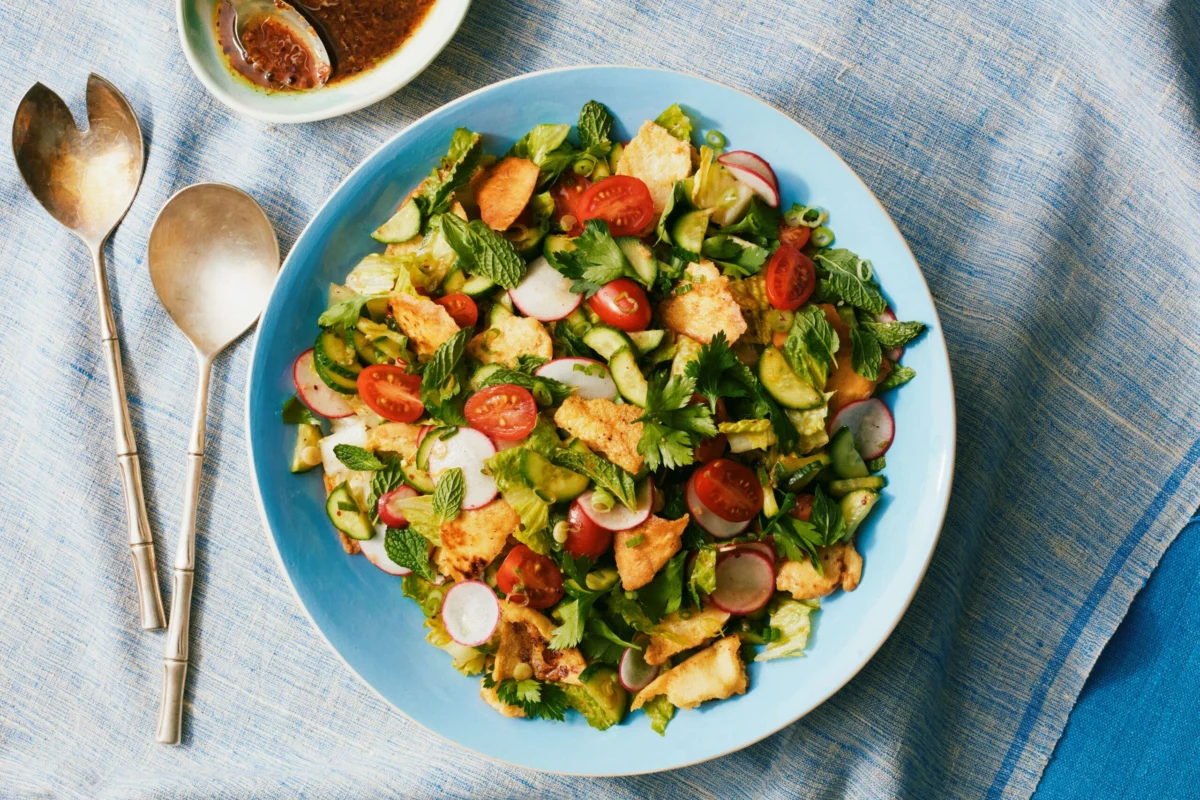
Fattoush remains one of the most enduring symbols of Levantine culinary heritage, representing a sophisticated blend of fresh agricultural produce and the resourceful use of staple ingredients. Historically rooted in the fertile regions of Lebanon, Syria, Jordan, and Palestine, this salad has transcended its origins as a rural peasant dish to become a centerpiece of Middle Eastern gastronomy. A contemporary adaptation by Mario Jr. Haddad, the visionary behind the renowned Lebanese café Al Falamanki, highlights the regional nuances that define the dish. By integrating the garlic-heavy traditions of Lebanon’s mountainous terrains with the deep, syrupy pomegranate molasses characteristic of Syrian preparations, the modern fattoush serves as a geographical map of the Levant on a single plate. This evolution reflects broader trends in global dining, where traditional recipes are being refined to meet modern artisanal standards while preserving the cultural integrity of their origins.
The Historical Context and Etymology of Fattoush
The term "fattoush" is derived from the Arabic word "fatteh," which translates literally to "crumbled" or "broken into fragments." This linguistic root provides a direct link to the dish’s functional history. In the pre-industrial Levant, bread was—and remains—a sacred staple. The cultural taboo against wasting bread led to the development of various "fatteh" dishes, where stale or day-old flatbreads were revived by being soaked in yogurt, broth, or, in the case of fattoush, tossed with the juices of fresh vegetables and olive oil.
Culinary historians note that while the core components of fattoush—bread and herbs—have been present in the region for millennia, the salad as it is recognized today began to take shape during the Ottoman era. The introduction of New World crops, specifically the tomato, in the 19th century transformed the flavor profile of the dish, adding a necessary acidity and moisture that complemented the dryness of the toasted pita. Today, fattoush is categorized alongside tabbouleh as a "mazza" essential, but it occupies a unique niche due to its textural complexity, balancing the soft crunch of toasted bread with the crispness of seasonal greens.
Regional Variations and the Mario Jr. Haddad Influence
The adaptation provided by Mario Jr. Haddad of Al Falamanki is significant because it synthesizes disparate regional identities into a singular, cohesive recipe. In the high-altitude villages of Mount Lebanon, garlic is a ubiquitous addition to salads, prized for its medicinal properties and its ability to provide a sharp counterpoint to the bitterness of certain wild greens. Conversely, the inclusion of pomegranate molasses is a hallmark of the culinary schools of Aleppo and Damascus.
Pomegranate molasses, a thick reduction of pomegranate juice, provides a layer of "mizzeh"—a specific Arabic term for a pleasant sour-sweetness—that complements the citrusy notes of sumac. By combining these elements, the Al Falamanki version moves away from a simplistic "chopped salad" and toward a complex dish with multiple flavor dimensions. This approach has influenced a generation of chefs who seek to present Lebanese food not as a static tradition, but as a living, breathing dialogue between different provinces and historical influences.
The Botanical and Chemical Significance of Key Ingredients
To understand the profile of a professional-grade fattoush, one must analyze the chemical contributions of its primary components. The defining spice of the dish is sumac (Rhus coriaria), a red berry that is dried and ground into a coarse powder. Unlike the acetic acid of vinegar or the citric acid of lemons, sumac provides a malic acid-driven tartness that is more subtle and lingering. Modern culinary science suggests that soaking sumac in warm water before application, as recommended by traditionalists, allows for the full extraction of essential oils and pigments, ensuring the dressing is infused with a deep, ruby hue and a consistent flavor.
Furthermore, the choice of vegetables is governed by seasonal availability. The "juicy" quality of fattoush is dependent on the osmotic release of water from tomatoes and cucumbers when they come into contact with salt. This liquid, when combined with high-quality extra virgin olive oil and pomegranate molasses, creates a natural vinaigrette that coats the herbs and bread. The use of Purslane (ba’leh), a succulent herb often found in traditional fattoush, adds a source of Omega-3 fatty acids and a slightly salty, lemony crunch that distinguishes the dish from standard Western garden salads.
Technical Execution: The Science of the "Crunch"
One of the most critical aspects of fattoush preparation is the management of the pita bread’s texture. In professional kitchens, the transition from "fresh" to "stale" to "toasted" is a controlled process. While domestic versions of the dish often use fried pita for immediate flavor impact, health-conscious and artisanal versions—such as those popularized by the Bon Appétit culinary community—advocate for baking the pita with a light coating of olive oil.
The Maillard reaction, the chemical process that occurs when heat interacts with the carbohydrates and amino acids in the bread, is essential for creating the "deeply golden" profile required for a durable fattoush. If the bread is insufficiently toasted, it will absorb the dressing too quickly and become sodden. By baking it until it reaches a brittle state, the bread acts as a structural element that maintains its integrity for the duration of a meal. This technical requirement explains why culinary experts advise dressing the salad in stages: a light initial toss to coat the leaves, with the majority of the dressing added only at the moment of consumption.
Chronology of Global Popularity and Market Growth
The global trajectory of fattoush can be mapped through the expansion of the Mediterranean diet and the rise of "Middle Eastern Modernism" in the culinary world.
- 1970s–1980s: Fattoush remains largely confined to ethnic enclaves and family-run restaurants in the West, often overshadowed by the more recognizable tabbouleh.
- 1990s: The rise of health-conscious dining brings attention to the Mediterranean diet. Fattoush gains traction as a "superfood" salad due to its high vegetable content and use of olive oil.
- 2000s: The "Ottolenghi Effect" occurs. Chef Yotam Ottolenghi and others popularize Levantine ingredients like sumac and pomegranate molasses in the UK and North America, making them household staples.
- 2010–Present: High-end Levantine concepts like Al Falamanki (Beirut/Dubai) and Zahav (Philadelphia) elevate fattoush to a gourmet status. It becomes a staple on menus ranging from casual "fast-casual" bowls to fine-dining tasting menus.
Market data indicates a significant increase in the import of Levantine spices. According to trade reports, the global sumac market is projected to grow at a CAGR of 4.5% through 2028, driven by the increasing consumer preference for natural, plant-based flavor enhancers. This economic trend is a direct result of the popularization of dishes like fattoush in mainstream media and high-end restaurant circuits.
Official Responses and Culinary Analysis
Culinary professionals and cultural ambassadors have weighed in on the significance of maintaining the authenticity of fattoush while allowing for modern substitutions. Mario Jr. Haddad has frequently emphasized in interviews that while the ingredients may vary based on what the land provides, the "soul" of the dish—the balance of acid and crunch—must remain inviolate.
Food critics have noted that the versatility of fattoush is its greatest strength. The ability to substitute radishes with red onions or to incorporate bell peppers allows the dish to be local to wherever it is being made. However, the "analysis of implications" suggests a tension between globalization and tradition. As fattoush becomes a global commodity, there is a risk of "culinary dilution," where essential ingredients like sumac are replaced by cheaper alternatives like lemon zest and vinegar. To counter this, organizations dedicated to gastrodiplomacy—the use of food to promote cultural understanding—have advocated for the use of Protected Geographical Indication (PGI) status for certain Levantine ingredients to ensure quality and authenticity.
The Broader Impact: Sustainability and Gastrodiplomacy
The rise of fattoush also intersects with modern sustainability movements. At its core, the dish is a "zero-waste" innovation. In an era where food waste is a global crisis—with approximately one-third of all food produced for human consumption being lost or wasted—the fattoush model of repurposing bread offers a historical solution to a modern problem. This aspect of the dish has made it a favorite among eco-conscious chefs who prioritize the full lifecycle of their ingredients.
Furthermore, fattoush serves as a vehicle for gastrodiplomacy. By sharing the specific stories of the Lebanese mountains or the Syrian plains through a salad, the Levantine diaspora has been able to foster a nuanced understanding of their culture that transcends political headlines. The dish is more than a culinary item; it is a narrative of resilience, showing how a community can take simple, leftover items and transform them into a world-class gastronomic experience.
In conclusion, the modern fattoush is a testament to the enduring power of Levantine cuisine. Whether it is anchored by the traditional garlic-sumac profile of Mario Jr. Haddad’s Al Falamanki or adapted for the global palate with seasonal variations, it remains a masterclass in texture, flavor balance, and resourcefulness. As it continues to feature on tables from Beirut to New York, its role as a cultural bridge and a nutritional powerhouse is firmly established. For the best results, whether prepared in a professional kitchen or at home, the principles remain the same: respect the bread, honor the sumac, and always prioritize the season’s peak harvest.