Danny Garick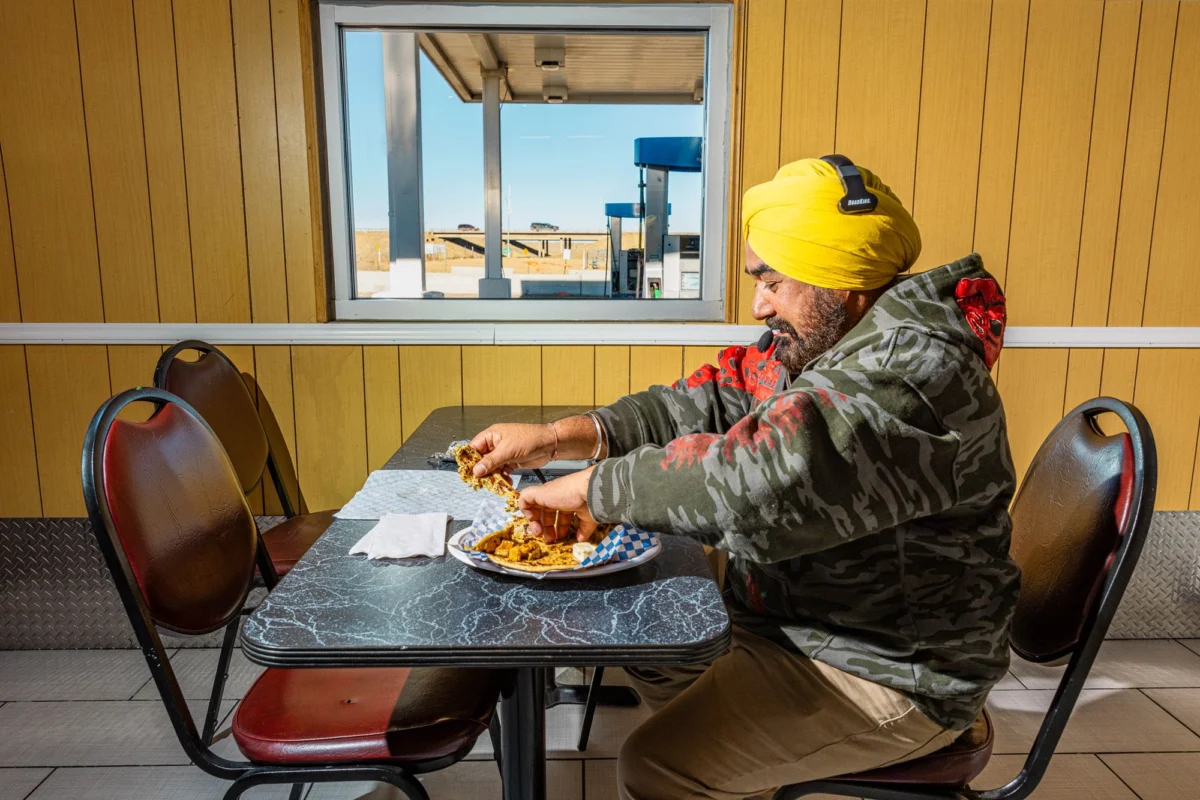
On a desolate stretch of Interstate 80, approximately 20 miles from the city of Laramie, Wyoming, the traditional landscape of the American West meets the vibrant culinary traditions of northern India. The Akal Travel Center, a 24-hour truck stop situated on the state’s high plains, has become an unlikely epicenter for authentic Punjabi cuisine and Sikh culture. Amidst the biting winds and gray skies of a late January afternoon, the interior of the facility offers a stark contrast to the surrounding Wyoming wilderness. Inside, the air is thick with the aroma of sizzling garlic, earthy curry powder, and fresh ginger—a sensory experience far removed from the standard grease and salt of the national fast-food chains that typically dominate the interstate corridors.
For drivers like Ediquis Brown, a long-haul trucker based out of Fort Lauderdale, Florida, the Akal Travel Center is a necessary reprieve from the grueling demands of the logistics industry. Brown, who traverses the continent from east to west on a weekly basis, often manages 11-hour driving shifts that leave little room for nutritious meals. Like many regular patrons, he navigates past the aisles of mass-produced candy and kitschy Wyoming souvenirs to reach the checkout counter. Without consulting the faded whiteboard menu, he places a familiar order: tandoori chicken, garlic naan, a mango lassi, and two cups of creamy chai. For Brown and dozens of other motorists daily, this stop represents more than just a refueling point; it is a vital source of sustenance that offers a "healthier, tastier alternative" to the ubiquitous burgers and fries of rural America.
The Evolution of the Punjabi Truck Stop Model
The Akal Travel Center is part of a broader, transformative trend within the American trucking industry. Over the last decade, the presence of South Asian drivers and business owners has surged, leading to the emergence of "dhabas"—traditional Indian roadside restaurants—across the United States. The Akal facility was purchased in 2012 by Mintu Pandher and his wife, Amandeep. Since taking ownership, the Pandhers have transformed the site into a cultural hub.
Gurjot Singh, who has served as the facility’s manager since 2014, notes that the business strategy relies on a dual-appeal model. "We attract customers with the cheapest diesel—and the food," Singh explains. This strategy addresses the two primary needs of the modern long-haul driver: operational efficiency and personal well-being. The facility is staffed by 10 employees, all of whom relocated to Laramie from the Punjab state of northwest India. To support this workforce in a region where the Asian population constitutes less than 2 percent of the total demographic, the Pandhers established a housing complex directly behind the gas station, creating a self-sustaining community in the heart of the Mountain West.
Chronology of Growth and Cultural Integration
The rise of the Akal Travel Center follows a specific timeline that mirrors the shifting demographics of the American workforce:
- 2012: Mintu and Amandeep Pandher acquire the truck stop off I-80, identifying a gap in the market for specialized services catering to the growing number of Punjabi truckers.
- 2014: Gurjot Singh joins as manager, overseeing the expansion of the kitchen and the formalization of the Punjabi menu.
- 2015-2020: The facility gains a reputation among the national trucking community via word-of-mouth and specialized trucking apps, leading to a steady increase in non-local traffic.
- Present Day: The center now operates as a full-scale cultural outpost, featuring a wood-paneled four-table dining area and a Sikh gurdwara (temple) on-site.
The inclusion of a gurdwara is perhaps the most significant cultural addition to the site. It provides a space for staff and visiting drivers to engage in prayer and reflection, adhering to the Sikh principles of "Vand Chakko" (sharing with others) and "Sewa" (selfless service). The presence of a place of worship in such a remote location underscores the commitment of the owners to maintain their cultural identity while contributing to the local Wyoming economy.
Industry Data and Demographic Shifts
The emergence of Punjabi-run truck stops like Akal is supported by broader industry data. According to the American Trucking Associations (ATA), the United States faces a persistent shortage of truck drivers, currently estimated at approximately 80,000. This vacuum has been increasingly filled by immigrant communities. In states like California, it is estimated that nearly 40 percent of long-haul truckers are of South Asian descent. As these drivers moved from the West Coast into the interior of the country, the demand for "desi" (home-style) food grew.
In Wyoming, the demographic impact is particularly notable. Census data indicates that Wyoming is one of the least diverse states in the nation. The establishment of a Punjabi kitchen in this environment serves as a case study in "micro-diversity," where specific highway nodes become multicultural intersections. For drivers like Anthony Masonar, who frequently shares a table with Ediquis Brown, the presence of Akal is a welcome disruption to the "food deserts" that often characterize rural interstate travel. Masonar and Brown represent a growing segment of the trucking population that prioritizes "slow simmering" over the convenience of drive-thrus.
Nutritional Implications and the "Dhaba" Tradition
The "dhaba" tradition originated in India as stops on the Grand Trunk Road, providing hearty, fresh meals to travelers. At Akal, this tradition is maintained through the production of house-made batches of blistered naan, golden-hued butter chicken, and biryani enriched with fresh carrots and peas.
From a health perspective, the transition from fast food to Punjabi cuisine has tangible benefits for long-haul drivers. The trucking profession is traditionally associated with high rates of obesity, hypertension, and diabetes due to a sedentary lifestyle and poor dietary options. The meals served at Akal utilize ingredients like turmeric, ginger, and lentils, which offer anti-inflammatory properties and higher fiber content compared to processed fast-food items. "I don’t like Wendy’s," Brown stated during a recent stop. "This is my spot. A place to get good fresh food." This sentiment is echoed by many drivers who view the 15-to-20-minute wait for a fresh meal as an investment in their long-term health.
Economic and Social Impact Analysis
The success of the Akal Travel Center provides several insights into the future of rural American infrastructure and immigrant entrepreneurship:
1. Revitalization of Rural Assets: Small, independent truck stops often struggle to compete with massive chains like Love’s or Pilot Flying J. By offering a unique, high-quality product (Punjabi cuisine), independent owners like the Pandhers can carve out a profitable niche that the larger corporations cannot easily replicate.
2. Cultural Bridging: While the kitchen primarily serves the trucking community, it also introduces local Wyoming residents to Indian culture and flavors. This "soft power" approach to integration helps foster a more inclusive environment in historically homogenous regions.
3. Labor Logistics: The model of providing on-site housing for employees is a pragmatic response to the housing shortages and high costs often found in Western "mountain towns" like Laramie. This ensures a stable, dedicated workforce for a 24-hour operation.
4. Spiritual Infrastructure: The on-site gurdwara serves a dual purpose. It provides emotional and spiritual support for drivers who spend weeks away from their families, and it establishes Akal as a "destination" rather than just a waypoint.
Future Outlook
As the logistics industry continues to evolve with the potential introduction of autonomous trucking and changing fuel standards, the role of the truck stop is also shifting. However, the human element—the need for community, fresh food, and spiritual connection—remains constant. The Akal Travel Center has proven that even in the most remote sections of the American landscape, there is a profound appetite for cultural authenticity and quality.
The Pandhers’ success has inspired similar ventures across the I-80 and I-40 corridors, from Nebraska to New Mexico. These establishments are redefining what it means to be an "American" truck stop. No longer just a place for fuel and coffee, these stops are becoming essential pillars of a diverse, modern workforce. For the drivers navigating the 11-hour shifts and the harsh Wyoming winters, the sight of the Akal sign represents a piece of home, a commitment to health, and a testament to the enduring spirit of the roadside dhaba.
In the final analysis, the Akal Travel Center is not merely a business; it is a manifestation of the American Dream, flavored with the spices of Punjab and anchored in the rugged plains of Wyoming. It stands as a beacon for the weary traveler, offering a reminder that even on the longest haul, a warm meal and a welcoming community are never truly out of reach.