
 Johny Marice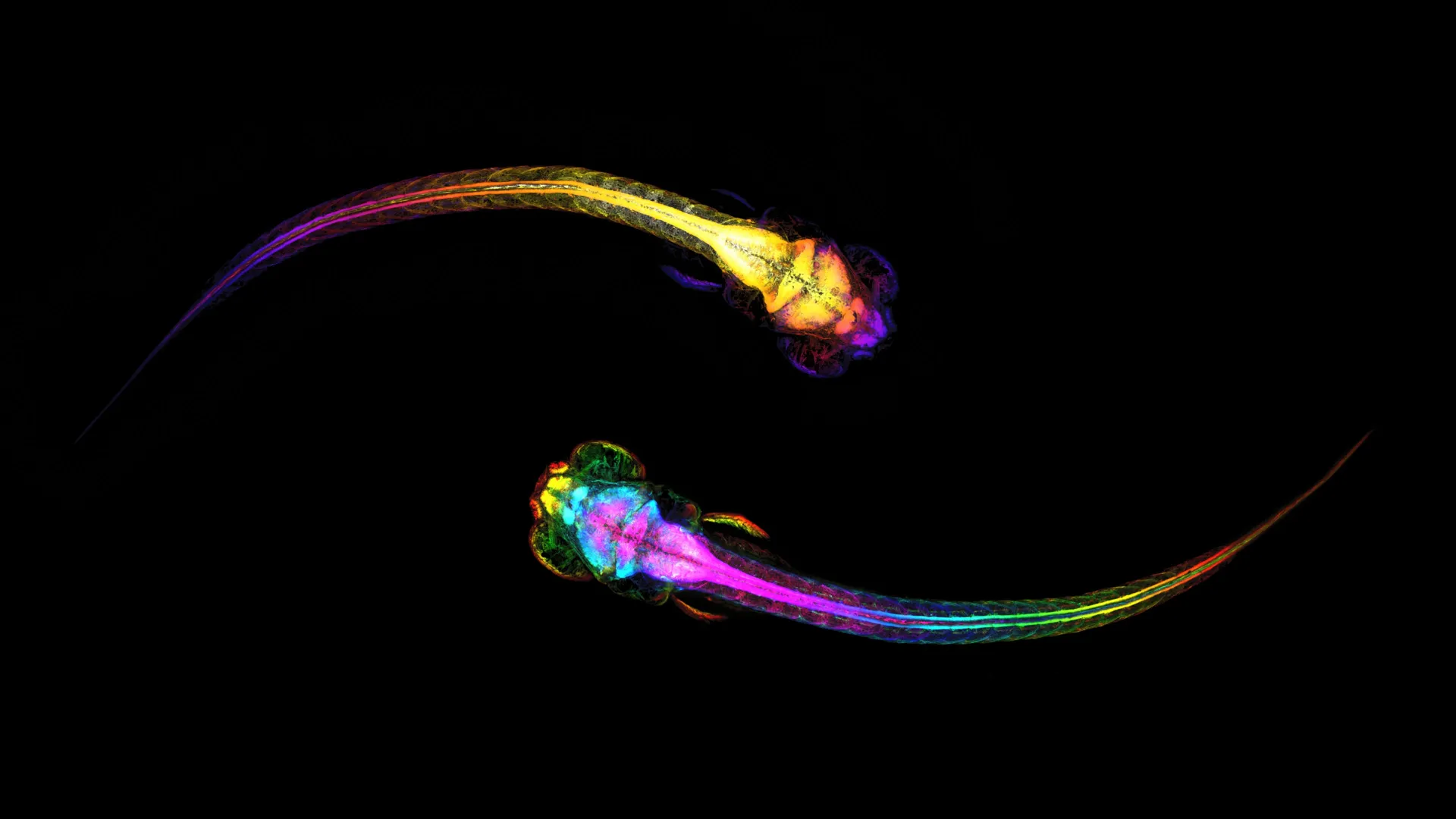
New research from the prestigious Hebrew University of Jerusalem has shed light on the intricate neural processes that precede our decisions to approach other individuals. The study, published in a leading scientific journal, indicates that the brain initiates a distinct pattern of activity across multiple regions several seconds before any physical movement towards another being occurs. This brain-wide signature, researchers found, is not only predictive of an impending social interaction but also reflects the individual’s underlying social motivation.
The groundbreaking work, led by Dr. Lilah Avitan of the Edmond and Lily Safra Center for Brain Sciences (ELSC) at the Hebrew University of Jerusalem, was meticulously carried out by PhD student Imri Lifshitz and a dedicated team within Avitan’s laboratory. Their investigation delved into the fundamental question of how the brain translates social stimuli into purposeful action, utilizing the zebrafish as a sophisticated model organism. Zebrafish are particularly valuable in neuroscience research due to their transparent bodies, which allow for the non-invasive monitoring of brain activity at the cellular level, offering an unprecedented window into neural dynamics.
Unraveling the Neural Precursors of Social Engagement
To meticulously track the cascade of neural events leading to social decisions, the research team engineered a novel experimental paradigm. This setup involved presenting a single zebrafish with the visual stimulus of another conspecific swimming in its proximity. While the observer fish processed this social cue, researchers employed advanced imaging techniques to record its entire brain activity in real-time. This innovative approach enabled them to capture the subtle, yet critical, neural transformations that unfold in the moments preceding a social behavioral response, charting the process as it dynamically evolved.
The findings were striking: the study identified a consistent and distinctive pattern of neural activity that emerged several seconds before the observer fish initiated any swimming behavior towards its counterpart. This pre-movement neural signature was not confined to a single, isolated brain region traditionally associated with social processing. Instead, it manifested as a coordinated, widespread change in activity across numerous interconnected areas of the brain.
Specifically, researchers observed an increase in neural activity within the pallium, a brain region recognized for its role in higher-order cognitive functions and complex behaviors, including social interactions. Concurrently, activity levels decreased in other brain areas, suggesting a complex interplay of excitation and inhibition across the neural network. Together, these synchronized changes create what the researchers have termed a "neural pre-decision state." This brain-wide pattern acts as an early warning signal, indicating that a social action is imminent and, crucially, can be used to accurately predict the impending behavior even before any outward manifestation.
The Strength of the Signal: A Measure of Social Drive
Beyond simply identifying the timing and location of this pre-social neural signature, the study made a significant discovery regarding its variability among individuals. The researchers observed that the intensity or strength of this brain-wide neural pattern differed considerably from one zebrafish to another. Crucially, they found a direct correlation between the robustness of this neural signature and the fish’s inherent tendency towards social interaction.
Fish that exhibited a more pronounced and widespread neural pre-decision state were found to be more socially active overall. This observation strongly suggests that the strength of this neural signal serves as a quantitative indicator of an individual’s underlying "social drive" or motivation to engage with others. The findings further underscore the pivotal role of the pallium, highlighting its central involvement not only in processing social information but also in generating the very impetus to approach and interact with conspecifics.
"This study identifies a brain-wide neural signature of social approach that emerges before movement begins," stated Dr. Lilah Avitan, the lead researcher. "This signature predicts not only whether an upcoming action will be social, but also how strongly socially driven the individual is." This statement encapsulates the dual significance of their findings: the temporal aspect of social decision-making and the individual differences in social motivation.
Background and Chronology of the Research
The journey to this discovery involved years of foundational research in neurobiology and ethology. The Hebrew University of Jerusalem, a global leader in scientific innovation, has fostered an environment conducive to tackling complex biological questions. The ELSC, in particular, is renowned for its interdisciplinary approach, bringing together experts in neuroscience, psychology, and computational biology.
The choice of zebrafish as a model organism is rooted in decades of scientific validation. Their genetic similarity to humans, coupled with their rapid development and ease of manipulation in laboratory settings, makes them an invaluable tool for dissecting complex biological processes. The ability to visualize neural activity in living, behaving animals, a feat made possible by advancements in genetic engineering and microscopy, has revolutionized the study of brain function.
The timeline of this specific project likely involved several key phases:
- Initial Hypothesis Development (Pre-2020s): Building upon existing knowledge of social cognition and neural networks, Dr. Avitan’s team likely formulated the hypothesis that pre-motor neural activity precedes social approach.
- Experimental Design and System Development (Early 2020s): Significant effort would have been dedicated to designing the novel experimental setup, including the development of specialized imaging protocols and the creation of the controlled environment for observing fish interactions.
- Data Acquisition (Mid-2020s): The core data collection phase, where hundreds, if not thousands, of hours of brain activity recordings were captured from numerous zebrafish. This would have been a demanding period, requiring meticulous attention to detail and robust data management.
- Data Analysis and Interpretation (Late 2020s – Present): Sophisticated computational tools and statistical methods were employed to analyze the vast datasets, identify patterns, and draw meaningful conclusions. This stage involves rigorous peer review and validation of findings.
- Publication and Dissemination (Present): The culmination of the research, leading to the publication of their findings in a peer-reviewed scientific journal and subsequent dissemination through academic conferences and public outreach.
Supporting Data and Methodological Rigor
While the article does not present specific numerical data points, it highlights the quantitative nature of the findings. The "strength" of the neural pattern implies that researchers measured quantifiable aspects of neural activity, such as firing rates, synchrony, or the amplitude of neural signals. The use of "real-time" monitoring and "individual cells" suggests a high resolution of both temporal and spatial data.
The experimental system, described as "new," likely incorporates cutting-edge technologies such as:
- Genetically encoded calcium indicators (GECIs): These fluorescent proteins, expressed in neurons, change their fluorescence intensity in response to changes in intracellular calcium levels, a proxy for neuronal activity. This allows for the visualization of neural firing in thousands of individual neurons simultaneously.
- Two-photon microscopy or similar advanced imaging techniques: These methods enable deep imaging of brain tissue with high resolution, penetrating the zebrafish’s body to capture activity in deeper brain structures.
- Automated behavioral tracking systems: Sophisticated software likely tracked the precise movements of the fish, correlating neural activity with specific behavioral events, such as initiating approach.
The statistical significance of the findings would have been rigorously assessed, ensuring that the observed neural patterns and their correlation with social behavior were not due to random chance. The use of a model organism like zebrafish, with its well-characterized neuroanatomy and genetic tractability, provides a strong foundation for the reliability of these results.
Broader Implications and Potential Future Directions
The implications of this research extend far beyond the understanding of zebrafish social behavior. Given the conserved nature of brain structures and neural circuits across vertebrate species, including humans, these findings offer valuable insights into the fundamental mechanisms of social cognition and motivation.
Understanding Human Social Function: The study could pave the way for a deeper understanding of why some individuals are more predisposed to social engagement than others. This could have significant implications for fields such as psychology, sociology, and even marketing, where understanding consumer behavior is paramount.
Clinical Relevance for Neurological and Psychiatric Disorders: Conditions characterized by altered social behavior, such as autism spectrum disorder (ASD), social anxiety disorder, and schizophrenia, could potentially benefit from this research. By identifying the neural signatures associated with typical social engagement, researchers may be able to pinpoint anomalies in these signatures that contribute to social deficits in these conditions. This could lead to the development of new diagnostic markers or therapeutic targets aimed at improving social functioning. For example, understanding the neural "pre-decision state" might reveal why individuals with certain disorders struggle to initiate or maintain social interactions.
Ethical Considerations in Animal Research: The study adheres to the highest ethical standards for animal research, as is customary in leading scientific institutions. The use of zebrafish, a species with a relatively simple nervous system and a low capacity for experiencing complex emotions, is a standard practice for investigating fundamental biological processes.
Future Research Avenues: The researchers themselves have indicated potential future directions:
- Investigating the specific neural pathways: Further research could aim to map the precise neural circuits involved in generating this brain-wide pre-decision state, identifying the key neurotransmitters and cell types that mediate these processes.
- Exploring the influence of external factors: Examining how factors such as stress, hunger, or the presence of rewards might modulate this neural signature and influence social approach.
- Translating findings to mammalian models: Gradually moving towards more complex mammalian models to further validate and refine these findings, ultimately aiming for human applications.
In conclusion, the research from the Hebrew University of Jerusalem offers a profound glimpse into the brain’s intricate preparation for social interaction. By identifying a pre-movement neural signature that not only predicts social approach but also quantifies social drive, Dr. Avitan and her team have opened new avenues for understanding the biological underpinnings of our social lives, with potential implications for both fundamental science and clinical applications. The study serves as a testament to the power of innovative research in unraveling the complexities of the brain and its impact on our interactions with the world around us.








