
 Reynand Wu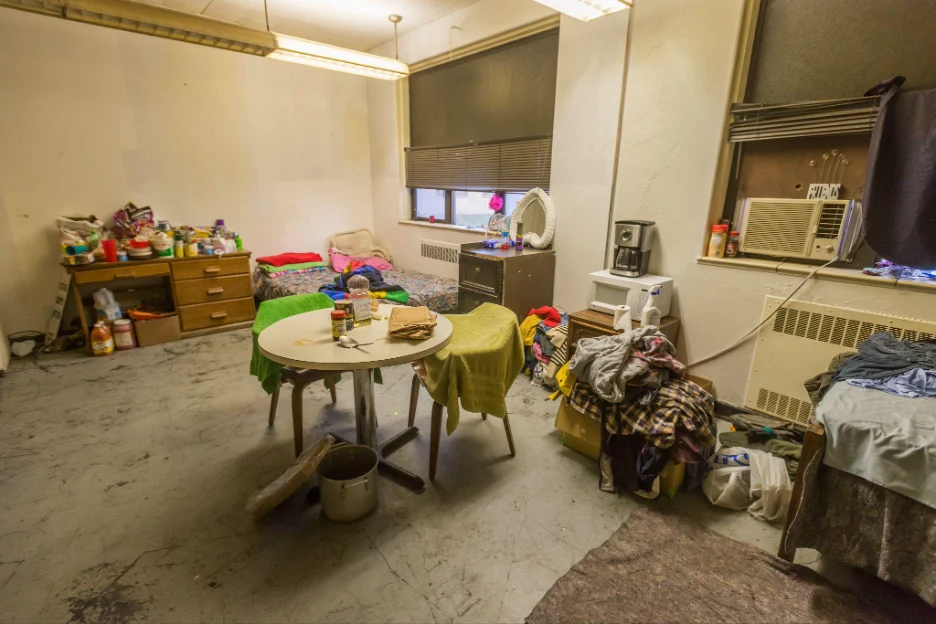
The United States agricultural sector relies on a foundational, yet largely unseen, workforce: the millions of migrant laborers who plant, tend, and harvest the crops that stock the nation’s grocery stores. While this labor is essential to the stability of the American food supply, the individuals performing it occupy a precarious social and spatial position. In many cases, employers house these workers in remote, private, and gated facilities tucked behind orchards or hidden by dense groves, far removed from the sight of the general public. This physical isolation is not merely a byproduct of rural geography; it is a strategic element of a labor system that thrives on the invisibility and restricted autonomy of its workforce.
Historical Context and the Evolution of Migrant Housing
The current state of migrant housing is deeply rooted in the history of American labor practices. During the Great Depression, the plight of agricultural families—often documented by photographers like Dorothea Lange—highlighted the severe instability and lack of basic infrastructure for those following the harvest. Throughout the mid-20th century, the Bracero Program (1942–1964) institutionalized the temporary migration of millions of Mexican laborers. During this era, housing was frequently provided by the employers themselves, setting a precedent that persists today.
By linking housing directly to employment, the agricultural industry created a dependency model. Unlike standard residential tenancies, where housing is decoupled from a worker’s job, agricultural housing often terminates immediately upon the loss of employment. This creates a high-stakes environment where a grievance regarding wages, workplace safety, or living conditions carries the threat of immediate homelessness and, for many, the risk of forced relocation or deportation.
The Sociology of Spatial Control
Sociological frameworks provide essential insight into why these facilities are designed the way they are. Drawing on the work of French philosopher Henri Lefebvre, who argued that space is "socially produced," it becomes clear that the layout of migrant housing is a physical manifestation of power dynamics. When employers determine the architecture of a living space, they are not merely providing shelter; they are engineering social behavior.
Michel Foucault’s theories on discipline and punishment offer further clarity. Foucault famously analyzed how institutional architecture—such as the design of prisons—functions to monitor, categorize, and control individuals. In the context of modern migrant labor, dormitories often feature communal bathrooms, high-density bunking, and restricted access to kitchens. These designs maximize efficiency for the employer while minimizing the individual’s sense of privacy and autonomy. By stripping away personal space, the architecture subtly reinforces a sense of constant surveillance, compelling workers to remain quiet and compliant to avoid further scrutiny.
Data and Current Conditions
Current research into agricultural labor highlights the discrepancy between the legal requirements for housing and the realities on the ground. The Department of Labor’s Wage and Hour Division and the Occupational Safety and Health Administration (OSHA) oversee regulations concerning housing standards, yet enforcement remains a complex challenge.
Data from the Midwest Center for Investigative Reporting and other labor advocacy groups suggest that many facilities operate at the bare minimum of legal requirements. In many cases, workers report living in dormitories where bed-to-square-foot ratios are severely restricted, communal cooking facilities are under-equipped, and opportunities for social interaction outside of the employer’s gaze are non-existent.
A study conducted by the Farmworker Justice organization indicates that the H-2A visa program, which allows U.S. employers to bring in foreign nationals for seasonal agricultural work, has seen a steady increase in participation over the last decade. As the number of H-2A workers rises, the demand for employer-provided housing has surged, often outpacing the capacity for effective oversight by state and federal agencies. This surge has led to the proliferation of temporary housing structures that prioritize speed and cost-effectiveness over the dignity or long-term health of the laborers.
Implications of Tied Housing
The practice of tying housing to employment creates a "closed loop" system. For a worker, the dormitory is not a home in the traditional sense; it is an extension of the workplace. When housing is located on private land behind locked gates, the worker’s ability to access legal aid, medical services, or community resources is severely constrained.
Paralegals and advocates who work with the migrant population in regions like Metro Detroit have documented recurring themes in worker testimony:
- Lack of Privacy: Many workers report living in proximity to others that prevents any semblance of personal life, often citing the inability to host family members or even maintain a private conversation.
- Surveillance: The presence of restrictive rules regarding visitors, noise levels, and movement creates an environment where workers feel they are being monitored even during their off-hours.
- The Fear Factor: The most consistent thread in these reports is the fear of retribution. Because a complaint about a leaky roof or an unsafe working condition can lead to an eviction notice, the housing itself becomes a tool for silencing dissent.
Official Responses and Regulatory Challenges
Agricultural industry groups often argue that the cost of housing is a significant overhead expense and that they are complying with the regulatory frameworks mandated by the states and federal government. Many employers emphasize that the seasonal nature of the work necessitates temporary housing solutions that can be scaled up or down depending on the harvest cycle.
However, labor rights advocates contend that the current regulatory framework is insufficient. They argue that "compliance" with minimum standards is an inadequate metric when those standards themselves fail to provide for human dignity. There have been calls for increased inspections and for the decoupling of housing from employment, which would allow workers to seek independent, off-site housing. However, such a shift would require significant investment in rural housing infrastructure, a project that remains low on the list of legislative priorities.
Broadening the Scope: Structural Determinants of Health
The physical conditions of these living spaces are also a public health concern. The structural determinants of health—factors such as housing quality, access to clean water, and the ability to maintain hygiene—are significantly compromised in many of these facilities. Research from public health scholars suggests that the stress of living in high-density, monitored, and precarious conditions contributes to long-term health disparities among migrant populations.
When workers live in spaces where they cannot control their temperature, noise exposure, or social environment, the cumulative physiological toll is significant. Furthermore, the lack of transparency in where these workers are housed makes it difficult for public health officials to provide adequate medical outreach or disaster response during heat waves or disease outbreaks.
Conclusion: Moving Toward Visibility
The invisibility of the migrant labor force is a manufactured condition. By situating housing in the shadows of the fields and designing spaces that emphasize control over comfort, the current agricultural model effectively segregates a critical segment of the population.
Addressing this issue requires more than just building better dorms; it requires a systemic reevaluation of the relationship between labor, property, and human rights. As sociologists, policymakers, and citizens, the first step is to bring these structures into the public view. Transparency is the precursor to accountability. Until the spatial arrangement of the agricultural labor market is scrutinized with the same intensity as the products it yields, the invisibility of the migrant worker will remain a defining, and troubling, feature of the American food system. The stories shared by workers—of narrow bunks, locked gates, and the persistent fear of losing their only shelter—are not merely anecdotes; they are evidence of a system that functions precisely as it was designed to, at the expense of those who feed the nation.







