
 Reynand Wu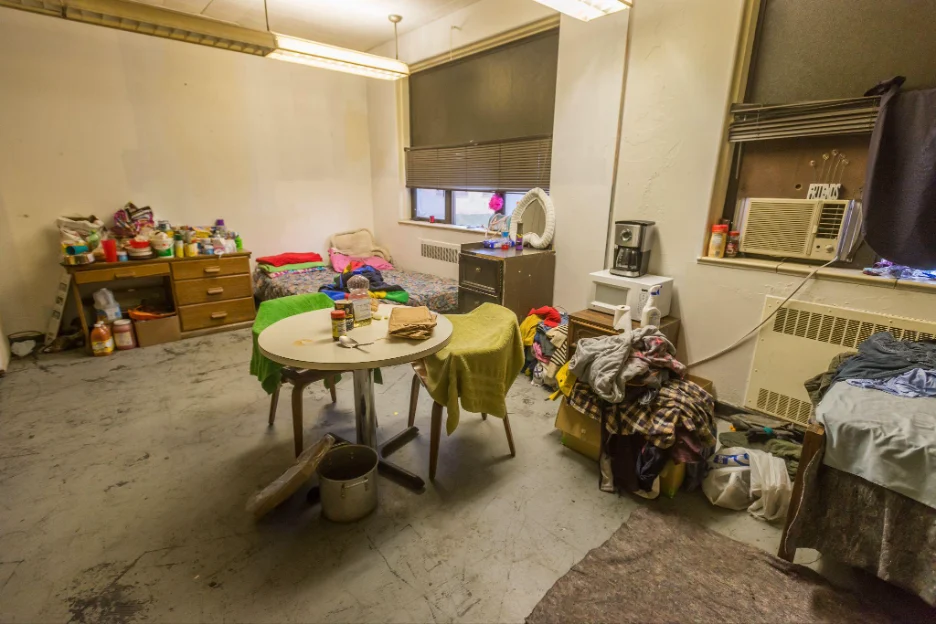
The backbone of the United States agricultural sector is a workforce that remains fundamentally unseen. While migrant labor is essential to the production of the nation’s food supply—contributing to a multibillion-dollar industry—the individuals performing this backbreaking labor often exist in a state of enforced spatial isolation. This invisibility is not a byproduct of chance; it is a calculated feature of the modern agricultural employment model. By tucking housing deep behind sprawling orchards, establishing sites far from urban centers, and utilizing private land secured by locked gates, employers create environments that are physically isolated and socially sequestered.
The Geography of Exclusion
The structural reality of migrant housing in the United States often mirrors the conditions of the early 20th century. Historical data, including photographic records from the Farm Security Administration during the Great Depression, reveal a consistent pattern of temporary, substandard, and isolated shelters. Despite significant advancements in labor laws and housing regulations over the past century, the spatial organization of migrant labor camps has remained largely stagnant.
For many laborers, the transition from the field to the home is not a transition to comfort, but to a different form of managed space. Interviews with migrant workers in regions such as Metro Detroit, California’s Central Valley, and rural North Carolina consistently highlight a lack of autonomy. These housing units, often categorized as dormitories, typically feature shared sleeping quarters, communal bathroom facilities, and sparse, inadequate kitchen space. The proximity of these living arrangements—where bunks are placed in tight, uncomfortable intervals—prevents any semblance of personal privacy or familial cohesion, even for those traveling with spouses.
Historical Context and Institutional Design
To understand the current state of migrant housing, one must look at the historical trajectory of agricultural labor policy. Following the implementation of the Bracero Program in 1942, the United States government facilitated the mass importation of Mexican workers to address labor shortages during World War II. The infrastructure built to house these workers was designed for efficiency and temporary occupancy. Decades later, the legacy of that era persists.
Sociological inquiry into these spaces suggests that the architecture of migrant camps serves a disciplinary function. According to the theories of French philosopher Michel Foucault, institutions utilize space to exert power and enforce behavioral norms. In the context of contemporary agricultural labor, the physical layout of a camp acts as an architectural deterrent to dissent. Because housing is tied directly to employment, the power dynamic is absolute. If a worker challenges a supervisor, reports a safety violation, or attempts to organize, the penalty is not merely the termination of employment; it is the immediate eviction from the site, which often equates to homelessness or, for those with precarious immigration status, the threat of deportation.
Quantitative Realities of Agricultural Labor
The scale of this issue is immense. According to the United States Department of Agriculture (USDA) and the National Agricultural Workers Survey (NAWS), the agricultural workforce is comprised of millions of individuals, a significant portion of whom are foreign-born. Many of these workers are employed under the H-2A visa program, which mandates that employers provide housing for laborers who cannot reasonably return to their permanent residence each day.
However, the "legal standards" for this housing are frequently contested. While the Department of Labor (DOL) sets guidelines regarding square footage, sanitation, and safety, these regulations are often interpreted at the bare minimum. A 2022 analysis by independent labor investigators found that nearly 30% of inspected migrant housing units across three major agricultural states exhibited significant health and safety violations, including inadequate ventilation, lack of clean water access, and overcrowding. The disconnect between federal policy and on-the-ground reality is exacerbated by the fact that many of these sites are situated on private, rural land that is difficult for labor inspectors to access without prior notice or employer cooperation.
Conflict Theory and the Production of Space
The spatial organization of these facilities is not incidental; it is, as sociologist Henri Lefebvre argued in his seminal work The Production of Space, a manifestation of social power. Those who hold the authority to determine where and how workers live are effectively shaping the social boundaries of the labor force. By keeping workers removed from public view and distant from community resources, employers minimize the "social friction" that might otherwise occur if the workforce were integrated into local populations.
This arrangement also serves as a strategic labor management tool. By limiting the mobility of the worker—placing them far from public transit, grocery stores, or legal aid clinics—the employer ensures that the worker’s focus remains entirely on the harvest. This isolation limits the workers’ access to external networks, making them less likely to learn about their rights or seek assistance in cases of exploitation.
The Human Cost: Case Studies in Regulation
The implications of this system are best reflected in the testimonies of those who have lived within it. For many, the camp is a place of perpetual surveillance. Strict rules regarding visitors, curfews, and the use of communal spaces contribute to an environment of psychological distress. In instances where couples are employed by the same operation, the refusal of employers to provide family-inclusive housing forces them into separate, gender-segregated dorms, effectively dismantling the family unit as a condition of employment.
Official responses to these concerns are often framed through the lens of economic necessity. Agricultural trade associations frequently argue that the costs of building and maintaining high-quality, centrally located housing are prohibitive, particularly given the seasonal and transient nature of the work. They emphasize that the current model is the only way to ensure the harvest is brought in on time and that the supply chain remains stable.
However, labor advocates argue that this perspective ignores the long-term social and health costs. The lack of adequate living conditions contributes to high rates of chronic fatigue, heat-related illnesses, and mental health struggles among the workforce. These "structural determinants of health" mean that the very people who produce the nation’s nutrition are often the least likely to have a healthy home environment.
Implications for the Future
The debate surrounding migrant housing is moving toward a critical juncture. As public awareness of the labor practices behind the food supply chain increases, there is growing pressure on regulators to move beyond minimum safety checks. Advocacy groups are increasingly calling for:
- Mandatory Third-Party Audits: Removing the reliance on employer-reported compliance and increasing the frequency of unannounced inspections by independent, non-governmental bodies.
- Improved Infrastructure Standards: Updating federal housing regulations to move away from the "dormitory" model and toward housing that respects the dignity and privacy of families and individuals.
- Legal Empowerment: Ensuring that labor rights are untethered from housing status, so that a complaint against an employer does not result in the immediate loss of a home.
Ultimately, the issue of migrant housing is a litmus test for the agricultural industry’s commitment to ethical labor practices. The current system relies on the assumption that a productive workforce can be maintained through isolation and spatial control. Yet, as history has shown, such systems are inherently unstable and morally precarious.
The task ahead is to transition from a model of invisibility to one of integration. By bringing these designs and the lived experiences of workers into the public sphere, policymakers and the public can begin to dismantle the structures that have kept the American food system’s most vital contributors in the shadows for far too long. As the demographic and economic landscape of the United States continues to shift, the demand for a more transparent and humane approach to agricultural labor will likely become an inescapable feature of the national conversation. Ensuring that those who feed the nation are themselves provided with safe, stable, and dignified living conditions is not merely a matter of charity; it is a fundamental requirement of a functional and equitable society.







