Prabowo Widodo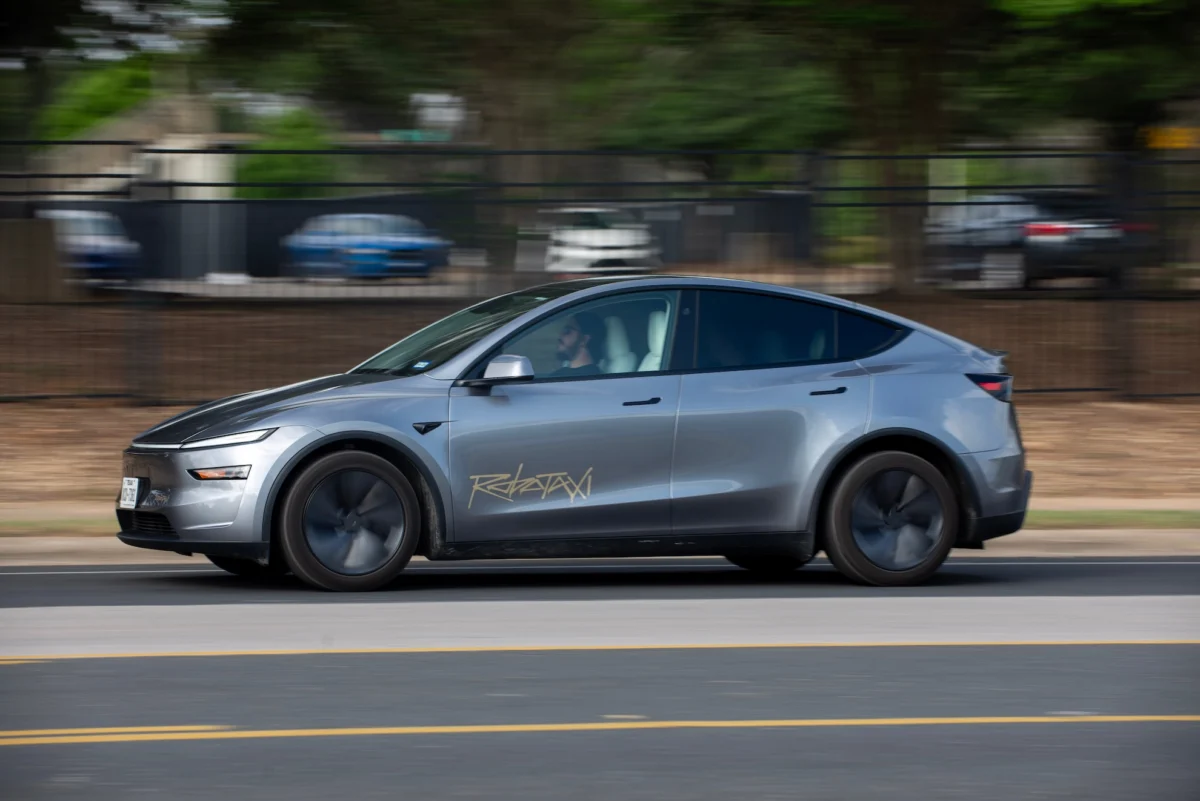
Tesla has officially announced the expansion of its autonomous robotaxi service to Dallas and Houston, marking a significant step in the company’s ambitious self-driving roadmap. The announcement, conveyed via a succinct social media post from the company’s official "Robotaxi" account, stated, "Robotaxi is now rolling out in Dallas & Houston 🤠," accompanied by a 14-second video. This footage notably depicted Tesla vehicles operating without human monitors or drivers in the front seat, signaling a fully autonomous deployment in these major metropolitan areas. This latest rollout establishes Dallas and Houston as the second and third cities, respectively, where Tesla is offering driverless robotaxi services, all within the state of Texas. The move follows the initial launch of its robotaxi rides in Austin last year, with fully driverless operations commencing in January 2026.
Chronology of Tesla’s Autonomous Driving Journey and Robotaxi Ambitions
Tesla’s pursuit of full self-driving (FSD) capability and a subsequent robotaxi network has been a cornerstone of its corporate strategy and a frequent topic of discussion by CEO Elon Musk for nearly a decade. The vision of a vast network of autonomous vehicles generating passive income for owners, or directly for Tesla, has been central to the company’s long-term valuation and technological narrative.
The journey began in earnest with the introduction of "Autopilot" in 2014, offering advanced driver-assistance features. This was followed by the promise of "Full Self-Driving" capability, a software package offered as an upgrade, which Musk initially projected would achieve true autonomy much earlier than industry consensus. In 2019, Musk famously predicted that Tesla would have a million robotaxis on the road by 2020, a projection that, like many of his timelines for FSD, proved overly optimistic. The company’s development progressed through various iterations of its FSD Beta program, which allowed select customers to test increasingly advanced autonomous features on public roads, albeit under human supervision.
The first significant public deployment of Tesla’s robotaxi service occurred in Austin, Texas, in June 2025. This initial phase likely involved human safety drivers to monitor operations and gather data. A pivotal moment arrived in January 2026, when Tesla began offering rides in Austin without human safety drivers, transitioning to a fully autonomous commercial service in the state capital. This move positioned Tesla alongside a select few companies globally operating truly driverless commercial services. The expansion into Dallas and Houston, while anticipated given Tesla’s aggressive autonomous driving strategy, underscores the company’s commitment to scaling its operations, particularly in a regulatory environment as permissive as Texas.
Beyond its fully driverless robotaxi operations, Tesla also maintains a more limited ride service in the San Francisco Bay Area, which still utilizes human drivers. This hybrid approach suggests a phased rollout strategy, adapting to regional regulatory landscapes and the maturity of its FSD technology in different environments.
Supporting Data and Early Deployment Insights
While the announcement of expansion into Dallas and Houston is definitive, the scale of current operations in these new markets appears to be nascent. Crowdsourced data from the Robotaxi Tracker website, which monitors autonomous vehicle deployments, indicates a limited presence at this early stage. As of recent reports, only a single Tesla robotaxi vehicle was registered in each of Dallas and Houston, contrasting sharply with the 46 active vehicles logged in Austin. This suggests a cautious, phased rollout, likely focusing on data collection, mapping, and refining performance within specific operational design domains (ODDs) before a wider deployment. Such a strategy is common in the autonomous vehicle industry, where incremental scaling allows companies to address unforeseen challenges and build a robust operational foundation.
The experience in Austin provides crucial context for these new deployments. A February filing revealed that Tesla’s Austin robotaxis have been involved in 14 crashes since their launch. While the specific details regarding fault, severity, and whether these incidents occurred during human-supervised or fully driverless operations are not publicly exhaustive, the data has drawn the attention of the National Highway Traffic Safety Administration (NHTSA). The involvement of NHTSA signals ongoing regulatory scrutiny into the safety performance of nascent autonomous vehicle technologies, a critical aspect as these services expand to more cities and greater operational complexity. It is important to note that "involved in a crash" does not automatically imply the AV was at fault, but such incidents inevitably contribute to the public and regulatory perception of autonomous vehicle safety.
Official Responses and Inferred Stakeholder Reactions
Tesla, true to its characteristic communication style for such announcements, has offered a brief, celebratory social media post rather than an elaborate press release or official statement. This minimalist approach often places the onus on the public to interpret the significance of the expansion. From Tesla’s perspective, this rollout is likely viewed as a validation of its long-term investment in AI and autonomous technology, a tangible step towards realizing its robotaxi vision, and a demonstration of the efficacy of its camera-only "Tesla Vision" approach to autonomy, which eschews lidar and radar sensors favored by many competitors.
However, the expansion will undoubtedly elicit a range of reactions from other stakeholders:
- Industry Analysts: Many analysts will view this as an aggressive move by Tesla to gain market share and data, particularly in a state with a relatively favorable regulatory environment for AV testing and deployment. Questions will likely arise regarding the scalability of Tesla’s technology, its safety record compared to industry peers like Waymo and Cruise, and the financial viability of a widespread robotaxi network. Analysts might highlight the competitive pressure this places on other AV developers, compelling them to accelerate their own deployments.
- Regulatory Bodies (NHTSA, Texas Department of Motor Vehicles): The expansion will undoubtedly lead to increased monitoring and scrutiny. NHTSA, already investigating the Austin crash data, will likely extend its oversight to Dallas and Houston. State and local authorities will be keen to ensure compliance with existing traffic laws and any specific AV regulations. Texas has historically been more open to AV testing than some other states, but public safety remains paramount, and regulators will likely emphasize data sharing and transparent reporting of incidents.
- Consumer Safety Advocates: Organizations focused on road safety and consumer protection are likely to voice concerns, particularly regarding the fully driverless nature of the service and the incident rate observed in Austin. They will advocate for stringent testing, robust safety standards, clear accountability frameworks in the event of crashes, and transparent public reporting of safety metrics. The debate over whether AVs are safer than human drivers, and at what statistical threshold, will intensify with each new market entry.
- Competitors: Established autonomous vehicle companies like Waymo (Alphabet’s self-driving unit), Cruise (General Motors’ AV subsidiary), and Zoox (Amazon’s AV company) will observe Tesla’s expansion closely. While these companies often employ different technological stacks (e.g., heavy reliance on lidar and radar) and more gradual, geo-fenced deployment strategies, Tesla’s aggressive approach in Texas could influence their own market entry strategies. The "Texas-first" strategy by Tesla could be seen as an attempt to establish a dominant position in a crucial state before broader nationwide competition intensifies.
- Local Authorities and Residents in Dallas/Houston: City officials will need to consider the implications for urban planning, traffic management, and public transportation. Residents will likely react with a mix of curiosity, excitement, and apprehension. Public acceptance is a critical factor for the long-term success of robotaxi services, and initial perceptions in these cities will be crucial.
Broader Impact and Implications for the Autonomous Vehicle Industry
Tesla’s expansion into Dallas and Houston carries significant implications for the company, the broader autonomous vehicle industry, and the future of urban mobility.
- For Tesla: This move is critical for validating its FSD technology and demonstrating its capability to scale operations beyond a single city. A successful expansion would bolster investor confidence, potentially unlock new revenue streams from ride-hailing services, and provide invaluable data for further refining its AI models. However, it also amplifies the risks. Any significant safety incidents in these new, larger markets could severely impact public trust, invite heavier regulatory intervention, and damage the company’s reputation. The relatively low initial vehicle count suggests a cautious but determined approach to mitigate these risks.
- For the Autonomous Vehicle Industry: Tesla’s aggressive market expansion, particularly with a camera-only vision system, continues to challenge the industry’s conventional wisdom regarding sensor suites. While Waymo and Cruise have generally opted for comprehensive sensor arrays (lidar, radar, cameras) and highly detailed 3D mapping, Tesla relies primarily on cameras and neural networks. The success or failure of Tesla’s approach in diverse and complex urban environments like Dallas and Houston will be a crucial test case for the entire industry, potentially influencing future technological directions. Moreover, Tesla’s expansion reinforces Texas as a key battleground for AV deployment, given its generally supportive regulatory environment. This could attract further investment and testing from other AV companies, turning the state into a vibrant hub for autonomous technology.
- For Urban Mobility and Infrastructure: The introduction of robotaxi services in Dallas and Houston has the potential to fundamentally alter urban transportation landscapes in the long term. If successful and scaled, robotaxis could offer increased accessibility, potentially reduce private car ownership, alleviate traffic congestion, and contribute to lower emissions (especially if the fleet is electric). However, these benefits are contingent on widespread adoption and seamless integration with existing infrastructure. Challenges include dedicated pick-up/drop-off zones, potential impacts on public transit ridership, and the need for robust telecommunications infrastructure to support the AV networks. The displacement of human-driven taxi and ride-share jobs is also a significant socio-economic consideration that cities will need to address.
- Regulatory Frameworks: The expansion will place further pressure on both state and federal regulators to develop more comprehensive and harmonized frameworks for autonomous vehicles. The current patchwork of state-level regulations creates complexities for companies seeking to operate nationwide. The ongoing data collection from Tesla’s deployments, including crash statistics and operational performance, will be vital for informing future policy decisions, establishing safety benchmarks, and ensuring public accountability. The balance between fostering innovation and ensuring public safety remains a critical challenge for lawmakers.
In conclusion, Tesla’s entry into Dallas and Houston represents a pivotal moment in its journey towards mass-market autonomous mobility. While the initial deployment is modest, it signals a clear intent to rapidly scale its driverless robotaxi service. The success of this expansion will not only be a testament to Tesla’s technological prowess but will also profoundly impact the competitive dynamics of the autonomous vehicle industry, influence regulatory approaches, and reshape the future of urban transportation in two of America’s largest cities. The coming months will be crucial in observing how Tesla navigates the complex interplay of technology, regulation, and public acceptance in these new, high-stakes environments.