Kang Muslim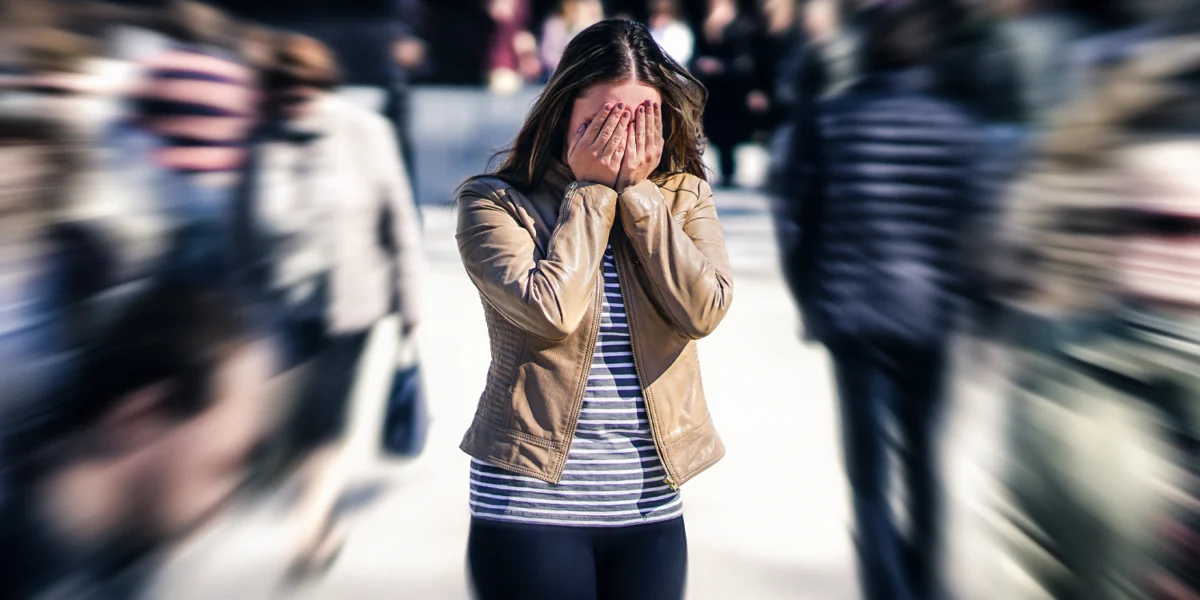
By utilizing sophisticated 3D modeling and testing "ensemble perception"—the brain’s ability to summarize the movements of a crowd—researchers Jisu Choi, Jiyeon Park, and Jae-Won Yang have mapped the intersection of spatial logic and psychological distress. Their findings suggest that the socially anxious brain is hyper-sensitized to potential social threats, over-interpreting neutral or ambiguous spatial data as a direct "approach," which may explain the physical avoidance behaviors and heightened vigilance characteristic of social anxiety disorder.
The Cognitive Architecture of Social Anxiety
Social anxiety is characterized by a persistent and intense fear of being watched, judged, or evaluated by others. While it is often colloquially dismissed as shyness, clinical social anxiety is a debilitating condition that can interfere with work, education, and basic interpersonal relationships. According to data from the National Institute of Mental Health (NIMH), approximately 7% of adults experience social anxiety in a given year, with many suffering from "threat-related perceptual biases."
Historically, psychological research has focused on how these individuals process "static" social cues, such as facial expressions. Numerous studies have shown that socially anxious people are faster to detect angry or contemptuous faces in a crowd. However, humans are rarely static. In real-world environments, we must constantly interpret "biological motion"—the rhythmic movements of the human body—to determine another person’s intentions from a distance. The ability to distinguish between someone walking past you and someone walking toward you is a critical survival skill. The new research from South Korea suggests that for the socially anxious, this survival mechanism is calibrated to a state of permanent "high alert."
From 2D Ambiguity to 3D Precision: A Chronology of Research
To understand the significance of this study, one must look at the evolution of how scientists study human movement. Since the 1970s, researchers have used "point-light walkers" (PLW). These are minimalist animations where the human form is represented only by dots placed at the major joints (shoulders, hips, knees, and ankles). Despite the lack of skin, clothing, or faces, the human brain can instantly identify these dots as a walking person, even inferring the person’s gender, weight, and mood.
Previous studies using two-dimensional (2D) point-light walkers yielded inconsistent results. Because 2D images lack depth, a walker can appear to be moving toward the viewer or away from them simultaneously—a phenomenon known as the "facing-bias." In these older experiments, socially anxious participants often showed conflicting behaviors, sometimes appearing hyper-vigilant toward approaching figures and other times exhibiting "perceptual avoidance," where they subconsciously chose to see the figures as walking away to reduce their internal stress.
Recognizing these limitations, the research team at the Catholic University of Korea sought to eliminate visual ambiguity. They developed a 3D experimental environment where shading, spherical perspective, and a ground plane provided clear depth cues. This ensured that the animated figures were always perceived as moving forward. The question was no longer "Is this person coming or going?" but rather "At what exact angle does this person feel like they are heading straight for me?"
Methodology: Quantifying the "Collision Path"
The researchers recruited 147 university students, a demographic often studied due to the high prevalence of social anxiety onset during late adolescence and early adulthood. Participants were screened using standardized psychological assessments, including the Social Interaction Anxiety Scale (SIAS). Crucially, the researchers also measured depressive symptoms using the Beck Depression Inventory (BDI). Because anxiety and depression often co-occur (comorbidity), the team needed to ensure that the perceptual biases they observed were specifically linked to social anxiety rather than a general negative mood or depressive state.
The experiment was divided into two distinct phases: individual perception and ensemble (group) perception.
Phase One: The Individual Walker
Participants were shown a single point-light figure for just 250 milliseconds—a fraction of a second. The figure walked either directly toward the viewer (0 degrees) or at varying angles up to 24 degrees away. Participants had to make a split-second decision: Is the person approaching me?
The results were stark. The high social anxiety group had a much lower threshold for "approach." While a person in the low-anxiety group might correctly identify a 15-degree angle as a person walking "past" them, a person with high social anxiety would perceive that same 15-degree angle as a direct approach. Their brains were essentially expanding the "collision path" of strangers.
Phase Two: The Ensemble Perception
The second phase addressed how we perceive crowds. The brain uses "summary statistics" to process large amounts of information quickly—for example, you can tell if a crowd is generally "angry" without looking at every single face.
In this test, participants saw ten walkers simultaneously for 500 milliseconds. The researchers used the data from Phase One to calibrate the test for each individual. They mixed "straight" walkers with "angled" walkers. The high social anxiety group required a significantly lower percentage of straight-walking figures to conclude that the entire group was approaching them. Their brains "averaged" the movement of the crowd in a way that favored the threat of an incoming group.
Error Management Theory and Evolutionary Logic
The findings align with "Error Management Theory" (EMT), a framework in evolutionary psychology suggesting that human cognition is biased toward making the "least costly" mistake. In the context of ancestral survival, the cost of a "False Positive" (thinking someone is walking toward you when they aren’t) is minimal—perhaps a brief moment of unnecessary alertness. However, the cost of a "False Negative" (failing to notice someone walking toward you with hostile intent) could be physical injury or death.
The study suggests that social anxiety causes an over-application of this safety mechanism. For a socially anxious individual, the "cost" of being observed or evaluated is perceived as so high that the brain recalibrates its spatial logic to ensure no potential observer is missed. This creates a state of "evaluative dread," where the individual feels constantly centered in the "gaze" or "path" of others.
Dissecting the Anxiety: Observation vs. Interaction
One of the most nuanced findings of the study was the distinction between different types of social fear. The researchers analyzed two sub-factors of social anxiety:
- Fear of being observed: The anxiety felt when one is being watched while performing a task (e.g., walking across a room, eating in public).
- Fear of interaction: The anxiety felt during active conversation or social engagement.
The perceptual bias toward approaching walkers was exclusively correlated with the fear of being observed. Because the point-light walkers lacked faces and didn’t "speak," they represented the pure, abstract concept of an observer. This suggests that the spatial bias is a "pre-cognitive" event—it happens in the visual processing centers of the brain before a person even has a chance to think about a social interaction.
Implications for Therapy and Clinical Practice
The identification of this "approach bias" has significant implications for the treatment of Social Anxiety Disorder (SAD). Current gold-standard treatments, such as Cognitive Behavioral Therapy (CBT), often focus on challenging "maladaptive thoughts" (e.g., "Everyone is looking at me"). However, if the patient’s visual system is literally telling them that people are moving toward them, simply challenging the thought may not be enough.
Potential Applications Include:
- Cognitive Bias Modification (CBM): Future therapies could involve "retraining" the brain using VR environments. Patients could be exposed to 3D walkers and given feedback to help recalibrate their spatial thresholds, essentially teaching the brain to accept a wider "safety angle."
- Virtual Reality Exposure Therapy (VRET): By understanding that the bias scales up from individuals to crowds, therapists can create more accurate VR simulations of crowded spaces (like malls or subways) to help patients manage the feeling of being "closed in" by approaching people.
- Physical and Occupational Therapy: The study notes that this visual distortion may drive "postural swaying" or physical avoidance. Addressing the visual root of these movements could help patients feel more grounded and less physically reactive in social settings.
Limitations and the Path Forward
While the study provides a robust new framework, the authors acknowledge several limitations. The use of university students means the findings may not perfectly mirror those with clinical-grade psychiatric diagnoses. Furthermore, the brief exposure times (0.25 to 0.5 seconds), while necessary to capture "raw" perception, do not account for how a person might adjust their judgment over a longer period of observation.
The researchers suggest that future studies should move toward even more naturalistic settings. "Point-light walkers are useful for isolation, but in the real world, we deal with faces, clothing, and varying speeds," the study notes. The next frontier of this research will likely involve fully rendered 3D avatars in interactive environments where the "walker" can react to the participant’s own movements.
Conclusion: A New Lens on Social Fear
The research by Choi, Park, and Yang reframes social anxiety as a fundamental alteration of spatial reality. It confirms that for those struggling with social fear, the world is quite literally a more intrusive place. By proving that this bias exists at both the individual and ensemble levels, the study opens a new door into understanding the "social brain." It suggests that the path to overcoming social anxiety may lie not just in changing how we think about others, but in recalibrating how we see them move through the world.