Johny Marice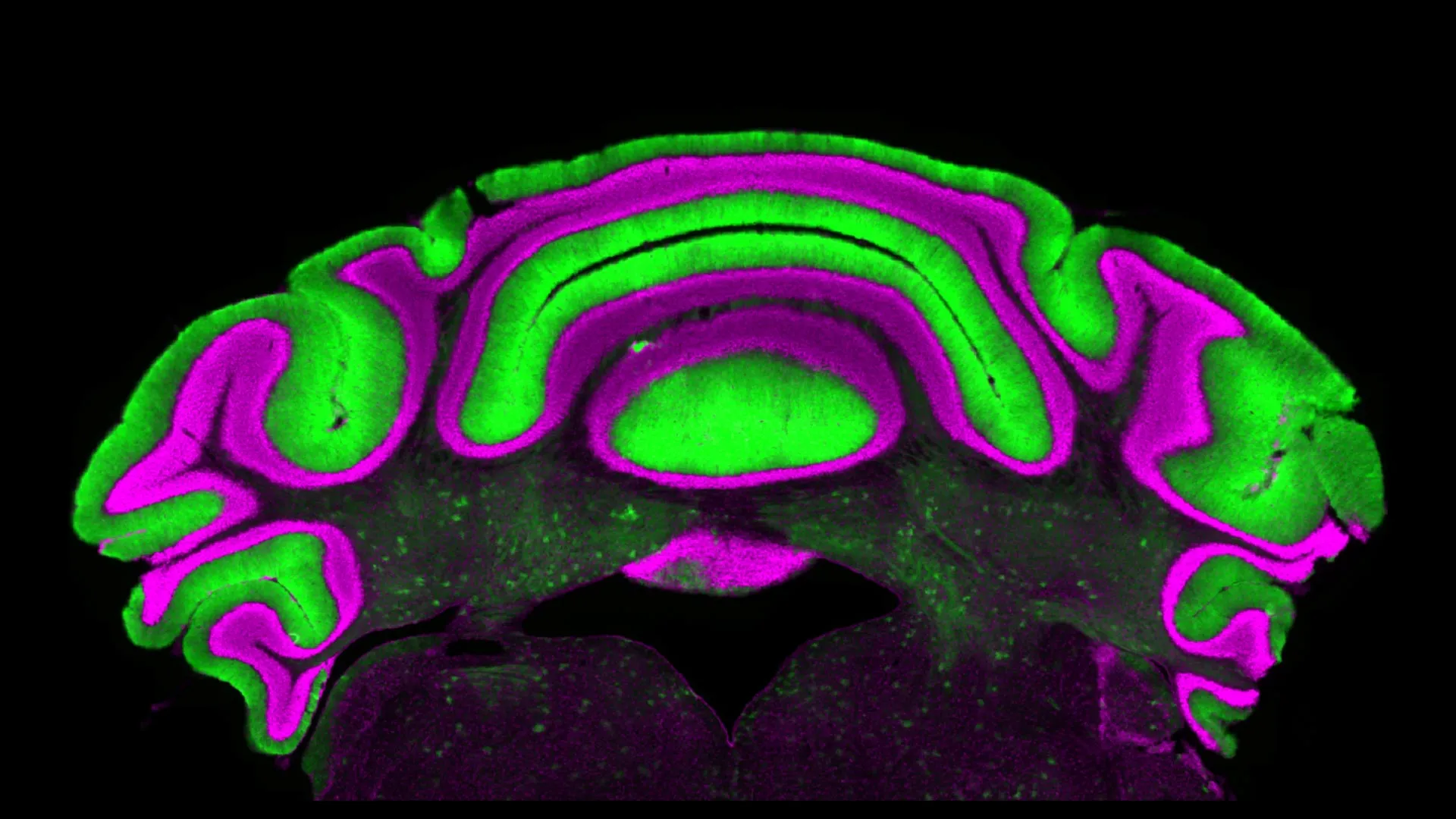
New research from a Virginia Tech neuroscientist at the Fralin Biomedical Research Institute at VTC is raising questions about a long-standing approach to studying chronic neurological conditions such as dystonia, ataxia, and tremor. This groundbreaking work, published in the Journal of Physiology, suggests that a fundamental assumption about the relationship between two key cell types in the cerebellum may be flawed, potentially impacting how scientists understand and treat these debilitating movement disorders.
The Cerebellum: A Hub for Motor Control and Its Disorders
The cerebellum, a distinct structure at the back of the brain, plays a critical role in motor control, coordination, balance, and fine-tuning movements. When this intricate neural network malfunctions, it can manifest in a range of severe neurological conditions. Dystonia, characterized by involuntary and prolonged muscle contractions that cause abnormal postures and movements, affects millions worldwide. Ataxia, a lack of voluntary coordination of muscle movements, can lead to unsteady gait, difficulty with fine motor skills, and slurred speech. Tremor, an involuntary rhythmic shaking, can significantly impair daily activities.
These disorders collectively represent a significant public health challenge, imposing immense physical, emotional, and financial burdens on patients and their families. For decades, the focus of much cerebellar research has been on the interplay between two specific types of neurons: Purkinje cells and deep cerebellar nuclei (DCN) cells. Purkinje cells are the sole output neurons of the cerebellar cortex and are known for their inhibitory function. They project to the DCN, which are the primary output of the cerebellum to the rest of the brain. The prevailing scientific model posited that the activity of Purkinje cells directly and predictably influences the activity of DCN cells. Specifically, it was widely assumed that increased Purkinje cell activity would lead to decreased DCN cell activity due to their inhibitory connection, and vice versa. This presumed linear relationship made Purkinje cells an attractive, and more accessible, target for study, leading many researchers to use their activity as a proxy for understanding what was happening in the DCN.
A Paradigm Shift in Understanding Neural Communication
The study, led by Meike van der Heijden, assistant professor at the Fralin Biomedical Research Institute at VTC, and the paper’s first author, doctoral candidate Alyssa Lyon, meticulously re-examined this foundational assumption. Their investigation delved into a substantial database of electrophysiology recordings derived from pre-clinical models of cerebellar disease. The objective was to ascertain the degree to which Purkinje cell activity could predict DCN cell activity.
The results, however, delivered a significant challenge to established thinking. The research team found a striking absence of a clear, linear correlation between the firing patterns of Purkinje cells and DCN cells. In essence, observing the activity of one cell type did not reliably forecast the activity of the other, despite their direct anatomical link and inhibitory relationship.
"We see that there’s not a clear linear relationship between activity in the Purkinje cells and in the deep nuclei cells," stated Dr. van der Heijden. "So there’s very limited predictive power in monitoring one to understand what’s going on in the other." This finding is particularly significant because Purkinje cells, located in the outer layer of the cerebellum, are more readily accessible for electrophysiological recordings compared to the DCN cells, which are situated deeper within the brain. This accessibility has historically made Purkinje cells a primary focus of investigation.
The Implications for Research and Treatment Strategies
The ramifications of this discovery are profound, potentially reshaping research methodologies and the development of therapeutic interventions for a spectrum of cerebellar disorders.
"Purkinje and cerebellar deep nuclei cell activity is disrupted in a disease state, and a better understanding of the relationship between these neuron types will ultimately help optimize treatments for diseases such as dystonia, ataxia, and tremor," explained Lyon. The current approach, which often relies on Purkinje cell activity as an indirect measure of DCN function, may therefore be providing an incomplete or even misleading picture of cerebellar circuitry in disease.
The study’s findings suggest that if researchers are aiming to comprehend how the cerebellum functions during disease states, a direct examination of the DCN neurons is essential, rather than solely relying on observations of Purkinje cells. This could necessitate the development and adoption of more sophisticated or novel techniques for measuring DCN activity in both research settings and potentially in clinical applications.
Furthermore, the research offers a critical cautionary note for therapeutic strategies. Many experimental treatments for cerebellar disorders aim to modulate Purkinje cell activity with the expectation that this will indirectly influence the DCN and alleviate symptoms. The new findings imply that such interventions might not yield the anticipated downstream effects on DCN activity, potentially leading to ineffective treatments or unforeseen consequences.
"This is a cautionary tale for understanding cerebellar activity in disease, but also for treating these challenging diseases," Dr. van der Heijden emphasized. "We need to be very careful in making assumptions, and to actually do experiments to test our hypotheses." This sentiment underscores the importance of rigorous experimental validation and a move away from reliance on indirect biomarkers when direct measurements are feasible or become more accessible.
Unpacking the Data: A Deeper Look at the Findings
The research team’s analysis of electrophysiology recordings provided quantitative evidence for their conclusions. While specific numerical correlations were not detailed in the initial press release, the study’s methodology involved assessing the statistical relationship between the firing rates and patterns of Purkinje cells and DCN cells across various experimental conditions, particularly within models simulating disease states. The absence of a "significant correlation" indicates that the observed variations in Purkinje cell activity did not reliably predict corresponding variations in DCN cell activity. This suggests that other factors, not directly or linearly related to Purkinje cell output, might be significantly influencing DCN function, or that the relationship itself is far more complex and context-dependent than previously understood.
One of the challenges in understanding the cerebellum is its complex microcircuitry. The cerebellum contains more neurons than the rest of the brain combined, with an estimated 50 billion Purkinje cells and an even greater number of granule cells, which provide excitatory input to Purkinje cells. The DCN, while fewer in number, are crucial relays for cerebellar output. The intricate connectivity, including recurrent loops and the influence of various neurotransmitters and neuromodulators, could contribute to the observed lack of a simple, predictable relationship between Purkinje and DCN activity.
Future Directions and the Path Forward
This research opens up several avenues for future investigation. Scientists will likely be encouraged to develop and employ techniques that allow for more direct and simultaneous recordings of both Purkinje cells and DCN cells in behaving animals and, if possible, in human studies. This could include advanced imaging techniques, optogenetics, and refined electrophysiological methods.
Moreover, researchers may need to reconsider the specific roles of other cerebellar neurons and inputs in modulating DCN activity. Granule cells, mossy fibers, and climbing fibers all contribute to cerebellar processing, and their complex interactions with Purkinje cells and their influence on DCN output warrant further exploration. Understanding these broader network dynamics will be crucial for a comprehensive picture of cerebellar function and dysfunction.
The findings also have implications for the development of animal models used to study cerebellar diseases. If the relationship between Purkinje and DCN cells is not as straightforward as assumed, then models that focus solely on manipulating Purkinje cells might not accurately recapitulate the full pathology of human conditions like dystonia or ataxia.
A Broader Impact on Neurological Research
The implications of this study extend beyond the immediate focus on cerebellar disorders. It serves as a potent reminder of the importance of critically evaluating long-held assumptions in neuroscience. The brain is a remarkably complex organ, and our understanding of its intricate workings is constantly evolving. The pursuit of scientific knowledge often involves challenging established paradigms and rigorously testing hypotheses, even those that have been widely accepted for years.
The work by Dr. van der Heijden and her team exemplifies this scientific rigor. By questioning a fundamental tenet of cerebellar neuroscience, they have opened the door to a deeper, more nuanced understanding of how the cerebellum operates and how its disruption leads to devastating neurological conditions. This research underscores the need for continuous innovation in scientific methodology and a commitment to empirical evidence in advancing our knowledge of the brain and in developing effective treatments for neurological diseases. The journey toward understanding and treating complex conditions like dystonia, ataxia, and tremor is ongoing, and this study marks a significant, albeit challenging, step forward.