
 Ronny Sianturi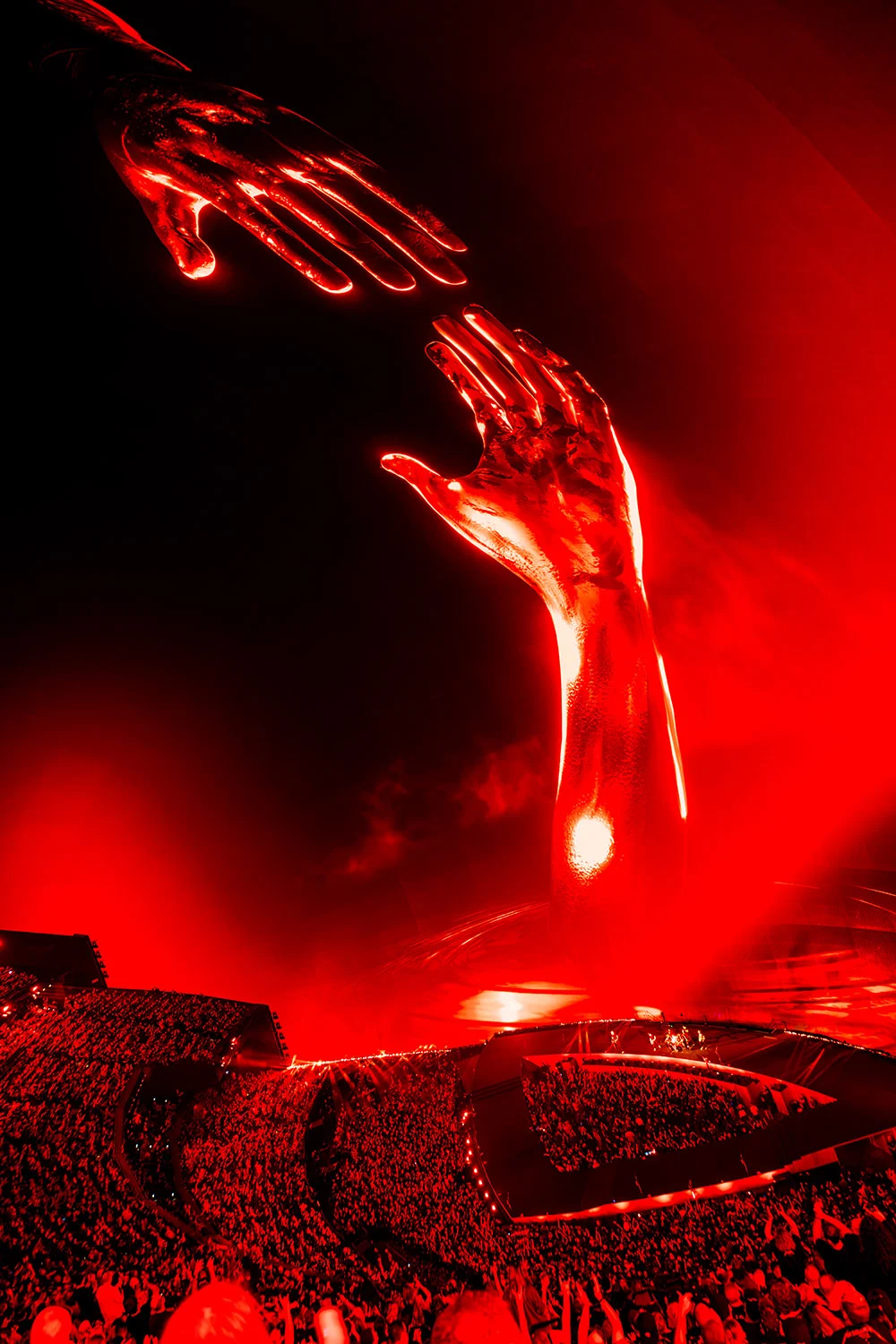
The sea of black T-shirts swelled across the Las Vegas Strip on Saturday night as Metallica completed the second installment of its sold-out opening weekend for the Life Burns Faster residency at the Sphere. Surrounding the venue’s signature Snake Pit and cascading up the steep architectural tiers of the seating bowl, the predominantly middle-aged male demographic appeared even larger on Saturday than during the residency’s debut 48 hours prior. This performance marked the second half of the band’s inaugural "No Repeat Weekend" at the high-tech venue, kicking off an ambitious 22-show run scheduled to extend through March 2027.
The high-stakes residency arrives on the heels of Metallica’s successful M72 World Tour concept, introduced in 2023, which requires fans to attend two distinct performances in the same city separated by an off-day, promising zero set-list repetition. However, the economic and technical stakes at the Sphere are considerably higher than traditional stadium settings. Resale ticket prices for upcoming single-night admissions have hovered between the high $600s and low $700s, with prime Saturday slots routinely crossing the $1,000 threshold. Meanwhile, two-night passes for subsequent weekends command starting prices in excess of $1,100, placing a heavy financial burden on the dedicated fanbase.
Acknowledging Fan Investment and Economic Realities
Frontman James Hetfield addressed the financial and temporal commitment directly during Saturday’s performance, acknowledging the dedication required to attend the multi-night engagement.

"We’re grateful you’ve taken the time, energy, and the cash," Hetfield told the packed arena, speaking to an audience acutely aware of the premium pricing model governing modern residency entertainment in Las Vegas.
Unlike standard concert tours where legacy acts rely on a dependable, unchanging greatest-hits package, Metallica’s residency format demands a compelling artistic justification for the second ticket. By delivering 15 entirely distinct songs and a completely new two-hour visual accompaniment, Saturday’s set list was meticulously engineered to satisfy hardcore collectors while visually captivating casual attendees drawn by the technological novelty of the Sphere.
Chronological Comparison: Night One Versus Night Two
The structural contrast between the two opening nights highlighted the band’s deep catalog and careful pacing. Thursday’s launch leaned heavily into aggressive thrash metal, featuring established staples such as Sad but True, Nothing Else Matters, Seek & Destroy, Master of Puppets, and the nearly 10-minute epic …And Justice for All.
In contrast, Saturday’s performance delivered massive melodic and atmospheric hits, including The Unforgiven, For Whom the Bell Tolls, the title track One (also drawn from …And Justice for All), and the band’s ubiquitous commercial breakthrough, Enter Sandman.

Crucially, Saturday also introduced rare deep cuts that thrilled long-time followers. Devil’s Dance, originating from the 1997 album Reload, made its first live appearance since 2008, while the sprawling Load epic The Outlaw Torn returned to the stage for the first time since 2019.
Emotional Tributes and Historical Echoes
A poignant emotional anchor of the evening arrived following a stirring rendition of The Unforgiven. The band transitioned seamlessly into Orion, dedicating the intricate instrumental to founding bassist Cliff Burton, who co-wrote the piece. Burton tragically died in a tour bus accident in Sweden on September 27, 1986. The Sphere residency opening weekend coincided precisely with the 40th anniversary of Burton’s passing, transforming the high-tech venue into a space for genuine collective mourning and remembrance. Amidst state-of-the-art visuals capable of rendering any object larger than life, the tribute stood out as one of the weekend’s most grounded human moments.
The architectural geometry of the two set lists mirrored each other with surprising precision. Thursday opened with the aggressive assault of Battery, whereas Saturday answered with Blackened. Both nights deployed major emotional releases at the ninth position: Thursday utilized Nothing Else Matters ahead of the instrumental The Call of Ktulu, while Saturday positioned The Unforgiven at the same coordinate, followed by Orion.
Furthermore, drummer Lars Ulrich’s rotational journey across the venue’s irregular circular stage inverted the choreography of opening night. While Thursday progressed sequentially through drum-kit positions one, two, and three, Saturday reversed the path, beginning at position three, moving to two, and concluding at one.

Production Design and Sphere Integration
Longtime Metallica production designer and show director Dan Braun leveraged the Sphere’s advanced exosphere and interior wraparound LED screen to construct distinct visual worlds for individual tracks. During the performance of material from 72 Seasons, the venue displayed towering, damaged childhood memories, featuring gigantic vintage television sets, tiny human figures stranded within glowing screens, and an enormous broken crib resting against a toxic yellow expanse. The visual design underscored a core theme of the tour: ordinary domestic objects rendered threatening through monumental scale.
The visual immersion reached a peak during The Outlaw Torn, where a devastated city rendered in arterial red stretched across the entirety of the interior dome before folding inward to swallow the audience in a swirling vortex. Similarly, For Whom the Bell Tolls functioned as an icy homage to the band’s Cold War-era rise, projecting a bombed-out cityscape, a fighter aircraft cockpit, trench-bound soldiers, and a sky suddenly inundated with falling birds.
This visual pairing carried historical significance for the band. Exactly 35 years prior, on September 28, 1991, Metallica performed For Whom the Bell Tolls and One back-to-back during their legendary Monsters of Rock set at Moscow’s Tushino Airfield. Replicating that exact sequence inside the Sphere effectively wrapped the audience inside a digital battlefield, translating a historical stadium moment into an enclosed, hyper-realistic sensory experience.
The evening culminated with Enter Sandman, underscored by a massive blue orb emerging on the dome’s interior. The sphere expanded, transitioning from blue to blinding white and ultimately fiery red, creating the optical illusion that an independent celestial body was consuming the entire venue.

Broader Implications and Future Outlook
As the dust settled on the opening weekend, industry analysts and music critics alike began evaluating the broader implications of Metallica’s residency strategy. The proven success of the "No Repeat Weekend" framework within a fixed-location technological incubator raises significant logistical questions regarding the remainder of the 22-date run.
Chief among these concerns is the sustainability of the rotating set lists. It remains to be seen whether upcoming Thursday and Saturday dates will continue to feature entirely unique song selections, or if rare revivals like Devil’s Dance and The Outlaw Torn will cement themselves into the permanent residency blueprint or vanish back into the archives. Moreover, given the immense complexity of programming custom visual packages tailored to specific tracks, logistics will dictate how much flexibility the production crew maintains as the residency progresses.
Ultimately, Metallica’s Sphere debut has successfully answered the immediate proof-of-concept challenge. By balancing steep financial demands with an uncompromising commitment to catalog variety and technological spectacle, the heavy metal pioneers have established a high benchmark for residency entertainment in Las Vegas. Whether fans will continue returning week after week to experience a constantly shifting sonic and visual landscape remains the defining mystery of an engagement slated to run well into 2027.








