Kang Muslim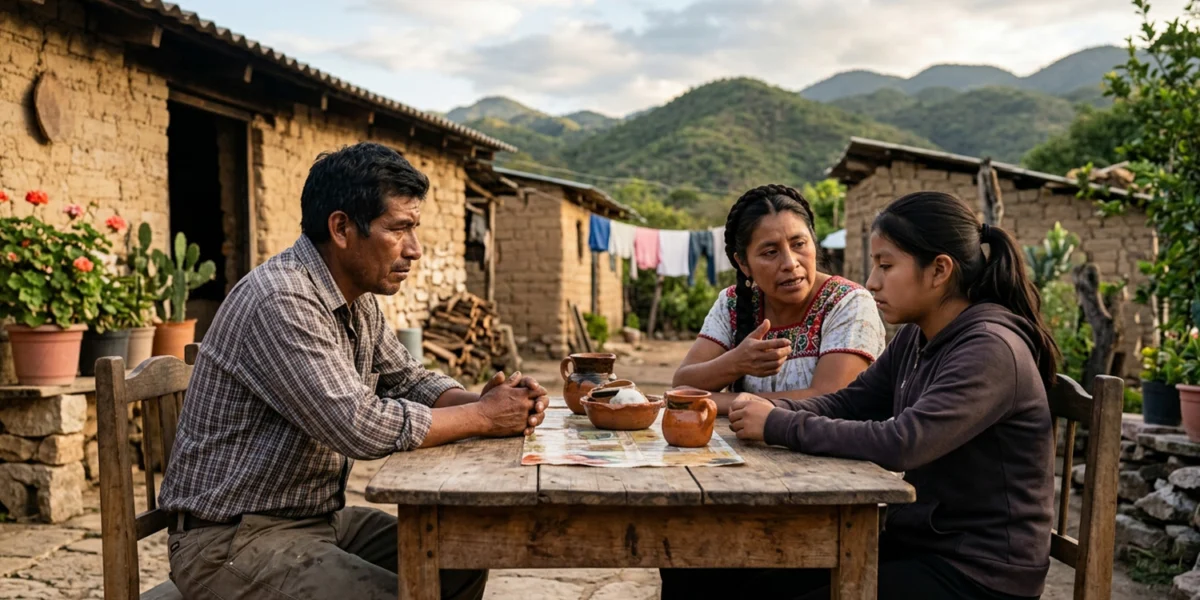
A comprehensive investigation into the social fabric of rural Mexico has revealed a significant disconnect between how parents explicitly report their views on gender-based violence and how they discuss those same issues in private, everyday conversations. The study, led by researcher Andrea S. Medrano and published in the journal Sex Roles, highlights a complex duality: while rural Mexican parents often reject traditional machismo and rape myths when presented with formal surveys, they frequently revert to gendered assumptions regarding risk, responsibility, and victimhood when discussing safety with their children. This research provides a critical look at the transmission of gender norms in environments characterized by geographic isolation, limited institutional resources, and deep-seated cultural traditions.
Contextualizing Sexual Violence in Rural Mexico
To understand the findings of Medrano and her colleagues, it is essential to examine the broader landscape of gender-based violence in Mexico. The State of Mexico (Estado de México), where the study was conducted, has historically faced significant challenges regarding women’s safety. According to data from the Executive Secretariat of the National Public Security System (SESNSP), the State of Mexico frequently records some of the highest rates of femicide and sexual assault in the country. However, these official statistics often fail to capture the full scope of the problem in rural and Indigenous communities.
The researchers argue that psychological studies on sexual violence have long suffered from a "WEIRD" bias—focusing disproportionately on Western, Educated, Industrialized, Rich, and Democratic populations. By shifting the lens to rural Mexico, the study addresses a critical gap in global psychological literature. In these regions, sexual violence is often shrouded by rural underreporting, a profound distrust of law enforcement, and a lack of accessible medical or legal services. For many women in these communities, the social stigma of reporting an assault can be as damaging as the act itself, leading to a culture of silence that masks the true prevalence of harm.
Methodology: A Mixed-Methods Approach
The study employed a mixed-methods design to capture both quantifiable attitudes and the nuanced "implicit logics" used by parents. The data collection took place between April and May 2021 in a small, largely Indigenous rural town in the State of Mexico.
Quantitative Phase: The Survey
The research team surveyed 200 parents of adolescents, recruited through two public schools. The demographic profile of the participants reflected the socio-economic realities of the region:
- Gender: A majority of the participants were women.
- Occupation: Many identified as homemakers.
- Socio-economic Status: Most participants were living in poverty.
- Education: The majority had an elementary-level education or less.
Participants completed a 60-90 minute paper-and-pencil survey in Spanish. Two primary scales were utilized: the Traditional Machismo and Caballerismo Scale and the Illinois Rape Myth Acceptance Scale-Short Form. These tools allowed researchers to measure two distinct forms of masculinity: "traditional machismo," which emphasizes male dominance and hierarchy, and "caballerismo," which focuses on chivalry, family responsibility, and emotional connection.
Qualitative Phase: The Interviews
Following the survey, the authors conducted in-depth interviews with a subsample of 16 parents (12 mothers and four fathers). These interviews were designed to move beyond the "yes or no" format of a survey, allowing parents to speak freely about community violence, neighborhood risks, and the advice they give their children. This phase was crucial for identifying the "implicit reproduction" of gendered assumptions that surveys often miss.
The Duality of Masculinity: Machismo vs. Caballerismo
One of the study’s central contributions is the distinction between machismo and caballerismo. While both concepts are rooted in traditional gender roles, they impact attitudes toward sexual violence in vastly different ways.
Traditional machismo was found to be a strong predictor of rape myth acceptance. Parents—both men and women—who endorsed beliefs tied to male toughness and dominance were significantly more likely to agree with statements that minimize sexual violence or shift blame onto the victim. Interestingly, while men reported higher levels of traditional machismo than women, the link between these beliefs and the acceptance of rape myths was actually stronger among women. This suggests that women play a pivotal role in the intergenerational transmission of patriarchal norms, often viewing these beliefs as a necessary framework for navigating a dangerous society.
Conversely, caballerismo was linked to lower levels of rape myth acceptance. The values of respect, family protection, and emotional intimacy inherent in caballerismo appear to function as a protective factor, fostering attitudes that are more empathetic toward victims and less tolerant of harassment. This finding suggests that traditional cultural frameworks are not inherently harmful; rather, the specific emphasis on dominance within those frameworks is what correlates with the justification of sexual violence.
The Disconnect: Rejection in Theory, Reproduction in Practice
The most striking finding of the study was the "tension between explicit rejection and implicit reproduction." On the standardized surveys, parents generally did not endorse high levels of rape myths. They frequently rejected the idea that women are responsible for their own assaults or that harassment is a minor issue.
However, the qualitative interviews painted a different picture. When discussing the practicalities of raising children in a rural environment, parents often relied on "rape-myth logic" without realizing it. This was manifested in several key themes:
1. Gendered Patterns of Risk
Parents described the world as a place where men and women face fundamentally different dangers. While men were seen as being at risk of general public violence or physical altercations, women were portrayed as uniquely vulnerable in both public and private spheres. This vulnerability was often treated as an immutable fact of life rather than a result of systemic inequality.
2. The Burden of Responsibility
In conversations about safety, the responsibility for preventing sexual violence was almost exclusively placed on girls and women. Parents emphasized the need for daughters to:
- Monitor their clothing and appearance.
- Avoid being alone in public spaces.
- Constantly surveil their surroundings.
- Adhere to strict behavioral codes to avoid "provoking" unwanted attention.
By framing safety as a matter of individual female behavior, the parents implicitly reinforced the myth that the victim is responsible for managing the perpetrator’s potential for violence.
3. Protective Socialization
The study identified "protective socialization" as a primary parenting strategy. Parents reported teaching their daughters to be hyper-vigilant while teaching their sons to be "respectful" and not to be "machista." While the advice to sons represents a conscious effort to challenge harmful norms, the advice to daughters often remains rooted in the very myths the parents claimed to reject on surveys.
Analytical Implications: The Limits of Standardized Testing
The researchers noted that standardized tools like the Illinois Rape Myth Acceptance Scale might not fully capture the cultural nuances of rural Mexico. Traditional scales often focus on "Western" myths, such as the idea that a woman "wanted it" because of her sexual history. In rural Mexican communities, however, myths may manifest through "maternal blame" (blaming a mother for not supervising her daughter) or narrow definitions of what constitutes "real" rape (excluding marital rape or harassment by known community members).
This suggests that future interventions and academic studies must be culturally tailored to identify and address the specific ways in which victim-blaming persists in non-Western contexts.
Broader Impact and Recommendations
The study’s findings have significant implications for public health and social policy in Mexico. If parents are the primary source of information regarding gender and safety, then their "implicit" beliefs will continue to shape the next generation’s understanding of consent and accountability.
Institutional Distrust
The geographic isolation of the town studied, combined with a general distrust of authorities, means that families often feel they must rely on themselves for protection. When the state fails to provide a reliable legal or protective framework, parents default to traditional, gendered survival strategies. To change these attitudes, there must be a parallel improvement in institutional reliability and the accessibility of justice for rural women.
Educational Interventions
The authors suggest that school-based programs should involve parents, not just students. Since parents are already attempting to teach their sons not to be "machista," there is an opening for community-led education that bridges the gap between their explicit values (rejecting violence) and their implicit advice (victim-blaming).
Future Research
The study calls for more mixed-methods research in non-WEIRD populations. By understanding how gendered risks are communicated in the home, researchers can better design programs that target the root causes of underreporting and the social normalization of harassment.
Conclusion
The study by Medrano and colleagues serves as a reminder that cultural change is rarely a linear process. In the rural communities of the State of Mexico, the rejection of machismo is underway in the public and formal sphere, yet the private language of the home remains tethered to older, gendered logics of risk. Bridging this gap—moving from a theoretical rejection of rape myths to a practical dismantling of victim-blaming—is the next essential step in ensuring the safety and dignity of women in rural Mexico. The research underscores that while "caballerismo" offers a more positive path forward for masculinity, the deep-seated habit of placing the burden of safety on women remains a formidable barrier to true gender equality.