Layla Zulfa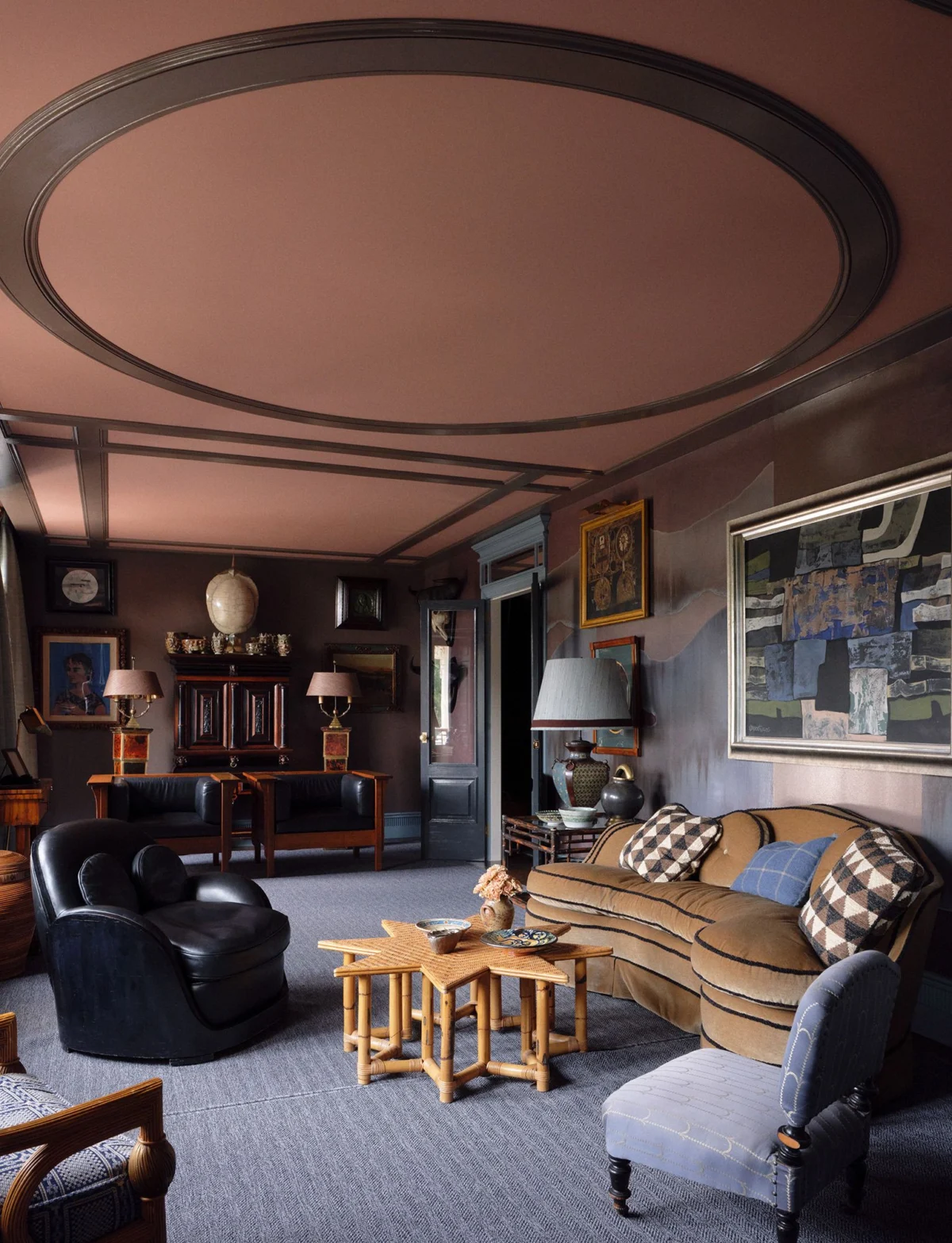
At the apex of a distinguished career that spans over three decades, Madrid-born interior designer Lorenzo Castillo has transitioned from a celebrated decorator of elite residences into a pivotal figure in the pedagogical landscape of global design. Born in 1968, Castillo has spent his professional life bridge-building between the rigid classicism of the past and the fluid, eclectic sensibilities of the 21st century. His recent projects, including a deeply personal renovation in Oviedo, the capital of Asturias, serve as a culmination of his philosophy: that the design of one’s domestic environment is not merely an exercise in aesthetics, but a fundamental prerequisite for human well-being.

The Oviedo project stands as a testament to this maturation. By merging two separate apartments into a singular, sprawling residence overlooking the historic Campo de San Francisco park, Castillo has created an architectural dialogue between the stately character of early 20th-century French-influenced Spanish urbanism and a contemporary interior narrative. The residence serves as a repository for a lifetime of collecting, featuring significant works by Jansen, Gabriella Crespi, and Anthony Redmile, alongside the designer’s own custom-made furniture collections.
A Chronology of Artistic Development
Castillo’s journey began in an atmosphere of creative curiosity, fostered significantly by his maternal grandmother. In an era when international design publications were rare and prohibitively expensive in Spain, his grandmother’s subscription to the American edition of Architectural Digest provided the young Castillo with his first exposure to the principles of high-end global design. This early exposure was complemented by his mother’s penchant for frequent redecoration, which instilled in him the understanding that domestic spaces are dynamic, not static.

By the 1990s, Castillo had begun to formalize his artistic identity. His early foray into the antique trade, conducted alongside his brother Santiago in Madrid’s Barrio de las Letras, was initially met with skepticism from established circles. At the time, the Spanish market viewed antiques primarily as objects of historical collection rather than as functional elements of a modern interior. Castillo’s intervention was radical: he began to juxtapose 17th and 18th-century European antiques with mid-century modern furniture, specifically from the 1960s and 1970s. This approach, heavily influenced by the work of David Hicks and later by the opulent, layered aesthetics of Renzo Mongiardino, effectively redefined the Spanish decorative lexicon.
The Philosophical Shift: From Commercial Decorator to Educator
While Castillo maintains a high-profile practice serving an international clientele, his current focus has pivoted toward the dissemination of design knowledge. This shift is evidenced by his recurring role as an educator and judge on the Spanish television competition DecoMasters, as well as his forthcoming publication outlining the core fundamentals of interior design.

Castillo’s approach to teaching is grounded in the belief that design should not be reserved for the ultra-wealthy. He argues that the principles of light, color, and spatial flow are universal and accessible. By analyzing the way he manages light in his own home—utilizing darker, cooler palettes in rooms with limited sunlight to foster intimacy, and bright, ochre-and-butter tones in sun-drenched spaces—he demonstrates that effective design is a logical application of spatial science rather than a capricious whim.
Supporting Data: The Economic and Cultural Impact of Interior Design
The interior design industry in Europe has seen a notable shift over the last decade. Market analysis indicates that the demand for "bespoke luxury" has grown by approximately 5.4% annually since 2018, as homeowners increasingly seek to personalize their living environments in the wake of the COVID-19 pandemic. Castillo’s focus on the "home as a sanctuary" mirrors a broader trend in European real estate, where property value is increasingly tied to the flexibility and emotional resonance of interior spaces.

Furthermore, his advocacy for the preservation of historical architectural elements—such as the glass-enclosed galleries typical of Asturian buildings—aligns with a growing European movement toward "adaptive reuse." By modernizing historic shells rather than gutting them, designers like Castillo contribute to the preservation of local architectural heritage while simultaneously updating the living standards of aging urban centers.
The Role of Art and Cinema in Design Inspiration
Castillo’s methodology is heavily informed by a cross-disciplinary approach. He frequently cites cinema—specifically the works of Luchino Visconti and Stanley Kubrick—as his primary sources of inspiration. His recent, repeated viewing of the 1971 film Death in Venice is not merely a hobby; it is a clinical study in composition, texture, and the use of authentic period materials.

In his Oviedo home, this translates into a meticulous layering of artifacts. A 17th-century Dutch cabinet might sit alongside a collection of Senegalese and Gambian art, which in turn shares space with a portrait by 19th-century painter Carlos de Haes. For Castillo, this "chaos" is carefully curated. He distinguishes between social spaces—designed to reflect his public persona—and private, restricted areas, such as his personal duplex within the apartment. This distinction highlights a crucial, often overlooked aspect of interior design: the psychological necessity of privacy and the "microcosm" as a defense against the pressures of public life.
Institutional and Peer Reactions
While Castillo has occasionally been viewed as an outlier by traditionalist antique dealers and modernist minimalists alike, his impact on the Spanish design scene is widely acknowledged. His ability to navigate the tension between the "frivolous" reputation of decoration and the "serious" nature of architectural history has earned him a unique position. Peers have noted that his capacity to blend materials—such as brushing gold to create an artificial patina or mixing silver and gold to balance warm and cool light—demonstrates a technical mastery that sets him apart from contemporary decorators who rely on singular, minimalist palettes.

Broader Implications for the Future of Design
The implications of Castillo’s work extend beyond the private residence. His career trajectory suggests a future where the distinction between "interior decorator" and "cultural historian" becomes increasingly blurred. As the industry moves away from the post-war obsession with extreme minimalism, there is a visible resurgence of interest in ornamentation, texture, and historical narrative.
Castillo’s assertion that "the next house will be the best one" is not just a nod to his own ambition; it reflects a restless, iterative process that defines the best of contemporary design. His commitment to passing on the "torch" to the next generation of designers is a critical development for the industry. By framing design as a pursuit of happiness rather than a display of wealth, he is helping to demystify the field, making it an essential component of urban development and personal mental health.

In conclusion, Lorenzo Castillo’s work represents a sophisticated synthesis of European history, personal narrative, and spatial engineering. His ongoing projects in Oviedo and his upcoming literary contributions mark a significant phase in his career, one defined by the desire to institutionalize his unique perspective on what it means to dwell. As the design world continues to grapple with the tension between technological advancement and the need for human-centric spaces, the lessons provided by his practice—the importance of light, the value of historical context, and the fundamental necessity of comfort—remain more relevant than ever.