Kang Muslim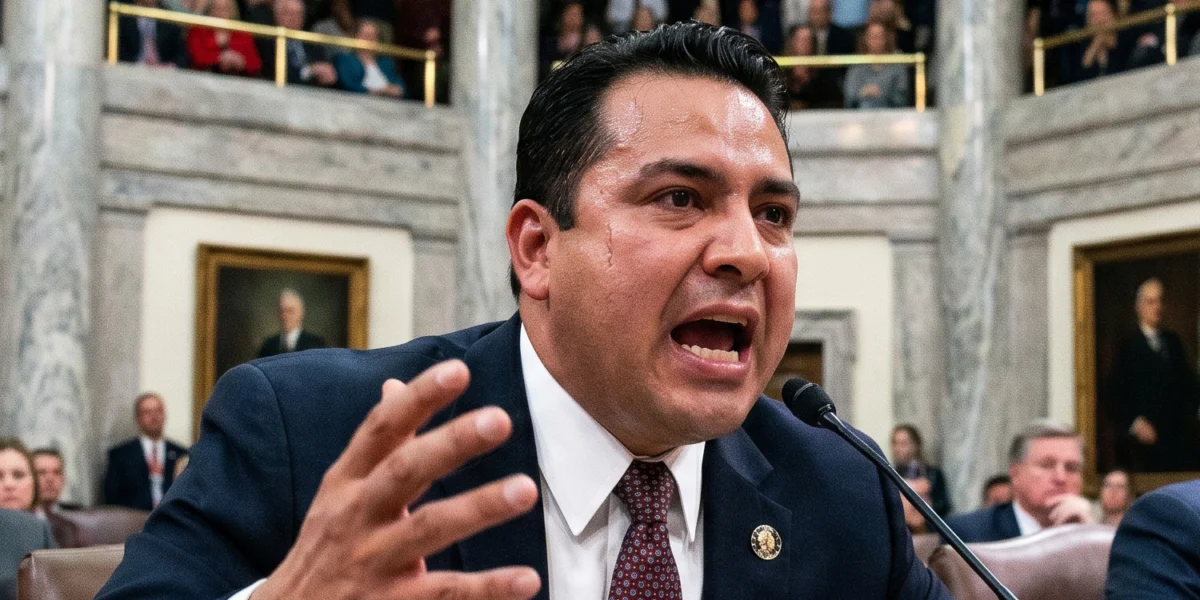
The widespread introduction of video cameras and livestreaming technology into state legislative chambers has failed to alter the fundamental voting behavior of politicians or exacerbate political polarization, according to a comprehensive study published in the American Political Science Review. The research, which analyzed decades of data from across the United States, challenges a long-standing belief among political observers and lawmakers that the presence of a "public eye" through continuous broadcasting incentivizes grandstanding and disrupts the functional mechanics of government.
For nearly half a century, the impact of transparency on democratic institutions has been a subject of intense academic and practical debate. Proponents of increased visibility have historically argued that "sunlight is the best disinfectant," suggesting that when citizens can monitor their representatives in real-time, those representatives are more likely to behave moderately and seek compromise to avoid public backlash. Conversely, critics have long feared that cameras transform the floor of a legislature into a stage for political theater, where members prioritize viral moments and appeals to extremist bases over the nuanced, often tedious work of policymaking.
The new findings, led by political scientists Jeffrey Lyons of Boise State University and Josh Ryan of Utah State University, suggest that both the hopes of transparency advocates and the fears of critics may be overstated. By examining the transition to gavel-to-gavel coverage in 91 different state legislative chambers, the researchers found that the arrival of cameras had no statistically significant impact on how laws are made or how partisan the environment becomes.
The C-SPAN Legacy and the National Debate
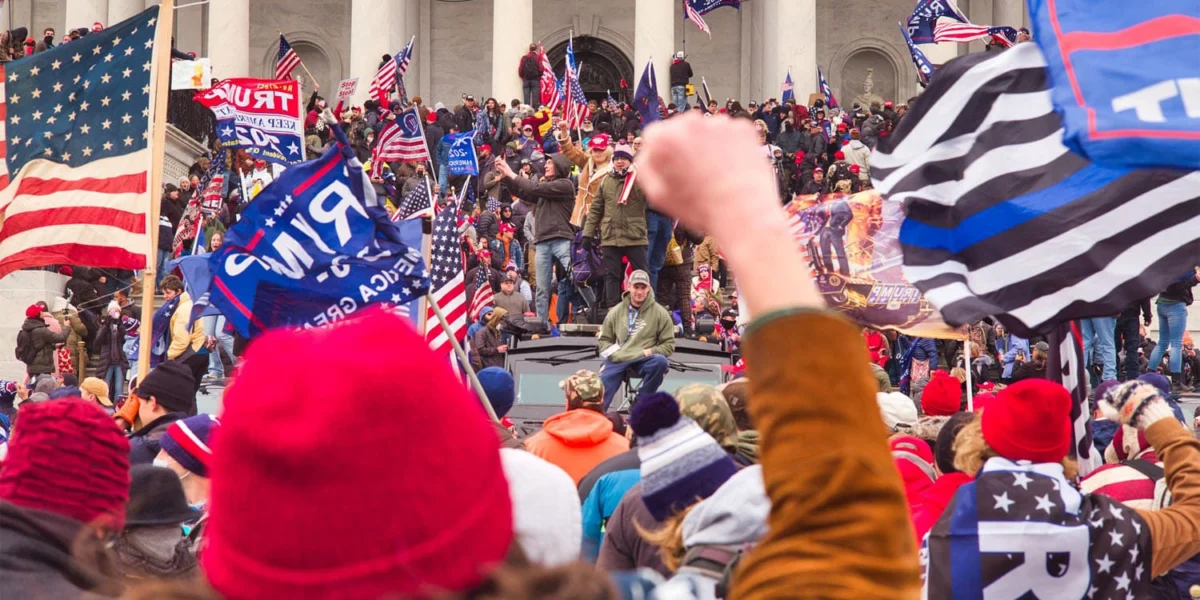
The suspicion that video coverage breeds dysfunction is largely rooted in the history of the United States Congress. When the House of Representatives first allowed C-SPAN to broadcast its proceedings in 1979, the move was met with immediate controversy. While intended to provide public access, many observers noted that the timing coincided with a sharp increase in partisan vitriol.
Figures like Newt Gingrich famously utilized the late-night "special orders" period—when the chamber was empty but the cameras were still rolling—to deliver fiery speeches aimed at a national television audience. This era marked a shift in how legislative proceedings were perceived, leading many to conclude that the cameras themselves were the catalyst for the rising polarization of the 1980s and 1990s.
The late Representative Don Young, a long-serving Republican from Alaska, once famously lamented the introduction of television to the House floor, calling it "probably the worst thing that happened to the Congress." Young and his contemporaries argued that the cameras discouraged the informal, cross-aisle conversations that were once the bedrock of legislative compromise. However, as Lyons and Ryan point out in their study, the national government provides a poor dataset for testing this theory. Because the House and Senate each introduced cameras only once, it is impossible to separate the impact of the broadcasts from the broader cultural, economic, and technological shifts occurring simultaneously in American society.
Methodology: State Legislatures as Natural Laboratories
To solve this analytical problem, the research team shifted their focus to the 50 U.S. states. Unlike the federal government, state legislatures adopted video transparency at vastly different times and through different technologies. This staggered rollout created a "natural experiment" that allowed researchers to compare states that had cameras with those that did not, as well as to track individual states before and after the cameras were installed.
The study focused specifically on "gavel-to-gavel" coverage—continuous, unedited broadcasts that capture the entirety of a floor session. This distinction is crucial, as it excludes selective media coverage or edited highlights, which might bias the results. The dataset spanned a wide chronological range: some states, such as New York and California, were early adopters of televised proceedings in the late 1980s and early 1990s. Others did not provide continuous coverage until the COVID-19 pandemic forced a transition to digital livestreams in 2020 and 2021 to maintain public access during lockdowns.
By gathering data on 91 legislative chambers, the researchers were able to control for regional trends and focus purely on the "camera effect." They utilized a "difference-in-differences" statistical approach, a robust method used to determine the causal impact of a specific change by comparing the treatment group (states with cameras) against a control group (states without cameras) over the same period.
Measuring Legislative Health and Individual Behavior
To determine whether cameras "break" the policymaking process, the researchers examined several key indicators of legislative health. One of the primary metrics was the timely passage of state budgets. A late budget is a classic sign of legislative breakdown; it suggests that partisan gridlock has reached a point where the government cannot agree on its most basic responsibilities, often leading to credit downgrades or the suspension of public services.
The team also measured the "legislative output"—the total volume of bills passed into law. The theory was that if cameras encouraged grandstanding and obstructionism, the number of successful bills would decrease as members spent more time debating for the audience and less time negotiating.
Furthermore, the study looked at polarization through the lens of roll-call voting records. They calculated "party unity" scores to see if members began voting more frequently with their own party leadership after cameras were introduced. They also utilized ideological scaling to see if individual lawmakers’ voting records drifted toward the extremes of the political spectrum.
Finally, the researchers applied "Legislative Effectiveness Scores." These scores, common in political science, measure a lawmaker’s ability to move their own agenda through the committee process and onto the floor for a final vote. If a politician were to abandon serious policy work in favor of performing for a television or internet audience, their effectiveness score would theoretically show a marked decline.
Empirical Findings: Stability Amidst Transparency
Despite the long-held fears of political scientists and veteran lawmakers, the data revealed a striking lack of impact. Across almost every metric, the introduction of gavel-to-gavel coverage left legislative behavior unchanged.
- Budgetary Stability: States did not experience an increase in late budgets after cameras were installed. The presence of a public broadcast did not appear to make the high-stakes negotiations surrounding state finances any more or less contentious.
- Legislative Productivity: The volume of bills passed remained consistent. Lawmaking did not ground to a halt, nor did it accelerate; the "output" of the legislatures followed existing historical trends regardless of the cameras.
- Ideological Consistency: Individual lawmakers did not become more extreme in their voting patterns. A representative who was a moderate before the cameras arrived generally remained a moderate afterward.
- Party Loyalty: There was no statistically significant increase in party-line voting. Lawmakers did not feel an increased pressure to "perform" loyalty for their party base in a way that altered their actual votes on the floor.
The researchers even tested whether the medium of the broadcast mattered. They compared the impact of traditional television broadcasts from the 1990s with the more recent shift to internet livestreams and social media integration. Even with the rise of "viral" culture and the ability to share clips instantly online, the fundamental voting behavior of state legislators remained steady.
Nuance and the "Backroom" Hypothesis
While the study’s findings are definitive regarding voting and productivity, the authors acknowledge certain limitations that warrant further investigation. The research primarily focused on what politicians do (their votes and bill passages) rather than how they say it.
It remains possible that the tone and rhetoric used during floor debates become more abrasive when cameras are present. A politician might deliver a scathing, partisan speech for the benefit of the cameras—and the subsequent social media clip—while still voting for a bipartisan compromise once the microphones are turned off. In this scenario, the "theater" exists, but it does not successfully derail the actual policy outcomes.
Another possibility raised by the study is the "relocation" of negotiations. If the legislative floor becomes a site for public performance, serious work may simply move elsewhere. Lawmakers might retreat to private offices, hallways, or local restaurants to conduct the real business of compromise, away from the watchful eye of the camera. If this is the case, transparency measures might not be changing the nature of the work, but rather the location where the work occurs.
Implications for Modern Governance
The relevance of this study extends far beyond state capitals. In the current era, transparency is being demanded at every level of government. From local school boards to city councils and zoning commissions, the expectation that meetings be livestreamed has become the new standard for democratic participation.
Opponents of these measures often cite the "chilling effect" on collaboration or the fear that public meetings will descend into chaos if every word is recorded. The data from the American Political Science Review suggests these fears may be overblown. If state legislatures—which handle highly contentious issues like reproductive rights, gun control, and multi-billion dollar budgets—can maintain their functional integrity under continuous video coverage, it is likely that local agencies can as well.
The study provides a powerful counter-argument to officials who resist transparency on the grounds of "institutional efficiency." It suggests that the institutional norms of lawmaking are stronger than the superficial pressures of being on camera. Politicians, it seems, are driven more by their ideological commitments, the needs of their constituents, and the internal power structures of their parties than by the mere presence of a recording device.
Conclusion and Future Research
The research by Lyons and Ryan offers a reassuring perspective on the health of legislative institutions. It suggests that transparency and functionality are not mutually exclusive. As digital technology continues to lower the barrier for public monitoring of government, the "theatrics" of politics may continue to occupy the headlines, but the "mechanics" of politics appear to remain resilient.
Future studies may look deeper into the career trajectories of "media-savvy" politicians to see if cameras provide a springboard for individual advancement, even if they don’t change collective legislative outcomes. Additionally, researchers may begin to analyze the text of floor speeches using natural language processing to determine if the language of politics is indeed becoming more polarized, even if the actions of politics remain stable.
For now, the evidence suggests that the cameras can keep rolling without fear of breaking the gears of government. The "sunlight" of transparency may not have been the panacea its advocates hoped for, nor the poison its critics feared, but rather a benign addition to the modern democratic landscape.