Jono Maryono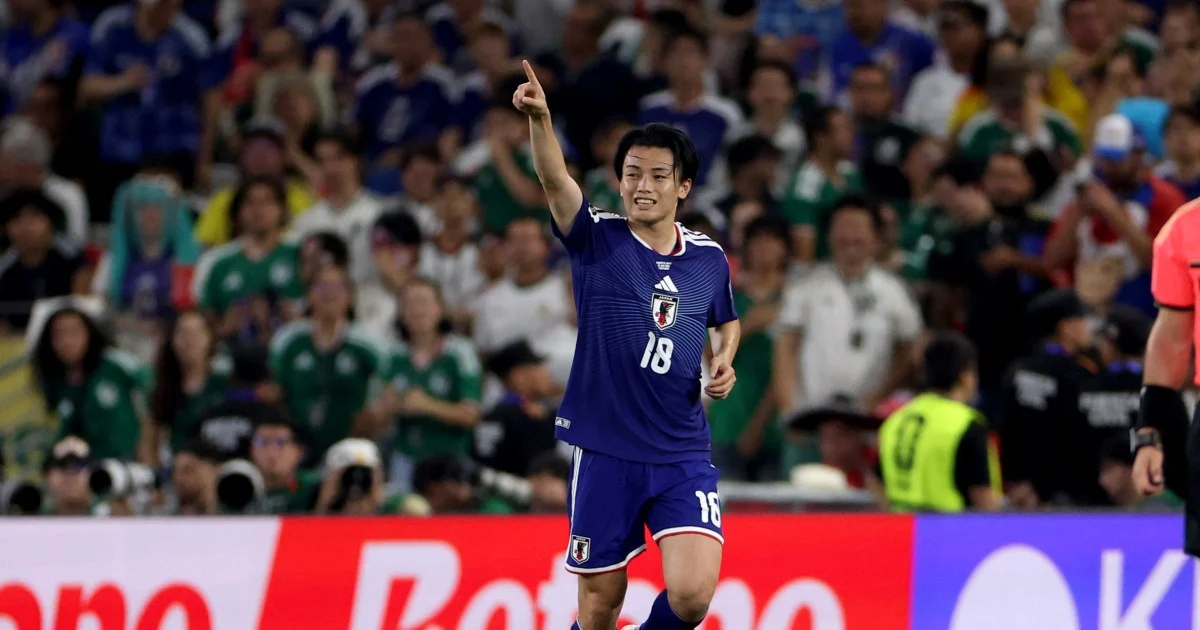
Japan delivered a commanding performance on Saturday, marking the 1,000th game in the history of the FIFA World Cup with a decisive 4-0 triumph over Tunisia. This crucial victory propels the Asian powerhouse into a strong position, joint on four points with the Netherlands at the summit of Group F, significantly enhancing their prospects of advancing to the knockout stage. The resounding win also confirmed Tunisia’s elimination from the tournament, extinguishing their hopes of progressing beyond the group phase.
A Milestone Occasion with a Statement Performance
The 2026 FIFA World Cup, co-hosted by Canada, Mexico, and the United States, reached a significant milestone with its 1,000th fixture, a match that saw Japan seize the opportunity to make a profound statement of intent. Held at the Estadio Monterrey in Guadalupe, Mexico, the game was more than just a tactical battle; it was a celebration of the tournament’s rich history and a showcase of Japan’s growing prowess on the global stage. The atmosphere was electric, with fans from both nations adding their voices to the historical significance of the occasion.
The Samurai Blue, renowned for their disciplined play and attacking flair, demonstrated both in abundance against the North African side. The foundation of their victory was laid by a stellar offensive display, spearheaded by Ayase Ueda, who etched his name onto the scoresheet twice. The impressive offensive contribution was further bolstered by single goals from Daichi Kamada and Junya Ito, creating a comprehensive and unassailable lead. This performance not only secured three vital points but also sent a clear message to their rivals in Group F and across the tournament.
Unpacking the Goals: A Tactical Masterclass
Japan’s path to victory was characterized by clinical finishing and astute tactical execution. Ayase Ueda opened the scoring, demonstrating his predatory instincts inside the penalty area. His first goal, a testament to his sharp movement and composure, set the tone for the match, injecting confidence into the Japanese squad.
The lead was then doubled by Daichi Kamada, a midfielder known for his vision and ability to influence the game from various attacking positions. Kamada’s goal showcased his technical skill, further consolidating Japan’s advantage and putting Tunisia under immense pressure.

The third goal, a crucial strike that effectively sealed the game, came from Junya Ito. Ito, a dynamic winger with blistering pace and a keen eye for goal, provided another moment of brilliance. His contribution not only added to the scoreline but also highlighted the collective attacking strength of the Japanese team, with multiple players contributing to the goal tally.
The brace from Ayase Ueda in the second half was the final flourish, putting the icing on the cake of a dominant performance. His second goal was a demonstration of his enduring threat and ability to capitalize on opportunities, further cementing his status as a key player for Japan in this tournament. The collective effort of these four goals painted a picture of a cohesive and highly motivated Japanese side.
Group F Dynamics: A Tight Race for Progression
With this emphatic victory, Japan now sits level on points with the Netherlands in Group F. Both nations have accumulated four points from their opening fixtures, positioning them as the frontrunners to secure a place in the coveted Round of 32. The Netherlands, having also secured positive results, presents a significant challenge for Japan in the race for the top spot.
For Tunisia, this defeat marks a heartbreaking end to their World Cup aspirations. Having failed to secure any points from their initial matches, they are now mathematically eliminated from contention for the knockout stages. This outcome will undoubtedly be a bitter pill to swallow for the Tunisian team and their passionate fanbase, who had arrived at the tournament with hopes of making a deep run. The early exit underscores the highly competitive nature of the World Cup and the fine margins that often decide qualification.
Historical Context: The 1,000th World Cup Match
The significance of this particular fixture extends beyond the immediate tournament implications. The 1,000th game in the history of the FIFA World Cup is a testament to the enduring legacy and global appeal of the sport’s premier competition. Since its inception in 1930, the World Cup has provided countless memorable moments, fostered national pride, and united billions of people across the globe.
The tournament has evolved dramatically over the decades, from its humble beginnings with just 13 participating nations to the expanded format of the 2026 edition, featuring 48 teams. This growth reflects the increasing globalization of football and the sport’s ability to transcend cultural and geographical boundaries. Japan’s commanding performance in this historic milestone match adds another chapter to the rich narrative of the World Cup.

Japan’s World Cup Journey: A Trajectory of Growth
Japan’s participation in the FIFA World Cup has been a story of consistent development and increasing competitiveness. Since their debut in 1998, the Samurai Blue have become a regular fixture in the tournament, often exceeding expectations and demonstrating a commitment to tactical innovation and player development. Their performances have steadily improved, with notable runs to the Round of 16 in 2002 (as co-hosts), 2010, and 2018.
This current generation of Japanese players, with talents like Ueda, Kamada, and Ito, represents a blend of experience and youthful exuberance. Their ability to compete at the highest level is a testament to the robust development programs within Japanese football, which have focused on technical proficiency, tactical discipline, and a strong work ethic. The team’s performance against Tunisia is indicative of this continuous upward trajectory.
Tunisia’s World Cup Aspirations and Challenges
Tunisia, a consistent participant in World Cup tournaments, entered the 2026 edition with ambitions of making a significant impact. The Carthage Eagles have a proud footballing history in Africa, having participated in six previous World Cups. Their squad, a mix of domestic and international talent, aimed to leverage their physicality and experience to navigate the challenges of Group F.
However, the reality of the modern World Cup is that the competition is fiercer than ever. The increasing parity among nations means that any lapse in concentration or tactical misstep can be severely punished. Tunisia’s early elimination serves as a stark reminder of the immense challenge of progressing from a group that includes established footballing nations like Japan and the Netherlands. Their focus will now shift to rebuilding and preparing for future tournaments, aiming to learn from this experience.
Post-Match Reflections and Future Outlook
The aftermath of such a decisive victory is typically filled with a mixture of elation and strategic analysis. For Japan, the immediate feeling would be one of immense satisfaction and relief, having secured such a crucial win in a landmark game. Coach Hajime Moriyasu, known for his meticulous preparation, would likely commend his players for their discipline and execution while also emphasizing the need to maintain focus for upcoming matches.
While specific official statements from the Japanese Football Association or the coaching staff would typically be released following such a significant win, it is reasonable to infer a tone of proud accomplishment and a renewed sense of optimism. The emphasis would undoubtedly be on the team’s collective effort and their ability to perform under pressure.

For Tunisia, the mood would be somber. Coach Mondher Kebaier, if still in his post, would face the difficult task of analyzing what went wrong and addressing the disappointment within the squad. Statements from Tunisian officials would likely express regret but also a commitment to future endeavors in international football.
Broader Implications for the Tournament
Japan’s dominant performance has significant implications for the rest of the 2026 World Cup. Firstly, it solidifies their position as a genuine contender, capable of challenging some of the tournament’s more established teams. Their attacking prowess, demonstrated by the four goals, makes them a dangerous opponent for any team they face.
Secondly, the result adds an intriguing dynamic to Group F. The battle for qualification is now clearly a two-horse race between Japan and the Netherlands, with their upcoming encounter likely to be a pivotal match determining the group winner. The performance of both teams suggests a high-quality contest awaits.
Furthermore, the 4-0 scoreline against Tunisia highlights the increasing competitiveness of Asian football on the global stage. Japan’s consistent presence and strong performances in recent World Cups underscore the progress made by football federations across Asia in developing talent and implementing effective strategies.
The 1,000th World Cup match, therefore, was not just a numerical milestone but a stage for Japan to showcase its evolution as a footballing nation, delivering a performance that resonated with the historical significance of the occasion and set a strong precedent for their aspirations in the remainder of the 2026 tournament. The journey for the Samurai Blue continues, with the knockout stages now firmly within their sights.