
 Ronny Sianturi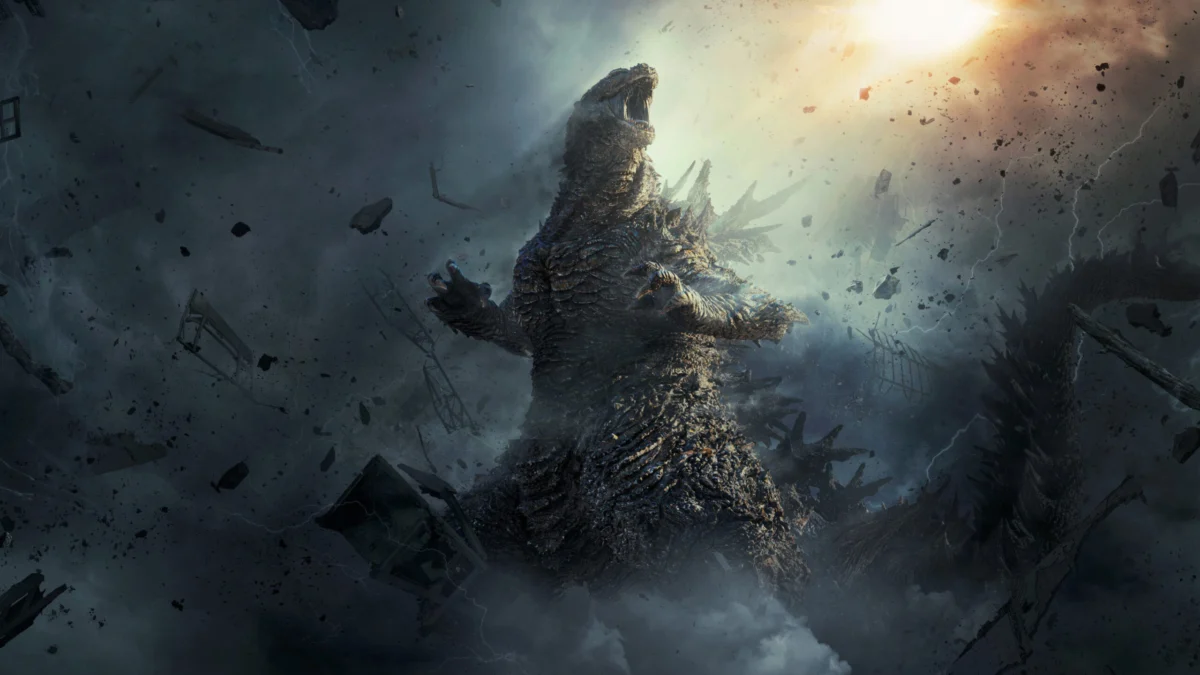
The return of Toho’s flagship monster franchise continues to redefine contemporary blockbuster cinema, balancing ground-shaking digital effects with profound human drama. Following the unprecedented international success and Academy Award triumph of 2023’s Godzilla Minus One, writer, director, and visual effects supervisor Takashi Yamazaki returns with the direct, scaled-up sequel, Godzilla Minus Zero. World-premiering as the Spotlight Gala at the New York Film Festival before a nationwide theatrical release via GKIDS on November 6, this latest installment expands the scope of Japan’s post-war cinematic landscape. Running two hours and fifteen minutes and rated R, the film reunites key members of the original cast—including Ryunosuke Kamiki, Minami Hamabe, Yuki Yamada, Kuranosuke Sasaki, and Sakura Ando—while introducing legendary franchise antagonist King Ghidorah into Yamazaki’s meticulously constructed universe.
Main Facts and Production Overview
Godzilla Minus Zero picks up the narrative threads of its predecessor, examining a recovering Japan striving to find normalcy in 1949. While the immediate physical devastation of World War II has ceased, the psychological and geopolitical repercussions remain palpable. The nation grapples with complex sentiments toward the United States and the enduring global shadow of military-industrial expansion.
The plot escalates dramatically with the sudden arrival of King Ghidorah. Bypassing the convoluted extra-terrestrial mythologies historically assigned to the three-headed dragon in past Showa and Heisei-era films, Yamazaki frames Ghidorah as an ancient, hyper-regenerative apex predator. Equipped with massive wings capable of generating hurricane-force gales and three fanged mouths that emit devastating electromagnetic gravity beams, Ghidorah immediately clashes with a newly regenerated Godzilla in a struggle for planetary dominance.
The human element remains central to the narrative framework. Former kamikaze pilot Koichi Shikishima (Ryunosuke Kamiki) attempts to forge a domestic life alongside Noriko (Minami Hamabe) and their adopted orphaned child, Akiko (Sae Nagatani). Meanwhile, government scientists, military veterans, and disaster response leaders—including Noda (Hidetaka Yoshioka), meteorological forecaster Aoyama (Masami Nagasawa), and Professor Murakami (Min Tanaka)—scramble to formulate defense strategies. These efforts are further complicated by Noriko’s uncanny, rapid physical recovery following her exposure to Godzilla’s cellular tissue during the Ginza attack depicted in the previous film.
Chronology of the Franchise’s Modern Revival
The contemporary resurgence of Toho’s live-action Godzilla films represents a calculated pivot back to the character’s thematic roots.
November 2023: Toho and director Takashi Yamazaki release Godzilla Minus One in Japan, followed by a wide international rollout through Toho International. The film becomes a global critical darling and a massive box-office anomaly, grossing over $115 million worldwide on a modest reported budget.
March 2024: Godzilla Minus One achieves historic recognition at the 96th Academy Awards, winning the Oscar for Best Visual Effects. This marks the first time a Japanese film or a film in the Godzilla franchise wins in this category, establishing Yamazaki as a premier global talent.
Late 2024 to 2025: Pre-production and principal photography for Godzilla Minus Zero commence under tight security, utilizing advanced virtual production techniques and an expanded visual effects team. Notably, the production achieves a historic technical milestone by becoming the first Japanese feature film shot entirely in IMAX format.
November 2025: The film debuts at the New York Film Festival as the Spotlight Gala, drawing strong critical notices for its technical ambition and emotional resonance before its commercial release via GKIDS.
Supporting Data and Technical Metrics
The production scale of Godzilla Minus Zero reflects Toho’s increasing confidence in the global viability of its domestic productions.
Budget and Scale: While precise production budgets for Japanese studio films are rarely disclosed with the transparency of Hollywood blockbusters, industry analysts estimate Godzilla Minus Zero operates on a significantly larger financial tier than its predecessor, driven by the box-office windfall of Godzilla Minus One.
Box Office Precedents: Godzilla Minus One set the all-time record for a live-action Japanese Godzilla film in North America, finishing its domestic theatrical run with over $56 million in the U.S. and Canada alone. Industry projections anticipate strong opening figures for GKIDS’ November 6 rollout, aided by the prestige of the New York Film Festival launch and the widespread adoption of IMAX screens.
Cast and Crew Statistics: The ensemble features ten principal actors, anchored by Kamiki and Hamabe. Behind the camera, returning director-screenwriter Takashi Yamazaki leads a creative team that includes returning cinematographer Kozo Shibasaki, production designer Anri Jojo, art director Wataru Hirai, and composer Naoki Sato.
Official Responses and Industry Analysis
Industry observers and critics have lauded Yamazaki’s approach as a vital corrective to contemporary Hollywood monster movies. Analysts note that while U.S. studio productions, such as the MonsterVerse entries from Legendary Pictures, prioritize kinetic action and expansive sci-fi world-building, they frequently neglect human character development.
In contrast, promotional materials and early critical consensus emphasize that Godzilla Minus Zero succeeds by anchoring its immense digital spectacle in tangible socio-historical trauma. Statements from festival organizers and distribution partners highlight the film’s ability to transcend genre conventions. By focusing on the survivor’s guilt of its protagonists and the specific cultural anxieties of post-war Japan, the film distinguishes itself from standard monster-brawl cinema.
Cinematic Implications and Broader Impact
The release of Godzilla Minus Zero underscores a broader shift in the global film market, where East Asian blockbusters increasingly rival—and occasionally surpass—Hollywood tentpoles in technical sophistication and narrative impact. Critics have pointed out that films like Godzilla Minus Zero and Na Hong-jin’s Hope demonstrate that high-concept action sequences can coexist with sophisticated character studies without sacrificing pacing or spectacle.
Furthermore, the integration of King Ghidorah into Yamazaki’s gritty, realistic aesthetic signals Toho’s willingness to mine its historical vault of kaiju characters while maintaining narrative discipline. By rejecting convoluted extraterrestrial lore in favor of a grounded, ecological rivalry between alpha predators, the creative team has established a sustainable blueprint for future sequels.
As the film prepares for its commercial release, industry discussions center on whether Godzilla Minus Zero can replicate or exceed the box-office milestones of its predecessor. With the plot structure leaving room for subsequent installments, the success of this IMAX-optimized production solidifies Toho’s position as a dominant force in modern international genre cinema, prompting speculation regarding which classic kaiju might be reintroduced next.








