Kang Muslim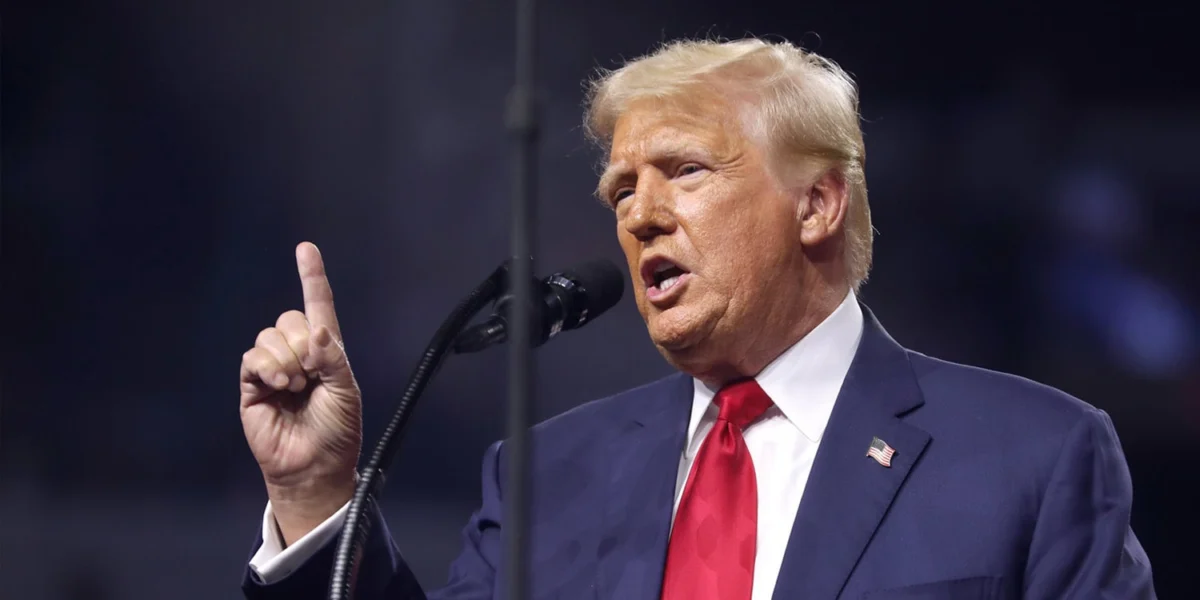
A new study published in the Proceedings of the National Academy of Sciences (PNAS) reveals a significant and rapid shift in public attitudes toward constitutional protections, suggesting that the rhetoric of high-ranking political leaders can fundamentally alter how citizens view foundational democratic rights. The research, led by Matthew E. K. Hall and his colleagues at the University of Notre Dame, provides empirical evidence that when prominent politicians move away from traditional defenses of the First Amendment and toward an embrace of government censorship, their supporters often follow suit. This phenomenon highlights the fragility of long-held democratic values in the face of polarized political leadership and the power of "elite cueing" to reshape the American political landscape.
The findings come at a time of intense national debate regarding the boundaries of free expression, the role of the media, and the extent of executive power. For years, the American political right has positioned itself as a staunch defender of free speech, frequently critiquing "cancel culture" and social media moderation as forms of modern-day censorship. However, the study identifies a specific pivot point in this narrative, demonstrating that even deeply ingrained partisan identities can be redirected when a leader shifts their stance on a core constitutional principle.
The Rhetorical Pivot: From Defense to Restriction
The impetus for the study was a notable change in the messaging coming from former President Donald Trump and his administration. For much of his political career, Trump portrayed himself as a champion of the First Amendment, frequently appearing at rallies and on social media to decry what he characterized as the silencing of conservative voices. This rhetoric resonated deeply with his base, contributing to a broader Republican platform that emphasized the protection of speech against institutional overreach.
However, the researchers noted a sharp departure from this stance following a series of high-profile incidents, including rhetoric surrounding the conservative activist Charlie Kirk. According to the study, Trump and key members of his administration began to articulate a new vision for speech regulation. This updated messaging suggested that the First Amendment should not serve as an absolute shield for media outlets or individuals whose speech was deemed overly negative or damaging to the administration’s objectives.
This shift was not merely a change in tone but an explicit call for the reevaluation of legal protections. Figures such as Federal Communications Commission (FCC) Chairman Brendan Carr and Attorney General Pam Bondi were cited as contributors to this new rhetorical framework. Their statements moved beyond criticizing the media to suggesting that the government should have the authority to intervene in cases where expression was perceived as biased or "fake." This transition provided a unique "natural experiment" for social scientists to observe whether voters would maintain their commitment to free speech or adjust their values to align with their preferred leader.
Methodology: Measuring the Impact of Elite Cues
To investigate this phenomenon, the research team, led by Matthew E. K. Hall, director of the Rooney Democracy Institute, designed a comprehensive online experiment involving 1,305 American adults. The sample was carefully curated to reflect the broader U.S. population, balanced for age, gender, education, and race. Crucially, the participant pool was split almost exactly between those who voted for Donald Trump in 2024 (653 participants) and those who did not (652 participants), including Harris voters, third-party voters, and non-voters.
The experimental design utilized a randomized control trial approach to isolate the effects of political rhetoric. Participants were assigned to one of three distinct groups:
- The Anti-Free Speech Group: These participants were presented with quotes advocating for government censorship. These quotes were adapted from actual statements made by Trump, Carr, and Bondi, focusing on the idea that certain forms of media coverage and public expression should be restricted.
- The Pro-Free Speech Group: These participants read quotes that were the exact inverse of the anti-speech statements. The researchers modified the language to reflect a robust, traditional defense of the First Amendment and a rejection of government censorship.
- The Control Group: This group was not exposed to any political quotes, providing a baseline for existing attitudes toward censorship and free speech.
To further refine the data, the researchers introduced a variable concerning the source of the quotes. Half of the participants in the quote-based groups saw the statements attributed to their original sources (e.g., Donald Trump or Pam Bondi), while the other half saw the quotes attributed to a "prominent politician." This was intended to determine if the name of the leader specifically drove the change in opinion, or if the "style" and "content" of the rhetoric were sufficient to signal a partisan shift.
Experimental Results: The Divergence of Voter Attitudes
The data gathered from the study revealed a stark divide in how different segments of the electorate respond to calls for censorship. The most prominent finding was that exposure to anti-free speech rhetoric significantly increased support for government censorship among Trump voters. When presented with arguments that the government should have the power to restrict "negative" media or "hostile" individuals, Trump supporters were far more likely to agree than those in the control group.
Specifically, the study measured support for censoring what is known in political science as "outparty" speech—media outlets and individuals who are critical of the voter’s own political party. The results indicated that the new rhetoric from the Trump administration successfully moved the needle among his supporters, making them more willing to abandon the abstract principle of free speech in favor of the practical goal of silencing political opposition.
Conversely, the study observed a "backlash effect" among non-Trump voters. When exposed to the same anti-free speech quotes, those who did not vote for Trump became significantly more supportive of protecting the speech of their political opponents. For these voters, the call for censorship acted as a warning sign, reinforcing their commitment to First Amendment protections as a defensive measure against what they perceived as an authoritarian shift.
Interestingly, the identity of the speaker (whether the quote was attributed to Trump or a generic politician) had a negligible impact on the results for Trump voters. They responded to the anti-speech messaging with increased support for censorship regardless of whether Trump’s name was explicitly attached to the quote. Professor Hall suggested that this indicates a high level of familiarity with the leader’s "voice" and rhetorical style. Supporters could recognize the sentiment as belonging to their political camp even without a direct attribution.
Analyzing the "Inparty" vs. "Outparty" Dynamic
A critical component of the study was the distinction between "inparty" and "outparty" censorship. In the context of American polarization, voters are often more willing to tolerate restrictions on those they perceive as enemies. The research sought to determine if the rhetorical shift was specifically targeting the "outparty" or if it represented a broader skepticism of the First Amendment itself.
The findings suggest that the rhetoric was most effective at mobilizing support for censoring the "outparty." Trump voters who read the anti-speech quotes showed a marked increase in the desire to see media outlets that attack the Republican Party censored. They also expressed higher support for the government to prevent individuals in their communities or authors in local libraries from criticizing their political leaders.
This highlights a trend in modern political psychology: the prioritization of partisan victory over procedural democratic norms. While Americans across the spectrum claim to support free speech in the abstract, that support often collapses when the speech in question comes from a disliked group. The Notre Dame study suggests that political leaders have the power to exploit this vulnerability, turning a universal right into a partisan tool.
Institutional Implications and the Fragility of Norms
The broader implications of this research are significant for the health of democratic institutions. For decades, political scientists have debated whether the American public possesses a "deep" commitment to democratic values or if their views are merely reflections of what their leaders tell them. This study provides strong evidence for the latter—a theory known as "elite cueing."
If the public’s commitment to the First Amendment is as malleable as the study suggests, it poses a challenge to the stability of constitutional protections. When mainstream leaders begin to normalize the idea of government censorship, it lowers the "political cost" of pursuing such policies. If a significant portion of the electorate is willing to support the restriction of the press or individual speech, the institutional barriers to such actions—such as court rulings and legislative pushback—may weaken over time.
Furthermore, the researchers explored whether this rhetoric affected general skepticism toward the Constitution. They found that for non-Trump voters, even exposure to pro-speech rhetoric (when framed as a response to Trump) increased their skepticism of how the First Amendment is applied, suggesting a complex "meta-cynicism" regarding constitutional law in a polarized environment.
Future Outlook: Durability and Normalization
One of the primary questions remaining for the researchers is the durability of these shifts in opinion. It is currently unclear whether the increased support for censorship among Trump voters is a temporary "spike" in response to a specific political moment or if it represents a permanent realignment of their values.
Professor Hall noted that the longevity of these attitudes likely depends on the persistence of the messaging. If calls for censorship become a staple of political discourse, the public may eventually internalize these views, leading to a long-term decline in support for free speech. Conversely, if the rhetoric shifts back toward traditional defenses of the First Amendment, voters may return to their baseline support for constitutional rights.
The study concludes that the influence of political figures over their supporters is immense, particularly in an era of high polarization. As leaders test the boundaries of democratic norms, the reactions of their supporters serve as a barometer for the future of American civil liberties. The Notre Dame research serves as a cautionary analysis of how quickly the "foundational" values of a society can be reshaped by the language of those in power.