Kang Muslim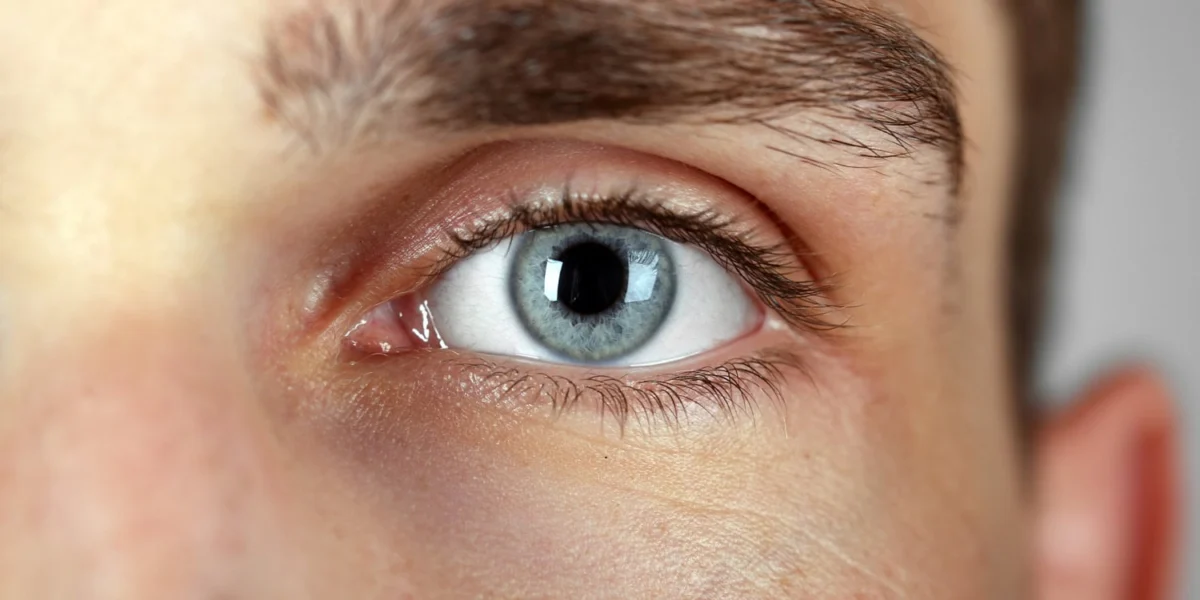
A groundbreaking study published in the Proceedings of the National Academy of Sciences reveals that the human brain’s ability to learn and adapt to new information is profoundly compromised when that information contradicts established personal beliefs. By combining eye-tracking technology, computational modeling, and a simulated news-evaluation environment, researchers from Sapienza University of Rome have mapped the cognitive and physiological pathways that allow misinformation to persist despite the availability of factual corrections. The findings suggest that the difficulty in debunking "fake news" is not merely a matter of stubbornness but is rooted in fundamental reinforcement learning mechanisms that prioritize belief-consistent data.
The Cognitive Architecture of Misinformation
The research arrives at a critical juncture in the global struggle against disinformation. In the digital age, social media platforms have transformed from simple communication tools into the primary conduits for news consumption. However, the automated algorithms governing these platforms often create "filter bubbles" or "echo chambers," where users are predominantly exposed to content that aligns with their existing political and social leanings. This environment does more than just shield users from opposing views; according to the new study, it may actually alter the way the brain processes rewards and learns from experience.
The genesis of this research can be traced back to the global health crisis of 2021. Lead author Stefano Lasaponara, an associate professor in the department of psychology at Sapienza University of Rome, noted that the COVID-19 pandemic provided a tragic laboratory for observing the real-world consequences of misinformation. The resistance to vaccination campaigns, often fueled by demonstrably false claims, prompted Lasaponara and his colleagues to investigate whether fake news affects the very mechanics of human learning. The study sought to determine if our preexisting convictions act as a "prior" that biases how we evaluate feedback, making it harder to learn from evidence that suggests we are wrong.
Experimental Chronology: Mapping the Belief Filter
To investigate these dynamics, the research team recruited 28 healthy young adults, aged 18 to 36, for a rigorous three-phase experiment. This demographic, often considered "digital natives," provided a relevant sample for studying how modern news consumption habits interact with cognitive processes.
Phase One: The Initial Judgment and Physiological Baseline
The experiment began with participants viewing a curated set of 324 news headlines. These headlines were selected from popular social media platforms and were evenly split: 162 were legitimate news reports, and 162 were entirely fabricated. Participants were tasked with judging each headline as "true" or "fake" while their eye movements were monitored using specialized eye-tracking glasses.
A crucial element of this phase was the "confidence wager." Participants were asked to bet a virtual sum, ranging from zero to 99 cents, on the accuracy of their judgment. This served as a quantitative measure of their internal certainty. During this process, the researchers focused on pupil dilation—an involuntary physiological response controlled by the autonomic nervous system. Pupil dilation is a well-established marker of mental effort, physiological arousal, and the activation of the locus coeruleus-norepinephrine system, which plays a key role in attention and decision-making.
Phase Two: The Reinforcement Learning Game
In the second phase, the researchers moved beyond simple judgment to test how participants learned new rules. Participants engaged in a computer game where they had to choose between pairs of headlines they had evaluated in the first phase. The objective was to select the headline that would trigger a 20-cent virtual reward.
Crucially, the rewards were not random. The researchers programmed an 83 percent probability of winning, but the "winning" category shifted across different rounds. In some rounds, the reward was tied to headlines the participant had previously judged as "true." In others, the reward was tied to those judged "fake." Some rounds rewarded high-confidence choices, while others rewarded low-confidence ones. A control round with entirely random rewards established a baseline for comparison. This structure allowed the team to see how quickly participants could identify a winning strategy when that strategy either aligned with or challenged their preexisting beliefs.
Phase Three: The Persistence of Belief
The final phase assessed whether the learning game had any lasting impact on the participants’ original views. They were shown the original headlines again, alongside their initial judgments and wagers. They were given the opportunity to revise their answers. If their final judgment matched the objective reality (true or fake), they were allowed to keep their wagered money as a payout. This phase measured the "update" factor—how much "learning" from the second phase actually translated into a change of mind.
Supporting Data: The High Cost of Cognitive Conflict
The results of the study provided clear evidence of a "belief-consistency bias" in learning. When the computer game rewarded participants for choosing headlines they already believed to be true, they identified the pattern almost immediately. Their learning curves were steep, and their scores were consistently high.
However, when the game’s internal logic required them to choose headlines they had previously labeled as "fake" to get a reward, their performance plummeted. Participants struggled to adapt to the new reality, often failing to recognize the pattern even after multiple rounds of feedback. This suggests that the brain finds it significantly more difficult to associate a positive outcome (a reward) with an idea it has already rejected.
Computational Modeling and Strategy Shifts
To delve deeper into the "why," the scientists employed mathematical simulations of human decision-making. The models revealed a stark difference in cognitive strategies. When rewards were consistent with beliefs, participants used "broad generalization" strategies. They formed a high-level rule (e.g., "choosing things I think are true makes me win") and applied it efficiently.
In contrast, when faced with belief-inconsistent rewards, participants abandoned generalized rules. They reverted to a "trial-by-trial" reactive mode, treating each choice as an isolated event rather than part of a larger pattern. This fragmented approach is cognitively taxing and significantly less effective for learning, explaining why people often fail to "connect the dots" when presented with evidence that contradicts their worldview.
Physiological Markers of Conflict
The eye-tracking data offered a physical window into this mental struggle. The researchers discovered that pupil dilation occurred much earlier than expected. Pupils began to dilate as soon as participants encountered a headline they would later judge with high confidence. This indicates that strong beliefs trigger a physiological arousal response even before a conscious decision is articulated.
Furthermore, during the learning phase, pupils dilated significantly when participants were forced to choose against their beliefs. This dilation is a physical manifestation of "cognitive surprise" and increased mental load. The brain is essentially working harder to process information that doesn’t fit its internal map of the world.
Official Responses and Academic Context
The study’s findings have resonated within the psychological and sociological communities. Stefano Lasaponara emphasized that the research highlights a fundamental vulnerability in human cognition. "One important takeaway is that our prior beliefs can begin shaping our decisions even before we explicitly express a judgment," Lasaponara noted. He added that the influence of these convictions is strong enough to "bias reinforcement learning," creating a cycle where we become better at learning what we already know and worse at learning what we need to correct.
While not directly involved in this specific study, other experts in the field of "motivated reasoning" have noted that these findings complement existing theories like the "Backfire Effect," where corrections can sometimes strengthen a person’s belief in a falsehood. By providing a physiological and reinforcement-learning basis for this phenomenon, the Sapienza University team has moved the conversation from "why people are stubborn" to "how the brain processes reward and error."
Broader Impact and Implications for Digital Literacy
The implications of this research for the modern digital landscape are profound. It suggests that the "fact-checking" model of modern journalism—while necessary—may be insufficient on its own. If the brain is biologically predisposed to struggle with belief-inconsistent feedback, then simply presenting the truth may not be enough to override the reinforced learning pathways created by years of exposure to biased information.
The Role of Confidence
One of the most significant findings was the role of confidence. High confidence in a judgment acted as a nearly impenetrable shield against change. Participants who were "very sure" of their initial (even if incorrect) judgment were the least likely to change their minds in the final phase, regardless of the rewards they received during the learning game. This suggests that the "certainty" provided by echo chambers is a primary driver of the persistence of misinformation.
Future Research and Potential Solutions
The researchers acknowledge that this study is a starting point. The sample size of 28, while standard for detailed physiological and computational studies, necessitates further testing across broader and more diverse populations. Additionally, the focus on political and social news means that these patterns might differ for more neutral topics.
Lasaponara and his team are already planning follow-up work to identify conditions under which misinformation becomes less effective. "We are investigating whether different reinforcement structures can lead to varying degrees of belief updating," he explained. This could eventually lead to the development of "digital inoculation" strategies or new educational tools designed to help individuals recognize and bypass their own cognitive biases.
In a lighthearted concluding note, Lasaponara mentioned that the title of the paper, "Eye of the Beholder," was a nod to the band Metallica, but the core of the work was a collaborative effort with co-authors Silvana Lozito, Valentina Piga, and others. As society grapples with the "infodemic," studies like this provide the essential cognitive blueprints needed to understand—and eventually bridge—the divides created by the modern information age.