
 Johny Marice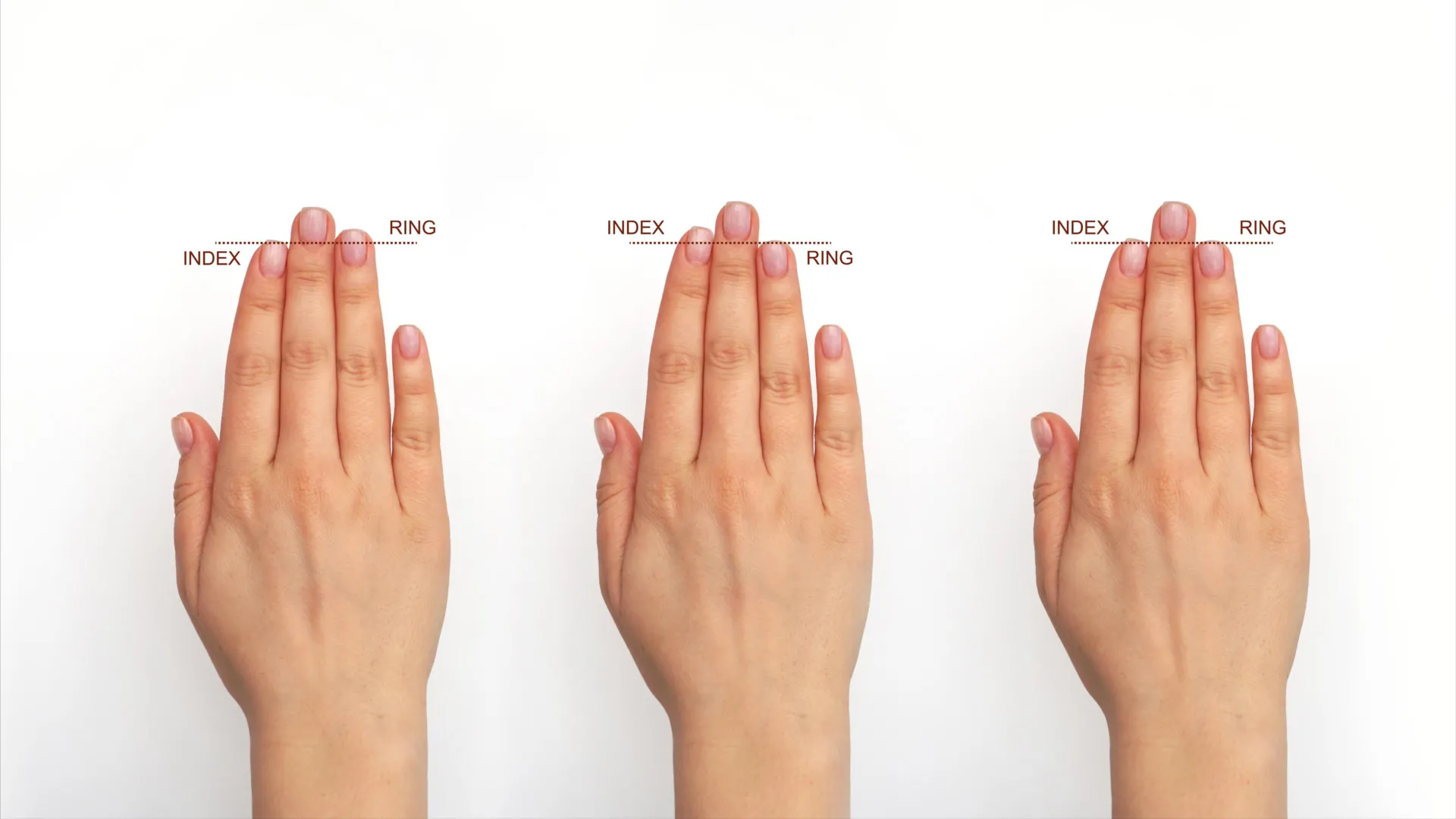
The remarkable expansion of the human brain, a defining characteristic of our species, may have been significantly influenced by prenatal exposure to estrogen, according to groundbreaking new research. This study, conducted by an international team of scientists, proposes that the hormonal environment in the womb, particularly during the crucial first trimester, left a tangible imprint on our evolutionary trajectory, potentially observable even in the relative lengths of our fingers.
Unveiling the Digit Ratio: A Window into Prenatal Hormones
At the heart of this investigation lies the concept of the 2D:4D digit ratio, a measurement that compares the length of the index finger (the second digit, or 2D) to that of the ring finger (the fourth digit, or 4D). Professor John Manning, a leading figure from Swansea University’s Applied Sports, Technology, Exercise and Medicine (A-STEM) research team, has dedicated years to the study of this ratio, recognizing it as a valuable indirect indicator of fetal exposure to sex hormones, namely estrogen and testosterone.
The prevailing scientific understanding is that higher prenatal exposure to androgens like testosterone is associated with a lower 2D:4D ratio, meaning the ring finger is relatively longer than the index finger. Conversely, individuals with relatively higher prenatal exposure to estrogens tend to exhibit a higher 2D:4D ratio, characterized by a longer index finger in proportion to the ring finger. This hormonal balance, established in the early stages of fetal development, is believed to influence a range of physical and even behavioral traits throughout an individual’s life.
The Study: Newborns, Fingers, and the Genesis of Brain Size
The latest research, a collaboration between Professor Manning and colleagues from Istanbul University’s Department of Anthropology, delved into the relationship between prenatal hormonal exposure, as indicated by digit ratio, and early indicators of brain development. Their findings, published in the esteemed journal Early Human Development, examined 225 newborns, comprising 100 boys and 125 girls. For each infant, researchers meticulously measured the 2D:4D digit ratio and simultaneously recorded their head circumference.
Head circumference in newborns is a widely accepted proxy for brain size, offering an initial assessment of cranial development. Furthermore, this measurement has been correlated with later assessments of cognitive abilities and intelligence quotients (IQ), although it is crucial to acknowledge that intelligence is a complex trait influenced by a myriad of genetic, environmental, and developmental factors.
The study’s pivotal discovery emerged from the comparative analysis: boys exhibiting a higher 2D:4D ratio – a marker of greater prenatal estrogen exposure – also displayed a statistically significant tendency towards larger head circumferences. This correlation was not observed in the female newborns within the study cohort. This gender-specific finding suggests that the influence of prenatal estrogen on early brain development, as potentially reflected in digit ratio, may manifest differently between males and females.
The Estrogenized Ape Hypothesis: A New Perspective on Human Evolution
These findings lend significant weight to a long-standing theory in evolutionary biology known as the "estrogenized ape hypothesis." This hypothesis posits that the dramatic increase in brain size that characterizes human evolution occurred in tandem with a general trend towards a less robust, more gracile skeletal structure in our ancestors, a shift that has been described as a feminization of the skeleton when compared to earlier hominin species.
Professor Manning articulated the significance of their findings in relation to this hypothesis: "This finding is relevant to human evolution because increases in brain size are found alongside feminization of the skeleton, what is known as the estrogenized ape hypothesis." He further elaborated on the broader implications of high 2D:4D ratios in males, noting their association with certain health challenges. "High values of 2D:4D in males have been found to be related to elevated rates of heart problems, poor sperm counts and predisposition to schizophrenia."
However, the research intriguingly suggests a potential evolutionary trade-off. "Increases in brain size may offset these problems," Professor Manning proposed. "Thus, the evolutionary drive for larger brains in humans may inevitably be linked to reductions in male viability including cardiovascular problems, infertility and rates of schizophrenia." In essence, the very hormonal conditions that may have fostered larger brains could have also introduced certain biological disadvantages for males, which were potentially outweighed by the immense evolutionary advantages conferred by enhanced cognitive capacity.
Evolutionary Trade-Offs and the Costs of Cognition
The research team underscores that their study does not imply a direct, causal link where finger length dictates brain size. Instead, they propose that the 2D:4D digit ratio serves as a valuable historical marker, an "epigenetic signature," if you will, of hormonal exposure during critical periods of fetal development. The observed association between higher 2D:4D ratios in boys and larger head circumferences offers compelling clues as to how prenatal hormonal environments might have sculpted the trajectory of human brain evolution.
This perspective suggests that the development of larger, more complex brains, a hallmark of Homo sapiens, may not have been a straightforward progression. Instead, it could have involved a series of evolutionary "trade-offs," where the benefits of increased cognitive power were accompanied by certain biological costs, particularly for males. The potential for enhanced survival and reproductive success through superior intellect might have compensated for increased susceptibility to certain health conditions.
Broader Implications and Future Research Directions
The implications of this research extend beyond understanding human origins. Professor Manning’s previous work has already established the digit ratio as a potential predictor in diverse fields. His prior studies have explored its correlation with alcohol consumption, outcomes following COVID-19 infection, and even oxygen consumption rates in professional footballers. This consistent observation of the digit ratio’s predictive power across various biological and physiological contexts lends credibility to its utility as a marker of prenatal hormonal influences.
The current findings invite further exploration into the intricate interplay between prenatal hormones, brain development, and evolutionary pressures. Future research could investigate the specific molecular pathways through which estrogen influences neurodevelopment in utero, potentially shedding light on sex-specific differences in brain structure and function. Furthermore, comparative studies across different primate species could help to pinpoint when and how the estrogenized ape hypothesis began to manifest, offering a more detailed timeline of human brain evolution.
The research team’s work provides a fascinating new lens through which to view the complex history of human evolution, suggesting that the very essence of what makes us human – our expansive brains – may be deeply intertwined with the hormonal milieu experienced before birth, and that this legacy is subtly etched into our very anatomy.








