Nila Kartika Wati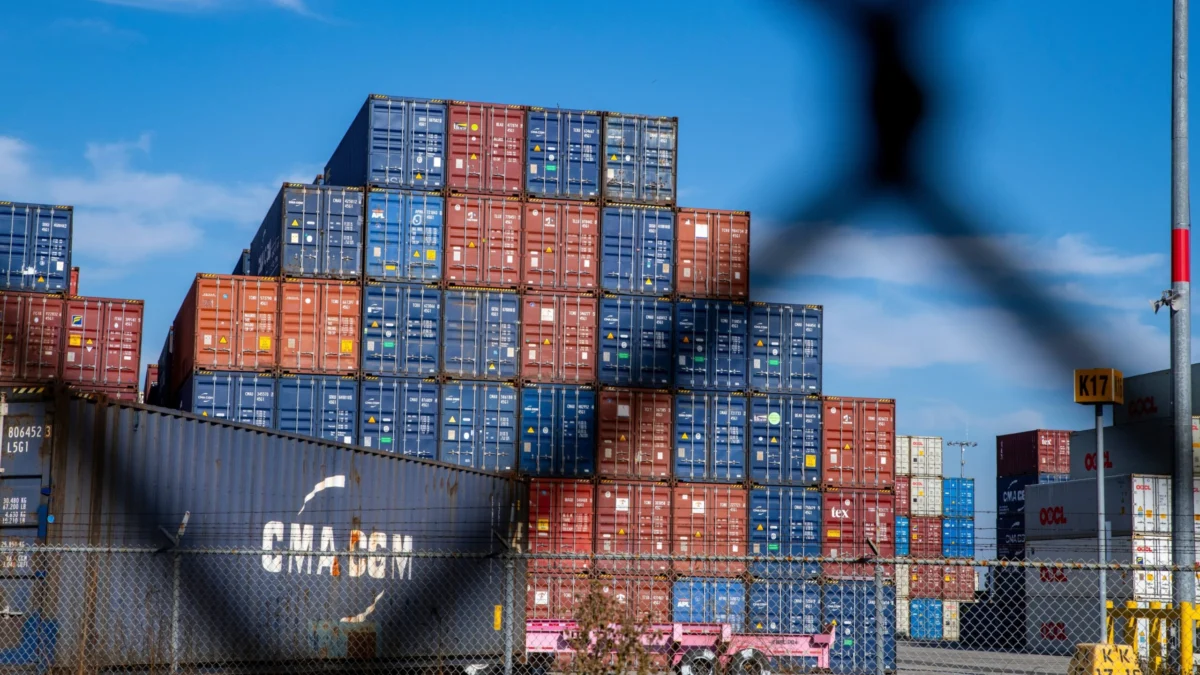
In a significant development concerning the ongoing trade disputes and their impact on American consumers and businesses, a coalition of 15 Democratic members of the U.S. House of Representatives has formally requested that chief executive officers of major retailers and shipping companies detail how they have passed on the costs associated with tariffs imposed by the Trump administration. The lawmakers are urging these companies to return any tariff refunds or relief directly to consumers who bore the brunt of increased prices, as well as to small businesses and other suppliers who faced higher operational costs.
The letter, sent on Thursday, marks a concerted effort by a bloc of legislators to ensure that the financial burden of protectionist trade policies is not disproportionately borne by the public and the backbone of the American economy. This action follows a series of tariff implementations and subsequent adjustments by the previous administration, which aimed to rebalance trade relationships and protect domestic industries. However, the unintended consequences have often included elevated prices for imported goods, impacting household budgets and the profitability of businesses reliant on international supply chains.
Background: A Shifting Trade Landscape
The push for tariff relief and its equitable distribution is rooted in the broader trade policies enacted during the Trump administration. Beginning in 2018, the U.S. initiated a series of tariffs on goods from various countries, most notably China, citing concerns over trade deficits, intellectual property theft, and unfair trade practices. These tariffs, applied to hundreds of billions of dollars worth of imported products, ranged from steel and aluminum to a wide array of consumer goods and industrial components.
The stated intention behind these tariffs was to incentivize domestic production, create American jobs, and secure more favorable trade agreements. However, the economic reality proved more complex. Importers, including retailers and manufacturers, were compelled to pay the additional duties. While some companies absorbed these costs, many passed them on to consumers in the form of higher prices. This led to increased inflation for a range of products, from electronics and apparel to furniture and household appliances. The Congressional Budget Office (CBO) estimated in 2019 that tariffs imposed by the Trump administration would cost American households an additional $83 billion annually, equivalent to an average of $767 per household.
Furthermore, small businesses, often operating on thinner margins than larger corporations, found themselves particularly vulnerable. They faced increased costs for raw materials, finished goods, and transportation, which could either erode their profitability or force them to raise prices, potentially impacting their competitiveness. Suppliers, too, felt the squeeze as demand fluctuated and their own input costs rose due to tariffs on their own raw materials or components.
The Call for Accountability: A Detailed Inquiry
The letter from the 15 Democratic representatives seeks a transparent accounting of how these tariff costs have been managed by corporate America. The core of their request is to understand the mechanisms by which companies have either absorbed tariff expenses, passed them on to consumers and businesses, or benefited from any subsequent tariff adjustments or refunds.
Specifically, the lawmakers are asking CEOs to provide detailed information on:
- Cost Pass-Through: How have tariff costs been passed on to consumers, including the percentage of costs transferred and the specific product categories affected?
- Impact on Small Businesses: What steps have been taken to mitigate the impact of tariffs on their small business suppliers and partners? Have they offered any form of relief or support to these entities?
- Tariff Refund Distribution: In cases where tariffs have been reduced, rescinded, or where refunds have been issued (e.g., through administrative review processes or legal challenges), how are these funds being allocated? The representatives are particularly interested in ensuring that any such financial relief is returned to the end consumers who initially paid the higher prices.
- Future Mitigation Strategies: What measures are being put in place to ensure that future tariff relief or adjustments translate into tangible benefits for consumers, such as lower prices or direct credits?
The representatives’ emphasis on ensuring tariff relief translates into lower prices or other direct benefits for consumers, including credits, underscores a desire to see a direct correlation between trade policy adjustments and consumer affordability. This suggests a concern that without explicit directives or scrutiny, companies might retain tariff-related savings for their own profit margins rather than passing them on.
Chronology of Trade Policy and its Fallout
The period of heightened tariff activity can be broadly contextualized within a timeline:
- Early 2018: The Trump administration begins imposing tariffs on steel and aluminum imports, followed by significant tariffs on goods from China under Section 301 of the Trade Act of 1974.
- Throughout 2018-2020: A series of escalating tariff rounds occur, impacting a wide range of products. Retaliatory tariffs are imposed by China and other trading partners on U.S. exports.
- Economic Impact Assessments: Various economic bodies, including the CBO, the International Monetary Fund (IMF), and academic institutions, release reports detailing the negative impacts of tariffs on global trade, economic growth, and consumer prices. Studies highlight the disproportionate burden on certain sectors and consumer groups.
- Mid-to-Late 2020 and Beyond: As the geopolitical and economic landscape shifts, there are instances of tariff adjustments, reviews, and, in some cases, the potential for refunds related to specific tariff classifications or administrative rulings. Discussions around the effectiveness and economic consequences of these tariffs become more prominent.
- Present Day: The current administration has maintained some tariffs while reviewing others, and the focus has increasingly shifted towards ensuring that any economic benefits derived from trade policy changes are broadly shared. The letter from the House Democrats is a direct manifestation of this ongoing concern.
Supporting Data and Economic Realities
The concerns raised by the lawmakers are supported by a body of economic data illustrating the financial impact of tariffs. For instance, a 2021 report by the U.S. International Trade Commission (USITC) indicated that tariffs imposed on Chinese goods had led to increased costs for U.S. importers, with a significant portion of these costs being passed on to consumers. The report detailed how certain sectors, particularly those heavily reliant on imported components, experienced reduced sales and profits.
Furthermore, analyses from organizations like the Tax Foundation have estimated the economic drag of tariffs, pointing to potential reductions in GDP and job losses in sectors that are net importers. While proponents of tariffs argue for their benefits in protecting domestic industries, the immediate and often visible effect for consumers has been higher prices at the checkout counter. The complexity of supply chains means that the ultimate incidence of a tariff – who ultimately pays for it – can be diffused, but evidence suggests that consumers have been a primary bearer of these costs.
Reactions and Broader Implications
While specific reactions from the targeted CEOs to this particular letter have not yet been widely reported, the general sentiment from the business community regarding tariffs has been mixed. Many industry groups have historically expressed concerns about the unpredictability and economic disruption caused by tariff escalations. They have advocated for stable, predictable trade policies that facilitate international commerce.
The Democrats’ initiative to scrutinize tariff cost pass-through and demand refunds for consumers has several broader implications:
- Consumer Protection: It signals a stronger governmental focus on protecting consumers from the financial repercussions of trade policy decisions. This could set a precedent for greater transparency and accountability in how companies manage trade-related costs and benefits.
- Fairness in Trade Policy: The demand for equitable distribution of tariff relief speaks to a principle of fairness, ensuring that the benefits of policy adjustments are not captured solely by corporate entities. This aligns with a broader political discourse about corporate responsibility and the distribution of economic gains.
- Potential for Future Policy: If companies are not forthcoming with information or if evidence suggests a lack of adequate pass-through of relief, it could lead to further legislative action. This might include calls for specific regulations on tariff cost allocation or increased oversight of corporate pricing strategies in relation to trade policy.
- Impact on Trade Negotiations: The scrutiny over tariff costs could also influence future trade negotiations. Governments may be more inclined to consider the domestic economic impact and the equitable distribution of benefits when designing new trade agreements or adjusting existing ones.
In conclusion, the letter from the 15 Democratic representatives is a critical step in demanding accountability from major corporations regarding the financial fallout of past trade policies. By seeking to ensure that tariff relief benefits consumers and small businesses, these lawmakers are highlighting the need for a more equitable and transparent approach to trade, where the intended positive outcomes of policy are demonstrably realized by the wider public and economy. The response from the business community and any subsequent actions by Congress will be closely watched as the nation continues to navigate its complex global trade relationships.