Kang Muslim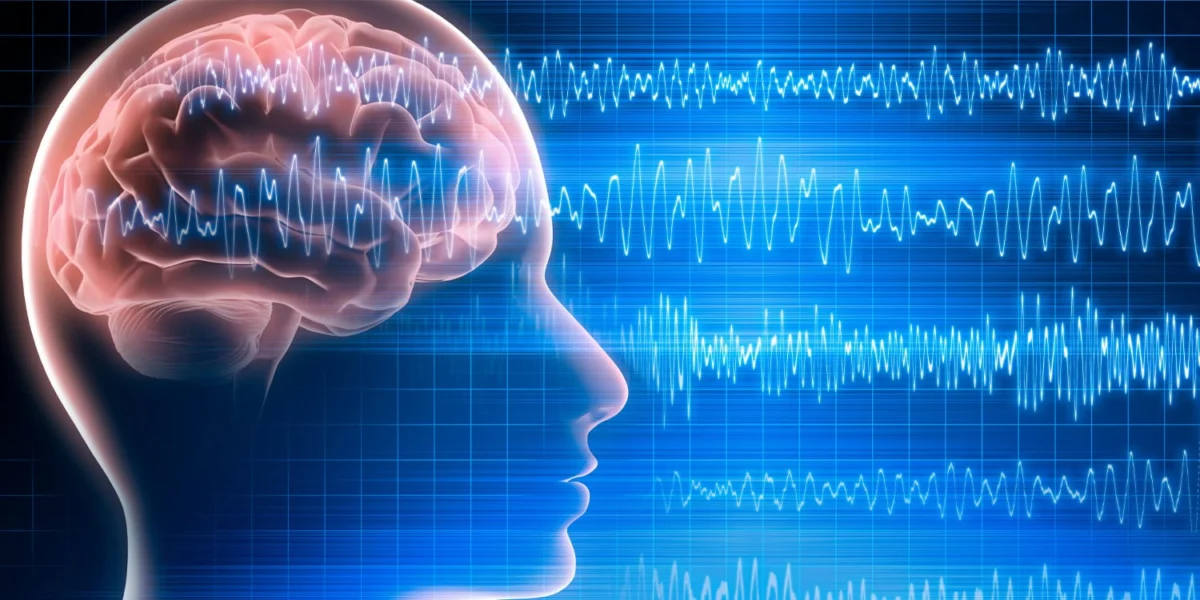
For decades, the scientific community has debated whether the antisocial and often callous behaviors associated with psychopathy stem from a lack of feeling or a lack of focus. The "Emotional Deficit Theory" posits that individuals with these traits possess a primary biological "coldness," where the brain’s sensory and emotional regions fail to register fear or empathy. Conversely, the "Attentional Bottleneck Theory" (often referred to as the Response Modulation Hypothesis) suggests that the brain is simply too focused on a primary goal to notice peripheral emotional cues, such as a victim’s distress or a secondary threat. This new research suggests that both theories may be correct, but they apply to different facets of the psychopathic personality.
The Triarchic Model: Redefining Psychopathic Traits
To understand these findings, it is essential to look at the Triarchic Model of Psychopathy, which has become a standard framework in modern psychology. This model suggests that psychopathy is not a single "yes or no" diagnosis but a combination of three distinct phenotypic pillars that exist on a continuum throughout the general population.
Boldness is the first pillar, characterized by social efficacy, emotional resilience, and a sense of daring. Bold individuals often excel in high-stress environments, showing little fear in the face of danger. Meanness, the second pillar, involves a lack of empathy, exploitative behavior, and a callous disregard for others. This is the "cold" element of psychopathy. Disinhibition, the third pillar, is defined by poor impulse control, a lack of foresight, and difficulty regulating emotions and urges, often leading to irritability and externalizing behaviors.
By studying these traits in a community sample rather than a prison population, the research team aimed to identify the "pure" biological signatures of these characteristics before they are confounded by the long-term effects of criminal lifestyles or severe psychiatric comorbidities.
Methodology: High-Tech Tracking of the Brain and Body
The study recruited 115 healthy adults from the community, ensuring a diverse range of personality types without the history of clinical psychiatric diagnoses or criminal backgrounds. This approach aligns with the National Institute of Mental Health’s Research Domain Criteria (RDoC) framework, which encourages researchers to study mental health through the lens of fundamental biological systems rather than rigid diagnostic categories.
The experimental design was rigorous, combining subjective self-reporting with objective physiological measurements. Participants first completed a series of validated surveys, including the Triarchic Psychopathy Measure (TriPM), to establish their baseline levels of boldness, meanness, and disinhibition. They also provided data on their cognitive and affective empathy levels.
The core of the experiment involved a sophisticated visual-audio task. Participants viewed a series of 54 images—divided equally into positive (e.g., cute animals), negative (e.g., victims of violence), and neutral (e.g., household objects) categories. These images were displayed via a smartphone mounted on a stand, utilizing a specialized application called BlinkLab.
To measure the brain’s real-time reaction to these images, the researchers employed two primary tools:
- EEG (Electroencephalography): Participants wore electrode-lined caps to record Event-Related Potentials (ERPs). Specifically, the researchers looked at brainwave patterns that signify involuntary attention shifts and those that reflect sustained emotional engagement.
- Startle Blink Reflex: At varying intervals (50, 700, and 4,500 milliseconds) after an image appeared, a loud 100-decibel burst of white noise was delivered through headphones. This "startle probe" triggers an involuntary defensive blink. The intensity and speed of this blink, tracked by the smartphone’s front-facing camera, serve as a window into the state of the nervous system.
Boldness and the "Attentional Bottleneck"
The results regarding boldness were particularly striking, especially among male participants. The data supported the Attentional Bottleneck Theory, showing that high levels of boldness were associated with an exaggerated focus on the primary task at the expense of secondary information.
When bold individuals were presented with negative or distressing images, their EEG data showed a significant spike in attention-related brainwaves at the 700-millisecond mark. This indicates that their brains were "locking in" on the visual stimulus with unusual intensity. Consequently, when the loud startle noise occurred during this window of high engagement, their physiological response to the noise was diminished.
This suggests that bold individuals are not necessarily "fearless" because their brains cannot process fear. Instead, they may become so cognitively consumed by their immediate goals or the visual environment that they effectively "filter out" threats or emotional signals that are not directly relevant to what they are doing. In a real-world context, this might explain why a bold person can remain calm in a crisis; they aren’t ignoring the danger out of courage alone, but because their brain has prioritized a specific action over the emotional "noise" of the situation.
Meanness and the "Emotional Deficit"
In contrast, the trait of meanness showed a clear alignment with the Emotional Deficit Theory. Participants who scored high in meanness did not show the same attentional "lock-in" seen in bold individuals. Instead, they exhibited a blunted physiological response to emotional content regardless of where their attention was directed.
Under normal circumstances, when a person views a distressing image for several seconds, their nervous system enters a state of "affective priming." The body becomes more guarded, and the startle reflex becomes more intense. However, in participants with high meanness scores, this priming effect was absent. At the 4,500-millisecond mark—a point where emotional processing should be at its peak—their startle blinks remained muted.
This suggests a fundamental physiological "unresponsiveness" to the distress of others or to unpleasant scenarios. This biological blunting correlates with the lower levels of affective and somatic empathy reported by these individuals in their initial surveys. When boldness and meanness were both present in a single individual, the suppression of empathic brainwave responses was even more pronounced, suggesting a cumulative effect of these traits on the brain’s social-emotional circuitry.
The Disinhibition Paradox
Interestingly, the study found no significant relationship between disinhibition and the biological markers measured via EEG or startle blinks. While disinhibition is a core component of psychopathy—often responsible for the impulsive and "messy" behaviors seen in clinical cases—it appears to be driven by different neural mechanisms than those governing fear and attention.
Researchers speculate that disinhibition may be more closely tied to the brain’s executive control functions, such as the prefrontal cortex’s ability to inhibit motor impulses, rather than the sensory-emotional pathways tested in this study. This finding reinforces the idea that psychopathy is a "syndrome" of separate issues rather than a single flaw in the brain’s architecture.
Chronology of the Research and Theoretical Context
The study represents a culmination of years of shifting paradigms in personality psychology. For much of the 20th century, psychopathy was viewed through the lens of the "Hare Psychopathy Checklist," which focused heavily on criminal behavior. The shift toward the Triarchic Model in 2009, pioneered by researchers like Christopher Patrick, allowed for the current study’s more nuanced exploration.
The timeline of this specific experiment involved several phases of data validation. By using the BlinkLab smartphone technology, the researchers were able to bring high-precision laboratory measurements into a more accessible format, potentially paving the way for larger-scale community studies in the future. The inclusion of EEG allowed the team to map the "when" and "how" of brain activity with millisecond precision, providing a timeline of neural events that self-report surveys could never capture.
Limitations and Future Directions
While the study provides groundbreaking insights, the authors acknowledged certain limitations. The images used, while distressing, were not direct, high-stakes threats. In a real-world scenario where a person’s life is at risk, the biological responses might differ. Furthermore, the repetitive nature of the startle noise could lead to "habituation," where participants begin to expect the sound, potentially skewing the data at later intervals.
Future research is expected to expand the sample size to include clinical and forensic populations to see if these biological signatures become more extreme as one moves up the psychopathy scale. There is also a significant interest in exploring gender differences more deeply, as the attentional bottleneck seen in bold individuals was notably more prominent in men.
Implications for Treatment and Society
The implications of this research for the fields of psychology and criminal justice are profound. If antisocial behavior is driven by an attentional bottleneck, as seen in boldness, then traditional "empathy training" may be ineffective. Instead, cognitive therapies that focus on broadening a person’s situational awareness and teaching them to "check in" on peripheral cues might be more successful.
On the other hand, if behavior is driven by a meanness-related emotional deficit, different therapeutic strategies might be required—perhaps those that focus on the cognitive understanding of social rules and the long-term consequences of behavior, rather than trying to "force" an emotional response that the biology may not support.
By dissecting the psychopathic brain into these specific channels of attention and emotion, the study moves society closer to a future of personalized mental health interventions. It suggests that "psychopaths" are not a monolithic group of villains, but individuals whose brains are wired to prioritize information in ways that deviate from the norm, for better or for worse.