
 Reynand Wu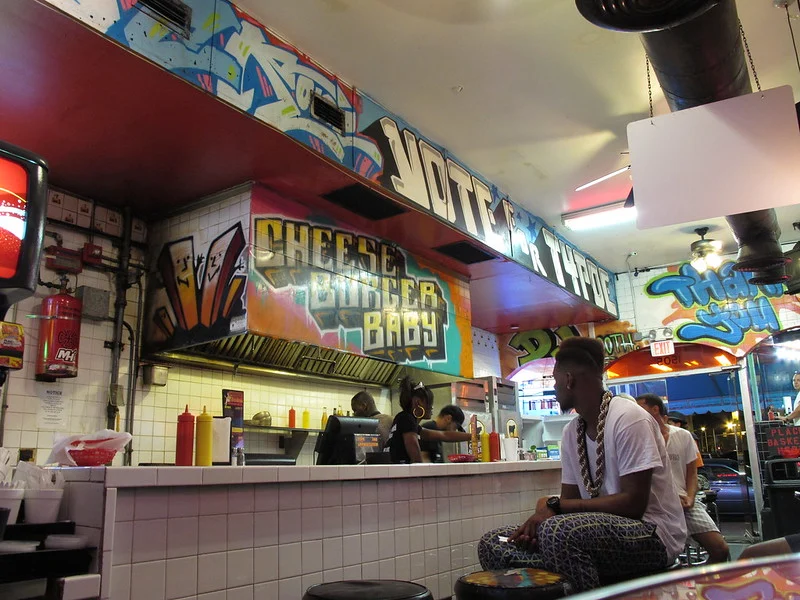
For students navigating the complex landscape of introductory sociology, grasping abstract theoretical frameworks—such as social construction, bureaucracy, and cultural objects—often presents a pedagogical hurdle. While classical theorists like Max Weber provide the essential vocabulary for understanding modern organizational structures, the ubiquity of standardized systems in contemporary life can render these concepts invisible. To bridge this gap, educators are increasingly turning to cultural artifacts, specifically the humble cheeseburger, as a diagnostic tool for analyzing the impact of McDonaldization and the resilience of localized social traditions. By examining the stark contrast between the hyper-rationalized, franchised fast-food industry and the idiosyncratic, regionally specific "hamburger stands" documented by filmmakers like George Motz, sociology departments are successfully demonstrating how deep-seated sociological principles manifest in the everyday objects of American life.
The Weberian Framework and the McDonaldization Thesis
Max Weber’s conceptualization of bureaucracy remains the cornerstone of modern sociological inquiry into institutional behavior. Weber argued that as societies modernize, they move toward "rationalization"—a process characterized by predictability, calculability, efficiency, and control. In the late 20th century, sociologist George Ritzer famously extended this analysis in his seminal work, The McDonaldization of Society. Ritzer argued that the principles governing fast-food restaurants—standardization, deskilling of labor, and the substitution of human judgment with non-human technology—had permeated every sector of society, from education and healthcare to the entertainment industry.
The challenge for educators, as noted by contemporary sociologists like Evan Stewart of the University of Massachusetts Boston, lies in the "This is Water" problem. Much like the fish that does not realize it is swimming in water, modern students are so deeply immersed in a bureaucratic, point-of-sale driven environment that the unique, artificial traits of these systems are rarely interrogated. When the standard operating procedure for every transaction is automated, standardized, and franchised, the alternative—a world of artisanal, non-standardized production—becomes difficult to conceptualize.
Chronology of a Cultural Icon: From Regional Fare to Global Commodity
The evolution of the American hamburger serves as a physical timeline of the country’s socioeconomic development. In the early 20th century, the hamburger was a localized commodity, served primarily in diners, lunch wagons, and roadside stands. These establishments were reflections of their specific geography; the ingredients, preparation methods, and even the social function of the diner were dictated by local supply chains and cultural norms.
- Early 1900s: The emergence of the hamburger as a staple of the American diet, popularized by vendors at regional fairs and local diners.
- 1921: The founding of White Castle, which introduced the first standardized assembly-line production methods, effectively launching the fast-food revolution.
- 1940s–1950s: The rise of the drive-in and the McDonald’s franchise model, which prioritized speed and consistency over regional variety.
- 2004: The release of George Motz’s documentary Hamburger America, which sought to catalog the disappearing lineage of independent, non-franchised burger joints across the United States.
- Present Day: A resurgence of interest in "craft" food movements, which sociologists identify as a reaction against the perceived sterility of highly rationalized food systems.
Data and Disparities in the Food Industry
The contrast between the franchised model and the independent burger stand is supported by data regarding industry concentration. According to the U.S. Bureau of Labor Statistics and industry market reports, the "Limited-Service Eating Places" sector is dominated by a small number of massive chains. In 2023, the top 50 fast-food chains accounted for a significant majority of total industry revenue, leaving independent, non-franchised establishments as a shrinking minority.
This market concentration has profound sociological implications. When a single corporation dictates the menu, preparation methods, and service experience across thousands of locations, it effectively creates a "cultural monoculture." Conversely, the independent burger stands documented by Motz represent what sociologists call "cultural persistence." These establishments often rely on recipes passed down through generations, utilize locally sourced ingredients, and serve as hubs for community interaction that defy the impersonal nature of the franchised model.
Sociological Implications: Culture Embedded in Objects
The use of media like Hamburger America in a classroom setting provides a visual and intuitive hook for applying Wendy Griswold’s "Cultural Diamond"—a framework used to analyze the relationship between cultural objects, creators, receivers, and the social world.
When students observe a burger being cooked on a grill that has been used for 50 years, they are not just looking at a meal; they are observing a cultural object that carries the weight of history, de-industrialization, and urban migration. For instance, many of the burgers featured in independent stands are the result of immigrant traditions adapting to local ingredients. In the Midwest, the "butter burger" or the "deep-fried burger" reflects specific agricultural economies and the history of regional blue-collar labor.
By analyzing these objects, students can trace the following sociological intersections:
- Urban Planning: How the development of the interstate highway system decimated small-town "Main Street" businesses, favoring the centralized, exit-ramp franchise.
- Labor Relations: The difference between the deskilled, low-autonomy labor of a franchise worker and the high-skill, owner-operator model of a traditional stand.
- Segregation and Inequality: The ways in which access to food and the ability to operate a business were historically gated by racial and socioeconomic barriers, which are reflected in the geographic distribution of these historic establishments.
Academic and Official Responses
Sociological departments have reported that moving beyond textbooks to incorporate documentary evidence significantly increases student engagement. By utilizing the "hamburger as a cultural object," instructors can guide students through the complexities of bureaucracy without the alienation often caused by dense, abstract reading.
"The value of this approach lies in its ability to make the invisible visible," says Dr. Stewart. "When students realize that their lunch—something they interact with daily—is a product of specific, historical social arrangements, the theoretical concepts they learn in class suddenly become applicable to their own lives."
Industry analysts, while noting the economic efficiency of the McDonaldized model, acknowledge that the cultural pushback represented by the "foodie" and "craft" movements is a direct response to the loss of local identity. From a policy perspective, this reflects a broader trend of consumers seeking out "authentic" experiences in a digital and automated age.
The Broader Impact: Why It Matters
The study of such objects serves as a gateway to understanding broader systemic issues. When students understand how a burger is constructed—both physically and socially—they are better equipped to analyze how other systems are constructed. They begin to ask critical questions about their university’s bureaucracy, the standardization of their own educational experience, and the ways in which their personal choices are shaped by massive, impersonal, and highly rationalized institutions.
Ultimately, the goal of this sociological inquiry is to provide students with the "sociological imagination." By looking at the cheeseburger, the student learns to see the world not as a collection of inevitable facts, but as a series of social arrangements that have been designed, built, and maintained over time. In doing so, they become more capable of identifying where those systems serve the public good and where they might be challenged to allow for more human, diverse, and localized expressions of culture. The cheeseburger, therefore, acts as a microcosm for the very society that produced it—complex, stratified, and constantly in flux.







