Ronny Sianturi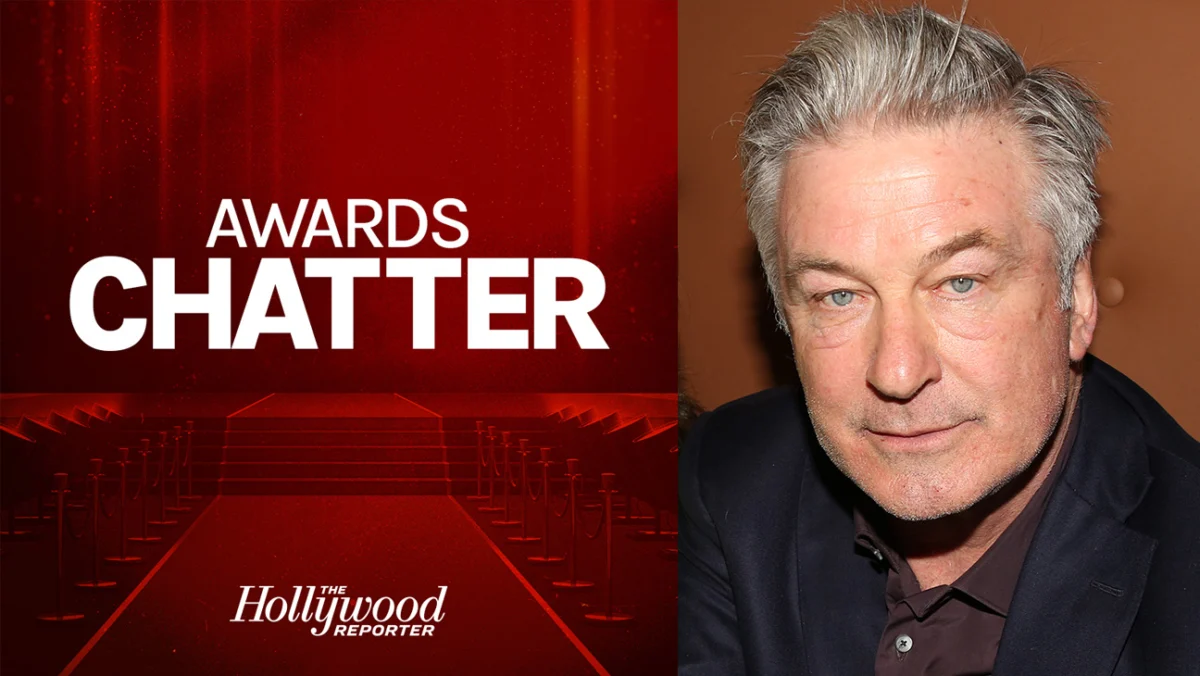
The storied career of Alec Baldwin, a figure synonymous with both cinematic triumphs and public controversy, was the central focus of the latest episode of The Hollywood Reporter’s "Awards Chatter" podcast. Recorded before a live audience at the Boulder International Film Festival, the candid conversation offered a deep dive into the 68-year-old actor’s multifaceted professional journey, his often-turbulent personal life, and the profound impact of the tragic incident on the set of the film "Rust." Baldwin, a veteran performer with a career spanning over four decades, has navigated the demanding landscape of Hollywood with a remarkable range, from anchoring blockbuster hits like "The Hunt for Red October" to captivating audiences in critically acclaimed independent films such as "The Cooler." His impressive resume includes a starring role in the Best Picture Oscar winner "The Departed" and a pivotal performance in the Emmy-winning best comedy series "30 Rock." Beyond his acting prowess, Baldwin has cemented his place in television history as the most frequent host of "Saturday Night Live," a role he has embraced an astonishing 17 times. His hosting duties also extended to the prestigious Academy Awards ceremony in 2010, alongside Steve Martin. The actor’s individual achievements are underscored by a substantial collection of accolades, including three Emmy Awards, three Golden Globe Awards, and seven Screen Actors Guild Awards for his individual performances, alongside nominations for an Academy Award and a Tony Award.
A Public Persona Under Scrutiny
Baldwin’s trajectory, however, has not been solely defined by professional achievements. For much of his public life, he has been a subject of intense media scrutiny, with paparazzi and tabloids frequently documenting his every move. His often outspoken and sometimes confrontational public persona has, at times, appeared to invite this heightened level of attention. This narrative of public life took a stark and tragic turn on October 21, 2021. While filming "Rust," a low-budget independent film in New Mexico, where Baldwin was both starring and producing, a devastating accident occurred. During the rehearsal of a scene, a prop firearm was handed to Baldwin. The weapon was reportedly checked by the on-set armorer to ensure it was unloaded. However, when the gun discharged, a live round emerged, resulting in the death of cinematographer Halyna Hutchins and injuring director Joel Souza. Baldwin has maintained that he did not pull the trigger of the weapon.
The "Rust" Tragedy and its Legal Aftermath
The ensuing years have been characterized by immense personal and legal challenges for Alec Baldwin, a period vividly chronicled in Rory Kennedy’s new documentary, "The Trial of Alec Baldwin." The legal proceedings initiated in the wake of the "Rust" incident have been particularly complex and protracted. In January 2023, Baldwin was initially charged with involuntary manslaughter. However, these charges were subsequently dropped in April 2023. The legal saga continued, and in January 2024, Baldwin faced a renewed charge of involuntary manslaughter. The case reached a critical juncture in July 2024, when, just three days into the trial, all charges against him were dismissed with prejudice. The judge presiding over the case determined that authorities had deliberately withheld crucial evidence from the defense team. While Baldwin was ultimately cleared of criminal wrongdoing, the ordeal undeniably left an indelible mark on his life and career.
An Evening of Revelations in Boulder
During his appearance on the "Awards Chatter" podcast in Boulder, Baldwin captivated an audience of hundreds with a performance that blended his signature wit, insightful anecdotes, and impressive vocal impressions. The discussion, however, also delved deeply into the "Rust" tragedy, a subject Baldwin addressed with a level of candor that appeared to surpass previous public statements. He spoke candidly about the profound toll the incident has taken on his health and how it has reshaped his outlook on his future in the industry.
Candid Reflections on the Film Industry and Artistic Choices
On the Nature of Hollywood Studios:
Baldwin offered a blistering, albeit intentionally toned-down, critique of Hollywood studios and producers. He described their business practices with a visceral analogy: "They go to your mother’s house and they rape your mother. They attack your mother. They beat her. They rape your mother. They take the whole weekend to rape your mother. It’s a horrible, horrible thing. 18 months later, you run into them at a party or a screening and they go, ‘Hey, man, I’m sorry. I know we raped your mother, but I got a script that is so good for you. It is so good. Let’s do business. Let’s not anything stand in the way of doing business.’" This raw metaphor highlights a perceived exploitative dynamic within the industry, where creative individuals can feel subjected to aggressive and potentially damaging business negotiations, only to be approached again with new projects as if past grievances are easily forgotten.
The Transformative Power of "A Streetcar Named Desire":
Reflecting on his career decisions, Baldwin shared the profound impact of his decision to star in "A Streetcar Named Desire" on Broadway shortly after the success of "The Hunt for Red October." He stated, "When I did ‘Streetcar,’ it changed my life. It changed my life in ways I never thought possible. And even though I lost a lot in the process – it really was the beginning of me turning away from playing leading roles in studio films and doing a lot of indies – I wouldn’t change anything because the play was really such an extraordinary experience for me. I loved it." This pivotal stage role marked a significant shift in his career trajectory, signaling a deliberate move away from mainstream studio fare towards more artistically driven independent projects, a choice he unequivocally affirms despite the perceived professional sacrifices.
The Unscripted Genius of Spike Lee’s "BlacKkKlansman":
Baldwin recounted a memorable experience on the set of Spike Lee’s "BlacKkKlansman," where his cameo involved a monologue. He detailed how Lee, on the day of filming, significantly altered the script at the last minute, demanding Baldwin memorize new lines. "He gives me a monologue, I memorize the whole thing and I go to his studio in Brooklyn… So we’re shooting there… he got me there early in the morning, I was tired, I memorized my lines – and he goes, ‘I changed the script. I want you to memorize this.’ And I’m like, ‘Shit.’ They’re putting the makeup on me, I’m half-dead, I’m guzzling coffee, I go out there and I go, ‘I’m going to give you the best I can, but I’m going to have to work toward this. I don’t think I can really get it unless I go off for an hour and try to memorize this. I really don’t.’ He goes, ‘Don’t worry about it.’ So when I do it, I keep flubbing, and I say some very choice words, I’m really angry. I’m sitting there going, ‘Everybody here, I want y’all to remember that – shit, goddamn, shit, fuck shit. I got it. I got it. Y’all got to remember the one time we came down that way when he… God, shit, fuck shit, fuck.’" To Baldwin’s surprise, Lee incorporated these unscripted expletives and moments of frustration into the final film, leading a friend to praise his "Tourette thing" as "fantastic." Baldwin’s realization of Lee’s intent – to portray a character struggling and swearing due to the last-minute script change – underscored his observation: "The movie business is tricky."
The Accidental Rise of Donald Trump Impersonator:
Baldwin’s iconic portrayal of Donald Trump on "Saturday Night Live" began almost serendipitously. He recalled a call from Lorne Michaels regarding a pre-2016 election appearance. Initially hesitant, Baldwin preferred to attend a screening of a documentary about Robert Mitchum. Michaels’ sarcastic retort – "Okay, good for you. Good for you. You don’t want to come in and be part of the hottest comedy sketch of the year? You can go watch your Robert Mitchum documentary" – persuaded him to participate. Michaels assured him it would be a brief role, predicting Trump’s electoral defeat. "Lorne calls me up… And Lorne goes [sarcastically], ‘Okay, good for you. Good for you. You don’t want to come in and be part of the hottest comedy sketch of the year? You can go watch your Robert Mitchum documentary.’ So I come in and I do it and he goes to me, ‘It’s only going to be two shows, man. He’s never going to win.’" The subsequent reality of Trump’s victory led to an extended tenure for Baldwin in the role. "I’m laying in bed with my wife on election night… It’s three o’clock. I wake up, [check the result] and I turn to my wife and I go, ‘He won. He won.’ And my wife literally just goes, ‘Ugh.’ She groans. And then I go, ‘I got to do this thing for the next four years! He’s going to ask me to do it for four years!’ So you start watching tapes of him. In acting school, they taught us watch the footage with the sound off. The voice comes last. So I’m watching footage of him and I’m going, ‘Oh, he does a lot of weird gestures and his face is always in a scowl.’"
The Shadow of "Rust" and a Desire for Retirement
The "Rust" tragedy has had a profound and lasting impact on Baldwin’s professional aspirations and personal well-being. He articulated this with deep emotion: "We had this incident, this tragedy, in New Mexico, where Halyna Hutchins was killed on the set of the film, and that was unspeakably difficult to deal with… Because of the situation in New Mexico, which was very painful, I wound up staying home a lot. I was home with my kids for three-and-a-half years – I hardly worked at all – and that’s just changing now. I’m going to go off and do a bunch of things. But I was home and I got used to it, and I don’t want to leave my house anymore. I don’t. I don’t want to work anymore. I don’t. I really don’t. I want to retire and stay home with my kids." This statement reveals a deep-seated desire to step away from the demands of his career, seeking solace and fulfillment in family life following the immense stress and trauma he has endured.
Examining "The Trial of Alec Baldwin" Documentary
Baldwin also provided insight into the genesis and content of Rory Kennedy’s documentary, "The Trial of Alec Baldwin." He explained the filmmaker’s initial proposal: "Rory said, ‘You want to do this movie? I want to do this movie about you.’ And I thought, ‘Ah.’ And we shot it – they were around during the trial in New Mexico, and they were around interviewing me, and she was always asking for more time: ‘Can I grab you for 20 minutes here? … We got the lights and the camera.’ There was a lot of that during the trial – before and during – and the movie, I think, exemplifies how it was beyond prosecutorial overreach; it was people who committed a crime. They committed a crime in hiding evidence during my trial and so forth. And it impacted me in every way – financially, career-wise, my wife, my kids, my health."
He detailed the severe health consequences he experienced, including a nerve condition and fainting spells, which necessitated extensive physical therapy and a precarious return to complete the filming of "Rust" as part of a settlement. "I had a nerve condition that you get when you take blood pressure medication, orthostatic hypotension, where you black out. I blacked out three times during the St. Patrick’s Day weekend of that year, and fell on top of my wife once. It was crazy. It was horrible. So I get into bed. I’m in bed for eight days. I can’t get out of bed. I can’t walk. I had to go to physical therapy for two weeks. And I had to get up on a horse and go back there to Montana to finish the film, or they were going to sue the shit out of me. So I make it – I get there, and I don’t give the performance I want to give because I’m sick, but I did the best I could."
Baldwin acknowledged the documentary’s significance but also expressed reservations common to subjects of biographical films. "Now, the movie came out… and when somebody makes a movie about you, you’re never going to be happy. You’re going to have a lot of notes. I didn’t [give her notes] because it’s not a commission – I don’t tell her what to do, it’s her thing. And I think there’s a lot of good things in the movie. I think she’s a great filmmaker." He concluded his thoughts on the documentary by referencing a conversation with a prominent lawyer who questioned the pursuit of the case against him, particularly in light of the lack of focus on other potential responsible parties. "A very famous lawyer in New York said to me, ‘Did you ever believe anybody did this to you [intentionally left bullets in the gun that was not supposed to be loaded but shot Hutchins] deliberately? That there was a conspiracy of some kind or anything like that? That someone was behind it?’ And I go, ‘If I have to give an answer to that question, the answer is no, because it’s very far-fetched. It’s very difficult to do. However, there were three or four things that I found very odd that happened in and around the day that she died.’ And this lawyer turned to me and goes, ‘You know what? It makes me wonder what’s going on here with your case.’ I go, ‘What?’ And she goes, ‘Because after they couldn’t get you, it was over. They never tried to find the other people who were responsible for what happened, who brought the bullets onto the set. You never hear about that. They don’t pursue the case. They don’t do anything.’ They tried to get me, and they didn’t get me, and they cheated and broke the law to get me, and it’s just been tough."
In a poignant moment during the podcast recording, Baldwin Facetimed his wife, Hilaria, and publicly expressed his gratitude for her support: "I told them if it weren’t for you, I wouldn’t have survived all of the Rust situation, so thank you." This gesture underscored the profound personal impact of the events and the crucial role of his family in his resilience. The conversation provided a comprehensive and often raw look at an actor whose life and career have been inextricably intertwined with the dramatic narratives he has helped create on screen and the often-unforeseen dramas that have unfolded in his personal life.