Jono Maryono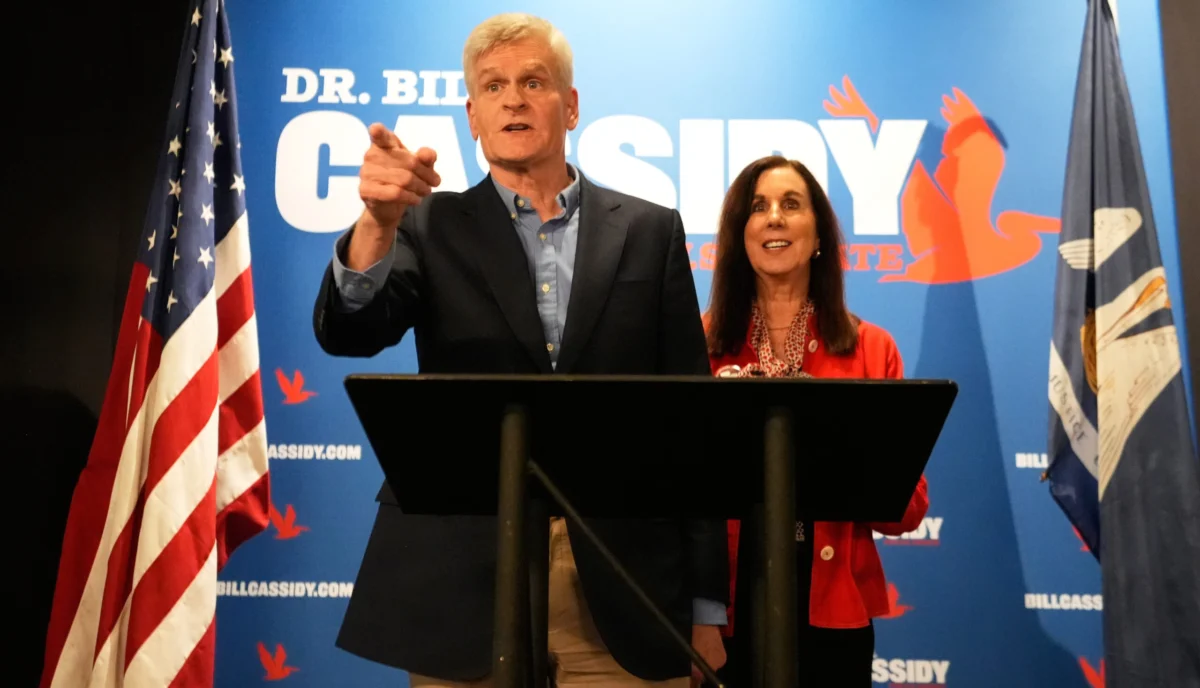
The political landscape of Louisiana is set to be a critical battleground this Thursday, as Republican Senator Bill Cassidy faces a significant primary challenge, a contest widely viewed as a litmus test for former President Donald Trump’s enduring influence within the Republican Party. Cassidy, one of only seven Republican senators who voted to convict Trump during his second impeachment trial in February 2021, finds himself on the defensive against rivals who have galvanized support by aligning themselves with the former president. The outcome of this race is expected to offer a clear indication of whether Trump’s endorsements continue to carry decisive weight, even as his national approval ratings have experienced a notable decline.
The impeachment proceedings that form the crux of Cassidy’s current predicament stemmed from the events of January 6, 2021, when a mob of Trump supporters stormed the U.S. Capitol building in an attempt to disrupt the certification of the 2020 presidential election results. The House of Representatives impeached Trump on a single charge: incitement of insurrection. The subsequent Senate trial, which concluded with Trump’s acquittal due to a lack of the required two-thirds majority for conviction, highlighted a deep ideological schism within the Republican Party. Cassidy, a physician by training, publicly stated his rationale for voting to convict, asserting that "Our Constitution and our country is more important than any one person. I voted to convict President Trump because he is guilty."
This principled stance, however, has placed him at odds with a significant segment of the Republican electorate, particularly in a state as staunchly Republican as Louisiana, where Trump has consistently performed strongly in presidential elections. In both 2016 and 2020, Trump secured approximately 58 percent of the vote in Louisiana, a margin that widened to 60 percent in the 2024 election, underscoring the deep loyalty he commands among the state’s voters.
The Trump Endorsement and Primary Contenders
Donald Trump has not shied away from making his preference known in the Louisiana Senate race, endorsing U.S. Representative Julia Letlow. Letlow, an academic administrator who entered Congress in 2021, has positioned herself as a staunch Trump loyalist and has explicitly leveraged Cassidy’s impeachment vote as a point of contention in her campaign. In her campaign launch video, she questioned the senator’s commitment to Louisiana’s interests when faced with pressure, stating that residents "shouldn’t have to wonder how our senator will vote when the pressure is on."
Another formidable challenger in the Republican primary is State Treasurer John Fleming, who also seeks to capitalize on anti-Cassidy sentiment among the party’s base. While Letlow has secured Trump’s coveted endorsement, Fleming also represents a significant challenge, drawing support from conservative voters who may be wary of Cassidy’s past actions. The winner of the Republican primary is widely expected to secure victory in the general election, given Louisiana’s deep-red political orientation, making this primary a de facto election for the Senate seat.
A Difficult Path for Republican Defectors
Senator Cassidy’s situation is emblematic of the broader challenges faced by Republican lawmakers who broke ranks with Trump during his impeachment. Of the seven Republican senators who voted to convict, a significant number have either been defeated in subsequent elections or have chosen not to seek re-election. This trend suggests that defying Trump, even on grounds related to the integrity of democratic processes, carries substantial political risks within the current Republican Party structure.
Notable exceptions to this trend include Senators Susan Collins of Maine and Lisa Murkowski of Alaska. Collins, often described as a centrist, has managed to maintain her position, benefiting from her ability to withstand Democratic challenges in her home state. Murkowski, on the other hand, successfully fended off a Trump-backed challenger in 2022, demonstrating that while challenging Trump’s influence is difficult, it is not impossible, particularly in states with diverse political dynamics or where incumbent senators have cultivated strong personal bases of support.
Cassidy’s Balancing Act and Past Clashes
Throughout Donald Trump’s presidency and in the years following, Senator Cassidy has navigated a complex political tightrope. He has, at times, aligned himself with the Trump administration, participating in White House events focused on healthcare policy and supporting key initiatives. This approach was likely an effort to maintain a degree of loyalty with his Republican constituents while also asserting his independence on certain issues.
However, Cassidy’s tenure has not been without high-profile disagreements with the Trump administration. A notable instance occurred during the confirmation hearing for Robert F. Kennedy Jr. to serve as Health and Human Services Secretary. Cassidy engaged in a robust debate with Kennedy regarding his well-documented skepticism towards vaccines. Cassidy, a medical doctor, emphasized the critical importance of vaccines in preventing disease, citing personal experiences with vaccine-preventable illnesses. He stated during the hearing, "I am a doctor who has seen people die from vaccine-preventable diseases, and when I see outbreaks numbered in the thousands, and people dying once more from vaccine-preventable diseases, particularly children, it seems more than tragic." Despite his reservations, Cassidy ultimately cast the deciding vote to confirm Kennedy, contingent on assurances that federal vaccine recommendations would not be altered. Ironically, the HHS under Kennedy’s leadership has since revised those recommendations.
More recently, in April of the current year, Trump publicly accused Cassidy of sabotaging his nominee for Surgeon General, Dr. Casey Means. Means had faced criticism for her own vaccine skepticism and for promoting unproven wellness theories. Trump publicly denounced Cassidy’s actions, labeling them as "intransigence and political games." In a subsequent social media post, he expressed his hope that Republicans "will be voting Bill Cassidy OUT OF OFFICE in the upcoming Republican Primary!"
In response to these accusations and the primary challenge, Senator Cassidy has sought to question the conservative credentials of his opponent, Julia Letlow. He has highlighted her past support for education diversity initiatives, which she has since disavowed, and her attendance at the 2023 United Nations climate change conference. Cassidy’s campaign aims to paint Letlow as not fully aligned with core conservative principles, attempting to draw a contrast beyond the singular issue of Trump’s impeachment.
The Enduring Sway of Donald Trump
The upcoming primary in Louisiana serves as a microcosm of a larger national phenomenon: the formidable and persistent influence of Donald Trump over the Republican Party. Despite a significant drop in his overall national approval rating, which reportedly hit a low of 34 percent in late April amid public discontent over the U.S. involvement in the conflict with Iran and its economic repercussions, Trump continues to command a powerful base of support within the Republican electorate. While his appeal to independent voters has reportedly waned, his hold on Republican loyalists remains largely unshaken.
This enduring sway is further evidenced by the performance of Trump-backed candidates in various primaries across the country. Many lawmakers who have echoed Trump’s unsubstantiated claims of widespread fraud in the 2020 election have found success in their electoral pursuits, signaling a strong alignment between the former president’s narrative and a significant portion of the Republican base.
Polls leading up to Thursday’s primary in Louisiana have indicated that Senator Cassidy is trailing both Julia Letlow and John Fleming. If no candidate secures an outright majority of the vote, the race will proceed to a runoff election scheduled for June 27. This potential runoff scenario further intensifies the focus on voter turnout and the ability of each campaign to mobilize their respective bases in the coming weeks.
Broader Context: Redistricting and Voting Rights
The timing of Thursday’s primary also coincides with a period of significant national debate surrounding congressional redistricting. In Louisiana, the U.S. House of Representatives primary, also scheduled for the same day, was temporarily suspended by Governor Jeff Landry. This suspension followed a Supreme Court decision that struck down a key provision of the Voting Rights Act. The ruling has paved the way for Louisiana’s Republican-controlled legislature to redraw its congressional map, with the explicit aim of eliminating one of the state’s two Black-majority congressional districts.
Civil rights organizations have responded to this development by filing a lawsuit, alleging that the suspension of the primary and the subsequent redistricting efforts violate both the U.S. Constitution and the constitution of Louisiana. This legal challenge underscores the broader implications of the current political climate, where issues of representation, voting rights, and the legacy of past discrimination remain at the forefront of national discourse. The outcomes of elections like the one in Louisiana, therefore, are not merely about individual candidacies but also reflect the ongoing struggles over the fundamental principles of American democracy and political representation.