
 Prabowo Widodo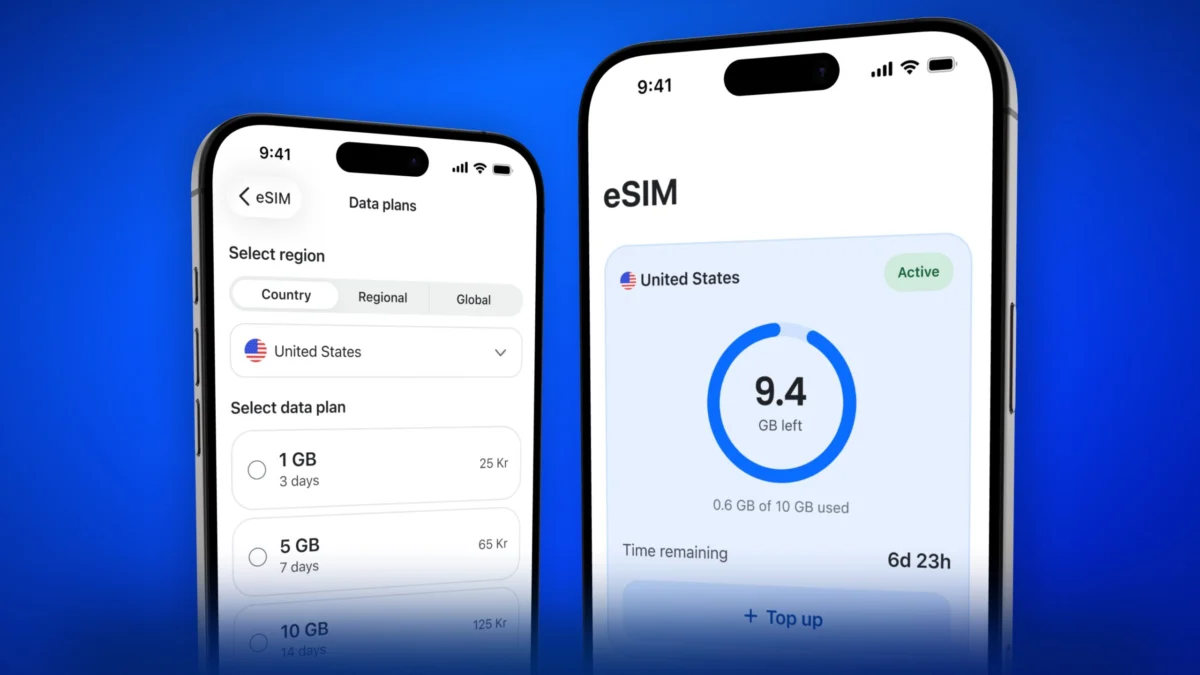
Stockholm-based Truecaller, globally recognized for its caller identification and spam blocking services, has officially launched its eSIM service, marking a significant strategic diversification aimed at bolstering its financial performance amidst a challenging advertising revenue landscape. This new offering positions Truecaller as a direct competitor in the burgeoning global travel eSIM market, leveraging its immense existing user base to secure a competitive edge. The initial rollout makes the eSIM product available in 29 countries, providing travelers with convenient and cost-effective mobile data solutions ranging from 1 GB over 7 days to more extensive plans of 20 GB over 30 days. This move comes at a critical juncture for the company, which recently reported declining net sales and advertising revenues, necessitating a proactive shift towards new monetization avenues.
The introduction of eSIM services is a calculated step by Truecaller to expand its ecosystem beyond its core utility. The company has partnered with Telna, a global cellular connectivity provider, and Telness Tech, a telecom software provider, to seamlessly operate the eSIM platform. This collaboration ensures a robust infrastructure capable of delivering reliable connectivity to international travelers. Truecaller’s strategy hinges on the premise that its established brand trust and a colossal user base exceeding 500 million monthly active users will significantly reduce customer acquisition costs, a major hurdle for new entrants in any competitive market. Fredrik Kjell, Truecaller’s Chief Operating Officer, articulated this advantage, stating, "The starting point is different from other players in the category. They have had to build their audiences from zero. We are offering travel eSIM inside our app that over 500 million people already use and trust every month." Kjell further emphasized that these "established relationships" and years of user engagement fundamentally alter the dynamics of distribution and pricing for Truecaller’s new offering.
Truecaller’s Strategic Imperative: A Pivot from Ad-Centric Model
This venture into telecommunications is not merely an opportunistic expansion but a critical component of Truecaller’s broader strategy to navigate increasing economic headwinds and evolving digital advertising landscapes. The company’s recent financial disclosures paint a challenging picture, underscoring the urgency of this diversification. In its Q1 2026 earnings report, Truecaller revealed a substantial 27% drop in net sales, falling to 362 million SEK (approximately $39.34 million), while its ad revenues plummeted by a stark 44%. These figures highlight a vulnerability to the fluctuating ad market, which has been impacted by global economic uncertainties, increased privacy regulations from major tech players like Apple and Google, and a general saturation in digital advertising spend.
The pressure on Truecaller has been palpable, leading to significant internal restructuring. Just last week, the company announced a workforce reduction of 70 jobs across various teams, a move indicative of efforts to streamline operations and cut costs. Such measures are typically undertaken when a company seeks to realign its resources with new strategic priorities or to improve operational efficiency in the face of revenue challenges. In this context, the eSIM launch is seen as a proactive measure to build more resilient and predictable revenue streams, lessening its reliance on the volatile ad market. Truecaller has already been investing in bolstering its subscription revenues through premium features like its AI Assistant, which leverages artificial intelligence to respond to calls in a user’s own voice, and Family Protection, a service designed to help users protect their loved ones from scammers. The eSIM service is a natural extension of this strategy, adding a tangible utility that directly addresses a common pain point for a significant segment of its global user base: international travel connectivity.
The Rise of eSIM Technology and Market Dynamics
The timing of Truecaller’s entry into the eSIM market is strategically aligned with the technology’s rapid adoption and projected growth. eSIM, or embedded SIM, is a digital SIM that allows users to activate a cellular plan from a carrier without needing a physical SIM card. Its advantages are particularly pronounced for international travelers, offering seamless connectivity across multiple countries without the hassle of swapping physical SIMs, managing different local providers, or incurring exorbitant roaming charges. The convenience and flexibility of eSIMs have driven their increasing popularity, further bolstered by greater device compatibility across smartphones, tablets, and wearables.
Industry reports and market analyses consistently project robust growth for the global eSIM market. For instance, some estimates suggest the global eSIM market, valued at around $8-10 billion in 2023, is poised to exceed $20-25 billion by 2030, growing at a compound annual growth rate (CAGR) of 15-20%. This upward trajectory is primarily fueled by the increasing number of eSIM-compatible devices, the expansion of 5G networks, and a heightened demand for seamless global connectivity, particularly from business travelers and tourists. The ease of switching carriers and plans digitally, often through an app, resonates strongly with the modern consumer’s demand for flexibility and control.
However, Truecaller is entering a competitive landscape already populated by several established and well-funded players. Companies like Airalo, Holafly, Roamless, and NordVPN’s Saily have carved out significant niches in the travel eSIM sector. Airalo, for instance, achieved unicorn status with a substantial investment round, demonstrating strong investor confidence in the market. Roamless recently raised $12 million to expand its global mobile operator ambitions, while Kolet and eSIMo also secured millions in funding. Truley topped up its funding to $5.5 million to boost travel connectivity solutions, indicating a vibrant and attractive investment environment. Truecaller’s challenge will be to convert its large, existing user base into paying eSIM customers, leveraging its brand recognition and integrated app experience as a key differentiator against these specialized providers.
Geographic Reach and Regulatory Hurdles: The India Anomaly
Truecaller’s initial eSIM launch covers a diverse array of 29 countries, primarily concentrated in Europe, North America, Oceania, and select markets in South America, Africa, and Asia. The list includes major travel destinations and economically significant regions such as Italy, Sweden, Spain, France, Germany, Poland, Portugal, Romania, the Netherlands, Belgium, Ireland, Austria, Finland, the Czech Republic, Denmark, Hungary, the United States, the United Kingdom, Australia, Canada, New Zealand, Switzerland, Norway, Chile, Indonesia, Malaysia, South Africa, Egypt, and Nigeria. This broad geographic footprint immediately positions Truecaller as a significant global player.
Conspicuously absent from this initial list, however, is India, Truecaller’s single largest market. This omission is highly significant and likely stems from India’s stringent and complex telecommunications regulations. The Indian government maintains a cautious stance on services that could potentially enable anonymous communication or bypass local Know Your Customer (KYC) requirements, which are designed to prevent fraudulent activities and enhance national security. Indian telecom regulations mandate rigorous identity verification for all mobile subscribers, a process that can be challenging for international eSIM providers to comply with without extensive local partnerships and infrastructure.
The Indian government has previously demonstrated its strict enforcement of these regulations. In January 2024, reports indicated that both Apple and Google’s app stores blocked two prominent eSIM apps, Airalo and Holafly, in India due to concerns surrounding potential fraudulent use and non-compliance with local telecom laws. Regulators were reportedly concerned that these international eSIMs, which do not typically require local KYC verification, could be exploited by individuals for illicit activities, making it difficult to trace communications back to a legitimate user. Given Truecaller’s deep understanding of the Indian market and its strong relationship with Indian users and authorities, its decision to exclude India from the initial rollout is a pragmatic acknowledgment of these regulatory complexities. The company will likely explore pathways for compliance in its largest market, but only after ensuring full adherence to local legal frameworks.
Operational Backbone: Partnerships with Telna and Telness Tech
The successful deployment and operation of a global eSIM platform require sophisticated technical infrastructure and robust partnerships. Truecaller has strategically aligned with Telna and Telness Tech to manage these critical components. Telna, a global connectivity provider, brings to the table its extensive network infrastructure and a vast web of roaming agreements with mobile network operators worldwide. This allows Truecaller to offer seamless data connectivity across multiple countries without having to build its own cellular network, a capital-intensive and time-consuming endeavor. Telna’s expertise in managing global mobile data traffic and ensuring quality of service is crucial for Truecaller’s offering.
Telness Tech, a telecom software provider, is responsible for the underlying platform that manages the eSIM profiles, data plans, billing, and customer provisioning. Their software likely provides the backend system that integrates with Truecaller’s existing application, allowing users to browse, purchase, and activate eSIM plans directly within the Truecaller interface. This partnership highlights Truecaller’s asset-light approach, focusing on its core strengths of user acquisition and brand trust, while outsourcing the complex operational aspects of telecommunications to specialized partners. This model allows for scalability and efficiency, minimizing the upfront investment and operational overhead for Truecaller.
Implications and Future Outlook
Truecaller’s entry into the eSIM market carries significant implications for the company’s financial future and strategic direction, as well as for the broader eSIM ecosystem. For Truecaller, this move represents a bold step towards becoming a more comprehensive utility app, extending its value proposition beyond caller ID and spam blocking to essential travel services. If successful, the eSIM service could evolve into a substantial revenue stream, providing a much-needed buffer against the volatility of ad revenues. It also enhances user engagement and "stickiness," making the Truecaller app more indispensable for its users, especially those who travel frequently. The company’s unique advantage lies in its pre-existing user base, which offers a significant competitive edge in customer acquisition, potentially translating into lower marketing costs and higher profit margins compared to competitors who must spend heavily to attract new users.
For the eSIM market, Truecaller’s entry, backed by its massive user base, could accelerate mainstream adoption of the technology. Its presence might intensify competition, potentially leading to more innovative service offerings, competitive pricing, and improved user experiences across the board. Travelers, in turn, stand to benefit from more choices, potentially lower costs, and the convenience of integrating travel connectivity management within an app they already trust and use daily.
Looking ahead, Truecaller’s strategic pivot suggests a long-term vision of transforming into a "super app" or at least a highly integrated platform that caters to a wider array of user needs. This trend is visible in other global markets, where successful tech companies continuously add new services to retain and monetize their user base. The success of Truecaller’s eSIM venture will be closely watched as a case study in leveraging an established digital identity and communication platform to enter and disrupt new, high-growth markets. Its ability to navigate regulatory challenges, particularly in crucial markets like India, and to effectively convert its vast user base into paying subscribers for its new offerings, will be key determinants of its long-term success in this strategic diversification.








