Ronny Sianturi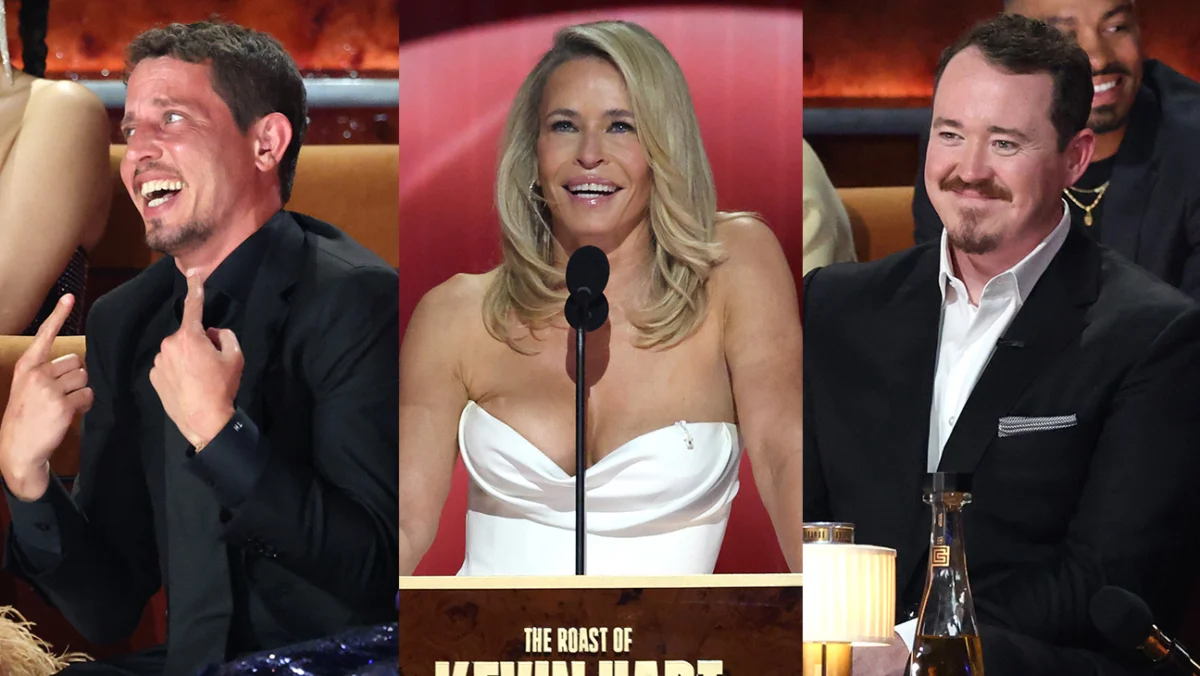
Chelsea Handler is expressing strong disapproval of the material delivered by comedians Shane Gillis and Tony Hinchcliffe during Netflix’s recent “Roast of Kevin Hart,” labeling their jokes as “racist,” “bigots,” and “sexist.” Handler’s criticisms surfaced during an appearance on the “Funny Knowing You” podcast with host Deon Cole, where she detailed receiving messages from individuals claiming to be former partners of Gillis and Hinchcliffe, who allegedly corroborated her negative assessment of the comedians’ public personas and comedic styles.
Context of the Netflix Roast
The “Roast of Kevin Hart,” a high-profile event produced by Netflix, aimed to celebrate the career and comedic journey of the beloved actor and comedian Kevin Hart. Roasts, a traditional form of comedic entertainment, involve a panel of celebrities and comedians humorously but often brutally teasing the guest of honor. While the genre is known for pushing boundaries and employing edgy humor, Handler’s reaction suggests that Gillis and Hinchcliffe crossed lines that she, and potentially a segment of the audience, found unacceptable. The event, which was filmed and later released on the streaming giant, was intended to be a night of levity and affectionate ribbing, but the content of certain sets has ignited a significant debate about the acceptable limits of humor, particularly concerning sensitive social and historical issues.
Handler’s Criticisms and Specific Examples
During her conversation with Deon Cole, Handler stated, “It’s just everything we know, that they’re racist, that they’re bigots, they’re sexist.” When pressed by Cole about whether she found any of their jokes from the roast to be palatable, Handler unequivocally responded, “No. I mean, it was ick. It was gross.” She proceeded to highlight specific instances from Gillis and Hinchcliffe’s sets that drew her ire.
One particularly contentious joke cited by Handler was Shane Gillis’s remark about Kevin Hart’s height, which involved a reference to lynching. Gillis quipped, “Kevin is so short, you’d have to lynch him from a bonsai tree.” Handler’s response to this joke was forceful: “I don’t find those jokes to be funny. Jokes about lynching Black people, lynching is not a joke. That’s worse than rape.” Her strong denunciation underscores the gravity with which she views humor that touches upon historical atrocities and racial violence. The use of lynching as a comedic trope, especially in the context of a roast involving a Black comedian, has been a recurring point of controversy in comedy, with many arguing that it trivializes a brutal instrument of racial terror.
Handler also criticized Tony Hinchcliffe’s segment, which targeted Sheryl Underwood. Hinchcliffe’s joke referenced the suicide of Underwood’s late husband, Michael Sparkman. He stated, “Her husband committed suicide three years into the marriage. I’ve been sitting next to her for two hours, and I have to ask, how did he last that long?” Handler described this as “gross,” adding, “I found them making fun of Sheryl Underwood’s dead husband, who committed suicide, is gross. You know, she’s fine with that. If she says she’s fine with that, she’s fine with that. I wasn’t fine with that.” This commentary highlights a nuanced aspect of roast humor: while the target of the roast is typically the guest of honor, other attendees and their personal tragedies can also become fodder, a practice that Handler found deeply offensive in this instance.
Furthermore, Hinchcliffe’s set reportedly included a joke that referenced George Floyd, a Black man whose murder by a police officer in 2020 sparked global protests against racial injustice. Hinchcliffe said, “The Black community is so proud of you. Right now, George Floyd is looking up at us all laughing so hard he can’t breathe.” This joke, linking Floyd’s death and his final moments to laughter, was met with widespread criticism. The phrase “I can’t breathe” became a rallying cry during the Black Lives Matter movement, symbolizing the struggle against police brutality and systemic racism. Using it in a comedic context, particularly in relation to Floyd’s death, is seen by many as deeply insensitive and exploitative of a tragedy.
Reactions and Responses
Shane Gillis, who was previously dropped by Saturday Night Live in 2019 following resurfaced footage of him using racial slurs, issued a brief statement to The Hollywood Reporter in response to Handler’s comments. His response was dismissive and somewhat confrontational: “This is a big moment for Chelsea. I am glad she’s capitalizing. Good for her. We’re all rooting for her. Anyway come see me July 17 at the football stadium in Philly.” This statement can be interpreted as an attempt to deflect criticism by suggesting Handler is seeking attention and to pivot back to promoting his own career.
Representatives for Tony Hinchcliffe were also contacted by The Hollywood Reporter for comment but had not responded by the time of publication. This lack of immediate response, coupled with Gillis’s indirect reply, suggests a strategy of either downplaying the controversy or awaiting further developments before issuing a more formal statement.
Broader Implications and the Nature of Comedy
Handler’s strong stance reignites a perennial debate within the entertainment industry and among audiences: where is the line between edgy comedy and harmful offense? Roasts, by their very nature, are designed to be uncomfortable and to provoke reactions. However, the specific jokes cited by Handler touch upon deeply sensitive issues: racial violence, suicide, and police brutality.
The context of the "Roast of Kevin Hart" is also significant. Hart himself has navigated complex issues of race and comedy throughout his career. While he has often used his own experiences with racism and discrimination as material, the inclusion of jokes that many perceive as perpetuating racist stereotypes or trivializing tragic events raises questions about the curation and oversight of such high-profile comedic productions.
The fact that Handler received messages from individuals claiming to be former partners of Gillis and Hinchcliffe adds another layer to the narrative, suggesting that these comedians’ controversial material might reflect deeper, ingrained attitudes. While these claims are unverified, they contribute to the public perception of the comedians and their comedic output.
Handler’s concluding remarks on the podcast suggested a sense of superiority in her ability to handle such material, stating, “There was so much disgustingness, that I knew it was gonna be a gross vibe that I would be able to elevate it no problem.” This statement implies that while she recognized the problematic nature of the jokes, she believed she could navigate or even improve upon the "gross vibe" of the roast. However, her primary focus remained on condemning the specific jokes that she found to be beyond the pale.
The fallout from the “Roast of Kevin Hart,” particularly concerning the jokes made by Gillis and Hinchcliffe, highlights the ongoing societal conversation about accountability in comedy. As streaming platforms like Netflix become major producers and distributors of comedic content, the responsibility for ensuring that humor does not cross into harmful territory becomes increasingly scrutinized. The incident serves as a case study in the delicate balance between artistic freedom, comedic expression, and the potential for humor to cause genuine pain and offense, especially when it engages with historical trauma and ongoing social injustices. The reactions from Handler and the initial response from Gillis indicate that this debate is far from settled and will likely continue to shape the landscape of stand-up and televised comedy.