Ronny Sianturi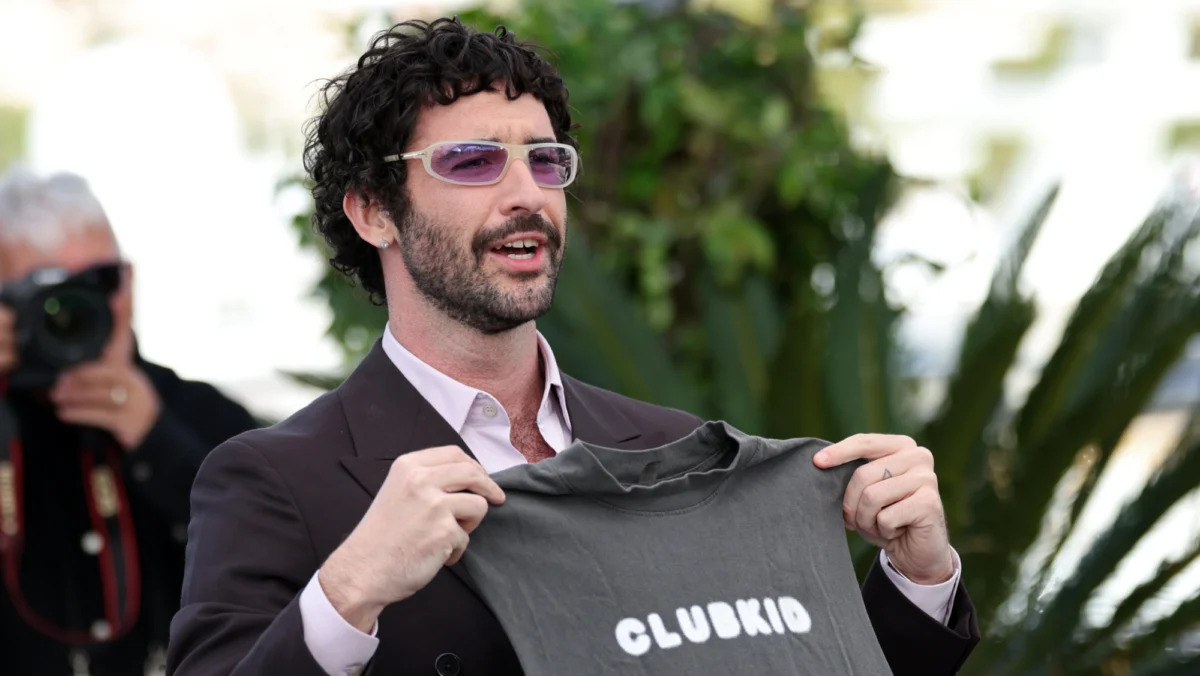
The air at the 77th annual Cannes Film Festival, a hallowed ground for cinematic artistry and commercial enterprise, crackled with a familiar energy this year, yet beneath the surface, a palpable sense of recalibration was underway. While the Palme d’Or race captivated global attention, the bustling Marché du Film, the festival’s vital film market, served as a barometer for the health and future direction of the independent film industry. This year’s event was punctuated by two significant, high-value deals that offered glimmers of hope, even as the broader market grappled with the erosion of traditional revenue streams and the search for new models of distribution and audience engagement.
A Tale of Two Blockbuster Deals: "Club Kid" and "Pumping Black"
The most electrifying transaction of the market saw A24, a studio renowned for its discerning taste and successful nurturing of independent talent, secure worldwide rights to Jordan Firstman’s directorial debut, Club Kid, for a reported eight-figure sum, estimated at a staggering $17 million. This acquisition, which outmaneuvered formidable rivals including Focus Features, Searchlight Pictures, Netflix, and Mubi, represented the kind of fervent bidding war that has become increasingly rare in recent years. The deal was reportedly cemented after a few days of intense negotiations, signifying a strong market belief in the film’s potential.
The genesis of this significant acquisition was the film’s premiere in the prestigious Un Certain Regard section of the festival. Following the screening, Firstman’s jubilant embrace of his 14-year-old co-star, Reggie Absolom, and his subsequent celebratory chant, underscored a palpable sense of achievement and confidence in the project. Club Kid centers on Firstman himself, portraying a gay, drug-addled party promoter who, after a decade adrift in the nightlife scene, finds his life upended by the unexpected arrival of a son he never knew. Critics have described the film as a potent blend of warmth, humor, and genuine emotional depth, all underscored by a raw, uncompromising edge. This combination proved irresistible to buyers, sparking a competitive dynamic that harked back to more robust eras of the Cannes market.
Adding another significant feather to the market’s cap was Amazon’s acquisition of most international rights to Pumping Black, a new psychological thriller from Mimi Cave, the director behind the critically acclaimed Fresh. This deal, also a multi-million dollar, eight-figure transaction, represents the largest package sale of the market. The film, set against the high-stakes world of competitive cycling, boasts a compelling cast including Jonathan Bailey and Natalie Portman. The dual success of these two high-profile deals provided a much-needed jolt of optimism for an industry that had been eagerly anticipating a genuine breakout success.
Navigating a Shifting Economic Landscape
While these marquee deals offered moments of intense excitement, the broader sentiment within the Cannes Film Market suggested a more complex reality. The corridors of the Palais des Festivals were abuzz with activity, and a considerable number of film packages were presented to potential buyers. However, a recurring theme among distributors and buyers was the compressed timeline for evaluating projects. Many announcements were made late in the festival, leaving little opportunity for buyers to thoroughly vet scripts or engage in in-depth discussions, thus deferring substantial deal-making to the post-Cannes period. This adjournment rather than outright closure of the market is symptomatic of a deeper, more fundamental transition within the independent film sector.
The traditional model that sustained independent cinema for decades is demonstrably fraying at the edges. A cornerstone of this ecosystem was the "pay-one television window," a predictable and lucrative revenue stream that empowered distributors to take calculated risks on pre-sales. These pre-sales, based on a film’s talent, a compelling pitch, and the promise of future broadcast rights, allowed for films to be financed before production even began. However, the ascendance of streaming platforms, which have increasingly negotiated exclusive, direct-to-consumer deals on their own terms, has largely eroded this vital window. Consequently, independent distributors find themselves operating in a landscape stripped of the financial safeguards that once facilitated risk-taking and emboldened them to champion diverse and often unconventional projects.
Matt Brodlie of Upgrade Productions observed that "buyers are very specific about what they want and how much risk they are willing to take." This sentiment was echoed by David Garrett of Mr. Smith Entertainment, a veteran of these markets, who noted that deals for projects exceeding a certain budget threshold or lacking a clearly defined path to commercial success are encountering protracted negotiations. Garrett further elaborated that producers are increasingly compelled to "rely more on equity financing and soft money to get movies financed." The cumulative effect is a buyer’s market characterized by a scarcity of buyers willing to commit substantial upfront capital, leading to a situation where films that would historically have triggered robust bidding wars are now met with polite attention and non-committal follow-up meetings.
Emerging Models: Community, Direct Engagement, and Reimagined Theatricals
Despite the challenges, the Cannes market also provided a glimpse into the emergent strategies that are beginning to fill the void left by the decline of traditional models. The concept of "community" is emerging as a powerful alternative in independent film distribution. Watermelon Pictures, a Chicago-based company co-founded by brothers Badie and Hamza Ali, exemplifies this approach. Their focus on films exploring the Palestinian and Arab experience is intrinsically linked to their operational philosophy: building a robust business on the foundation of a deeply engaged, and often underserved, audience. By leveraging WhatsApp groups, cultivating relationships with local community leaders, and collaborating with social media influencers, Watermelon Pictures has demonstrated remarkable success in driving audiences to cinemas. This grassroots approach has yielded significant accolades, with three of their Palestinian-focused films—Palestine 36, All That’s Left of You, and The Voice of Hind Rajib—making the Oscar shortlist for Best International Feature, and The Voice of Hind Rajib ultimately securing a nomination.
A parallel, and arguably more dramatic, manifestation of this community-driven strategy can be seen in the faith-based film sector. Angel Studios, known for its successful releases like King of Kings and The Sound of Freedom, has experienced rapid expansion across Europe, Latin America, and Asia. Their multi-season drama The Chosen, which chronicles the life of Jesus, has been entirely financed by the Christian nonprofit Come and See Foundation. Through theatrical releases of its episodes, the series has garnered over $120 million worldwide. Mark Sourian, president of production at 5&2 Studios, which produces The Chosen, articulated this philosophy: "We are really a fan-based production company. In the 21st century, if you are not in direct connection with your audience, if you are just letting your film ‘speak for itself,’ you are going to lose control of the conversation." 5&2 Studios was present at Cannes to promote their first standalone feature, The Chosen: The Crucifixion, slated for release next spring in partnership with Amazon MGM.
This imperative to engage directly with audiences has been fully embraced by a generation of online creators who are now transitioning into feature filmmaking, bringing their established fan bases with them. Jordan Firstman, who honed his craft on Instagram before directing Club Kid, and horror filmmaker Mark Edward Fischbach, widely known as Markiplier on YouTube, are prime examples. Fischbach’s self-distributed film Iron Lung has achieved a remarkable $50 million in worldwide gross. Firstman’s fluency in social media was not a peripheral factor in A24’s interest in Club Kid; it was an integral component of the film’s appeal and marketability.
Beyond these burgeoning models, the strategy of re-releasing classic films is also proving to be a quiet but significant force. Warner Bros.’ new Clockwork label showcased a restored version of Ken Russell’s controversial The Devils in Cannes Classics. Similarly, Cineverse presented a new 20th-anniversary 4K restoration of Guillermo del Toro’s beloved fantasy Pan’s Labyrinth in anticipation of its theatrical re-release this fall. Del Toro himself eloquently advocated for this approach, stating, "The future of theatrical is a mixture of reissues and new movies. You put Road Warrior out on a big screen, I’m there. You put The Devils, I’m there." This model leverages the enduring appeal of beloved films and the unique experience of seeing them on the big screen, offering a complementary revenue stream for distributors and a welcome opportunity for cinephiles.
A Resilient Industry in Search of New Pathways
While none of these emerging models offer a complete, one-to-one replacement for the lost revenue streams of the past, their collective impact suggests that the audience for independent film remains vibrant and engaged. This audience is simply seeking to be reached through evolving and innovative channels, whether via dedicated faith-based networks, intimate WhatsApp communities, or the dynamic comment sections of YouTube. The deal-making machinery of Cannes may be experiencing some operational friction, but the individuals and companies dedicated to reimagining the independent film landscape are demonstrably present and actively shaping its future. The success of Club Kid and Pumping Black at this year’s market, while significant, represents not just individual triumphs, but also indicators of a broader industry in flux, one that is determined to adapt and thrive in the face of profound change. The lessons learned from these new distribution paradigms and the continued appetite for compelling cinematic narratives portend a more diverse and resilient future for independent cinema.