Ana Megawati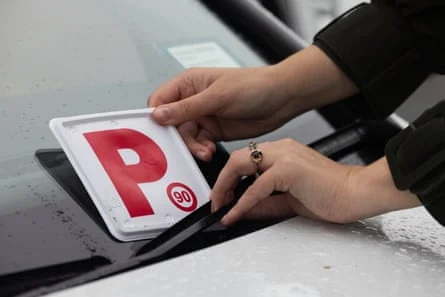
Last year, at the age of 35, a Sydney-based reporter successfully obtained her driver’s licence after a protracted and challenging learning journey that saw her fail the practical test four times. Her experience highlights a growing demographic trend of adults deferring or delaying driver’s licence acquisition, often due to urban living, reliance on public transport, or perceived lack of necessity, only to find driving becomes essential later in life, particularly upon relocation to suburban areas. This personal account serves as a microcosm of the broader challenges and increasing resolve observed among adult learners navigating a rigorous testing system designed for universal safety standards.
The Evolving Landscape of Driver Licensure in Adulthood
Historically, obtaining a driver’s licence was a rite of passage for many teenagers, often coinciding with their 16th or 17th birthday. However, recent decades have witnessed a notable shift in this pattern, particularly in developed nations like Australia. Data from various transport authorities, including those in New South Wales, suggest a steady increase in the average age at which individuals acquire their full driving privileges. Several factors contribute to this phenomenon:
- Urbanization and Public Transport Infrastructure: In major metropolitan centres such as Sydney, robust public transport networks, including trains, buses, and ferries, often negate the immediate need for personal vehicle ownership. Young adults living in inner-city areas can commute efficiently and affordably without a car, reducing the urgency to learn driving.
- Financial Constraints: The cumulative costs associated with learning to drive – including lessons, test fees, and eventually vehicle purchase, insurance, and maintenance – can be substantial. For many young adults, these expenses compete with other financial priorities like education, housing, and establishing a career.
- Environmental Consciousness: A growing awareness of climate change and environmental impact has led some individuals to consciously choose public transport, cycling, or walking over car usage, viewing personal vehicles as less sustainable options.
- Delayed Milestones: Broader societal trends indicate that many traditional adult milestones, such as leaving home, getting married, and having children, are being delayed. Learning to drive can be seen as another such milestone, pushed back as individuals focus on education and career development.
The reporter’s initial disinterest in driving as a teenager, preferring the perceived coolness and simplicity of bus travel with an MP3 player, aligns perfectly with these trends. Her subsequent career as a news reporter in her 20s, likely based in an urban environment, further reinforced this deferral, as the inconvenience of not driving was outweighed by the commitment required for lessons. It was only a significant life change – a move to suburban Sydney – that fundamentally altered her perspective, transforming driving from a luxury to an "essential" requirement for daily life and professional mobility.
A Personal Odyssey: The Reporter’s Journey to the Driver’s Seat
The path to licensure for the 35-year-old reporter was marked by a series of stops and starts, reflecting the common experience of adult learners. Her initial attempts at learning were fragmented, involving various informal instructors including her father and a flatmate, alongside a professional instructor whose unique approach, including playing amateur song recordings, did not lead to a successful outcome. This highlights the importance of finding a compatible and effective instructor, a crucial factor often underestimated by learners.

Her renewed commitment in suburban Sydney led her to Pete, a "jovial British man" with a penchant for political discussions, who became her consistent instructor. This relationship underscored the structured and regular practice necessary for skill development and confidence building, especially for adult learners who may carry a greater burden of self-consciousness or past negative experiences. After several months of dedicated lessons, both instructor and student felt prepared for the ultimate assessment: the Service NSW practical driving test.
Navigating the Rigours of the Driving Test: A Chronicle of Setbacks
The Service NSW practical driving test is renowned for its comprehensive nature, designed to assess not only technical driving skills but also hazard perception, decision-making, and adherence to road rules under real-world conditions. The reporter’s initial test experience, characterized by the testing officer’s "monotone voice" and her own "nervous quips," was a tense affair. Despite her efforts to project confidence, the test culminated in a critical error in a mall car park. While meticulously performing a blind spot check and verbally affirming readiness, she failed to observe an elderly pedestrian emerging at a crossing, leading to an emergency brake intervention by the testing officer and an immediate failure. This incident underscores the paramount importance of continuous situational awareness and the unpredictable nature of real-world driving environments, where even minor oversights can have significant consequences.
This first failure was merely the beginning of a challenging six-month period. The reporter faced a series of subsequent rejections, each attributed to a distinct error:
- Second Attempt: Mounting a curb at a roundabout, a common error reflecting difficulties with spatial awareness and vehicle control, particularly in complex intersections.
- Third Attempt: Attempting to run a red light, a severe safety breach demonstrating a momentary lapse in judgment or misinterpretation of traffic signals. This type of error often results in immediate failure due to its high-risk nature.
- Fourth Attempt: Hesitating too long at a pelican crossing. While often seen as a minor fault, excessive hesitation can impede traffic flow and create uncertainty for other road users, indicating a lack of decisive judgment under pressure.
These repeated failures, each for a different reason, illustrate the multifaceted demands of the driving test and the necessity of mastering a wide array of skills and decision-making processes. They also highlight the emotional toll such setbacks can take, as evidenced by the reporter’s tears after the first failure.
The Psychological Toll and the Drive for Persistence
Learning to drive as an adult, especially after multiple failures, can be a particularly "humiliating" experience, as described by the reporter. The perception that "everyone knows how to drive" can amplify feelings of inadequacy, while simultaneously observing other drivers’ perceived infractions ("running red lights and failing to brake at pedestrian crossings") can lead to frustration and a sense of injustice regarding the stringent testing standards. This sentiment reflects a common internal conflict experienced by many adult learners, balancing personal aspirations with the rigorous objectivity of the testing process.
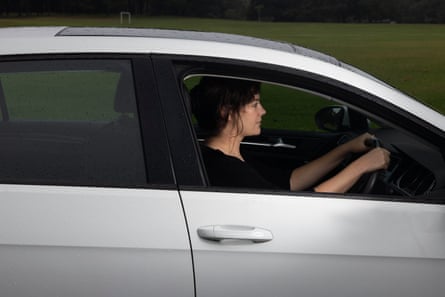
Despite these psychological challenges, the reporter’s "endless capacity to flub" ultimately strengthened her "resolve." This resilience is a critical factor for adult learners, who often have more to lose in terms of time, money, and self-esteem. The commitment to repeatedly pay the $72 test fee and endure the process demonstrates a powerful determination to achieve personal autonomy and meet the practical demands of her new suburban life.
The Fifth Attempt: A Triumph of Tenacity
For her fifth and final attempt, the reporter adopted a strategic approach, both mentally and practically. She chose an outfit subtly channeling "McLeod’s Daughters," a subtle nod to competence and resilience, perhaps hoping to project an aura of self-assurance to the testing officer. Crucially, she withheld information about the test from others, a common tactic to manage expectations and reduce external pressure, steeling herself for the possibility of yet another failure.
This time, a combination of improved skill, heightened focus, and perhaps a degree of good fortune aligned in her favour. She executed a "perfect parallel park," a manoeuvre that often trips up even experienced drivers. She successfully "stayed off the curb," demonstrating improved vehicle control. Even the seemingly minor act of remembering to "turn on the windscreen wipers" (perhaps in response to unexpected weather or as a simulated scenario) pointed to a comprehensive readiness.
Upon returning to the Service NSW office, the moment of truth arrived. The testing officer, shedding his previously observed detached calm, delivered the long-awaited verdict: "Congratulations… You’ve passed." This announcement marked the culmination of months of effort, frustration, and unwavering persistence, transforming the reporter into a licensed driver "against all odds."
Post-Licensure Realities: Embracing Independence and Overcoming the Unexpected
Obtaining a driver’s licence is often seen as the end of a journey, but for many new drivers, it marks the beginning of another learning curve: independent driving. Just weeks after passing her test, the reporter embarked on a new phase of mobility, utilizing a carshare app. This choice reflects another contemporary trend, where individuals, particularly those in urban-adjacent areas, opt for car-sharing services rather than immediate car ownership, balancing flexibility with the occasional need for a vehicle.

Her initial experience of independent driving was tinged with a sense of novelty and freedom, akin to a "2000s heart-throb headed to the beach." However, this nascent confidence was soon tested by an unexpected challenge: a flat tyre. The incident unfolded dramatically, with concerned bystanders attempting to alert her to the issue. Her inability to use her phone for navigation – a restriction common for P-platers (provisional licence holders) in NSW, designed to reduce distractions for new drivers – added to her distress.
Upon reaching a service station, her frantic declaration, "It’s my first day driving!", underscored the raw vulnerability and inexperience of a newly licensed individual facing a roadside emergency. The swift arrival of the NRMA (National Roads and Motorists’ Association), a prominent Australian roadside assistance provider, and the efficient tyre change, transformed a potentially debilitating situation into a valuable learning experience.
Broader Implications: Autonomy, Employment, and the Modern Driver
The reporter’s journey from driving novice to licensed driver, despite multiple setbacks, carries significant implications beyond her personal achievement. It highlights several key areas:
- Individual Autonomy and Quality of Life: For individuals transitioning to suburban or regional areas, a driver’s licence is often indispensable for accessing employment opportunities, educational institutions, healthcare, and social activities. Public transport infrastructure tends to be less comprehensive outside major urban cores, making personal mobility a critical determinant of quality of life and independence. The reporter’s ability to "deal with a flat tyre" transformed her perspective, fostering a sense of capability that extended beyond driving, embodying the notion of self-reliance.
- Employment Opportunities: Many job roles, particularly those requiring travel, site visits, or flexible schedules, explicitly require a valid driver’s licence. Delayed licensure can therefore restrict career progression or access to certain sectors of the job market.
- Adaptability of Adult Learners: The reporter’s story is a testament to the adaptability and determination of adult learners. While teenagers may absorb new skills faster, adults often bring greater maturity, focus, and a stronger sense of purpose to the learning process, even if they encounter initial difficulties.
- Relevance of Driving Test Standards: The rigorous nature of the Service NSW driving test, though frustrating for learners, serves a vital public safety function. The high rate of initial failures, as evidenced by the reporter’s experience, suggests that the system effectively filters out drivers who have not yet reached the required competency levels, ultimately contributing to safer roads for all.
The reporter’s eventual success, and her subsequent handling of a real-world driving challenge, underscores a profound personal transformation. From an initial aversion to driving and a series of frustrating failures, she emerged not just as a driver, but as an individual who could navigate unforeseen challenges on the road. This journey, while personal, resonates with the experiences of many adult learners today, demonstrating that persistence, coupled with robust instruction and a well-designed testing system, can empower individuals to achieve new levels of independence and confidence, regardless of when they decide to take the wheel. The growing trend of adult licensure will continue to shape urban planning, transport policies, and individual lifestyle choices for years to come.