Layla Zulfa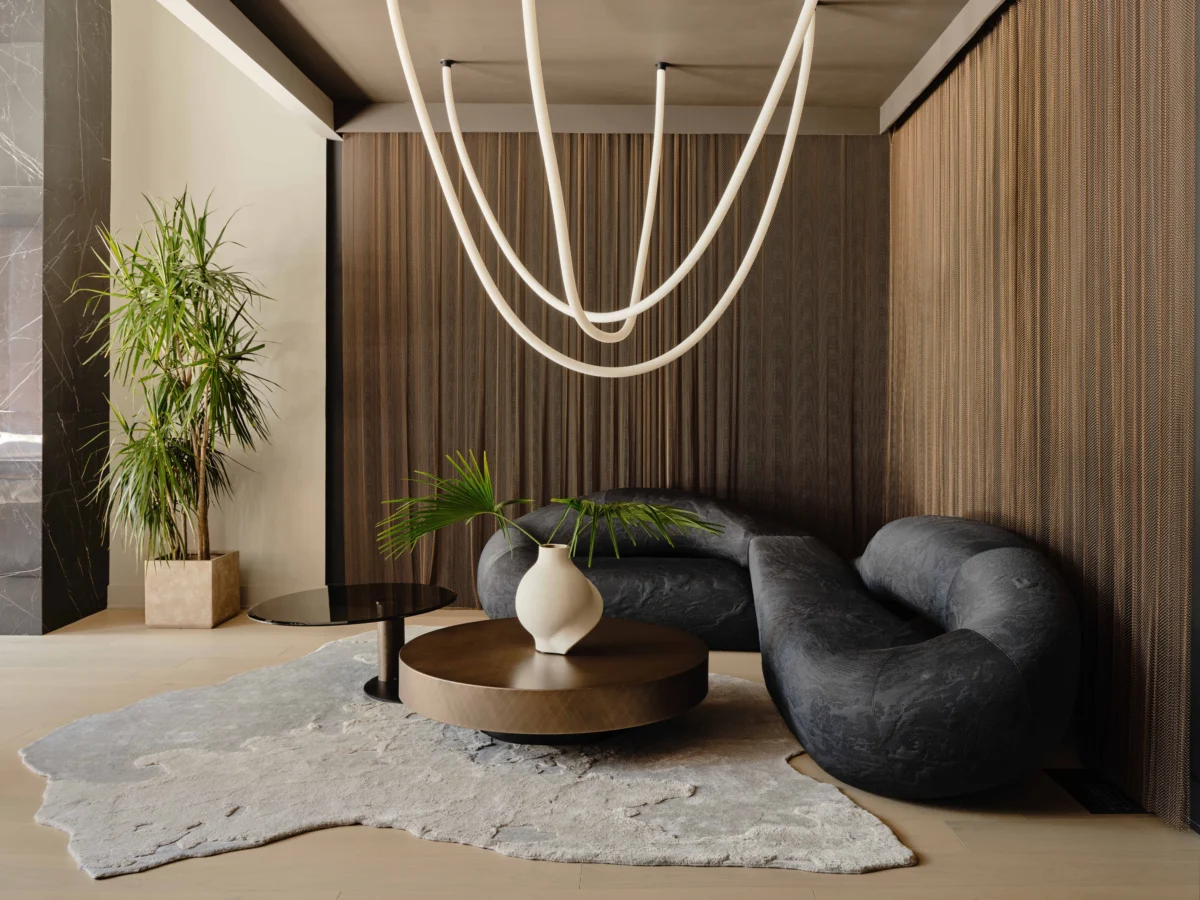
The landscape of contemporary interior design is currently witnessing a significant shift toward the integration of industrial materials into residential and hospitality spaces, marked most notably by the resurgence of metal textiles. At the Kips Bay Decorator Show House Dallas last November, designer Marcus Mohon of Mohon Interiors faced a specific architectural challenge: transforming a sprawling, 800-square-foot former office with flat 10-foot ceilings into a sophisticated, intimate evening lounge. His objective was to introduce architectural distinction without the permanence of physical walls, seeking a method to gently obscure vision without completely occluding the space. The result was a dramatic curtain of fine metal beads encircling a central dining area, a design choice that sparked immediate fascination among industry professionals and the public alike. Early visitors to the installation frequently inquired if the room was filled with smoke, a testament to the ethereal, shimmering quality of the material. This phenomenon highlights a broader movement in high-end design where chainmail, ring mesh, and metal beads are being utilized to navigate the delicate balance between openness and privacy.
A Historical Perspective: From the Seagram Building to Modernity
While the current trend feels avant-garde, the use of metal as a drapery material has deep roots in mid-century modernism. One of the most significant historical precedents is the former Four Seasons Restaurant located within New York City’s iconic Seagram Building. In 1958, architect Philip Johnson and textile designer Marie Nichols collaborated to install panels of horizontal brass and bronze chains as window treatments. These "ripple" curtains were designed to shimmer with the movement of air and light, providing a sense of motion that softened the rigid geometry of the Mies van der Rohe-designed skyscraper. The fact that these features have been preserved through the space’s transition into The Grill serves as a testament to the enduring aesthetic and functional value of metal textiles.

The contemporary revival of these materials is led by firms like Charlap Hyman & Herrero, who have been experimenting with chainmail across a spectrum of residential and hospitality projects. Adam Charlap Hyman, a principal at the firm, notes that the appeal lies in the material’s inherent contradiction: it is armorial and impervious, yet it drapes with the fluidity of silk. This duality allows designers to introduce a "medieval edge" that remains translucent. In their work at the Pocketbook Hudson hotel in Hudson, New York, the firm utilized swinging chainmail curtains to frame the restaurant’s dining room. By layering sconces behind the mesh, they created a luminous glow that suggests a depth of space beyond the immediate perimeter, effectively using the material to manipulate spatial perception.
Technical Specifications and Engineering Hurdles
The transition from traditional fabric to metal textiles involves significant technical considerations that distinguish it from standard interior decoration. Unlike polyester or linen sheers, metal curtains are heavy, industrial products that require specialized engineering. For instance, the metal bead curtain installed by Marcus Mohon at the Kips Bay Show House weighed in excess of 400 pounds. Such installations necessitate reinforced ceiling tracks and the expertise of professional drapery installers who understand the load-bearing requirements of architectural hardware.
Most modern metal curtains are fabricated from stainless steel, though brass, bronze, and aluminum variants are also common. Stainless steel is favored for its durability and low maintenance; it is resistant to corrosion and typically requires nothing more than occasional dusting. From a manufacturing standpoint, designers generally choose between two types of construction:

- Ring Mesh (Chainmail): Composed of interlocking metal rings, this material is inspired by medieval armor. It can be hand-linked for bespoke projects or industrially produced for larger commercial applications.
- Metal Bead Curtains: Consisting of spherical beads linked by thin wire, these offer a more vertical, linear aesthetic and are often used to create "waterfall" effects.
Beyond aesthetics, the use of metal textiles in commercial spaces is often driven by stringent fire safety regulations. In many hospitality environments, traditional fabrics must undergo expensive chemical treatments to meet NFPA 701 fire roar standards. Metal, being inherently non-combustible, provides a natural solution for designers who wish to maintain a soft, draped look without compromising on safety codes.
Case Studies in Residential Luxury: From Atlanta to West Texas
The application of metal textiles is not limited to public showrooms or hotels; it has increasingly become a staple in high-profile residential commissions. In Atlanta, designer Annysa LaMantia recently completed a project for the performer Lil Baby, where she integrated a brass-toned, honeycomb-patterned metal curtain as a dynamic wall treatment. Mounted on a discrete ceiling track, the curtain allows the homeowner to reshape the room’s configuration at will. LaMantia emphasizes that the material prevents a room from feeling static, as the rippling surface reacts to movement and light, offering varying degrees of transparency depending on how it is manipulated.
Similarly, Jamie Loren utilized chain link drapery at the entrance of a room for the Pasadena Showcase House of Design. Her approach involved a custom hook system where each chain strand hung independently. This increased the material’s kinetic potential, allowing it to sway more freely than a unified mesh panel. This focus on movement is a recurring theme among designers who view metal curtains as a way to "exaggerate" the presence of air and light within a home.

Looking ahead, Mohon Interiors is set to incorporate chainmail into a Spanish Colonial ranch in West Texas. In this context, the metal curtains will serve as window treatments in a home gym, providing a sharp, contemporary counterpoint to traditional Spanish architectural elements. This demonstrates the material’s versatility in bridging the gap between historical styles and modern industrialism.
Spatial Psychology and the "Allure of the Hidden"
The resurgence of chainmail and bead curtains also reflects a shift in the psychology of interior space. After years of open-plan living dominating the market, there is a growing desire for "flexible boundaries"—structures that define a space without permanently closing it off. Metal textiles provide a sense of enclosure while maintaining visual connectivity.
Designers describe this as the "allure of the hidden." Because the material is translucent, it creates a sense of mystery regarding what lies behind it. It acts as a veil rather than a barrier. This is particularly effective in multifunctional spaces where a dining area might need to feel "cloistered" from a living room without the need for a solid wall that would block natural light. The tactile nature of the material also plays a role; as Marcus Mohon observed, the physical weight and cool temperature of the metal beads invite human interaction, making the architecture feel more experiential.

Market Trends and Future Implications
The demand for architectural metal mesh and textiles is projected to grow as designers seek alternatives to the "recycled" aesthetics of previous decades. According to industry analysis, the move toward adaptive reuse—converting old offices or industrial buildings into luxury residences—has created a natural vacuum for materials that honor a building’s industrial past while providing modern comfort.
Furthermore, the sustainability profile of metal textiles is a contributing factor to their rise. Stainless steel and aluminum are highly recyclable, and the longevity of a metal curtain far exceeds that of traditional textiles, which are prone to fading, tearing, and staining. As the interior design industry moves toward more sustainable, long-term investments, the "buy it once" nature of metal architectural features becomes increasingly attractive to both designers and clients.
In conclusion, the adoption of chainmail and metal beads in interior design represents more than a stylistic trend; it is a sophisticated response to the needs of modern living. By offering a solution that is fire-safe, durable, and architecturally transformative, these materials allow designers to create spaces that are both secure and fluid. As evidenced by the enthusiastic reception at events like Kips Bay Dallas and the continued legacy of the Seagram Building, the "material in motion" is poised to remain a vital part of the architectural lexicon for years to come. In an era where flexibility is the ultimate luxury, metal textiles provide the perfect medium to divide, obscure, and illuminate the modern home.