Layla Zulfa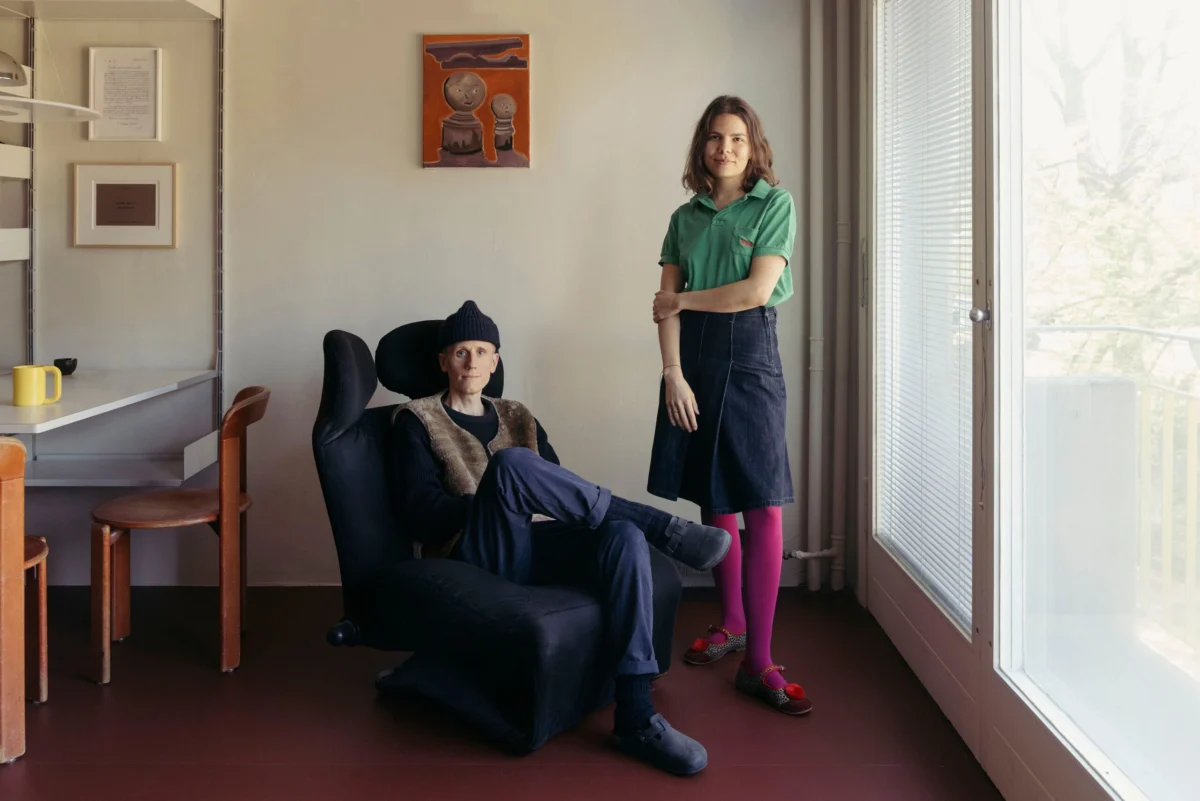
The acquisition of a 355-square-foot studio in Berlin’s Hansaviertel by Leonie Herweg and Simon Freund represents more than a mere real estate transaction; it is a meticulous preservation of post-war modernist history paired with a contemporary vision for urban density. The couple purchased the unit from Herweg’s great-uncle, Klaus, a man who, at the age of 80, moved into the compact space to "experience life" and immerse himself in the cultural fabric of the German capital. Located within the "Giraffe-Hochhaus," a landmark of 1950s architecture, the studio has since undergone a radical transformation that challenges conventional notions of privacy and space management while serving as a catalyst for community revitalization.

Historical Context: The Interbau 1957 and the City of Tomorrow
To understand the significance of the renovation, one must look at the architectural pedigree of the Hansaviertel. The district was the centerpiece of the 1957 International Building Exhibition (Interbau), a high-profile urban planning competition designed to showcase the "City of Tomorrow." Following the devastation of World War II, West Berlin sought to redefine itself through democratic, modernist architecture that emphasized "light, air, and sun"—a stark departure from the cramped, dark tenement blocks of the Wilhelminian era.
The Giraffe-Hochhaus, where the studio is located, was designed by architects Klaus Müller-Rehm and Gerhard Siegmann. Completed in 1957, the 17-story tower was a radical experiment in high-density living. It earned its nickname, "The Giraffe," due to its slender profile and the height it reached on its relatively small footprint. The building was designed exclusively with studio apartments, testing the viability of single-occupancy living in a rapidly modernizing metropolis.

One of the more peculiar aspects of the building’s design is its gendered spatial layout, a reflection of 1950s social engineering. The west-facing units, designated as the "men’s side," were equipped with small kitchenettes, under the assumption that men would prioritize simplicity. Conversely, the east-facing units, or the "women’s side," featured separate kitchens. The rationale provided at the time suggested that women, being more "industrious," would benefit from the morning sun while preparing meals. Herweg and Freund’s studio is situated on the west side, a detail that informed their approach to the kitchen’s eventual overhaul.
Chronology of the Renovation: From Construction Site to Hotel Suite
When Herweg and Freund took possession of the apartment, it was in a state that Herweg describes as "ready-to-move-in," yet it lacked the historical integrity and functional flow they desired. The couple, both professionals in the art world—Herweg having spent 14 years in Switzerland and a stint in Cairo—brought a refined aesthetic sensibility to the project. Their decision to strip the apartment to its core was immediate. On the day they moved in, they removed the bathroom door and began dismantling the 1990s-era kitchen.

The renovation process lasted over a year, during which the couple lived amid the dust and debris of an active construction site. The timeline of the project highlights a commitment to detail over speed:
- Demolition and Stripping: The couple removed seven layers of wallpaper and salmon-colored vinyl flooring that had been added over the decades. The goal was to rediscover the original proportions of the 1957 structure.
- Structural Reimagining: To maximize the 355 square feet, the couple opted for an open-plan concept. This included the controversial decision to leave the bathroom without a door, replacing it with a chainmail curtain to provide a visual boundary without sacrificing the sense of continuous space.
- Material Selection: In a nod to German design heritage, they installed dark red linoleum flooring, the same material used in the Bauhaus library in Dessau. This choice provided a durable, historically resonant foundation for the interior.
- Custom Fabrications: A custom stainless-steel kitchenette was commissioned to replace the outdated fixtures. During the interim, the couple relied on a 1970s mobile electric stove that had belonged to Herweg’s great-grandparents—a piece they continue to use today for its functional and sentimental value.
- Furnishing and Curation: The final phase involved integrating high-end modular systems, such as Vitsœ shelving and a Nils Holger Moormann FNP shelving system for their extensive book collection.
Supporting Data: The Economics and Ergonomics of Micro-Living
The Hansaviertel project arrives at a time when Berlin is grappling with a severe housing shortage and skyrocketing rents. According to data from the Berlin-Brandenburg Statistics Office, the demand for single-person households in the city has risen steadily, now accounting for more than 50% of all private households. In this climate, the efficient use of small square footage is no longer just an aesthetic choice but a socio-economic necessity.

Herweg and Freund’s studio utilizes several ergonomic strategies to make 33 square meters (355 square feet) habitable for two people:
- Vertical Integration: By using floor-to-ceiling shelving systems, the couple moved storage away from the floor plane, creating a larger perceived footprint.
- Multi-functional Furniture: A dining table is incorporated directly into the Vitsœ shelving system, serving as both a workspace and a communal area.
- Visual Continuity: The removal of internal barriers (like the bathroom door) and the use of a consistent color palette prevent the eye from "stopping," which tricks the brain into perceiving a larger area.
The financial aspect of the renovation also reflects a specific strategy. As Herweg noted, the small scale of the apartment allowed for "little extravagances" that would be budget-prohibitive in a larger home. High-quality electrical sockets, designer curtains from Studio Azur in Marseille, and curated artworks—including pieces by Sunah Choi, Katrin Plavcak, and Paul Levack—were feasible because the quantities required were minimal.

Community Impact: Beyond the Four Walls
For Herweg and Freund, the renovation of their studio was the first step in a broader commitment to the Hansaviertel neighborhood. Observing that many of the local storefronts were "in a kind of slumber," the couple expanded their footprint into the community by opening Café Tiergarten and an art gallery named Grotto.
This move aligns with the "broken windows theory" mentioned by Herweg—the idea that visible signs of care and investment in a neighborhood encourage others to treat the environment with similar respect. By revitalizing empty commercial spaces, they have fostered a sense of neighborly connection that mirrors the original intentions of the Interbau planners.

"Building a community requires effort," Herweg explained. "Taking care of your neighborhood and treating each other and the environment, including buildings, with respect often triggers a desire in others to get involved." This philosophy has transformed their 355-square-foot living space into a hub for a much larger social network, effectively "expanding their living space in a figurative sense."
Broader Implications and Analysis
The project serves as a case study for the preservation of modernist architecture in the 21st century. While many 1950s housing projects have been demolished or poorly modernized, Herweg and Freund have demonstrated that these spaces can be adapted for contemporary life without losing their historical soul.

Furthermore, the "Giraffe" studio challenges the modern obsession with square footage as a metric for quality of life. By focusing on materiality, light, and community engagement, the couple has created a residence that functions more like a "hotel suite surrounded by nature" than a cramped urban apartment. The Hansaviertel, once a "revolutionary model of modern living" that some critics felt never truly took off, is finding new life through a younger generation of residents who value its proximity to the Tiergarten park and its unique architectural identity.
As Berlin continues to grow, the lessons learned from the Giraffe-Hochhaus renovation—efficiency, historical respect, and community responsibility—will likely become increasingly relevant. The studio stands as a testament to the idea that a home is defined not by its size, but by the intentionality of its design and the depth of its connection to the world outside its windows. Herweg and Freund’s "love letter" to the Hansaviertel suggests that the future of urban living may well be found in the thoughtful reimagining of its past.