Ana Megawati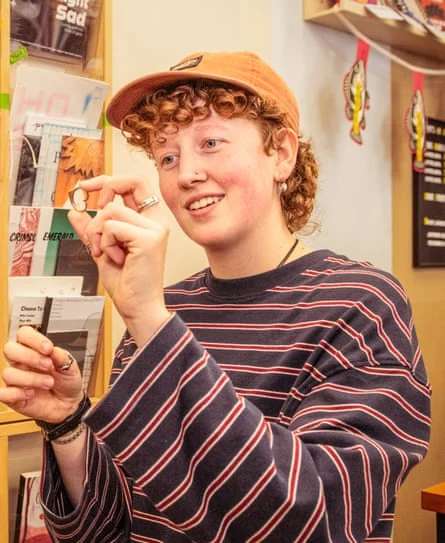
A burgeoning grassroots movement is sweeping across neighborhoods worldwide, manifesting in vibrant boxes overflowing with eclectic knick-knacks, all part of the rapidly expanding phenomenon of trinket exchanges. These community-driven installations offer participants a unique opportunity to trade small, often sentimental items, providing a surge of "sidewalk joy" without the ecological footprint of traditional consumption. What began as a scattered trend in the United States last autumn has rapidly escalated into a global network, with the United Kingdom emerging as a significant hotspot, underscoring a collective yearning for connection, nostalgia, and sustainable pleasure in an increasingly complex world.
The Genesis of a Global Movement: From Books to Baubles
The concept of neighborhood exchanges is not entirely new, tracing its roots back to the highly successful Little Free Libraries. Initiated by Todd H. Bol in Hudson, Wisconsin, in 2009, these miniature, publicly accessible book-sharing boxes fostered community engagement and promoted literacy by allowing individuals to "take a book, leave a book." This model of decentralized, trust-based sharing proved immensely popular, inspiring a wave of similar initiatives. The global pandemic, with its emphasis on local communities and low-contact activities, further accelerated the diversification of these installations. As people sought novel ways to interact and find solace close to home, the idea of exchanging items beyond books began to take hold.

Rachael Harms Mahlandt, a Portland-based artist, recognized and actively championed this evolving trend. Since 2022, she has been meticulously creating and cataloging what she affectionately terms "sidewalk joy" – a broad category encompassing everything from mug exchanges and seed swaps to mini-libraries designed for "itty-bitty books." Her own yard serves as a vibrant testament to this philosophy, hosting several such installations. Recognizing the burgeoning interest, Mahlandt launched a comprehensive world map of these installations in January 2024. The growth recorded on this map has been nothing short of exponential, swelling from approximately 800 registered "sidewalk delights" to nearly 1,500 in just two months. This remarkable expansion highlights the rapid adoption and organic spread of these community-led initiatives, with the United Kingdom experiencing a particularly sharp uptake. Mahlandt notes the UK’s transformation from having a solitary entry on the map to becoming a concentrated hub for trinket boxes, signaling a profound resonance with the British public.
Edinburgh’s Enthusiastic Embrace: A Case Study at Argonaut Books
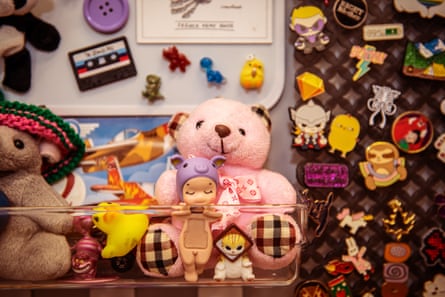
Among the many locations worldwide, Edinburgh, Scotland, stands out as a vibrant example of this trend’s success. At Argonaut Books in Leith, a bright pink box brimming with a kaleidoscopic array of objects serves as a focal point for the local community. This particular trinket exchange is the brainchild of Sam Stevens, a 29-year-old pet-sitter originally from Toronto, Canada. Stevens’ inspiration for the Edinburgh Trinket Trade (@edinburgh.trinket.trade) stemmed from observing similar online communities, specifically the San Francisco-based @sunset.trinket.trade. A self-professed "trinket collecting" enthusiast, Stevens was captivated by the concept of a free, community-driven exchange. She subsequently joined a group chat for trinket trade organizers, predominantly based in the United States, to glean insights and best practices before launching her own initiative from her Edinburgh home. Stevens emphasizes the inherent enjoyment in designing and assembling the box, much of its initial contents sourced from her personal collections acquired at car boot sales, highlighting the initiative’s role in sustainable recycling.
The decision by Argonaut Books to host Stevens’ trinket box was a natural fit for its community-centric ethos. Adam Barclay, the proprietor of Argonaut, explains that the bookstore actively seeks to foster local engagement beyond merely selling books. In March, as part of a broader initiative to support local artists, Argonaut hosted Eve Tong’s innovative coin-operated print vending machine, which dispensed mini-prints for a nominal fee of £1. It was the positive reception to this artistic installation that provided Stevens with the confidence to approach the bookstore as a potential host for her trinket exchange. The custom-designed box was installed at the beginning of April, and Barclay describes its presence as "really nice," noting that it has attracted a diverse array of patrons, including Argonaut staff members who occasionally engage in trades themselves, as evidenced by a new magnetic lobster now adorning the staff whiteboard.
The Dynamics of Exchange: Instant Gratification and Community Bonds
The immediate success of the Edinburgh Trinket Trade surprised even Stevens, who witnessed an "overnight" surge of 400 followers and a rapid increase in community participation. Her regular visits to check on the box frequently coincide with active trading, and she often finds herself tagged online by individuals proudly showcasing their new acquisitions. This digital dimension amplifies the community aspect, transforming individual exchanges into shared online experiences.
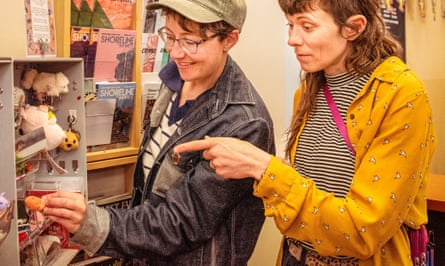
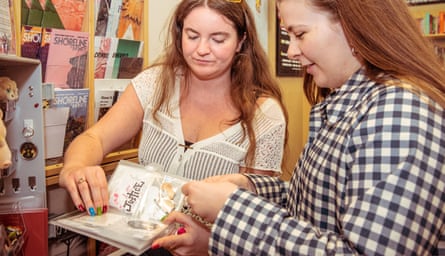
The act of trading itself is imbued with a unique charm. Visitors, like sisters Franky and Liza Cannon, find themselves drawn to the vibrant display. Franky, an artist and writer, who frequents Argonaut as her local bookshop, was initially captivated by the print vending machine, which led her to discover the trinket box. Both sisters, now in their 30s, fondly recall childhood experiences with geocaching and letterboxing – forms of treasure hunting that instilled in them a lasting appreciation for discovering small, hidden delights. While Franky admits a current preference for "ancient, mysterious" trinkets found during beachcombing, she readily embraces the joy of newer, playful items, articulating a sentiment shared by many: "We all need more fun in our lives." During their visit, Franky opted for a charming crab coin purse, while Liza selected a tiny rocket pin. Although they arrived unprepared, Franky spontaneously contributed her fluorescent bike safety armband to the exchange, demonstrating the fluid, reciprocal nature of the system.
Stevens finds immense satisfaction in observing these trades, often engaging participants in conversation about their choices: "I like to ask them: what did you take, what did you trade for?" She notes that the box’s contents are constantly evolving, frequently featuring 90s and 2000s collectibles such as Pokémon and Pingu, highlighting the potent role of nostalgia in these exchanges. Stevens herself collects nostalgic items from her own childhood, including Tamagotchis, Polly Pockets, and Sylvanian Families, underscoring the personal connection many have to these seemingly trivial objects.
The Psychology of Trinketcore: Nostalgia, Control, and Pure Joy
The appeal of trinket exchanges extends beyond mere novelty; it taps into deeper psychological and societal currents. Terms like "trinketcore" have emerged to describe this aesthetic of collecting small, whimsical objects. Commentators suggest it embodies "escapist nostalgia" and "whimsymaxxing"—a deliberate embrace of silly, delightful sources of pleasure. Adam Barclay refers to it as "the little treatification of the world," where small, accessible joys provide momentary relief from everyday pressures. As one thrifter observed in the New York Post, "Collecting trinkets feels like healing your inner child," pointing to a desire for comfort and playfulness reminiscent of youth.
Recent academic research further illuminates these motivations. Dr. Martin Reimann, an associate professor of marketing at the University of Arizona’s Eller College of Management, who studied engagement with collecting during the COVID-19 pandemic, notes that "People have a desire for control when times get tough, and collecting is great because it can put you in control of your little world." In an era marked by global uncertainties and rapid change, the act of curating a personal collection, even through informal exchanges, offers a tangible sense of agency and order. This psychological benefit provides a compelling explanation for the surge in popularity of such low-stakes, high-reward activities.
This sentiment of seeking joy and control is echoed by participants. Noa Carter, a 22-year-old photography student, was drawn to a pink Littlest Pet Shop bird within the box, a collectible she has cherished since childhood. Having discovered the Edinburgh box via an online map of UK trinket swaps, she initially arrived without an item to trade. However, Stevens encourages participants to take items even without an immediate swap, emphasizing that the system naturally balances out. Carter took her bird, later returning with a pink stuffed mouse and a tiny diplodocus to contribute, showcasing the self-regulating generosity of the community. Her friend, Cameron, found delight in a plush fish keychain, immediately clipping it onto her backpack.
Similarly, Niamh O’Connor and Ellie Millar, both 27, arrived at Argonaut Books bearing a "wee selection" of gifts, including stickers and a Barbie lipstick that reveals a Ken doll upon winding. Having previously missed out on the popular print vending machine, O’Connor was determined to experience the trinket exchange. Browsing the box, she exclaimed, "I just want the entire box in my house," capturing the pure, unadulterated desire for these small treasures. Millar articulated her enjoyment of "collecting things for the sake of it… having little things and no one just telling me it’s rubbish," highlighting the validation and freedom that these exchanges provide for harmless hobbies. O’Connor chose a Sonny Angel baby doll wearing a purple pig hat, another popular 2000s nostalgia figure, while Millar selected a magnetic tomato and a "Disco Cowgirl" sticker, both promising to return.
A Sustainable Model: Dopamine Without the Ecological Impact
Beyond psychological comfort, trinket exchanges offer a compelling answer to growing concerns about consumerism and environmental sustainability. While some might dismiss the contents as "tat" – small, often inexpensive items of little inherent value – the exchanges operate as a "circular tat economy," promoting reuse and reducing waste. As TikTok user @alottameg, who manages a London trinket exchange, explains, it provides "instant gratification, that dopamine without the ecological impact."
Stevens strongly concurs with this assessment, stating, "It’s a way people can get a boost of joy without having to buy something, but also recycle something they don’t want any more." This model directly contrasts with the often-criticized fast-fashion and disposable goods industries, offering a tangible, local alternative that aligns with principles of sustainability and mindful consumption. Furthermore, Stevens observes that participants often share profound emotional connections to the items they contribute. "You can tell it’s something they’ve had a long time and they’re like, ‘Someone else will love it instead of me’," she notes, emphasizing the sentimental value and the act of passing on cherished objects to new appreciative owners. This emotional dimension transforms the exchange from a simple transaction into an act of shared sentimentality and community care.
Broader Implications and Future Outlook
The rise of trinket exchanges represents more than just a fleeting trend; it signals a broader cultural shift towards localism, shared resources, and a renewed appreciation for simple, tangible joys. These micro-installations are transforming public spaces into interactive community hubs, fostering spontaneous interactions and strengthening neighborhood bonds. In a world often characterized by digital isolation, these physical, analogue exchanges provide a vital counterpoint, encouraging real-world engagement.
The sustained growth of Rachael Harms Mahlandt’s world map indicates a robust and expanding movement, with the UK’s enthusiastic participation underscoring a particular national appetite for such initiatives. While the Edinburgh trinket box at Argonaut Books has since moved to Lighthouse, another local bookshop in the Southside area, the former host is already considering installing a smaller, permanent exchange, demonstrating the lasting appeal and integration of these boxes into community life.
Sam Stevens, the force behind Edinburgh’s exchange, expresses unwavering commitment to the project: "I’ll do it for ever if people want." This dedication, coupled with the widespread enthusiasm from participants and hosts alike, suggests that trinket exchanges are poised for continued growth and evolution. In an era where complex global challenges often overshadow individual moments of happiness, these humble boxes offer a powerful reminder, as Adam Barclay wisely states, that "It’s just nice to have little things." They embody a collective pursuit of uncomplicated joy, sustainable practices, and vital community connection, proving that sometimes, the smallest treasures yield the greatest delight.