Layla Zulfa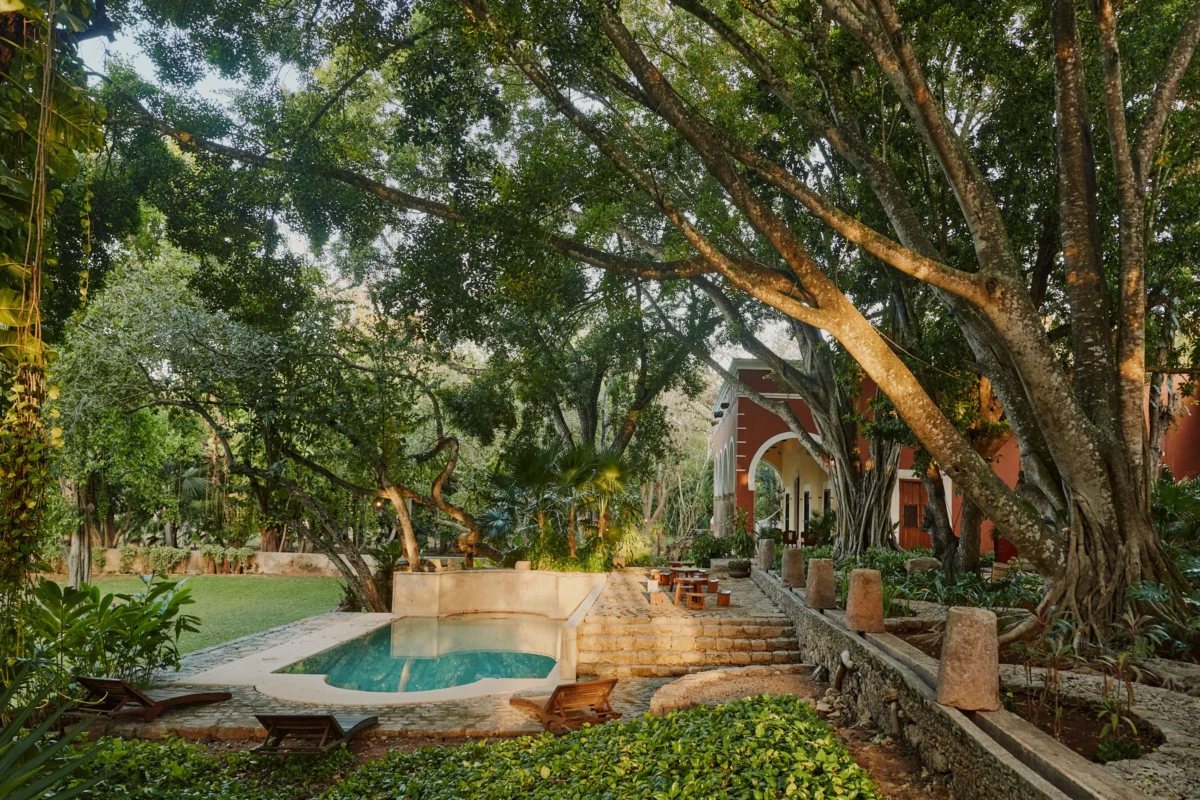
In a strategic collaboration designed to bridge the gap between contemporary interior design and ancestral Mexican craftsmanship, AD100 designer Nate Berkus recently led an intensive four-day cultural expedition through the Yucatán Peninsula. Orchestrated in partnership with travel curator David Prior and Capital One Entertainment, the journey centered on Mérida and its surrounding rural landscapes, offering a group of design professionals and aficionados an intimate look at the region’s architectural evolution and its burgeoning "Orange Economy"—the sector of the economy based on intellectual property, heritage, and creativity. The expedition served as a platform to highlight the resurgence of traditional materials, specifically henequen fiber, and the preservation of historic haciendas through modern architectural interventions.

The Resurgence of the Henequen Industry
A primary focus of the Berkus-led tour was the exploration of henequen production, a cornerstone of Yucatecan history often referred to as "Oro Verde" or Green Gold. During the late 19th and early 20th centuries, the Yucatán Peninsula was one of the wealthiest regions in the world due to the global demand for henequen fiber, derived from the Agave fourcroydes plant. The fiber was essential for manufacturing binder twine and maritime rope. However, the advent of synthetic fibers in the mid-20th century led to a sharp decline in the industry, leaving many historic haciendas in a state of ruin.
The group visited a working farm and studio owned by designer Angela Damman and her husband, Scott. Since relocating to the region in 2011, the Dammans have been instrumental in reviving henequen and sansevieria (snake plant) cultivation. Unlike the industrial-scale production of the past, the Dammans’ approach focuses on high-end luxury applications. The process remains labor-intensive: leaves are harvested by hand, the pulp is stripped to reveal raw fiber, and the material is then sun-bleached and combed.

During the visit, Berkus and the participants observed the manual combing process, where raw, sheep-wool-like fibers are transformed into silky, high-luster strands. These fibers are subsequently utilized in Damman’s "maximalist" designs, which include shaggy chandeliers and intricate handbags. This artisanal revival represents a significant shift toward sustainable luxury, where the value lies in the provenance of the material and the preservation of indigenous weaving techniques.
Architectural Chronology: From Pre-Columbian to Brutalist
The expedition’s itinerary was structured to provide a chronological overview of the region’s built environment, beginning with the ancient Maya and concluding with contemporary modernist structures. A pivotal stop was the archaeological site of Uxmal, a UNESCO World Heritage site known for its Puuc-style architecture. Characterized by intricate stone mosaics and geometric friezes, Uxmal served as a primary inspiration for the "Mayan Revival" movement in the United States.

Architectural historians note that the decorative elements of Uxmal directly influenced Frank Lloyd Wright, particularly evident in his design of the Ennis House in Los Angeles. By visiting the site, the Berkus group was able to trace the lineage of these motifs from the 9th-century Maya to 20th-century American modernism.
The journey then moved toward contemporary interpretations of the Yucatecan landscape. At Plantel Matilde, the group explored the studio and residence of artist Javier Marín. Designed as a "brutalist folly" in the heart of the jungle, the structure utilizes raw concrete and open-air galleries to house Marín’s monumental sculptures. The site exemplifies a growing trend in Mexican architecture where the boundaries between indoor and outdoor spaces are blurred, and the natural environment is treated as a structural component rather than a mere backdrop.

The architectural survey concluded in the city of Mérida at Casa Escuela. This 1919 residence, formerly a private home and later a school, was meticulously restored by architect Ezequiel Farca and designer Monica Calderón. The restoration highlights the delicate balance between preservation and modernization; original features, such as the colorful pasta tile floors (pisos de pasta), were maintained while adding functional modernist elements like perforated concrete screens. These screens serve a dual purpose: they provide a contemporary aesthetic while acting as passive cooling systems, a necessity in Mérida’s tropical climate.
Socio-Economic Context and Regional Safety
The timing of the expedition coincided with a period of heightened international scrutiny regarding safety in Mexico. Following high-profile security incidents in other parts of the country, questions were raised concerning the viability of tourism in the region. However, statistical data from the Mexican National Public Security System (SESNSP) consistently ranks Yucatán as the safest state in Mexico. Mérida, the state capital, frequently appears at the top of indices for quality of life and urban safety in Latin America.

The decision to proceed with the trip was bolstered by Mérida’s reputation as a secure hub for international investment and cultural exchange. Tourism officials in the Yucatán have worked aggressively to decouple the state’s image from the volatility seen in northern border states or certain Pacific coast regions. For Berkus and the travel team, the expedition was an opportunity to demonstrate that the region remains a stable and fertile ground for design exploration.
Culinary Heritage and the "Milpa" System
Beyond architecture and craft, the expedition emphasized the integral role of gastronomy in Yucatecan cultural identity. The region’s cuisine is a distinct hybrid of indigenous Mayan ingredients—such as achiote, sour orange, and habanero—and European influences brought by Spanish and Lebanese immigrants.

A significant cultural demonstration took place in a village cooperative where local women harvest honey from the Melipona bee, a stingless bee native to the Yucatán. The honey is prized for its medicinal properties and has been a staple of Mayan culture for over a millennium. The group participated in the preparation of cochinita pibil, perhaps the region’s most famous dish. The process involves marinating pork in achiote and citrus, wrapping it in banana leaves, and slow-roasting it in a pib—an underground earthen oven.
This method of cooking is inextricably linked to the "Milpa" system, an ancient Mayan agricultural practice of intercropping maize, beans, and squash. By highlighting these traditional foodways, the expedition underscored the interconnectedness of land, diet, and design. As Berkus noted during the journey, understanding a culture’s aesthetic output requires an equal understanding of its essential flavors and the labor involved in its sustenance.

Implications for the Global Design Market
The Berkus expedition highlights a broader shift in the global interior design market toward "hyper-localism" and ethical sourcing. High-net-worth consumers and top-tier designers are increasingly moving away from mass-produced luxury in favor of items with a documented history and a positive social impact.
By bringing a group of influential designers to sites like Sac Chich and the Dammans’ hacienda, Berkus and David Prior are facilitating a direct pipeline between Yucatecan artisans and the international market. The village of Sac Chich, for instance, houses a foundation established by Javier and Arcadio Marín that supports local potters and weavers. The products created here—ceramics and textiles that blend traditional motifs with contemporary silhouettes—are now finding their way into high-end retail environments in New York and Los Angeles.

This "design diplomacy" has several implications:
- Economic Sustainability: By creating demand for traditional crafts, designers help ensure that artisanal skills are passed down to younger generations, preventing the loss of cultural heritage.
- Environmental Impact: The use of natural fibers like henequen and mineral-based finishes like nopal-lime plaster offers a low-carbon alternative to synthetic building materials and home goods.
- Market Differentiation: For designers like Berkus, incorporating unique, handcrafted elements from specific geographic regions provides a level of exclusivity and narrative depth that cannot be replicated by industrial manufacturing.
Conclusion and Future Outlook
The Nate Berkus design expedition to the Yucatán serves as a blueprint for a new era of cultural tourism—one that prioritizes education, architectural scholarship, and the support of local creative economies. The journey successfully navigated the complexities of modern Mexico, contrasting the ancient ruins of Uxmal with the brutalist lines of Plantel Matilde, and the industrial history of the henequen boom with the sustainable luxury of the present.

As Mérida continues to grow as a global design destination, the integration of traditional Mayan craftsmanship into contemporary residential and commercial projects is expected to accelerate. For the participants, the expedition was more than a tour; it was a professional reconnaissance of a region that continues to define the intersection of heritage and innovation. The success of this journey suggests a growing appetite for immersive, expert-led travel experiences that go beyond sightseeing to foster genuine cross-cultural collaboration in the world of design.