Layla Zulfa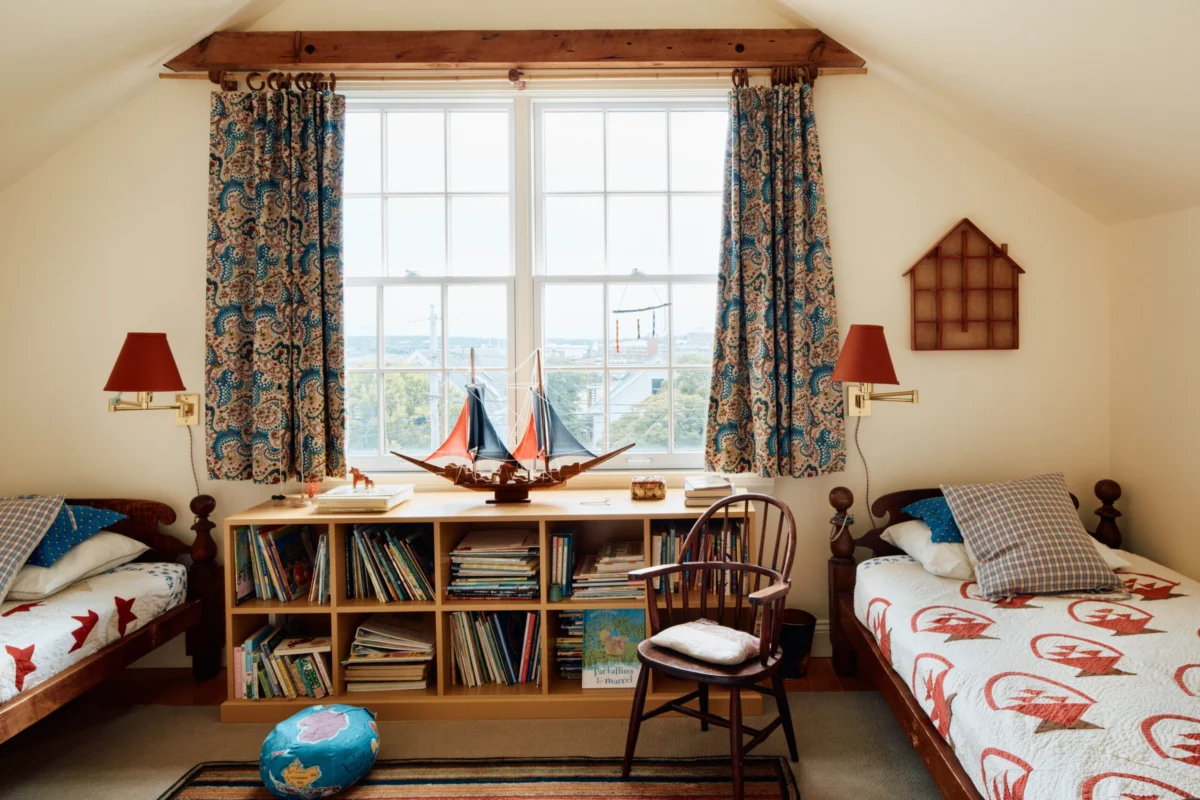
In the historic Munjoy Hill neighborhood of Portland, Maine, a mid-19th-century residence has undergone a comprehensive transformation that serves as a masterclass in integrating ancestral history with modern functional design. The project, led by Kacee Witherbee and Juliana Barton of the Maine-based Insides Studio, began as a modest proposal to update a kitchen but rapidly evolved into a holistic reimagining of a 3,000-square-foot Victorian home. At the heart of this renovation was not a desire for the new, but a commitment to the old: a vast collection of furniture, textiles, and artifacts inherited by the homeowners across multiple generations.

The residence, constructed in the 1850s, stands on a leafy rise overlooking Casco Bay. For the young family residing there, the home needed to accommodate the chaotic energy of modern child-rearing while providing a dignified stage for a "trove of treasures." These items—ranging from an antique cabinet that once graced a grandmother’s living room to a needlepoint rug that had transitioned through various apartments—became the literal and figurative anchors for every design decision made by the Insides Studio team.
The Architectural Context of Munjoy Hill
To understand the significance of the renovation, one must consider the architectural and social history of its setting. Munjoy Hill, located on the eastern end of Portland’s peninsula, is one of the city’s most storied districts. Historically a working-class enclave populated by Irish, Italian, and Jewish immigrants, the neighborhood is characterized by a dense concentration of Victorian, Queen Anne, and Italianate architecture.

The 1850s house in question predates the Great Fire of 1866, which destroyed much of Portland’s downtown but left portions of Munjoy Hill intact. Consequently, the structure retained many of the "playful quirks" common to mid-century Maine construction, including a labyrinthine layout of doorways and remnants of secondary staircases—often referred to locally as "stairs to nowhere"—that were left behind when large homes were subdivided into apartments during the early 20th century.
In recent years, Munjoy Hill has seen a dramatic rise in property values, with real estate data indicating a steady appreciation as the area becomes a preferred destination for young professionals and families. This gentrification has brought a renewed focus on historic preservation, as homeowners seek to balance the demands of 21st-century living with the stewardship of Portland’s limited stock of pre-Civil War housing.

Project Evolution: From Kitchen Refresh to Whole-House Vision
The collaboration between the homeowners and Insides Studio was initially narrow in scope. The primary objective was a kitchen renovation to improve flow and utility. However, as Witherbee and Barton immersed themselves in the property, the project expanded to include a new full bathroom, extensive custom millwork, and the conversion of a formal parlor into a multi-functional library.
"They were willing to embrace some of the playful quirks of the house," noted Juliana Barton, explaining that the design team viewed the home’s architectural irregularities as opportunities rather than obstacles. This philosophy is perhaps most evident in the treatment of a former pass-through—a relic of an earlier layout that was no longer functional. Rather than sealing it, the designers transformed the space into a "working, living pantry." This area now serves as an intentional display for the family’s collection of dishware, antique molds, and cookbooks, successfully blending utility with the display of personal relics.

Chronology of the Redesign
The renovation followed a phased approach to minimize disruption while allowing the design to respond to the home’s historical "surprises" as they were uncovered.
- Initial Assessment and Kitchen Planning: The designers identified structural bottlenecks, such as a chimney that occupied valuable square footage in the kitchen and an awkward "warren of doorways" that impeded natural light.
- The Library Conversion: The former parlor was reimagined as a library. This stage involved the installation of custom millwork by North Road Woodwork to house the family’s extensive book collection.
- The Playroom Integration: Designers addressed the "cozy chaos" of a family home by creating a playroom that connects to the living area. This involved sealing redundant doorways while leaving the original frames as architectural nods to the past.
- The Textile and Lighting Phase: The final stage involved layering the home with high-end modern lighting (Noguchi, Ron Rezek, Charlotte Perriand) and custom textiles to provide a contemporary counterpoint to the antique furniture.
A Synthesis of Materiality and Heritage
A defining characteristic of the Insides Studio approach is the nuanced use of textiles and lighting to bridge the gap between different centuries. The living room, for instance, presented a significant spatial challenge due to the placement of a piano and a corner fireplace. The designers resolved this by installing a custom banquette with a Home Remedies Maine cushion, creating a tailored reading nook within a window bay.

The material palette chosen for the home is both sophisticated and durable, reflecting the needs of a young family. Highlights include:
- Paint: Farrow & Ball’s "String No. 8" was used on the walls to provide a warm, neutral backdrop that allows the wood tones of the antique furniture to stand out.
- Lighting: The home features a curated mix of modernist and industrial lighting. A Ron Rezek hanging lamp sits above the dining table, while Dana Arbib ‘Fusto’ sconces from Tiwa Gallery provide a sculptural element in the living room. In the entryway, a Charlotte Perriand sconce is paired with an original ceiling light that the designers chose to retain.
- Textiles: Tactile elements were layered throughout, including a custom oilcloth rug by Black Point Mercantile and a pantry skirt made from Charleston Duncan Grant fabric. In the primary bedroom, antique textiles were used for window treatments, carefully selected to allow natural light to filter through while maintaining privacy.
Inherited Treasures as Design Anchors
The homeowners’ collection of inherited items provided the emotional core of the project. These were not merely decorative objects but "practical and poignant" links to the family’s past. A rooster weathervane, a collection of satirical engravings by William Hogarth, and a 20th-century tortoise glass trumpet vase were all integrated into the modern design.

The primary bedroom features a needlepoint rug that has followed the family through various homes, now finally grounded in a permanent space. In the nursery and living room, antique chairs from M. Kardana offer a sense of continuity. According to the homeowners, these items possess "personal meaning collected by and passed down from our parents, grandparents, and other relatives."
Analysis of Implications: The "Slow Design" Movement
This project reflects a broader trend in the interior design industry often referred to as "Slow Design" or "Curated Maximalism." Unlike the "fast furniture" trends that dominated the early 2010s, this movement prioritizes sustainability, historical preservation, and the emotional resonance of objects.

By choosing to work with the home’s existing "quirks"—such as the "stairs to nowhere" that now display pewter and children’s artwork—Insides Studio has demonstrated that historic homes do not need to be "gutted" to be modern. This approach has significant implications for urban planning and preservation in cities like Portland, where the tension between development and heritage is a constant subject of civic debate.
Furthermore, the project highlights the economic value of local craftsmanship. By employing Maine-based artisans like North Road Woodwork, Good Cube Studio, and Black Point Mercantile, the renovation contributed to the local "maker economy," a sector that has become a vital part of Maine’s identity.

Broader Impact and Conclusion
The result of the renovation is a 3,000-square-foot home that feels both expansive and intimate. It is a space that respects the 1850s Victorian architecture of Munjoy Hill while fully embracing the requirements of a 21st-century family. The designers’ ability to weave high-modernist pieces (like the Artek Aalto stool or the Artemide Tolomeo lamp) into a tapestry of 19th-century antiques has created a residence that is unique to its inhabitants.
Looking out over Casco Bay, where sailboats and islands dot the horizon, the home stands as a testament to the idea that the most successful modern designs are often those that are most deeply rooted in the past. As Witherbee noted, the project was about more than just aesthetics; it was about creating a vessel for a family’s history. "Even though the houses are pretty close together," she observed of the neighborhood, "I feel like everyone has some cute little garden." In this case, the "garden" is an interior landscape of memory, meticulously cultivated by designers who understood that a house is only truly a home when it tells a story.