
 Johny Marice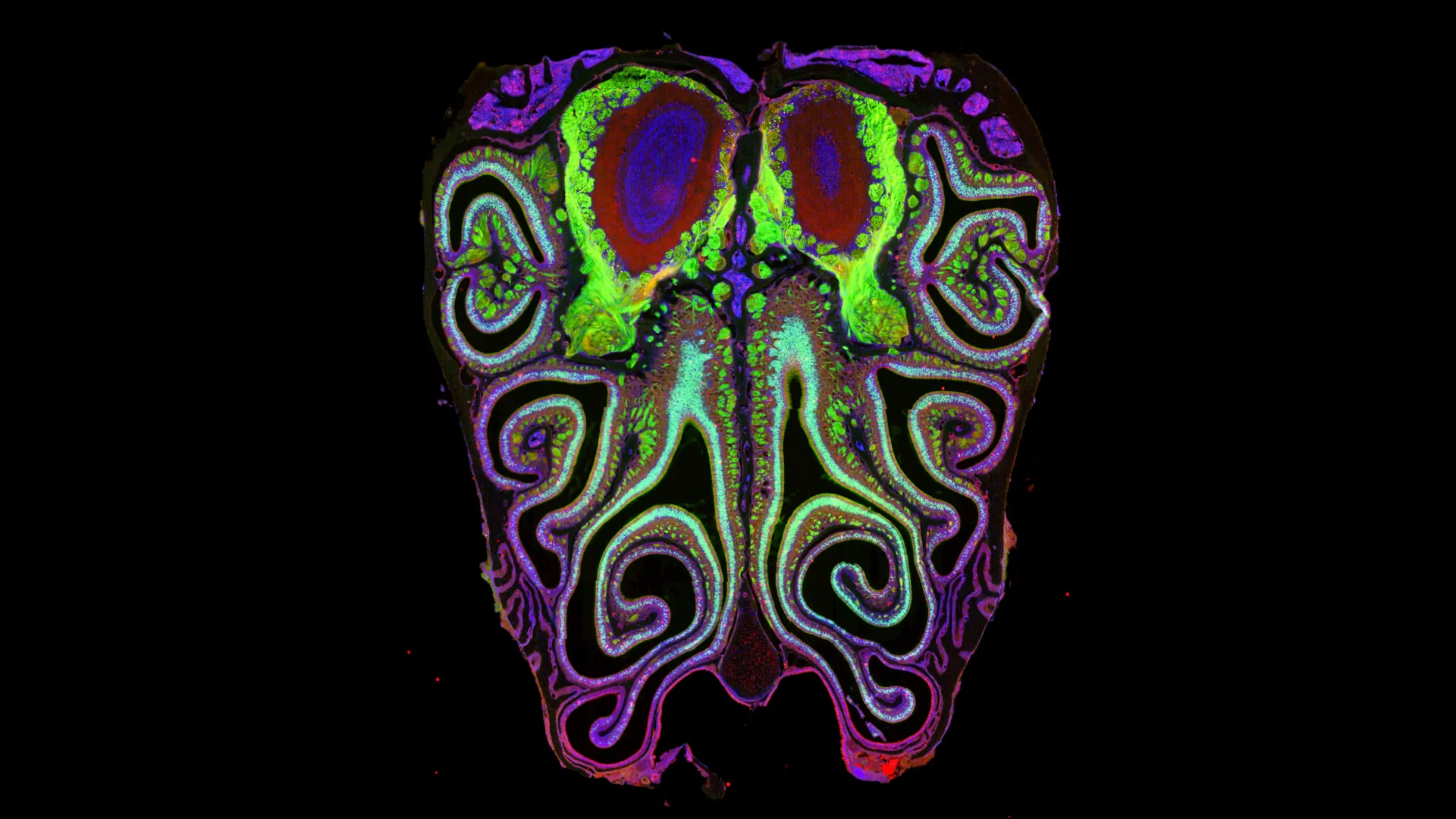
The human experience is deeply interwoven with the sense of smell, a fundamental yet often underestimated faculty that guides our daily lives. From alerting us to danger, such as a gas leak or spoiled food, to enriching the complex tapestry of flavor, and acting as a powerful conduit to memory and emotion, olfaction plays a pervasive role. However, despite its profound significance, the intricate biological mechanisms underlying this sense have remained largely enigmatic for scientists. This veil of mystery has begun to lift with a groundbreaking study that has produced the first comprehensive map of smell receptors in the mammalian nose, revealing an astonishing level of organization that challenges long-held scientific assumptions and opens new avenues for understanding and potentially treating smell disorders.
A Paradigm Shift in Olfactory Biology
For decades, the prevailing scientific understanding of smell reception within the nose suggested a rather haphazard arrangement of the more than a thousand different types of olfactory receptors found in mammals like mice. This perceived randomness made deciphering the olfactory system a formidable challenge, especially when compared to the well-understood organization of receptors in vision, hearing, and touch. "Olfaction is super-mysterious," remarked Sandeep (Robert) Datta, a professor of neurobiology at Harvard Medical School’s Blavatnik Institute and senior author of the pivotal new study. "Compared with vision, hearing, and touch, the basic biology of smell has remained less understood."
The recent research, published on April 28th in the prestigious journal Cell, utilized sophisticated genetic and spatial mapping techniques on mice to meticulously chart the distribution of over a thousand distinct smell receptor types. The findings are nothing short of revolutionary: instead of a chaotic jumble, the neurons that express these receptors are remarkably organized into distinct, horizontal bands, or stripes, running vertically within the nasal cavity. These stripes are meticulously grouped by the specific type of receptor they carry, creating an orderly architecture that was previously unimaginable. "Our results bring order to a system that was previously thought to lack order, which changes conceptually how we think this works," Datta explained. This newly unveiled map in the nose, the researchers further demonstrated, precisely corresponds to organized maps within the olfactory bulb of the brain, providing crucial insights into how scent information is processed and relayed from the periphery to the central nervous system.
The Decades-Long Quest for an Olfactory Map
The quest to map the olfactory system has been a long and arduous journey for scientists. While the precise spatial organization of sensory receptors in the eyes, ears, and skin has been understood for some time, allowing researchers to trace neural pathways to specific brain regions, olfaction has consistently remained the outlier. "Olfaction has been the one exception; it’s the sense that has been missing a map for the longest time," Datta stated, highlighting the persistent gap in our understanding.
Several factors have contributed to this prolonged enigma. The sheer complexity of the olfactory system is a primary driver. A single mouse, for instance, possesses an estimated 20 million olfactory neurons, each capable of expressing one of over a thousand different receptor types. This vast diversity stands in stark contrast to human color vision, which relies on a mere three primary receptor types. Each olfactory receptor is designed to detect a specific set of odor molecules, creating an incredibly intricate system where a vast array of chemical compounds can be perceived. This intricate interplay of receptors and odorants makes mapping the system exceptionally challenging.
The initial identification of olfactory receptors in 1991 marked a significant milestone, but subsequent decades of research struggled to identify coherent organizational patterns. Early studies, limited by available technology, suggested that receptors were distributed in only a few broad, indistinct zones within the nose, leading to the widespread assumption that their placement was largely random. This assumption, deeply ingrained in the scientific community, made the prospect of a detailed olfactory map seem distant.
Unveiling Order in Millions of Neurons
The advent of advanced genetic tools and computational power provided Datta’s team with the necessary arsenal to revisit this persistent question with unprecedented precision. Their study involved the comprehensive analysis of approximately 5.5 million neurons sampled from over 300 individual mice. This massive dataset was generated by combining two powerful techniques: single-cell sequencing, which precisely identifies the type of olfactory receptor expressed by each individual neuron, and spatial transcriptomics, which accurately determines the three-dimensional location of these neurons within the nasal cavity.
"This is now arguably the most sequenced neural tissue ever, but we needed that scale of data in order to understand the system," Datta emphasized, underscoring the monumental effort required to achieve this breakthrough. The results of this extensive analysis were unequivocal, revealing a striking and consistent organizational pattern. The neurons, far from being randomly scattered, were found to form tightly packed, overlapping horizontal stripes, each defined by the specific receptor type it expressed. This meticulously ordered arrangement was observed to be remarkably consistent across all the mice studied, and crucially, it mirrored the organizational patterns found in the olfactory bulb of the brain. This alignment suggests a direct and elegant correspondence between the peripheral detection of scents and their subsequent processing in the brain.
The Molecular Architects of the Smell Map
Beyond simply mapping the existing structure, the researchers delved into the developmental processes that give rise to this precise olfactory organization. Their investigations identified retinoic acid, a naturally occurring molecule known for its critical role in regulating gene activity and developmental processes, as a key orchestrator of this intricate mapping.
The study proposes that a specific gradient of retinoic acid within the developing nose acts as a molecular guide. This gradient appears to influence the migratory behavior of olfactory neurons, ensuring that each neuron settles in a position that dictates the activation of a specific type of smell receptor. To validate their hypothesis, the researchers experimentally manipulated the levels of retinoic acid. The results were dramatic: altering the concentration of this molecule caused a predictable shift in the entire receptor map, either moving the stripes upward or downward within the nasal cavity. "We show that development can achieve this feat of organizing a thousand different smell receptors into an incredibly precise map that’s consistent across animals," Datta stated, highlighting the elegant biological mechanisms at play.
Interestingly, a parallel study conducted by the laboratory of Catherine Dulac, the Xander University Professor in the Department of Molecular and Cellular Biology at Harvard University, and published concurrently in the same issue of Cell, reported findings that were entirely consistent with Datta’s team’s discoveries, further bolstering the significance and validity of this new understanding of olfactory organization.
Implications for Restoring Lost Senses and Enhancing Health
The implications of this discovery extend far beyond fundamental scientific understanding, holding significant promise for tangible clinical applications. Loss of the sense of smell, known as anosmia, can have profound and often debilitating effects on an individual’s quality of life. It can compromise safety by preventing the detection of dangerous substances like smoke or gas, impact nutritional intake by diminishing the enjoyment of food, and contribute to significant psychological distress, including depression and social isolation. Despite its considerable impact, effective treatments for anosmia remain limited.
"We cannot fix smell without understanding how it works on a basic level," Datta asserted, underscoring the critical need for foundational scientific knowledge before therapeutic interventions can be developed. The research team is now actively pursuing further investigations to unravel the precise sequence and underlying molecular cues that determine the specific order of these receptor stripes. A crucial next step will be to ascertain whether a similar organizational principle exists in humans.
The knowledge gained from this detailed olfactory map could pave the way for innovative therapeutic strategies aimed at restoring lost olfactory function. This might include the development of highly targeted stem cell therapies designed to regenerate damaged olfactory neurons in their correct positions, or the exploration of advanced brain-computer interfaces that could bypass damaged olfactory pathways and directly stimulate the brain’s smell processing centers.
"Smell has a really profound and pervasive effect on human health, so restoring it is not just for pleasure and safety but also for psychological well-being," Datta emphasized. "Without understanding this map, we’re doomed to fail in developing new treatments." The intricate blueprint of the olfactory system, now brought to light, offers a beacon of hope for millions affected by smell disorders and represents a significant leap forward in our ability to comprehend and ultimately heal one of our most fundamental senses.
Authorship, Funding, and Acknowledgements
The groundbreaking research was the product of a collaborative effort involving numerous scientists. Additional authors contributing to the paper include David Brann, Tatsuya Tsukahara, Cyrus Tau, Dennis Kalloor, Rylin Lubash, Lakshanyaa Kannan, Nell Klimpert, Mihaly Kollo, Martin Escamilla-Del-Arenal, Bogdan Bintu, Andreas Schaefer, Alexander Fleischmann, and Thomas Bozza.
This extensive research was generously supported by significant funding from various national and institutional bodies. Key contributors to the financial backing of this project include the National Institutes of Health, providing grants R01DC021669, R01DC021422, R01DC021965, and F31DC019017. Further support was received from the Yang Tan Collective at Harvard and a National Science Foundation Graduate Research Fellowship, underscoring the multidisciplinary and collaborative nature of this significant scientific endeavor.








