Jono Maryono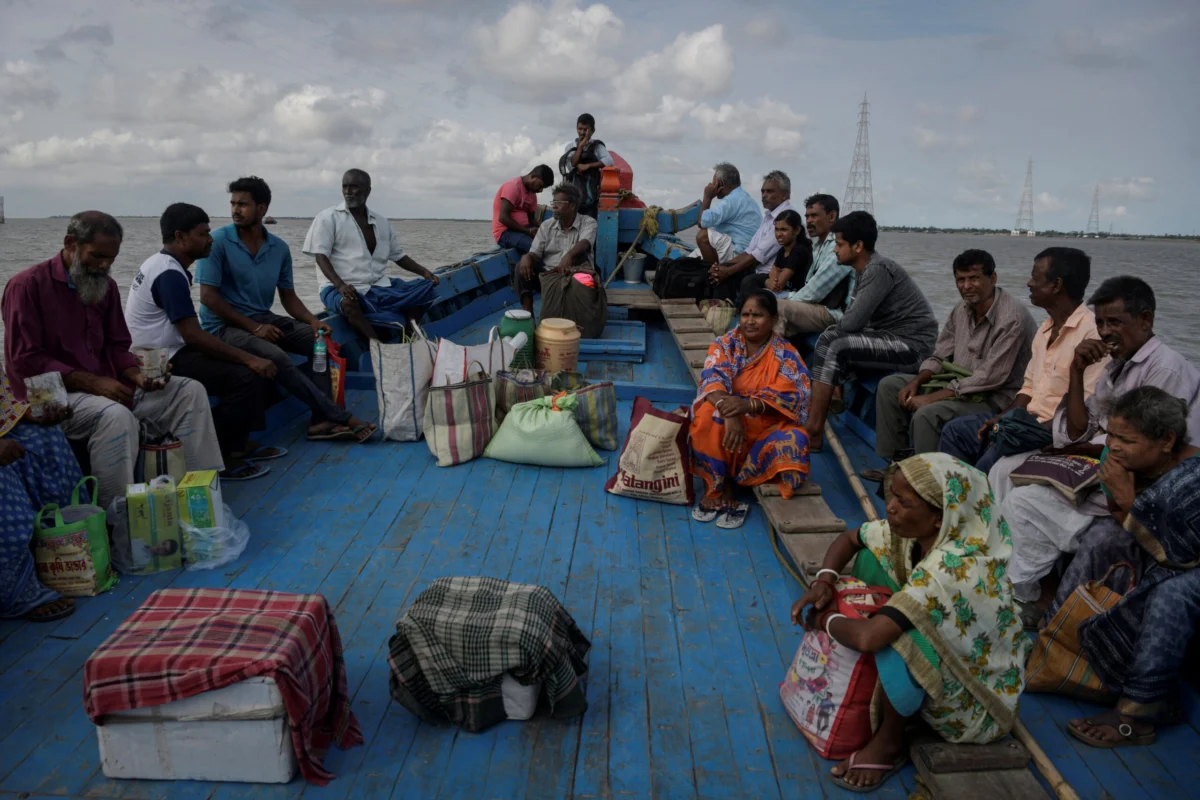
New Delhi, India – In a move that has ignited fierce debate among human rights advocates and wildlife conservationists, Indian officials are reportedly exploring a controversial plan to introduce apex predators, such as crocodiles and venomous snakes, into riverine stretches along the porous India-Bangladesh border. The proposal aims to create natural deterrents in areas where conventional fencing is logistically challenging, ostensibly to curb undocumented migration and smuggling.
The 4,096-kilometer (2,545-mile) India-Bangladesh border traverses a diverse and often unforgiving landscape, characterized by hills, rivers, and valleys across Indian states like West Bengal, Tripura, Assam, Meghalaya, and Mizoram. While New Delhi has successfully erected fencing along approximately 3,000 kilometers of this frontier, significant stretches remain vulnerable, particularly the marshy and riverine areas where local communities reside on both sides. It is precisely these challenging terrains that have prompted the Border Security Force (BSF), tasked with guarding India’s international borders, to consider unconventional measures.
An internal communication from the BSF, dated March 26, directed personnel at its headquarters on the eastern and northeastern fronts to “explore the feasibility of deploying reptiles in vulnerable riverine gaps.” This directive, first reported by regional publication Northeast News, has sent ripples of concern through various sectors. Officials were reportedly instructed to maintain “strict compliance” and share “action taken” following the directive, underscoring the seriousness with which the proposal is being considered within the BSF.
The Ministry of Home Affairs, in its report from the previous year, acknowledged the BSF’s diligent efforts in controlling illegal cross-border activities and undocumented migration, despite the arduous conditions. However, the report also highlighted persistent challenges, stating, “Some problem areas such as riverine/low-lying areas, habitations close to the border, pending land acquisition cases and protests by the border population, have slowed down the installation of fencing in certain stretches on this border.” This acknowledgement of persistent difficulties appears to have fueled the search for alternative solutions.

The Rationale Behind the Reptilian Deterrent
The core of this proposed strategy lies in the BSF’s ongoing struggle to effectively secure the riverine segments of the India-Bangladesh border. These waterways, often deep and wide, present formidable obstacles to the construction and maintenance of physical barriers like fences. The BSF’s internal communication explicitly identifies these "riverine gaps" as vulnerable points for illegal crossings. The idea, however unorthodox, is to leverage the natural predatory instincts of crocodiles and venomous snakes to deter individuals from attempting to cross these aquatic frontiers.
This initiative is viewed by proponents within the security establishment as a pragmatic, albeit extreme, response to a persistent national security concern. India has long expressed anxieties regarding undocumented migration from Bangladesh, with the government under Prime Minister Narendra Modi frequently articulating concerns about demographic shifts potentially impacting the nation. While formal statistics on the precise number of undocumented migrants are scarce – the last national census was conducted in 2011, with a new one commencing this month – the issue remains a significant point of political discourse.
The partition of British India in 1947, which divided the region of Bengal, left communities with shared cultural and ethnic ties on either side of the now international border. This historical context often complicates efforts to distinguish between genuine migrants and individuals with familial connections across the border, leading to a complex humanitarian and security challenge.
Concerns from Human Rights and Conservation Experts

The prospect of introducing dangerous wildlife to secure a border has been met with widespread alarm. Analysts and activists argue that such a move is not only ethically questionable but also fraught with practical dangers for both human populations and the environment.
Angshuman Choudhury, a researcher specializing in India’s northeastern and eastern border states, described the proposal as “sinister and dangerous,” and “absurd.” He emphasized the inherent flaw in the strategy: “Once you release venomous snakes and crocodiles, they won’t be able to differentiate if it’s a Bangladeshi or Indian.” This indiscriminate nature of animal predation raises serious concerns about the safety of local communities living near the border, who could become unintended victims.
Choudhury further characterized the plan as an act of “peak cruelty against and dehumanisation of undocumented immigrants. A whole new way of weaponising nature and animals against human beings. It’s biopolitical violence of a new kind.” He identified the river as the "Achilles’ heel" of the India-Bangladesh border, a point of consistent vulnerability for the BSF, and suggested this idea stems directly from the inability to effectively fence these waterways.
Human rights activists also point to a broader pattern of governmental policy that they argue targets religious minorities. They contend that the rhetoric surrounding undocumented migrants is often used to marginalize and harass communities, particularly Bengali Muslims in the eastern and northeastern regions. Reports have emerged over time of BSF officials allegedly engaging in forceful expulsions of Indian Muslims into Bangladesh at gunpoint, a practice that raises grave human rights concerns.
Harsh Mander, a prominent human rights activist, criticized India’s approach to undocumented immigrants, suggesting a preference for “extrajudicial methods” over diplomatic engagement with Bangladesh and adherence to judicial processes. He argues that the government conflates undocumented migrants with Indian Muslims, using the issue as a pretext to discriminate against minorities. “India’s approach on the question of what they call ‘contested citizenship’ is one of both cruelty and the defiance of the constitution and international principles,” Mander stated. He believes this strategy fosters a climate of "ongoing dread" among Bengali Muslims, fearing they could be stripped of their citizenship and rendered stateless.

The establishment of Foreign Tribunal Courts in states like Assam, tasked with determining the citizenship status of individuals suspected of being illegal migrants, has also drawn criticism. Choudhury highlighted cases where Indian citizens have been declared "foreigners" due to their inability to produce documentation, underscoring the potential for arbitrary detentions and expulsions. He views the idea of deploying predators as an extension of this policy, a further dehumanization of those deemed "outsiders."
Ecological Ramifications and Biological Implausibility
Beyond the human rights concerns, conservationists are raising red flags about the ecological implications of introducing non-native species into border regions. Rathin Barman, Chief of Strategy and Liaison at the Wildlife Trust of India, expressed significant doubts about the biological feasibility and ecological wisdom of the proposal.
“Crocodiles are not native to the riverine stretches along the India-Bangladesh border,” Barman told Al Jazeera. He explained that while some crocodile species exist in regions like the Sundarbans in southern West Bengal and specific wetlands in Assam, these are geographically distant from the border areas. Introducing them to new environments could prove detrimental to their survival. “First thing you know, they end up dead soon. The same goes for so-called venomous snakes.”
Barman cautioned against “any manipulation to the natural distribution range of species,” warning that such actions could disrupt the entire ecosystem. “If we do impose [this], it may intervene in the entire chain or ecosystem. I am concerned about other creatures who have equal rights to live in this world and in those stretches.” He definitively stated, “Technically, it is definitely not advisable. It will definitely never work in an open, flowing river.”

The problem is compounded by the fact that the swampy areas along the border are prone to seasonal flooding. This could lead to the uncontrolled spread of venomous snakes into residential areas, posing a grave risk to local populations, particularly those engaged in fishing. Mander echoed these concerns, stating, “These animals cannot do what the Indian state is unable to: to identify who is an ‘illegal infiltrator’. They will, of course, attack the local population on either side.” The inherent unpredictability of wildlife and the potential for unintended consequences appear to be significant deterrents to the proposed plan.
A Lack of Global Precedent
The concept of deploying natural predators to secure an international border appears to have no modern precedent. While former US President Donald Trump reportedly floated ideas such as a moat filled with snakes or alligators and shooting migrants in the legs during his presidency, he later denied such extreme measures. However, the South Florida Detention Facility, nicknamed "Alligator Alcatraz," has been cited as a comparable, though distinct, instance. Its remote, swamp-like location, believed to host predators, serves as a natural perimeter, but the facility has faced severe criticism for inhumane conditions and environmental harm to the Everglades ecosystem.
The Indian government has not yet issued a formal public statement regarding the BSF’s internal communication. However, the mere exploration of such a strategy highlights the escalating pressures and innovative, if controversial, approaches being considered to manage the complexities of border security in challenging terrains. The unfolding situation demands careful scrutiny, weighing national security imperatives against fundamental human rights and ecological preservation. The international community and human rights organizations will undoubtedly be monitoring developments closely.