Jono Maryono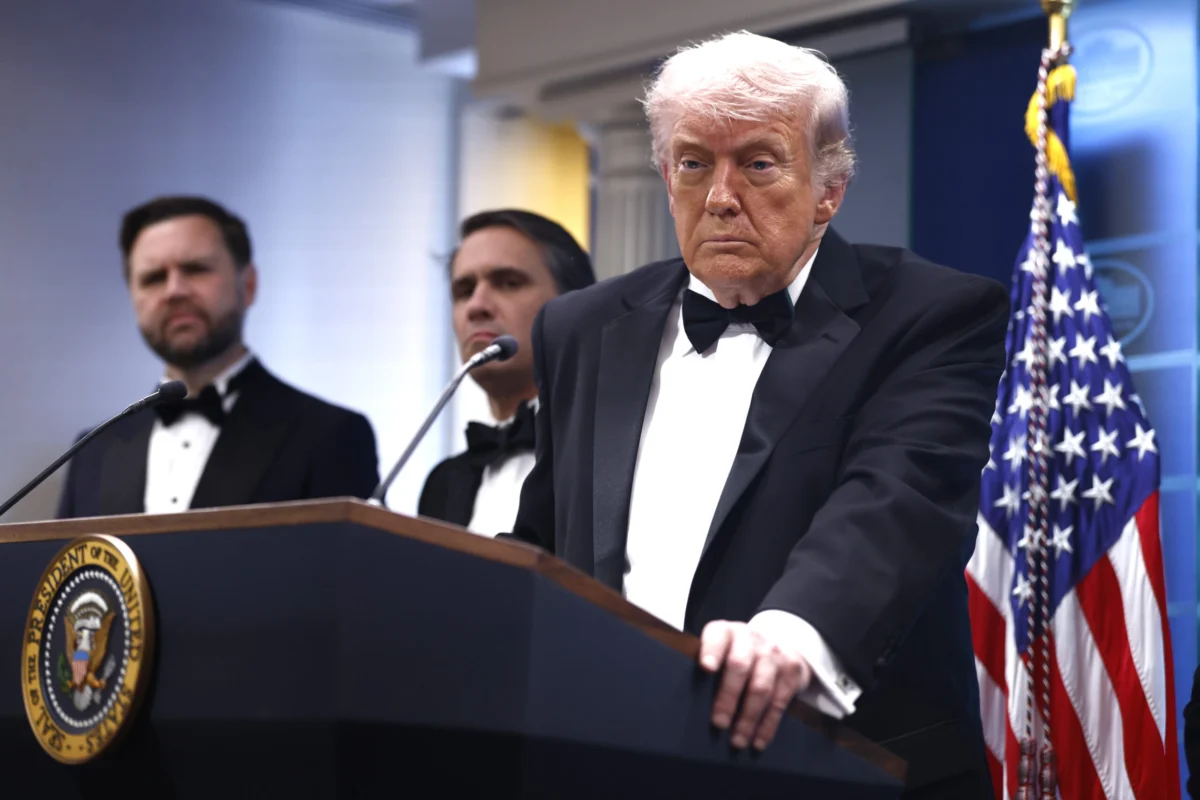
United States authorities are investigating an alleged assassination attempt at the White House Correspondents’ Association dinner, an event attended by President Donald Trump, top government officials, and hundreds of journalists. The suspect, identified by multiple media outlets as Cole Tomas Allen, 31, of Torrance, California, reportedly traveled from California to Washington, D.C., by train via Chicago. Acting Attorney General Todd Blanche stated that investigators believe the gunman’s intent was to target President Trump and members of his administration present at the gala.
The incident unfolded Saturday evening near the ballroom where the prestigious dinner was taking place. Shots were fired as Secret Service agents swiftly subdued the alleged assailant. President Trump, who was attending the event, was evacuated by his security detail. One Secret Service officer, wearing a bullet-resistant vest, sustained injuries but is reportedly recovering. The gunman was taken into custody, unharmed, and subsequently transported to a local hospital for evaluation.
President Trump, in an interview with Fox News, characterized the suspect as a "sick guy" and revealed that the family of the accused had previously expressed concerns about him to local police. The president also stated that the suspect had authored an "anti-Christian declaration," indicating a potential religiously motivated aspect to the planned attack. Law enforcement officials, after initial examinations of the suspect’s electronic devices and writings, have corroborated the belief that the individual intended to target administration officials in attendance.
"It does appear that he did in fact set out to target folks who work in the administration, likely including the president," Blanche told NBC. The acting attorney general further elaborated that the suspect is believed to have acquired the two firearms he carried with him in the past couple of years. As of Sunday, the suspect was reportedly not cooperating with law enforcement and was expected to face multiple charges on Monday.
Background of the Incident and Suspect Profile
The White House Correspondents’ Association dinner, often referred to as the "nerd prom," is an annual event that brings together members of the White House press corps, politicians, and the President of the United States. It is typically a high-profile affair characterized by speeches, comedic performances, and a celebration of journalism. The security perimeter around such events is always robust, involving the Secret Service, local law enforcement, and other federal agencies.
While official identification has not been released by authorities, multiple U.S. media outlets have named the suspect as Cole Tomas Allen, 31, from Torrance, California. Social media profiles, purportedly belonging to Allen, suggest he is a highly educated individual with multiple degrees in computer science and mechanical engineering. He is described as a tutor and an amateur video game developer. This profile, if accurate, presents a complex picture of an individual with apparent intellectual achievements who may have harbored extremist views. The contrast between his educational background and the alleged intentions of the attack could be a significant focus of the ongoing investigation.
Chronology of Events
- Prior to Saturday Evening: Reports indicate that the suspect’s family had expressed concerns about his behavior to local police. The exact timeline and nature of these concerns are still under investigation.
- Saturday Evening: The suspect allegedly traveled from California to Washington, D.C.
- During the White House Correspondents’ Dinner: Shots were fired near the venue as the suspect attempted to breach security. Secret Service agents responded immediately, apprehending the individual. President Trump was evacuated. One Secret Service officer was injured.
- Post-Incident: The suspect was taken into custody and transported to a hospital for evaluation. Law enforcement secured the scene and began their investigation.
- Sunday: Acting Attorney General Todd Blanche provided initial details of the investigation. President Trump commented on the incident in an interview with Fox News and via his Truth Social platform.
Investigation and Official Statements
The investigation is being led by the FBI, Secret Service, and the U.S. Attorney’s Office for the District of Columbia. Authorities are meticulously examining the suspect’s background, motivations, and any potential accomplices. The recovery and analysis of his electronic devices and any manifestos or writings are considered crucial to understanding the full scope of the alleged plot.
Acting Attorney General Todd Blanche’s statements on Sunday provided the most comprehensive overview of the official understanding of the event. He emphasized the belief that the target was specifically President Trump and his administration. The journey from California, involving travel by train through Chicago, suggests a degree of planning and deliberation. The acquisition of firearms over the past few years also points to a prolonged period of preparation.
The lack of cooperation from the suspect presents a significant challenge for investigators, potentially delaying the full understanding of his motives and the extent of any network he may have been part of. The charges expected to be filed will likely include federal offenses related to attempted assassination, weapons violations, and potentially terrorism-related charges, depending on the findings of the investigation.
President Trump’s comments to Fox News, particularly his assertion about the suspect’s anti-Christian declaration, inject a significant element into the public narrative. If confirmed by the investigation, this would suggest a religiously or ideologically driven motive, potentially aligning with broader patterns of extremism. His characterization of the suspect as "sick" and his focus on the "manifesto" highlight the administration’s interpretation of the event as a manifestation of dangerous fringe ideologies.
Broader Implications and Context
The alleged attack on a high-profile event attended by the President and the nation’s journalists carries significant implications for national security, political discourse, and the safety of public figures and the press.
Security Concerns: The incident underscores the persistent threats faced by high-profile individuals and public institutions in the United States. It will undoubtedly trigger reviews of security protocols for similar events and for the protection of the President and his administration. The effectiveness of the Secret Service’s rapid response in apprehending the suspect without further casualties is a testament to their training and dedication, but the fact that an individual could breach security to this extent is a cause for concern.
Political Discourse and Rhetoric: President Trump’s immediate reaction, linking the incident to his push for a new White House ballroom, also highlights how such events can become fodder for political agendas. His statement on Truth Social, lamenting the need for such a facility due to security threats, connects the alleged attack to his broader vision for presidential security and infrastructure. This proposal, which has faced legal and public opposition, may gain renewed traction in the wake of this incident, framed as a necessary measure for presidential safety.
The Role of the Press: The White House Correspondents’ Association dinner is intrinsically linked to the role of the press in a democracy. An attack at such an event can be interpreted as an assault on the free press itself. The presence of hundreds of journalists, documenting and reporting on public affairs, makes them both witnesses and potential targets in such scenarios. The injured Secret Service officer’s recovery is a stark reminder of the risks undertaken by those who protect public officials and institutions.
Extremism and Radicalization: The reported anti-Christian declaration by the suspect, if validated, points towards the complex and often unpredictable nature of modern extremism. Investigating the suspect’s online activities, social circles, and any ideological influences will be critical to understanding the pathways to radicalization. The potential for individuals with advanced technical skills to leverage their knowledge for destructive purposes is a growing concern.
Comparisons to Past Incidents: President Trump referred to this as potentially the "third attempt on his life in less than two years." While investigations into past incidents are ongoing or have concluded, this framing by the President highlights his perception of being under constant threat. The psychological impact of such perceived threats on a President and the broader political climate is a subject of ongoing analysis.
Future Developments
The investigation into Cole Tomas Allen’s alleged plot is expected to be extensive and complex. Key areas of focus will include:
- Motive: A thorough examination of the suspect’s writings, digital footprint, and personal history to definitively establish his motivations, particularly concerning the alleged anti-Christian sentiment.
- Network: Determining if the suspect acted alone or was part of a larger group or network. This will involve tracing his travel, communications, and any financial transactions.
- Weapon Acquisition: Detailing the timeline and source of the firearms used, which could lead to charges against anyone who may have facilitated their acquisition.
- Legal Proceedings: The forthcoming charges and subsequent legal proceedings will likely draw significant national attention, with potential for plea bargains or lengthy trials.
The incident at the White House Correspondents’ Association dinner serves as a sobering reminder of the challenges to security and stability in an era marked by political polarization and the pervasive influence of online radicalization. The investigation’s findings will be closely watched, not only for their impact on the individuals involved but also for their broader implications for national security and the health of democratic institutions. The swift and decisive action of the Secret Service in neutralizing the threat prevented a potential tragedy, but the underlying issues that may have contributed to such an act will continue to be a subject of national concern.