Johny Marice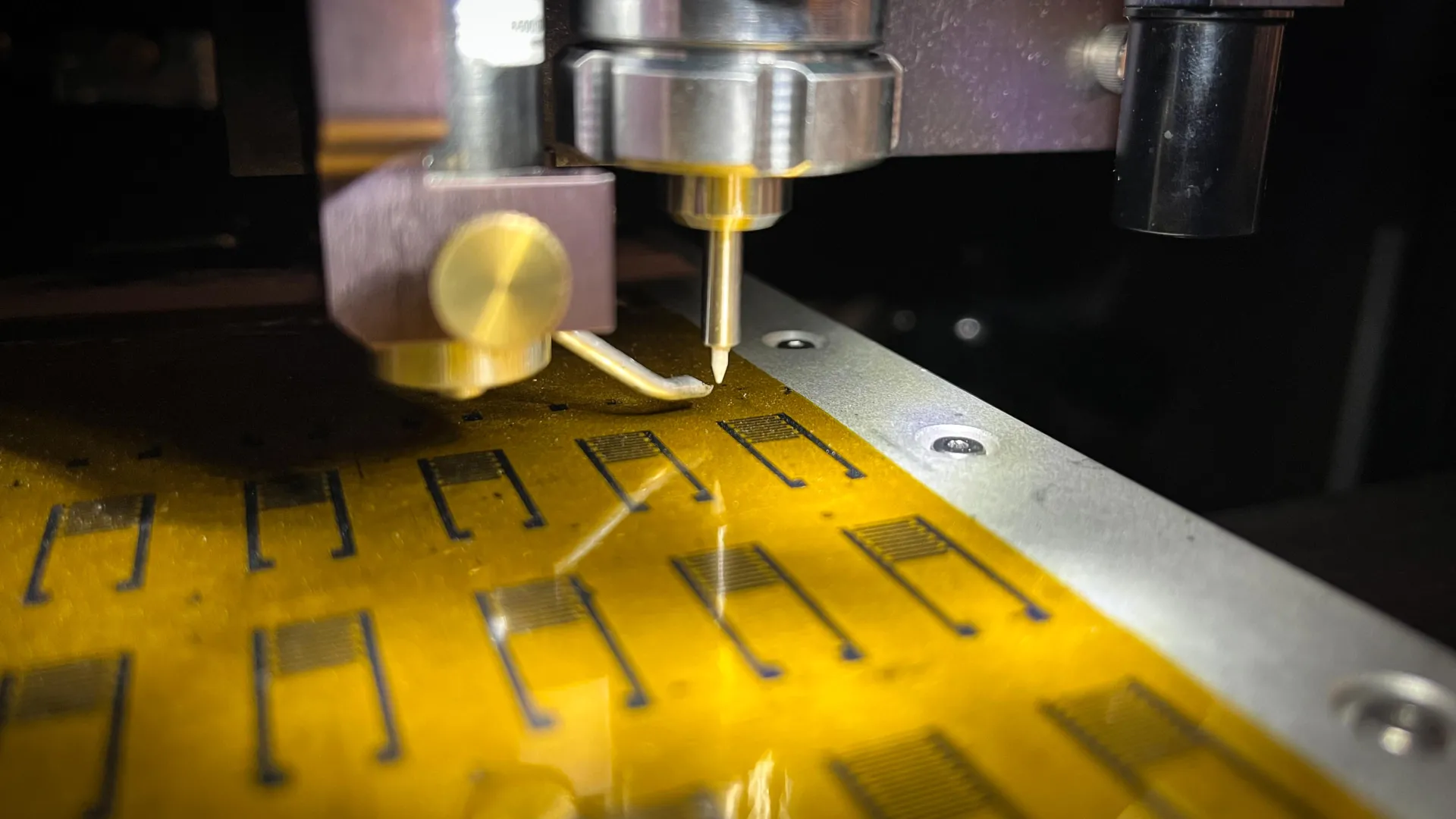
Northwestern University engineers have achieved a significant breakthrough in bio-integrated electronics, developing printed artificial neurons that not only mimic the electrical signals of biological neurons but can also directly interact with real brain cells. This innovation, detailed in a forthcoming publication in Nature Nanotechnology, represents a critical step toward seamless integration of electronics with the nervous system and offers a promising pathway for energy-efficient artificial intelligence.
A Leap Beyond Imitation: Direct Neural Interface
For decades, researchers have strived to create artificial systems that can interface with the human brain. Previous attempts often focused on replicating the output of neurons, generating electrical signals that, while inspired by biology, lacked the nuanced complexity and direct compatibility needed for true integration. The Northwestern team’s achievement lies in their ability to engineer devices that produce electrical signals so closely resembling those of living neurons that they can actively trigger responses in biological brain tissue.
Experiments conducted using meticulously prepared slices of mouse brain tissue demonstrated this profound compatibility. When exposed to the electrical output of these novel artificial neurons, the biological neurons exhibited clear and measurable responses. This direct activation of living neural networks by synthetic devices marks a paradigm shift, moving beyond mere imitation to genuine functional interaction. This success opens doors for a new era of neuro-prosthetics and brain-machine interfaces that could offer unprecedented restoration of lost sensory and motor functions.
The Genesis of a Breakthrough: A Decade of Material Science and Engineering
The journey to this advanced artificial neuron began years ago, rooted in Northwestern University’s strong interdisciplinary research environment. Professor Mark C. Hersam, a leading expert in brain-inspired computing and materials science, has been at the forefront of exploring how the principles of the brain’s architecture and function can inform the design of next-generation computing hardware. His lab, a hub for innovation at the McCormick School of Engineering, has long investigated novel materials and fabrication techniques to bridge the gap between biological and electronic systems.
The development of these printed neurons is the culmination of research into materials like molybdenum disulfide (MoS2) and graphene, known for their unique semiconducting and conductive properties at the nanoscale. Early work in the field often treated the polymer binders used in printable electronic inks as contaminants, requiring removal to achieve optimal electrical performance. However, the Northwestern team recognized a potential in these seemingly detrimental components. Their pivotal insight was to leverage, rather than eliminate, the polymer binder.
By developing a process that partially decomposes the polymer binder during printing and then further manipulates its decomposition through electrical current, the engineers were able to create a confined conductive pathway. This "spatially inhomogeneous decomposition" results in a narrow channel where electrical current is concentrated, leading to a sudden, sharp electrical response—akin to the "firing" of a biological neuron. This carefully controlled process allows the artificial neurons to generate a diverse range of signals, including single spikes, continuous firing patterns, and complex bursting behaviors, all of which closely mirror the intricate communication methods of the brain.
Addressing the Energy Crisis in AI: A Brain-Inspired Solution
The implications of this research extend far beyond the realm of neuroscience and medicine. Artificial intelligence (AI) is rapidly transforming industries, but its exponential growth is hampered by an insatiable demand for energy. Current AI systems, heavily reliant on data-intensive training, consume vast amounts of electricity, leading to significant environmental concerns and practical limitations.
Professor Hersam highlighted this critical challenge: "The world we live in today is dominated by artificial intelligence (AI). The way you make AI smarter is by training it on more and more data. This data-intensive training leads to a massive power-consumption problem. Therefore, we have to come up with more efficient hardware to handle big data and AI. Because the brain is five orders of magnitude more energy efficient than a digital computer, it makes sense to look to the brain for inspiration for next-generation computing."
Traditional silicon-based computing relies on packing billions of identical transistors onto rigid, two-dimensional chips. While this approach has driven progress, it is fundamentally different from the brain’s operational paradigm. The brain, a marvel of biological engineering, is composed of diverse, specialized neurons forming dynamic, three-dimensional networks. These networks are constantly reconfiguring themselves, adapting and learning through the formation and modification of connections.
"Silicon achieves complexity by having billions of identical devices," Hersam explained. "Everything is the same, rigid and fixed once it’s fabricated. The brain is the opposite. It’s heterogeneous, dynamic and three-dimensional. To move in that direction, we need new materials and new ways to build electronics." The Northwestern team’s printable artificial neurons, with their ability to generate complex, adaptable signals, offer a pathway toward replicating this brain-like efficiency and complexity.
The current trend of building massive data centers to power AI is already straining energy grids and water resources, as these facilities require enormous amounts of power and water for cooling. Hersam pointed out the stark reality: "To meet the energy demands of AI, tech companies are building gigawatt data centers powered by dedicated nuclear power plants. It is evident that this massive power consumption will limit further scaling of computing since it’s hard to imagine a next-generation data center requiring 100 nuclear power plants. The other issue is that when you’re dissipating gigawatts of power, there’s a lot of heat. Because data centers are cooled with water, AI is putting severe stress on the water supply. However you look at it, we need to come up with more energy-efficient hardware for AI."
This breakthrough in artificial neuron design promises to alleviate these concerns by enabling the creation of computing systems that operate with a fraction of the energy currently required, moving closer to the brain’s remarkable efficiency.
Rigorous Testing and Validation with Biological Systems
The ultimate test for any artificial neural system designed for biological interaction lies in its performance when directly interfacing with living tissue. To this end, the Northwestern researchers collaborated with Professor Indira M. Raman, a distinguished neurobiologist at Northwestern’s Feinberg School of Medicine. Her team’s expertise in studying neural circuits was instrumental in validating the functional capabilities of the printed artificial neurons.
In their experiments, the electrical signals generated by the artificial neurons were applied to slices of mouse cerebellum, a region of the brain crucial for motor control and coordination. The results were highly encouraging. The temporal and spatial characteristics of the artificial spikes closely matched key biological properties, demonstrating an alignment in their fundamental signaling mechanisms. Crucially, these synthetic signals reliably activated the living neurons, triggering neural circuits in a manner consistent with natural brain activity.
"Other labs have tried to make artificial neurons with organic materials, and they spiked too slowly," said Hersam, underscoring the significance of their achievement. "Or they used metal oxides, which are too fast. We are within a temporal range that was not previously demonstrated for artificial neurons. You can see the living neurons respond to our artificial neuron. So, we’ve demonstrated signals that are not only the right timescale but also the right spike shape to interact directly with living neurons." This precise temporal alignment, measured in milliseconds, is critical for effective communication within neural networks, where the timing of signals is paramount.
Sustainable Manufacturing and Future Applications
Beyond their sophisticated functionality, the new artificial neurons boast significant advantages in terms of manufacturing. The use of aerosol jet printing, an additive manufacturing technique, allows for precise placement of materials, minimizing waste. This approach is inherently low-cost and scalable, making widespread adoption more feasible. The process involves depositing electronic inks made from nanoscale flakes of MoS2 and graphene onto flexible polymer substrates. Unlike previous methods that sought to remove the polymer binder, this technique leverages its controlled decomposition to create the neuron’s active component.
The potential applications for this technology are vast and transformative. In medicine, these artificial neurons could form the basis of advanced neuroprosthetics designed to restore lost function. Implants could help individuals regain hearing by stimulating auditory nerves, restore vision by interfacing with the visual cortex, or re-establish motor control in cases of paralysis. Brain-machine interfaces could also enable direct communication between the brain and external devices, offering new avenues for controlling prosthetics, computers, or even communicating thoughts.
In the realm of computing, this research paves the way for neuromorphic computing systems that mimic the brain’s efficiency and processing power. Such systems could revolutionize fields like machine learning, enabling more sophisticated AI that requires significantly less energy, thereby accelerating scientific discovery and technological innovation without exacerbating environmental challenges.
The study, titled "Multi-order complexity spiking neurons enabled by printed MoS2 memristive nanosheet networks," was generously supported by the National Science Foundation, recognizing its potential to drive fundamental advancements in materials science, neuroscience, and computing. The publication date of April 15 in Nature Nanotechnology marks a significant milestone in the ongoing quest to understand and emulate the complexity of the human brain.
Professor Hersam’s extensive affiliations, including his roles as Walter P. Murphy Professor of Materials Science and Engineering at McCormick, professor of medicine at Feinberg, and professor of chemistry at Weinberg, along with his leadership positions in materials research centers, underscore the interdisciplinary nature of this groundbreaking work. Co-leading the study with Vinod K. Sangwan, a research associate professor at McCormick, further highlights the collaborative spirit that fueled this significant scientific achievement.
As the world grapples with the escalating demands of AI and the pressing need for sustainable technological solutions, the printed artificial neurons developed at Northwestern University offer a beacon of hope, promising a future where intelligent systems are both more capable and more environmentally responsible.