Reynand Wu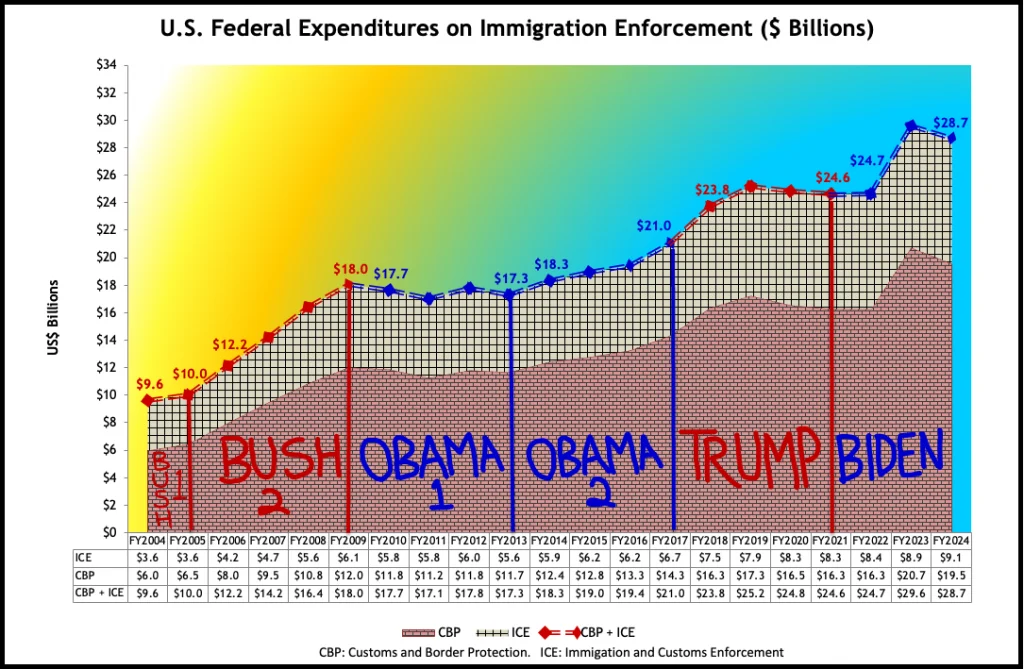
State borders are not immutable geographical features but rather complex constructs shaped by political conflict, nationalist narratives, and disparate economic systems. Crucially, as detailed analysis reveals, their creation and maintenance demand substantial public financial investment, often camouflaged by political rhetoric and policy frameworks that naturalize their arbitrary and sometimes violent origins. Beyond simply marking territory following conflict, state borders serve multifaceted social functions, including the demarcation of distinct political systems, the differentiation of insiders from outsiders, and the establishment of economic disparities through the regulation of trade, currencies, and value regimes across sovereign territories.
The Post-9/11 Securitization of the U.S.-Mexico Border
The genesis of the modern U.S. border enforcement apparatus is deeply rooted in the aftermath of the September 11, 2001, terrorist attacks. This pivotal moment allowed state officials to skillfully intertwine the discourse of anti-terrorism with that of border regulation, effectively ushering in an era of unprecedented securitization along the U.S.-Mexico border. In response, President George W. Bush’s administration established the Department of Homeland Security (DHS) through the Homeland Security Act of 2002. This monumental legislative act consolidated numerous federal agencies under a single umbrella, fundamentally reshaping the nation’s approach to security.
Within DHS, two key agencies emerged as central to immigration enforcement: U.S. Customs and Border Protection (CBP) and U.S. Immigration and Customs Enforcement (ICE). CBP, which proudly identifies itself as "one of the world’s largest law enforcement organizations" (CBP, 2020), articulates its primary mission as detecting and preventing the illegal entry of individuals into the United States and maintaining "borders that work" (CBP, 2021). Its purview extends to patrolling the physical border, inspecting goods and people at ports of entry, and interdicting illicit cross-border activities. ICE, on the other hand, states its mission is "to protect America from the cross-border crime and illegal immigration that threaten national security and public safety" (ICE, 2022). Its operations primarily focus on interior enforcement, including investigations into transnational crime, detentions, and deportations of individuals found to be in violation of immigration laws within the country.
A Chronicle of Escalating Expenditure: The Billion-Dollar Border Budget
The financial commitment to this securitized border paradigm has been staggering. Since 2002, U.S. federal governments, spanning both Republican and Democratic administrations, have allocated an astonishing total of $409.4 billion of public funds to immigration enforcement. This figure underscores a profound and sustained national investment in border policing, infrastructure, and personnel.
To contextualize this massive outlay, consider the trajectory of annual federal expenditures on immigration enforcement. From a baseline of $9.6 billion in Fiscal Year 2004, these costs have nearly tripled, reaching an estimated $28.7 billion by Fiscal Year 2024 (figures unadjusted for inflation). When adjusted for inflation to 2024 dollars, the increase remains substantial, rising from approximately $17.5 billion to $28.7 billion. This growth reflects not only the expansion of agency mandates but also significant investments in physical infrastructure, surveillance technology, and a vastly expanded workforce.
Breaking down these expenditures further, CBP has received the lion’s share of funding, accounting for approximately $275 billion of the total. This allocation reflects its extensive responsibilities for patrolling vast stretches of land and sea borders, operating numerous ports of entry, and deploying advanced surveillance systems. ICE, tasked with interior enforcement, detention, and deportation, has received approximately $134.4 billion. These figures highlight the dual nature of U.S. immigration enforcement: a heavily funded external barrier combined with a robust internal enforcement mechanism.
Political Rhetoric Versus Fiscal Reality: A Bipartisan Consensus
Despite pronounced rhetorical differences between Democratic and Republican presidents concerning immigration policy—with Democrats often articulating a more pro-immigrant stance compared to their Republican counterparts—the financial data reveals a striking bipartisan consensus on the funding of border policing. This fiscal reality gives the lie to the political performativity of partisan divides.
Over the 21-year period analyzed, Republican presidents approved budgets totaling $178.9 billion, averaging $17.9 billion annually. Democratic presidents, however, authorized an even greater sum, spending $230.5 billion, with an average annual expenditure of $21.0 billion. This data strongly suggests that regardless of their public posture or stated policy goals, both major parties have consistently prioritized and expanded the funding for border enforcement.
This convergence on spending can be attributed to several factors. National security concerns, particularly post-9/11, have provided a powerful justification for increased border spending across the political spectrum. Furthermore, the political landscape often rewards a tough-on-borders stance, with politicians from both parties wary of appearing "soft" on immigration or national security. This dynamic can lead to a consistent push for greater enforcement budgets, even when other aspects of immigration reform remain contentious.
A recent, stark illustration of this bipartisan fiscal approach came in October 2023, when President Joe Biden’s administration waived no fewer than 26 federal regulations to facilitate the construction of a border wall between the U.S. and Mexico in Texas. This action, widely seen as mirroring the policies of his Republican predecessor, Donald Trump, and occurring in advance of the 2024 presidential election, underscored the enduring political pressure to demonstrate robust border control, irrespective of prior rhetorical positions. This move by a Democratic administration, which had previously campaigned on a platform that included a halt to wall construction, highlighted the deep-seated political incentives driving continuous investment in physical border barriers.
The Mechanisms of Enforcement and Their Costs
The nearly half-trillion-dollar investment in border enforcement has manifested in various tangible ways:
- Physical Infrastructure: A significant portion of the budget goes towards constructing and maintaining physical barriers, including walls and fences. The U.S.-Mexico border, for instance, now features hundreds of miles of primary and secondary fencing, often costing millions per mile to build and requiring ongoing maintenance. This infrastructure also includes roads for patrol, lighting systems, and access gates.
- Surveillance Technology: The border is increasingly monitored by a sophisticated array of technologies. This includes drones for aerial surveillance, ground sensors to detect movement, remote video surveillance systems (RVSS), and advanced thermal imaging cameras. These technologies aim to create a "smart border" capable of detecting and tracking cross-border activity across vast and often remote terrains.
- Personnel Expansion: The budgets directly fund the salaries, training, and equipment for tens of thousands of CBP and ICE agents. The number of border patrol agents alone has more than doubled since the early 2000s, transforming CBP into one of the largest federal law enforcement agencies. This expansion requires substantial investment in recruitment, academies, and ongoing professional development.
- Detention and Deportation Operations: A considerable part of ICE’s budget is dedicated to the apprehension, detention, and deportation of immigrants. This includes operating a vast network of immigration detention centers, many of which are privately run, and covering the costs associated with transportation, legal processing, and travel for deportations. The average daily cost of detaining an individual can range from hundreds of dollars, accumulating rapidly given the thousands of individuals held daily.
- Information Technology and Data Systems: Modern border enforcement relies heavily on advanced information technology. This includes databases for tracking individuals, biometric identification systems (fingerprints, facial recognition), intelligence gathering platforms, and secure communication networks to coordinate operations across agencies and jurisdictions.
Broader Implications and Impact
The immense financial investment in border security carries profound and far-reaching implications, extending beyond mere budgetary figures:
- Economic Diversion and Opportunity Costs: The allocation of hundreds of billions of dollars to border enforcement represents a significant diversion of public funds that could otherwise be invested in education, healthcare, infrastructure development, or other social programs. The opportunity cost of this spending is substantial, prompting questions about national priorities and the most effective ways to address societal challenges. Furthermore, the border security industry itself has become a major economic sector, with numerous private contractors benefiting from federal contracts for technology, construction, and detention services, creating powerful vested interests in continued high levels of spending.
- Social and Humanitarian Consequences: The securitization of the border has had severe social and humanitarian impacts. Increased enforcement has pushed migrants and asylum seekers into more dangerous and remote crossings, leading to a rise in deaths and injuries. The focus on detention and deportation has led to family separations, psychological trauma, and challenges for individuals seeking legal refuge. Human rights organizations consistently highlight concerns regarding conditions in detention facilities and due process for those apprehended.
- Political Dynamics and Democratic Contradictions: The persistent bipartisan funding for border enforcement, despite rhetorical differences, points to what some analysts describe as the fundamental contradictions within bourgeois liberal democracies. While elected representatives are ostensibly meant to represent the will of the working people, critics argue they often end up serving the interests of ruling economic, political, and racial elites. In this framework, the continuous expansion of border security could be seen as a mechanism to maintain economic hierarchies and control labor flows, rather than solely a response to national security threats. The political system, influenced by powerful lobbying groups and the perceived need to appear tough on crime and immigration, can lead to policies that entrench existing power structures and perpetuate cycles of enforcement.
- Impact on International Relations: The U.S.’s robust border enforcement policies also significantly influence its relationships with neighboring countries, particularly Mexico. While cooperation exists on certain security fronts, the unilateral construction of walls, increased militarization, and rapid deportations can strain diplomatic ties and complicate efforts to address root causes of migration. These policies can also draw international criticism regarding human rights and the treatment of asylum seekers.
The Path Forward: Challenges to De-Securitization
Substantive progress towards de-carcerating the United States and de-securitizing the U.S.-Mexico border would necessitate a significant shift in political priorities and power dynamics. Such a transformation might be plausible if progressive forces exercised greater influence in Congress and if, in turn, Congress exerted more robust oversight and control over budgetary allocations and immigration enforcement policies.
However, in the current political climate, such a reorientation appears unlikely. The bipartisan trend of increasing border expenditures, reinforced by security narratives and political expediency, suggests a continued trajectory of substantial investment. The incident of the Biden administration waiving federal regulations for border wall construction, seemingly mimicking a Republican predecessor, underscores how deeply ingrained the securitization paradigm has become in U.S. governance. In the absence of a strong, unified progressive ideological agenda capable of challenging this status quo within the Democratic Party and across the political spectrum, the void is often filled by policies that, intentionally or not, perpetuate anti-immigrant violence and entrench a costly and expansive border enforcement regime. The "border is a budget," and for the foreseeable future, it remains a budget that continues to grow, reflecting a deep national commitment to a securitized frontier.