Layla Zulfa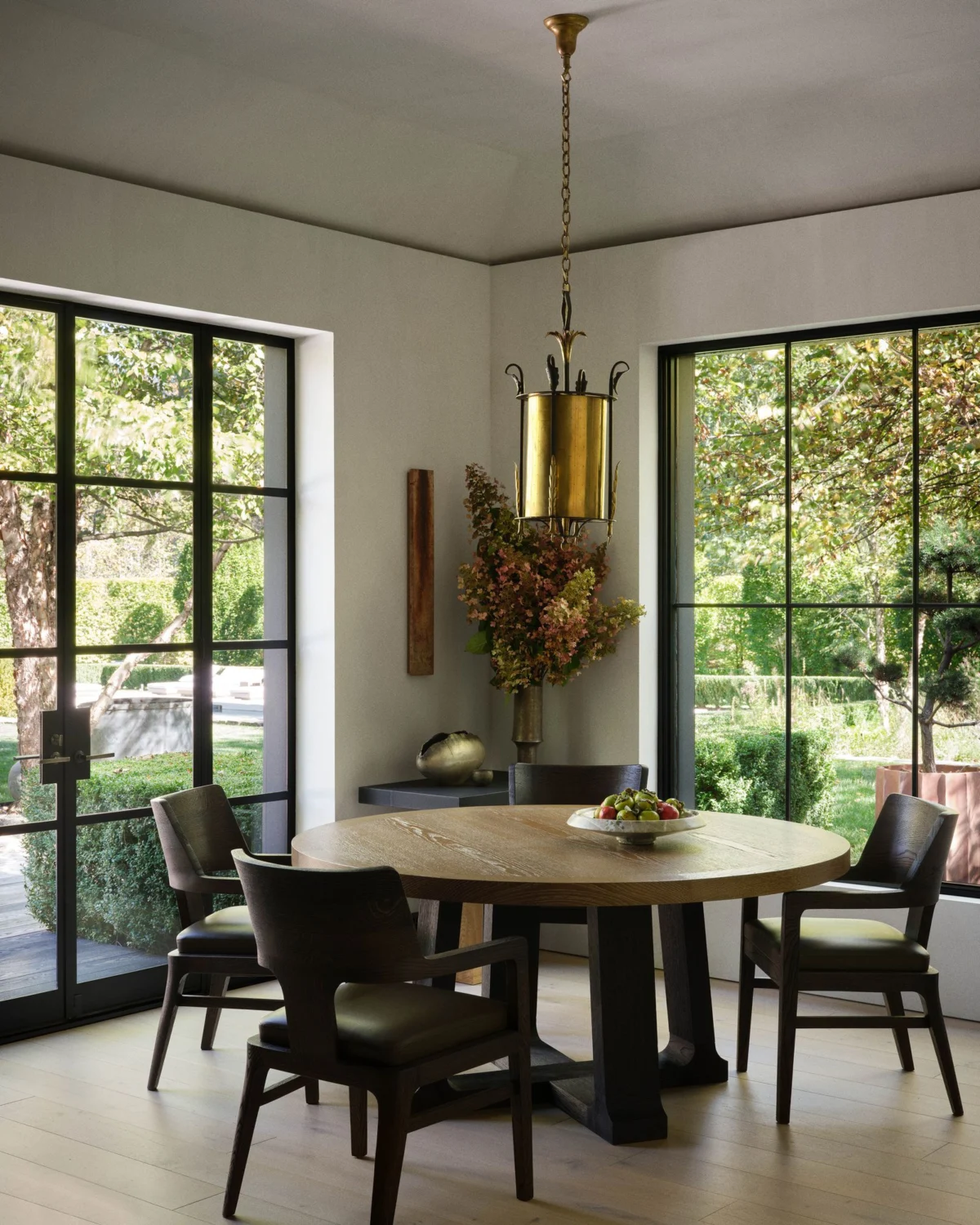
Matthew Fisher, whose Manhattan-based studio M.Fisher is renowned for producing classically informed art objects and bespoke stone commissions, approached the project with a unique blend of reverence and personal ambition. Casey, a third-generation real estate developer, provided the structural and logistical expertise necessary to navigate the complexities of a property that includes an original 1829 farmhouse and a sleek, gabled modern extension. Situated on nearly three acres, the estate functions as a "garden oasis" that maintains a strategic proximity to the village of Rhinebeck, a locale that has increasingly become a sanctuary for New York City’s creative elite seeking a balance between rural tranquility and sophisticated living.

A Legacy of Design Continuity
The provenance of the home played a critical role in the Fishers’ decision to purchase. When Hendifar and Anderson listed the property, it was already a celebrated example of how historical architecture could be harmonized with avant-garde design. The Apparatus founders had established a baseline of "brilliant" spatial volumes, as Matthew Fisher describes them, which the new owners were careful to respect. However, the transition necessitated a deep dive into the home’s infrastructure. To upgrade the building’s essential systems, the interior had to be partially disassembled, providing the Fishers with an opportunity to reimagine the "energy" of the space as it was reconstructed.
This process of "sussing out" the space was not merely about decoration but about alignment. Matthew Fisher’s background as a classical dancer informs his sense of movement and proportion, while Casey’s developmental background ensures a focus on longevity and structural integrity. Together, they sought to create a residence that functioned as a vessel for their expanding collection of art and evocative objects, moving away from the conventional "party house" trope toward a more intimate, narrative-driven environment.

The Architectural Synthesis of Old and New
The Rhinebeck property is a study in architectural contrasts. The 1829 farmhouse provides the historical anchor, featuring traditional cellar spaces and attic volumes that have been repurposed for modern utility. The modern extension, characterized by its gabled roofline and expansive glass, offers a counterpoint of light and transparency.
In the living and dining areas, the Fishers utilized sculptural elements to bridge these two eras. A steel fireplace serves as a focal point, accented by wrought-iron tools designed by Raymond Subes and sourced from Galerie Matthieu Richard. These tools, dating back to 1948, exemplify the owners’ commitment to sourcing pieces with historical weight. In the dining area, an antique brass and iron lantern hangs above a table from Liaigre—a French design house that Matthew credits with helping establish his own studio’s global visibility. The use of Naxos-green marble and other rare stones throughout the house reflects Fisher’s professional expertise in lithic materials, grounding the ethereal design in the weight of the earth.

Systemic Overhauls and Aesthetic Shifts
The renovation involved significant reconfigurations, particularly in the utilitarian spaces of the home. The kitchen, located in the cellar of the original farmhouse, was redesigned to recall the aesthetic of specimen drawers at the U.S. Geological Survey, a nod to Matthew’s father’s career. This space features oak cabinetry and a dining table with a blackened French-oak base and a custom granite slab designed by Matthew himself.
The transition between levels was also addressed through the reconstruction of the central staircase in plaster, a material choice that lends a soft, organic feel to the home’s circulation. On the attic level, the primary bedroom underwent a transformation with the installation of a glass and steel partition at the stairwell, balancing privacy with the open-volume feel of the farmhouse’s upper reaches. Personal touches abound in this private sanctuary, including an oak wardrobe adorned with hand-painted forest figures and a bed draped in striped silk jacquard, a fabric Matthew purchased on a whim to soften the room’s mirrored and wooden surfaces.

The Curation of Memory: A Philosophy of Objects
Central to the design of the Rhinebeck home is the concept of the "evocative object." Matthew Fisher cites Sherry Turkle’s book, Evocative Objects: Things We Think With, as a primary influence on his approach to curation. In this framework, objects are not merely decorative; they are "imbued with meaning," representing specific periods of life, travels, or personal relationships.
This philosophy led the Fishers to prioritize curation over "kid-friendliness" or traditional notions of domestic comfort. The home is filled with treasures that may not "make sense" in a conventional stylistic sense but are unified by their connection to the owners’ history. Notable pieces include:

- Lucio Fontana Artwork: A gold-foil cutout work housed in a colonial-era Dutch frame.
- Marcel Guillot Ceramics: Hand-painted aquatic plates mounted in a guest bedroom, chosen to evoke the nautical themes of Matthew’s brother’s home.
- Fortuny Tapestries: A vintage find from a local antiques show that anchors the guest suite.
- M.Fisher Prototypes: While the house is not a showroom for Matthew’s work, several prototypes, such as the Elegy Table Lantern, are integrated into the decor as markers of his creative journey.
Regional Context and the Hudson Valley Market
The Fishers’ renovation occurs against the backdrop of a broader real estate surge in the Hudson Valley. Following the 2020 global shift toward remote work, Ulster and Dutchess counties saw a dramatic influx of high-net-worth individuals from the New York City metropolitan area. Rhinebeck, in particular, has maintained its status as a "gold standard" for upstate living due to its historic preservation, high-performing schools, and robust culinary and arts scene.
According to regional real estate data, property values in Rhinebeck have seen a steady appreciation, with luxury listings often seeing competitive bidding. The Fishers’ home, with its combination of historical 1820s architecture and high-end modern additions, represents the most sought-after category of property in this market. By investing in a comprehensive system overhaul and high-concept interior design, the Fishers have not only created a personal sanctuary but have also contributed to the ongoing architectural "renaissance" of the region.

Broader Implications for Modern Design
The Rhinebeck residence illustrates a growing trend in the design world: the move away from "disposable" interiors toward spaces of "healing and memory." Matthew Fisher’s comment that the house is a place for "memory and healing" suggests that the modern home is increasingly viewed as a psychological refuge. In an era of mass-produced furniture and fleeting trends, the Fishers’ commitment to hand-painted figures, custom marble fire tables, and 1880s English tapestries signals a return to the "slow design" movement.
Furthermore, the integration of the grounds, updated by Brooklyn-based garden design studio Harrison Green, emphasizes the importance of indoor-outdoor connectivity. The custom marble fire table in the outdoor seating area and the preservation of the "garden oasis" established by Hendifar and Anderson show a holistic approach to estate management that considers the landscape as an extension of the interior gallery.

In conclusion, the Fisher residence in Rhinebeck is more than a weekend getaway; it is a sophisticated manifesto on living with art. By merging the historical bones of a 19th-century farmhouse with the sharp lines of modernism and a deeply personal collection of evocative objects, Matthew and Casey Fisher have created a space that honors the past while providing a canvas for their future. The home stands as a testament to the idea that a residence is at its best when it reflects the lived experience and aesthetic soul of its inhabitants.