Ronny Sianturi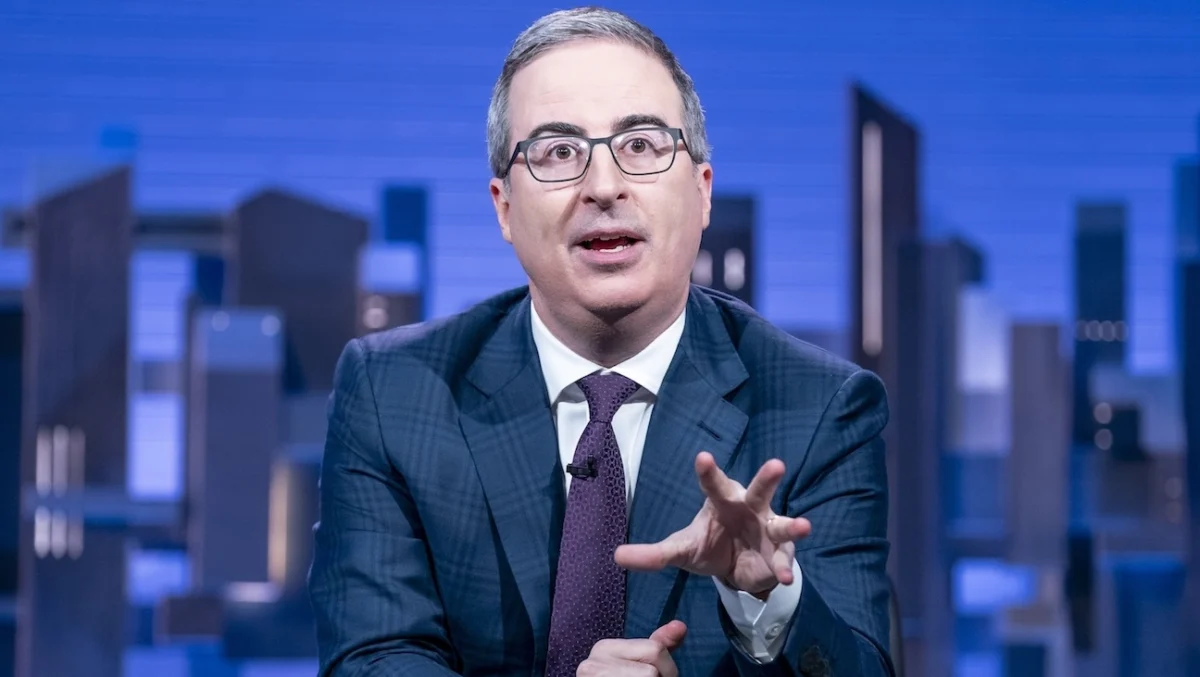
Following a brief hiatus, John Oliver returned to the airwaves on Sunday with a new installment of HBO’s Last Week Tonight, dedicating a significant portion of his program to satirizing former President Donald Trump’s recent public disagreements with Pope Leo XIV. The core of Oliver’s critique centered on Trump’s reaction to the Pope’s statements regarding the ongoing conflict in Iran, a conflict that has drawn international concern and diplomatic maneuvering.
Pope’s Stance on Conflict Sparks Controversy
The genesis of the controversy, as highlighted by Oliver, was Pope Leo XIV’s commentary on the Iran war. The Pontiff, a figurehead for over a billion Catholics worldwide and a prominent voice on global peace, issued a statement emphasizing the principles of non-violence inherent in Christian teachings. He declared, “whoever is a disciple of Christ, the Prince of Peace, never stands on the side of those who yesterday wielded the sword and today drop bombs.” This statement, delivered in the context of escalating tensions and military actions in the Middle East, was interpreted by many as a call for de-escalation and a critique of military interventionism.
Trump’s Retaliation: A "Truth Social" Tirade
Pope Leo XIV’s remarks, however, did not resonate with Donald Trump. Oliver presented evidence, including a lengthy post from Trump’s social media platform, Truth Social, illustrating the former President’s sharp retort. Trump, known for his often combative public discourse, apparently took significant offense to the Pope’s pacifist stance, leading to what Oliver described as Trump "losing his shit."
The former President’s initial salvo, as revealed by Oliver, was to label the Pope as "weak on crime." Oliver, in his characteristic satirical style, dissected this particular insult, finding it incongruous and misplaced. He likened the accusation to criticizing a possum for its lack of knowledge in Balkan geography, humorously arguing that such a critique is irrelevant to the possum’s natural functions and perceived role in its ecosystem. This analogy underscored Oliver’s view that Trump’s attack on the Pope was not only personal but also lacked logical coherence, particularly given the Pope’s spiritual and moral authority, rather than any secular or judicial responsibilities.
The Christ-like Image and Trump’s "Doctor" Defense
The feud escalated further with the emergence of an image shared by Trump, depicting him in a Christ-like pose. In this digitally manipulated artwork, Trump was shown wearing a tunic, with orbs of light emanating from his hands, suggestive of a healing or divine power. This imagery, as Oliver pointed out, predictably generated significant backlash, drawing criticism for its perceived megalomania and inappropriate self-aggrandizement.
When pressed on the image, Trump offered an explanation that Oliver found equally, if not more, absurd. Trump claimed that he believed the image depicted him as a "doctor." This defense provided fertile ground for Oliver’s comedic take. He painted a surreal picture of a doctor’s visit involving not just medical staff but also bald eagles, and where the doctor’s primary mode of treatment involved dispensing "antibiotics and orbs of light born from my very skin." The exaggerated scenario served to highlight the perceived absurdity of Trump’s explanation and the original imagery.
Fact-Checking Trump’s Claims on Iran’s Nuclear Ambitions
The conflict between Trump and Pope Leo XIV also involved differing perspectives on Iran’s nuclear program. During a press conference, when asked about his ongoing dispute with the Pope, Trump asserted, "I’m not fighting with him. The Pope made a statement. He says Iran can have a nuclear weapon. I say Iran cannot have a nuclear weapon."
This direct claim by Trump was immediately challenged by a reporter present at the event, who fact-checked the former President by stating, "Pope Leo has never said Iran should have a nuclear weapon." This moment of direct contradiction between Trump’s assertion and established fact became a focal point of Oliver’s segment, underscoring what he presented as Trump’s tendency to misrepresent or fabricate information to support his narratives.
Refusal to Meet: A Shared Sentiment?
Following this exchange, Trump was asked if he would be willing to meet with Pope Leo XIV to resolve their differences. His response was a dismissive, "I don’t think that a meeting was necessary." Oliver concurred with this sentiment, albeit for entirely different reasons. He suggested that a meeting would indeed be unnecessary, citing the perceived inability of the two figures to find common ground on most issues.
Oliver humorously speculated that the only potential area of agreement might be a shared appreciation for opulent decor. He drew a parallel between Trump’s well-documented penchant for lavish and often ostentatious design, particularly evident in his personal residences and business ventures, and the Vatican’s own historically rich and artistically significant architecture and interiors. This comparison, while lighthearted, served to draw attention to the stark contrast in their public personas and priorities, further emphasizing the unlikelihood of a productive dialogue.
Analysis of Trump’s "Losing Fights" Narrative
Oliver concluded his segment by framing Trump’s recent public engagements as a pattern of "picking losing fights." He argued that the air of invincibility that Trump may have projected in previous years appeared to be rapidly diminishing. This observation, Oliver suggested, served as a broader reminder of the transient nature of political power and influence. The analysis implicitly points to the potential for shifts in political landscapes and the eventual departure of figures from the public stage, a recurring theme in Oliver’s commentary on American politics.
Background Context: The Iran Conflict and Papal Diplomacy
The Iran war, as referred to in the article, likely alludes to the ongoing geopolitical tensions and potential military confrontations involving Iran and various international actors. These tensions are often fueled by Iran’s nuclear program, its regional foreign policy, and its relationships with countries like the United States and its allies. The United States, under various administrations, has maintained a strong stance against Iran acquiring nuclear weapons, employing sanctions and diplomatic pressure.
Pope Leo XIV, as the head of the Catholic Church, has historically played a role in advocating for peace and mediating international disputes. Papal diplomacy has a long and significant history, with Pontiffs often engaging in efforts to de-escalate conflicts, promote humanitarian aid, and foster dialogue between warring parties. The Pope’s statements on the Iran war, therefore, should be understood within this broader context of his role as a moral and spiritual leader with a global platform dedicated to peace.
Timeline of Events (Inferred from Article):
- Several days prior to Oliver’s show: Pope Leo XIV issues a statement on the Iran war, emphasizing peace and non-violence.
- Shortly after the Pope’s statement: Donald Trump posts a lengthy response on Truth Social, criticizing the Pope and labeling him "weak on crime." Trump also shares an image of himself in a Christ-like pose.
- Following the backlash to the image: Trump offers an explanation, stating he believed the image depicted him as a doctor.
- On Thursday (prior to Oliver’s Sunday show): Trump is interviewed about his feud with the Pope, asserting the Pope believes Iran should have nuclear weapons, which is fact-checked by a reporter. Trump also states a meeting with the Pope is unnecessary.
- Sunday: John Oliver dedicates a segment of Last Week Tonight to mocking Trump’s interactions with Pope Leo XIV.
Supporting Data and Broader Implications:
The article touches upon several points that warrant further consideration in terms of supporting data and broader implications:
- Public Opinion on Nuclear Proliferation: Data on global public opinion regarding Iran’s nuclear program and the effectiveness of various diplomatic and military strategies would provide context for the Pope’s and Trump’s differing stances. International Atomic Energy Agency (IAEA) reports and surveys from organizations like Pew Research Center often track these sentiments.
- Historical Papal Diplomacy: Examining historical instances of papal involvement in international conflicts could shed light on the potential influence and effectiveness of the Pope’s statements. Case studies of papal mediation in conflicts throughout history would offer valuable comparative data.
- Trump’s Rhetorical Style and Political Impact: Analysis of Trump’s communication patterns, particularly his use of social media and his engagement with political opponents, could provide data on the efficacy and impact of his rhetorical strategies. Studies on the influence of social media on political discourse and public opinion would be relevant here.
- The Role of Religious Leaders in Geopolitics: The article implicitly raises questions about the influence of religious leaders in shaping international policy and public discourse. Research on the role of faith-based organizations and leaders in peacebuilding and conflict resolution could offer a broader perspective.
- Electoral Impact of Political Discourse: Oliver’s observation about Trump’s "fading air of invincibility" could be analyzed in conjunction with polling data and electoral trends. The impact of specific controversies and public statements on a politician’s approval ratings and electoral prospects is a well-documented area of political science research.
The feud between Donald Trump and Pope Leo XIV, as satirized by John Oliver, highlights the complex intersection of religion, politics, and international relations. While Oliver’s segment primarily serves a comedic purpose, it also implicitly draws attention to the contrasting leadership styles, communication strategies, and policy approaches of the two figures, offering a commentary on the nature of public discourse and the shifting dynamics of political influence. The broader implications of such public disagreements, particularly when involving influential global figures, can range from shaping public perception to impacting diplomatic relations and potentially influencing the trajectory of international conflicts.