
 Reynand Wu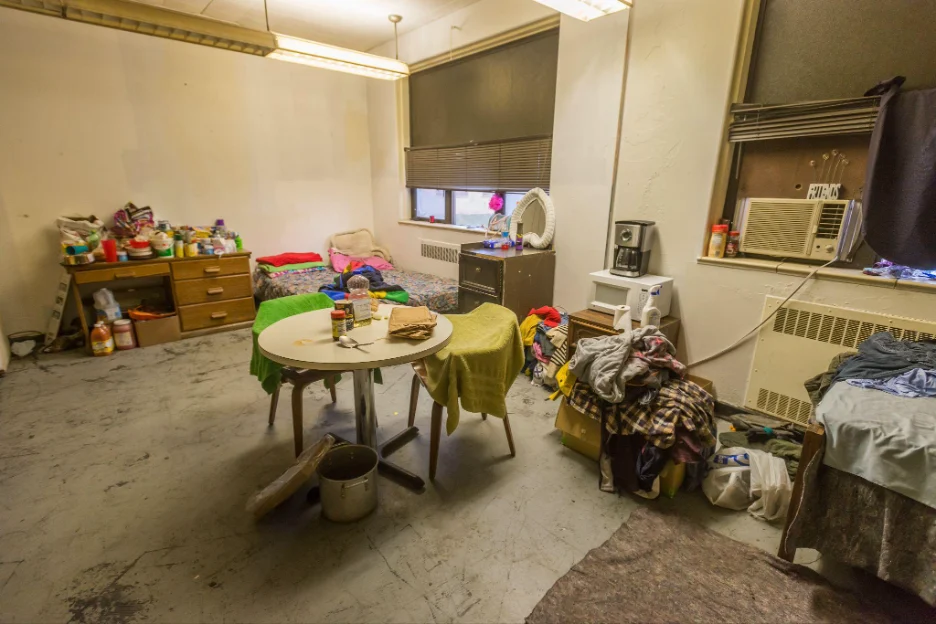
Migrant labor forms the bedrock of American agriculture, an indispensable workforce that ensures the bounty on the nation’s tables. This labor is constant, demanding, and utterly essential, yet the individuals who perform it remain largely unseen, their lives and struggles hidden from public view. This invisibility is not merely social; it is profoundly spatial, a deliberate design embedded in the very infrastructure that houses these workers. Employers strategically locate worker housing behind dense groves, far off main roads, or on private lands secured by locked gates, rendering these sites not only difficult to access but often equally challenging to leave. This isolation is a critical component of a system that, while enabling agricultural productivity, simultaneously restricts worker autonomy and perpetuates a cycle of control.
The Hidden Landscape of Agricultural Labor Housing
The experiences of migrant workers across the United States consistently paint a picture of arduous labor compounded by inadequate and isolating living conditions. Workers often spend long days, frequently six or seven days a week, toiling in fields and orchards under extreme weather conditions, from scorching summer heat to biting winter cold. Their return is not to a sanctuary of rest and rejuvenation but to dormitories or cabins situated far from towns and basic amenities. These shared spaces frequently lack privacy, comfort, or basic dignity. Reports from various regions, including those gathered by legal advocates, describe crowded dorms with shared beds, cramped quarters where personal space is a luxury, communal bathrooms offering little privacy, and kitchens that are often bare, ill-equipped, or unsanitary.
Photographic evidence from across the country, such as the widely circulated images from North Carolina and California, starkly illustrate these conditions. These photographs depict rows of identical cabins, each containing narrow beds, small windows, and barely enough room for an individual, let alone a family, to stretch out comfortably. Such images, including Dorothea Lange’s poignant 1936 portrayal of a migrant agricultural worker’s family in Nipomo, California, huddled outside a temporary shelter, serve as more than mere documentation. They are tangible evidence of a systemic design, revealing the architectural blueprint of a system structured to minimize the visibility and agency of the very people who sustain it. The contemporary images, like that of the Nightingale facility in Rantoul, Illinois, show that while decades have passed, the fundamental issues of spatial confinement and lack of dignity persist.
A Historical Lens: The Evolution of Migrant Worker Accommodation
The challenges faced by migrant agricultural workers are not new but are deeply rooted in American history, evolving alongside the nation’s agricultural and economic development. The early 20th century saw waves of internal migration, particularly during the Great Depression and the Dust Bowl era, when hundreds of thousands of "Okies" and "Arkies" moved to California and other states in search of farm work. The federal government, through agencies like the Farm Security Administration (FSA), established some camps to provide basic, albeit rudimentary, housing. However, many workers lived in squalid, unregulated private camps or self-made shantytowns, often facing severe exploitation. Dorothea Lange’s iconic photographs from this period captured the harsh realities of these temporary, undignified living arrangements, highlighting a long-standing pattern of neglect.
Following World War II, programs like the Bracero Program (1942-1964) brought millions of Mexican guest workers to the U.S. to fill agricultural labor shortages. While the program had provisions for housing standards, enforcement was often lax, leading to widespread complaints about substandard conditions, overcrowding, and exploitation. After the Bracero Program ended, the agricultural labor force increasingly shifted towards undocumented and authorized immigrant workers. This transition, combined with the increasing industrialization of agriculture, further entrenched the reliance on a vulnerable, often transient, workforce whose housing became intrinsically linked to their employment. The patterns of isolated, employer-controlled housing continued, adapting to new legal and demographic landscapes but retaining their core function of labor control.
Regulatory Frameworks and Their Gaps
In response to historical abuses, legislative efforts have been made to protect migrant workers. The Migrant and Seasonal Agricultural Worker Protection Act (MSPA) of 1983 is the primary federal law governing the employment and housing of migrant and seasonal agricultural workers. MSPA mandates that agricultural employers who provide housing must ensure it meets federal and state safety and health standards. These standards typically cover aspects like structural soundness, sanitation, ventilation, and fire safety. Additionally, the Occupational Safety and Health Administration (OSHA) sets standards for temporary labor camps, including requirements for sleeping quarters, cooking facilities, and water supply.
Despite these regulations, enforcement remains a significant challenge. The U.S. Department of Labor (DOL), responsible for MSPA enforcement, often struggles with understaffing and limited resources, making comprehensive inspections difficult. The remote location of many labor camps, as noted in the initial observation, further complicates access for inspectors and legal aid workers. Furthermore, fear of retaliation is a pervasive issue among workers. Migrant workers, many of whom are immigrants with precarious legal status, are often reluctant to report violations due to the risk of losing their job, their housing, and potentially facing deportation. This climate of fear effectively silences complaints, allowing substandard conditions to persist largely unchecked. The "minimum legal standard" often becomes the de facto maximum, with housing conditions designed to merely skirt legal thresholds rather than provide genuinely humane living environments. In many cases, these minimum standards are barely above what is considered acceptable for a prison cell, further underscoring the dehumanizing aspect of the architecture.
The Sociology of Control: Space as a Labor Strategy
From a sociological perspective, the conditions and locations of migrant worker housing are not accidental shortcomings but rather structural manifestations of power imbalances. Conflict theory, a foundational sociological paradigm, posits that society is shaped by ongoing struggles over power and resources. In the context of migrant labor, this struggle is vividly apparent in the very organization and control of housing. Employers, holding significant power over both employment and shelter, can leverage this dual control to their economic advantage, effectively suppressing wages and ensuring a docile workforce.
This power dynamic is further illuminated by Henri Lefebvre’s theory of the "production of space." Lefebvre argued that space is not a neutral, empty container but is actively produced and shaped by social relations and power structures. The arrangement of migrant housing—its isolation, its crowded interiors, its lack of amenities—is not driven by considerations of comfort, fairness, or optimal function for the residents. Instead, it reflects the interests of those who have the authority to determine how people live. The design of a dormitory, the distance between living quarters and public services, and the overall layout of a labor camp are not random; they are deliberate choices that reflect and reinforce existing power relationships, prioritizing employer control and economic efficiency over worker well-being.
Similarly, Michel Foucault’s work on "Discipline and Punish" provides a powerful framework for understanding how institutions utilize architecture to enforce discipline and control. Foucault demonstrated how spatial arrangements, such as those found in prisons, schools, or factories, can create docile bodies without the need for overt force or constant surveillance. In migrant housing, space signals control in a subtle yet pervasive manner. These dorms do not necessarily require bars or guards; the architecture itself becomes an instrument of discipline. By providing housing that meets only the minimum legal standard, which is often barely above subsistence level, the physical environment itself dehumanizes and, in doing so, controls. Workers are made acutely aware that their living conditions are contingent upon their labor, and any disruption to their employment means losing their bed and risking their presence in the country.
The firsthand accounts gathered by legal professionals confirm this sociological analysis. Workers describe bunks so close that they could hear every breath of the person above them, a profound invasion of privacy. Spouses recount being unable to live together, even when married, due to restrictive housing rules. They speak of feeling constantly monitored, subject to rules about visitors, meal times, and noise levels. This pervasive sense of being watched, coupled with the knowledge that their homes are not truly their own—that they are temporary, employer-provided, and contingent—instills a deep fear of speaking up. The system, through its spatial and regulatory design, ensures that individuals have fewer choices, making them easier to control.
Data and Statistics: Quantifying the Crisis
The scale of migrant labor in the U.S. is immense. Estimates suggest that approximately 2.5 to 3 million farmworkers are employed in the United States, with a significant portion being migrant workers who travel seasonally for work. The economic contribution of these workers is staggering, underpinning a multi-billion-dollar agricultural industry. Yet, their compensation often remains woefully inadequate. A 2022 report by the Economic Policy Institute noted that farmworkers’ median annual income hovers around $25,000, placing many families below the poverty line. This low wage base is directly linked to the housing situation, as the provision of substandard housing can be seen as a hidden subsidy to employers, allowing them to keep labor costs down.
Reports from the Department of Labor frequently document MSPA violations, with housing-related issues being a persistent concern. These violations range from unsafe structural conditions and inadequate sanitation to overcrowded facilities and lack of access to potable water. The public health implications of these conditions are severe, particularly in crowded, communal settings where infectious diseases can spread rapidly. Heat-related illnesses are also a major concern, as workers enduring extreme heat in the fields return to unventilated, often un-airconditioned, living spaces. The lack of privacy and dignity in these living arrangements also takes a heavy toll on mental health, contributing to stress, anxiety, and depression.
Voices from the Fields: Worker Testimonies and Advocacy
The experiences shared by workers, such as those encountered by paralegals, are echoed by countless others and amplified by dedicated advocacy groups. Organizations like the United Farm Workers (UFW), Farmworker Justice, and various legal aid societies work tirelessly to expose these conditions and fight for improved rights and protections. They provide legal assistance, organize workers, and lobby for policy changes, often facing immense resistance from powerful agricultural interests.
These advocacy efforts highlight the systemic nature of the problem, emphasizing that individual instances of poor housing are not isolated incidents but rather symptoms of a broader structural issue. Legal aid organizations, while crucial, face significant hurdles in reaching workers, building trust, and prosecuting cases in a system where workers’ vulnerability is often exploited. The fear of reprisal, including job loss, eviction, and deportation, remains a formidable barrier to justice.
Implications and The Path Forward
The spatial invisibility and systemic control embedded in migrant labor housing carry profound implications across human rights, public health, and economic justice. From a human rights perspective, the denial of basic dignity, privacy, and freedom of movement through coercive housing arrangements is a grave concern. Public health risks are exacerbated by crowded and often unsanitary living conditions, a reality made even more stark in the wake of global pandemics, which disproportionately affected these vulnerable communities. Economically, the current system allows agricultural producers to externalize the true cost of labor, relying on a workforce that subsidizes the industry through low wages and substandard living.
Addressing this complex issue requires a multi-faceted approach. Stricter enforcement of existing regulations, coupled with increased funding for labor inspections, is paramount. Furthermore, policies that empower workers, such as protecting their right to organize and providing clear pathways to legal residency that are not tied to a single employer, could significantly reduce their vulnerability. Exploring alternative housing models, including worker-owned cooperatives or community-managed housing, could offer greater autonomy and dignity. Ultimately, comprehensive immigration reform that prioritizes worker protections and human rights is essential to dismantle the structural inequities that enable these conditions to persist.
As scholars and engaged citizens, it is our collective responsibility to bring these hidden designs to light. We cannot change what we refuse to see. By understanding the intricate ways in which space is produced to exert control, and by confronting the historical and ongoing realities of migrant labor housing, society can begin to move towards a more equitable and humane agricultural system.







