
 Reynand Wu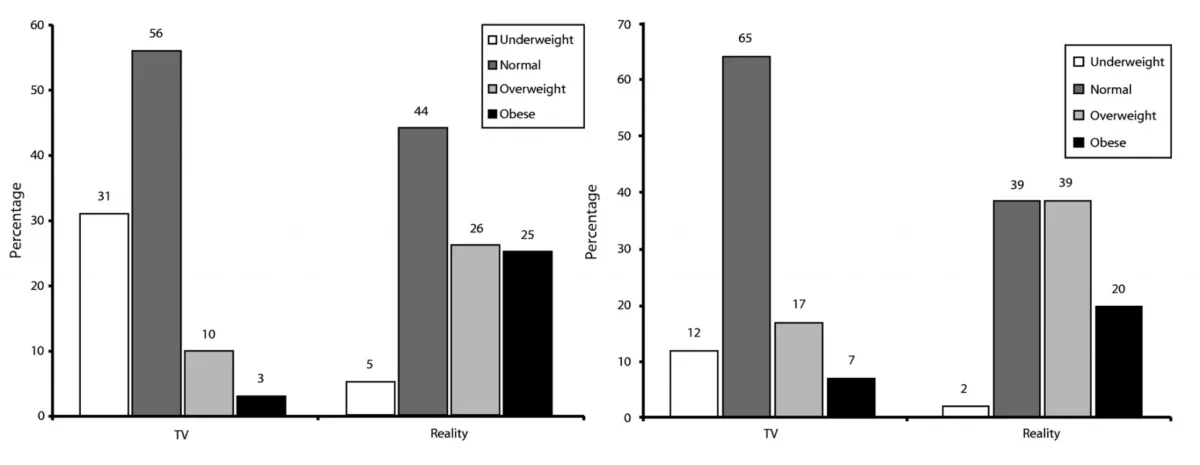
Television, a pervasive mirror reflecting and shaping societal norms, consistently distorts, mocks, and marginalizes individuals with larger body types, reducing them to one-dimensional caricatures whose stories and identities are rarely developed or deemed significant. This pervasive misrepresentation has profound implications for viewers, fostering negative self-perception and perpetuating harmful societal biases. A pivotal study by Tzoutzou et al., for instance, starkly revealed that across numerous examined programs, all 36 compliments related to appearance directed at women were exclusively reserved for thin characters. Not a single positive message about physical appearance was extended to a woman of an average or overweight body type. A similar, albeit slightly less severe, pattern emerged for male characters, with only one overweight individual receiving a positive appearance-related comment. This data underscores a deeply entrenched bias within broadcast media, where external beauty is narrowly defined by thinness, effectively excluding and devaluing anyone who deviates from this restrictive ideal.
The relentless exposure to such a skewed definition of beauty leads viewers, particularly vulnerable populations like young women and adolescents, to internalize this "thin ideal." This internalization can significantly erode self-esteem and make it exceedingly difficult for individuals to cultivate a positive body image, especially if their physical appearance does not conform to these unrealistic standards. The observed treatment of plus-size individuals on television directly impacts how viewers perceive their own bodies, fostering dissatisfaction and potentially leading to a host of psychological and behavioral challenges.
The Historical Arc of Body Representation on Screen
The history of television and film is replete with shifting ideals of beauty and body size, yet a consistent thread has been the marginalization or stereotypical portrayal of larger bodies. In early cinema and television, while diverse body types were present, "fat" characters often served as comedic foils or benevolent, asexual figures. The mid-20th century saw the emergence of the "Hollywood ideal" – a progressively slender aesthetic for leading ladies and muscular physiques for male heroes. By the late 20th and early 21st centuries, as diet culture and the "war on obesity" gained traction in public discourse, the media’s portrayal of larger bodies grew increasingly negative and demonizing.
This chronological shift aligns with the findings of researchers like Brownell et al., whose 2003 study highlighted a significant disparity between the body types shown on television and those present in reality. Their analysis from 1999-2000, for example, illustrated that the percentage of average and overweight women on TV was significantly lower than their prevalence in the general population. For men, while the gap was slightly narrower, overweight and obese men were still underrepresented compared to real-world demographics. This persistent underrepresentation is not merely an oversight; it is an active form of erasure that reinforces the notion that larger bodies are less worthy of screen time and nuanced narratives.
Bigger Bodies, Smaller, More Villainous Roles
Beyond simple underrepresentation, the pattern of dehumanizing plus-size characters is most evident in the limited, often negative, roles they are afforded. They are frequently relegated to being one-dimensional comedic sidekicks or outright villains, roles that deny them the opportunity for genuine character development and complex emotional arcs.
In the realm of comedy, the humor often comes at the expense of plus-size women, rather than with them. Research into comedic portrayals has shown that overweight women are approximately twice as likely to be the punchline of a joke compared to their thinner counterparts. These characters are also typically granted smaller roles, fewer romantic interests, and participate in "fewer positive interactions than thin characters." This dynamic, sometimes referred to in academic circles as "the Melissa McCarthy effect" (referencing the actress often cast in roles where her size is central to the humor), highlights a problematic trend where the perceived humor of a character is intrinsically linked to their body shape, rather than their wit or situation. While McCarthy herself has broken barriers, the broader industry tendency remains.
Equally concerning is the media’s propensity to cast plus-size characters as antagonists. A seminal study by Himes and Thompson examined popular children’s videos and found that "obesity was equated with negative traits (evil, unattractive, unfriendly, cruel) in 64% of the most popular children’s videos." This alarming statistic reveals how early in life children are exposed to the harmful association between body size and moral character. Iconic examples abound in children’s literature and film, from the menacing Ursula in The Little Mermaid to the tyrannical Queen of Hearts in Alice In Wonderland. These villains, often visually characterized by their imposing size, inadvertently establish a subconscious link in young minds between fatness and malevolence. Such portrayals strip plus-size characters of their humanity, preventing them from being developed into full-fledged individuals with complex motivations and backstories, a privilege routinely afforded to thinner characters. The industry’s approach is not merely to ignore larger bodies, but actively to demonize them.
The Detrimental Effects on Audiences
The relentless barrage of negative and stereotypical portrayals of plus-size individuals on television has profound and demonstrable psychological and social consequences for viewers. Audiences, particularly impressionable young people, can quickly internalize these distorted depictions, leading to a cascade of negative outcomes.
Studies have shown that this internalization can occur remarkably swiftly. Research by Fouts and Burggraf revealed that as little as 30 minutes of television viewing can significantly impact how a young woman perceives her own body, potentially initiating a cycle of body dissatisfaction and related struggles. The Tzoutzou et al. study corroborated this, finding that girls readily acknowledged the media’s influence on their desire to achieve the "thin ideal" and conform to narrow beauty standards. This desire often manifests in frequent dieting, a common precursor to disordered eating patterns, as individuals strive to meet unrealistic body standards transmitted by mass media.
Beyond low self-esteem and body image issues, these misrepresentations can instill a deeper, more insidious fear in viewers. They can lead individuals to believe they will be subjected to the same sexist and prejudiced treatment they witness on screen if they do not conform to the prevailing body norm. This fear can drive unhealthy behaviors, including extreme dieting and obsessive exercise, as individuals attempt to "fix" their bodies to avoid perceived social repercussions. The psychological burden of feeling judged by the very entertainment meant for relaxation transforms television from a source of enjoyment into a trigger for anxiety and self-scrutiny. The cumulative effect of these fictional, distorted depictions is the potential for female viewers, and increasingly male viewers, to feel worse about their appearance and anticipate negative reactions from others based solely on their body size.
Industry Responses and Advocacy for Change
While the pervasive issue of fatphobia in media has been a long-standing concern, the landscape is slowly beginning to shift, albeit incrementally. Advocacy groups and academic researchers have been at the forefront of demanding more inclusive and authentic representation. Organizations dedicated to body positivity and fat acceptance routinely call out egregious examples of misrepresentation and push for media literacy initiatives.
From an industry perspective, explicit "official responses" acknowledging systemic fatphobia are rare, but broader diversity and inclusion initiatives are starting to encompass body size. Some production companies and networks have begun to recognize the importance of authentic storytelling for all demographics. Shows like Hulu’s Shrill, starring Aidy Bryant, and NBC’s This Is Us, featuring Chrissy Metz, have been lauded for presenting plus-size characters with complexity, depth, and agency that transcends their body size. These examples, though still relatively few, demonstrate that it is possible to create compelling narratives where a character’s weight is simply one aspect of their identity, not their defining characteristic or the sole source of humor or tragedy.
However, these positive examples remain exceptions rather than the norm. The pressure on creators often comes from a combination of public outcry, academic scrutiny, and the growing demand from a diverse audience base that seeks to see themselves authentically reflected on screen. Media executives are increasingly aware that neglecting large segments of the population in their storytelling is not only ethically questionable but also a missed commercial opportunity. The global body positive movement, amplified by social media, has given a louder voice to those demanding change, challenging traditional beauty standards and pushing for a more inclusive media landscape.
The Path to Inclusive Storytelling and Broader Implications
The journey towards genuinely inclusive television, where all body types are portrayed with dignity and depth, requires a fundamental shift in creative thinking and production practices. It necessitates moving beyond tokenism and actively seeking out diverse narratives and casting choices. For creators, this means:
- Developing Complex Characters: Crafting stories where a character’s body size is not their sole defining trait, allowing them to have rich inner lives, ambitions, flaws, and relationships independent of their weight.
- Challenging Tropes: Consciously avoiding the tired stereotypes of the "fat villain," the "funny fat friend," or the "tragic fat person" whose storyline revolves entirely around their weight loss journey.
- Authentic Casting: Casting plus-size actors in a variety of roles—heroes, romantic leads, professionals, and everyday people—without making their size the central comedic or dramatic device.
- Promoting Positive Messaging: Ensuring that any discussions around body image are handled with sensitivity, promoting self-acceptance and health at every size, rather than perpetuating diet culture or body shaming.
The implications of such a shift extend far beyond entertainment. Television has a powerful capacity to shape cultural perceptions and reinforce or dismantle social prejudices. When media consistently shows diverse body types in positive, aspirational, and relatable roles, it can help normalize body diversity in real life, foster empathy, and combat fatphobia. It can empower viewers to feel better about themselves, regardless of their size, and challenge the narrow beauty ideals that contribute to widespread body dissatisfaction and mental health issues.
Television is meant to be a space for enjoyment, escapism, and connection. Yet, for countless viewers, it has become a source of judgment and self-doubt. No one should have to feel that their body is being critiqued or mocked by the shows they choose to watch. All bodies deserve to be seen, celebrated, and granted a place within the narratives that define our cultural landscape. This is not merely a call for political correctness; it is a demand for basic human decency and accurate reflection of the diverse world in which we live. By embracing true diversity, including body diversity, television can fulfill its potential as a truly inclusive and enriching medium for everyone.








