
 Reynand Wu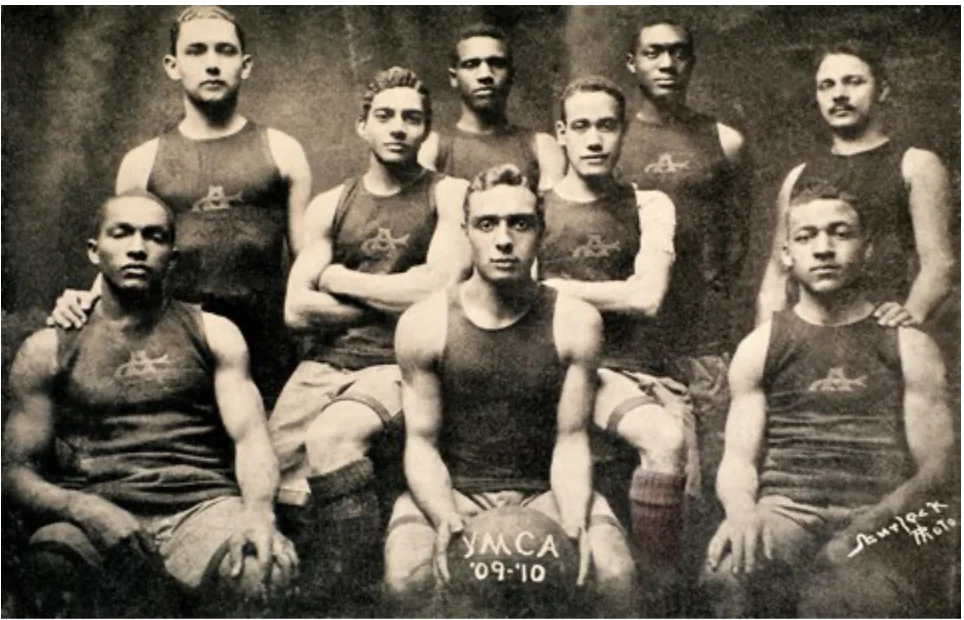
Strolling along 135th Street in Harlem, one might encounter a vibrant scene: a well-maintained outdoor basketball court, its fresh paint gleaming, enclosed by a sturdy chain-link fence. The rhythmic thud of a bouncing ball, the excited shouts of children, and the fluid motion of passes, dribbles, and shots from every angle paint a picture of community and passion. As the game intensifies, more spectators, mostly local kids, gather around, drawn into the magnetic pull of the court. This scene, ubiquitous across New York City’s diverse neighborhoods, particularly in historically Black communities from Harlem to Brooklyn, is more than just recreation; it is a profound cultural touchstone. Basketball, deeply embedded in the city’s identity, has become synonymous with African American culture for decades. The genesis of this deep connection is multifaceted, yet its roots are inextricably linked to a complex history of discriminatory practices such as redlining and segregation, which inadvertently steered minority communities toward the sport.
Basketball’s Early Days: A Sport of Exclusion
Basketball, as we know it, was conceived in December 1891 by Dr. James Naismith, a Canadian physical education instructor at the International YMCA Training School in Springfield, Massachusetts. Naismith sought a less injury-prone sport than football, one that could be played indoors during harsh New England winters. His innovative game, initially played with peach baskets and a soccer ball, quickly spread. By the early 1900s, it had taken root in colleges and high schools across the nation, predominantly among white student populations. Elite institutions like Harvard, Yale, Cornell, and Princeton established intercollegiate rivalries as early as 1901, solidifying basketball’s place within established academic and athletic frameworks. The sport professionalized with the founding of the National Basketball League (NBL) in 1937, which later merged with the Basketball Association of America (BAA) in 1949 to form the ubiquitous National Basketball Association (NBA).
For the initial three decades of organized basketball, participation at both collegiate and professional levels was overwhelmingly white. Systemic racial barriers explicitly barred Black athletes from these leagues. It was not until 1928 that George Gregory Jr. made history as the first Black collegiate player. The professional color barrier in basketball proved even more formidable, remaining intact until the 1949-1950 NBA season, when Chuck Cooper, Nathaniel Clifton, and Earl Lloyd courageously broke through, paving the way for future generations. During this era, basketball was largely played in community centers such as YMCAs, many of which, particularly in the North, adhered to strict segregationist policies, refusing membership and access to Black individuals. This forced exclusion meant that if Black communities wished to play basketball, they often had to build their own infrastructure.
The Landscape of Segregation: Redlining and Its Athletic Echoes
The pervasive influence of redlining and other forms of economic discrimination profoundly shaped the availability of resources in minority neighborhoods, including recreational facilities. Redlining, an exclusionary housing practice, gained institutional footing with the National Housing Act (NHA) of 1934. This legislation birthed government entities like the Federal Housing Administration (FHA) and the Home Owners’ Loan Corporation (HOLC), ostensibly to stabilize and improve the housing market. While the FHA successfully stimulated homeownership for white Americans by providing mortgage insurance to lenders, significantly easing access to loans, this support largely bypassed Black communities.
The HOLC played a pivotal role in formalizing residential segregation through its infamous "Residential Security Maps." These maps categorized neighborhoods into four grades: green (safest for investment), blue, yellow, and red (deemed "hazardous" for investment). Areas with large populations of Black residents were almost invariably colored red, signaling high risk to banks and investors. This designation actively depressed property values and deterred potential investment. The FHA subsequently utilized these HOLC maps to guide its lending policies, effectively refusing federally insured housing loans to minorities, particularly Black Americans, in redlined areas. This practice created a self-fulfilling prophecy of disinvestment and decline in Black neighborhoods.
Simultaneously, as Black families migrated to northern cities seeking refuge from Jim Crow segregation, a phenomenon known as "white flight" accelerated. White homeowners, often fueled by racial prejudice and fear of declining property values, moved en masse to newly developed suburbs outside city limits. This exodus further destabilized urban Black neighborhoods, leading to a diminished tax base, reduced public services, and a cycle of economic deprivation. Remaining white homeowners in these transitional areas often sold their properties at significant discounts, further exacerbating the economic disparities.
The economic inequality forged by redlining directly influenced the types of sports accessible to children in these marginalized communities. Redlined neighborhoods, systematically underfunded and neglected, typically possessed less green space and smaller, less-maintained parks compared to affluent areas. An analysis by the Trust for Public Land highlighted this disparity in New York City, revealing that the average park size in poor neighborhoods was merely 6.4 acres, a stark contrast to the 14 acres found in wealthy neighborhoods. This scarcity and inferior quality of public recreational facilities played a critical role in shaping athletic opportunities.
Beyond the physical space, minority children gravitated toward basketball due to its significantly lower cost of entry compared to other popular sports. Baseball, for instance, required substantial financial investment for specialized equipment (bats, gloves, uniforms), league fees, and travel teams to compete at higher levels. Basketball, by contrast, demanded minimal equipment: a ball and a hoop were often sufficient. This economic accessibility was a crucial factor. David C. Ogden, a University of Nebraska professor specializing in race and sport dynamics, noted that a primary reason for the lack of racial diversity in baseball was the "paucity of baseball facilities in Black neighborhoods, and the cost of playing select baseball." His research found that "more than two-thirds of the 27 coaches said that African-American youth prefer to spend their time on the basketball court rather than on the diamond." This preference was not merely cultural but a pragmatic response to economic realities imposed by systemic discrimination.
The Rise of Black Basketball Infrastructure and Cultural Resilience
Faced with institutional exclusion, Black communities responded by creating their own athletic ecosystems. The popularity of basketball among minority communities flourished notably through the establishment of independent Black YMCAs and athletic clubs. These institutions became vital community hubs, offering not only recreational opportunities but also social support and a sense of belonging in a segregated society. The Smart Set Athletic Club of Brooklyn, formed in 1907, stands as a landmark example, becoming America’s first fully independent Black basketball team. As more Black YMCAs and similar clubs emerged in major cities across the East Coast, basketball’s reach expanded exponentially.
A pivotal figure in this movement was Edwin Bancroft Henderson, an educator working in Washington D.C. Henderson, having learned the game during summer sessions at Harvard University, introduced basketball to young Black men in the D.C. area. His efforts sparked a grassroots movement, and soon, the game was being enthusiastically played across the eastern seaboard, particularly in burgeoning urban centers like New York, Philadelphia, and Baltimore. These early Black teams and leagues, often referred to as the "Black Fives," laid the groundwork for a rich basketball tradition, operating in parallel to the segregated white leagues. They played competitive games, drew large crowds, and fostered a deep sense of community pride and athletic excellence.
Basketball also became a significant avenue for economic upward mobility, albeit a challenging one. The Harlem Globetrotters, formed in 1926 by Abe Saperstein, emerged as the most renowned basketball team for Black players. While often framed as entertainers, the Globetrotters were formidable athletes who showcased exceptional skill and athleticism, captivating audiences worldwide. For many Black basketball players of that era, the Globetrotters represented one of the few, if not the only, viable paths to earn a living playing professional basketball, offering a semblance of professional opportunity that the segregated mainstream leagues denied. Their global tours not only entertained but also served as cultural ambassadors, challenging racial stereotypes and showcasing Black talent on an international stage.
Breaking Barriers and the Modern Era
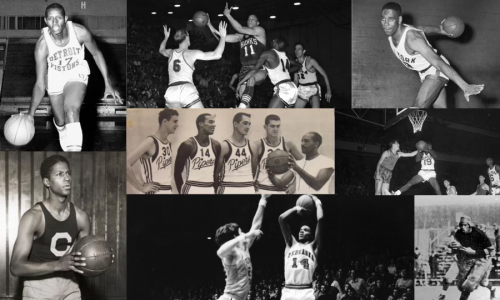
The integration of professional basketball was a gradual process, reflecting broader societal shifts in the mid-20th century. Following the pioneering efforts of George Gregory Jr. in college basketball, the NBA’s color barrier finally fell in 1950. Earl Lloyd, Nathaniel Clifton, and Chuck Cooper stepped onto NBA courts, enduring racial slurs, segregation during travel, and immense pressure. Their courage, along with that of other early Black players like Jackie Robinson in baseball, paved the way for the eventual transformation of American professional sports.
In the decades following desegregation, Black participation in basketball, especially in New York City, soared. The foundations laid by the Black Fives, the YMCAs, and the Globetrotters had created a robust pipeline of talent and a deep cultural affinity for the sport. Today, basketball is an indispensable part of NYC’s cultural fabric, transcending racial boundaries, yet profoundly shaped by its historical roots in Black communities.
Every summer, New York City parks become vibrant arenas for legendary basketball tournaments that draw national attention. Events like the Nike-sponsored "NY vs. NY" series and Slam Magazine’s "Summer Classic" feature top-ranked high school players, drawing thousands of fans to iconic venues such as Dyckman Park in Manhattan. These streetball tournaments are not merely games; they are cultural spectacles, celebrations of skill, community, and the enduring spirit of New York basketball. Legendary courts like Rucker Park in Harlem, West 4th Street in Greenwich Village, and Dyckman have produced generations of basketball heroes and shaped the gritty, improvisational style that defines New York City hoops.
The demographic shift in professional basketball has been equally profound. In stark contrast to the virtually all-white NBA of 1950, approximately 75% of the league’s players today are Black. Furthermore, a significant number of Black American athletes now play professionally in leagues across the globe, a testament to the talent pool cultivated over generations. The journey from exclusion to dominance underscores the resilience and adaptive capacity of Black communities. Segregation and redlining, though designed to stifle opportunity and perpetuate inequality, inadvertently channeled energy and talent into basketball, transforming it into an enduring staple of the community and a powerful symbol of aspiration and achievement.
The history of basketball’s popularity among African Americans in New York City is a compelling narrative of systemic injustice met with cultural innovation and unwavering determination. What began as a consequence of exclusion evolved into a cornerstone of identity, a pathway to economic advancement, and a source of immense pride. The vibrant courts of Harlem and beyond stand as living testaments to this legacy, where the echoes of a challenging past resonate with the joyous sounds of a ball bouncing, a testament to the enduring power of sport to unite, uplift, and transcend historical barriers.
Sharif Nelson ’26 is a student at Hamilton College studying economics.
Additional Resources:
Aaronson, D., Faber, J., Hartley, D., Mazumder, B., & Sharkey, P. (2020). The Long-Run Effects of the 1930s HOLC “Redlining” Maps on Place-Based Measures of Economic Opportunity and Socioeconomic Success. The Effects of the 1930s HOLC “Redlining” Maps. https://doi.org/10.21033/wp-2020-33
Bowen, F. (2023, April 7). In its early years, NBA blocked black players. The Washington Post. Retrieved April 24, 2023, from https://www.washingtonpost.com/lifestyle/kidspost/in-nbas-early-years-black-players-werent-welcome/2017/02/15/664aa92e-f1fc-11e6-b9c9-e83fce42fb61_story.html
Centopani, P. (2020, February 24). The makings of basketball mecca: Why it will always be New York. FanSided. Retrieved May 1, 2023, from https://fansided.com/2020/02/24/makings-basketball-mecca-will-always-new-york/
Domke, M. (2011). Into the vertical: Basketball, urbanization, and African American … Into the Vertical: Basketball, Urbanization, and African American Culture in Early- Twentieth-Century America. Retrieved March 31, 2023, from http://www.aspeers.com/sites/default/files/pdf/domke.pdf
Gay, C. (2022, January 13). The black fives: A history of the era that led to the NBA’s racial integration. Sporting News Canada. Retrieved April 24, 2023, from https://www.sportingnews.com/ca/nba/news/the-black-fives-a-history-of-the-era-that-led-to-the-nbas-racial-integration/8fennuvt00hl1odmregcrbbtj

Gorey, J. (2022, July 25). How “White flight” segregated American cities and Suburbs. Apartment Therapy. Retrieved April 30, 2023, from https://www.apartmenttherapy.com/white-flight-2-36805862
Hunt, M. (2022, October 11). What is the National Housing Act? Bankrate. Retrieved April 25, 2023, from https://www.bankrate.com/real-estate/the-national-housing-act/#:~:text=What%20is%20the%20National%20Housing%20Act%20(NHA)%3F,Loan%20Insurance%20Corporation%20(FSLIC).
Hu, W., & Schweber, N. (2020, July 15). New York City has 2,300 parks. but poor neighborhoods lose out. The New York Times. Retrieved April 21, 2023, from https://www.nytimes.com/2020/07/15/nyregion/nyc-parks-access-governors-island.html
Ivy league regular season champions, by Year. Coaches Database. (2023, March 5). Retrieved April 24, 2023, from https://www.coachesdatabase.com/ivy-league-regular-season-champions/
McIntosh, K., Moss, E., Nunn, R., & Shambaugh, J. (2022, March 9). Examining the black-white wealth gap. Brookings. Retrieved April 25, 2023, from https://www.brookings.edu/blog/up-front/2020/02/27/examining-the-black-white-wealth-gap/
Ogden, D. C. ., & Hilt, M. L. . (2003). Collective Identity and Basketball: An Explanation for the Decreasing Number of African Americans on America’s Baseball Diamond. Retrieved March 31, 2023, from https://www.nrpa.org/globalassets/journals/jlr/2003/volume-35/jlr-volume-35-number-2-pp-213-227.pdf
Ortigas, R., Okorom-Achuonyne, B., & Jackson, S. (n.d.). What exactly is redlining? Inequality in NYC. Retrieved March 30, 2023, from https://rayortigas.github.io/cs171-inequality-in-nyc/
Pearson, S. (2022). Basketball origins, growth and history of the game. History of The Game Of Basketball Including The NBA and the NCAA. Retrieved April 24, 2023, from https://www.thepeoplehistory.com/basketballhistory.html
Robertson, N. M. (1995). [Review of Light in the Darkness: African Americans and the YMCA, 1852-1946., by N. Mjagkij]. Contemporary Sociology, 24(2), 192–193. https://doi.org/10.2307/2076853
Townsley, J., Nowlin, M., & Andres, U. M. (2022, August 18). The lasting impacts of segregation and redlining. SAVI. Retrieved March 30, 2023, from https://www.savi.org/2021/06/24/lasting-impacts-of-segregation/









