Jono Maryono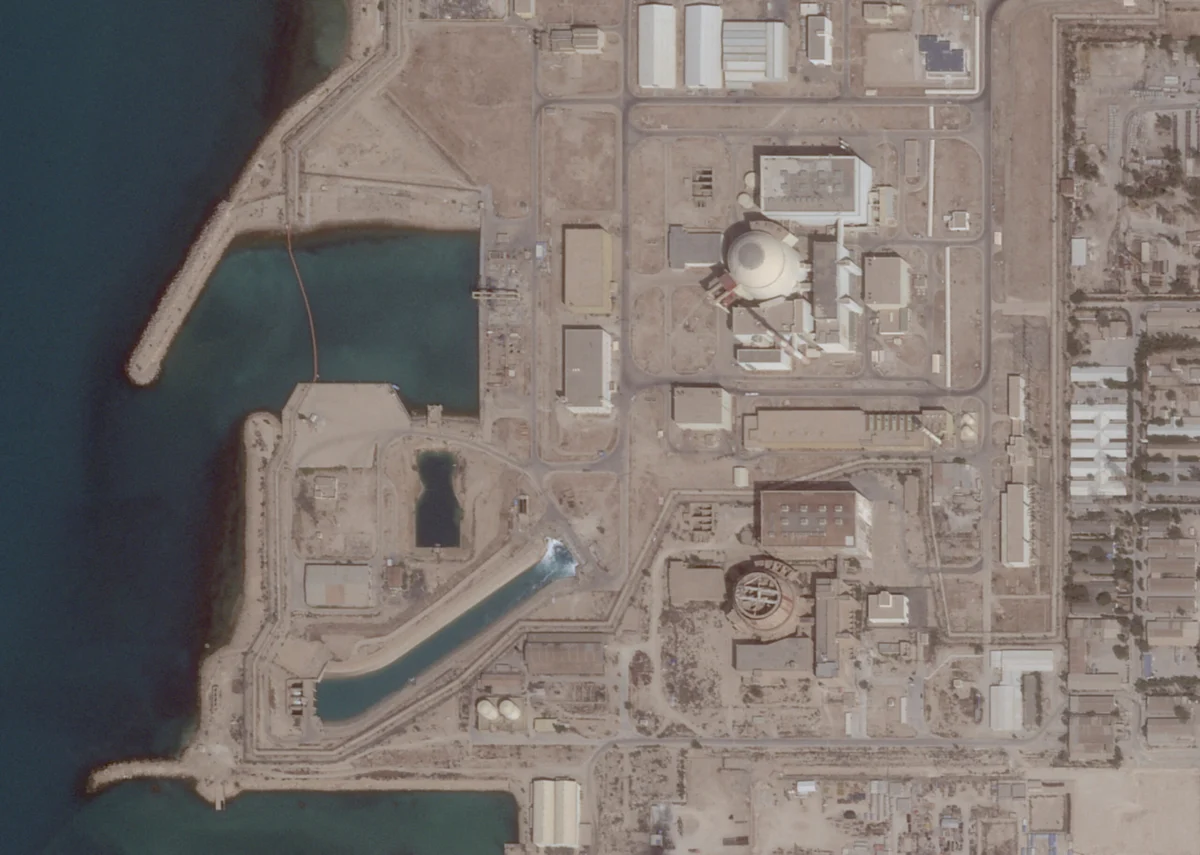
Tehran has reported a significant escalation in the ongoing conflict, with a projectile strike near Iran’s sole operational nuclear power plant in Bushehr resulting in one fatality. The International Atomic Energy Agency (IAEA) confirmed the incident, citing Iranian authorities, and revealed that the attack on Saturday led to the death of a security personnel member due to projectile fragments. Crucially, the agency underscored that no increase in radiation levels was detected following the strike, a critical detail given the sensitive nature of the facility. This event marks the fourth reported attack on or near the Bushehr plant since the current phase of hostilities, characterized by what Iran describes as a "US-Israel war on Iran," intensified.
The targeting of areas adjacent to nuclear facilities has drawn stern warnings from the international community, particularly the IAEA, which oversees global nuclear safety and security. Director General Rafael Grossi articulated his "deep concern about the reported incident," emphasizing that "sites or nearby areas must never be attacked." He highlighted the potential dangers, noting that "auxiliary site buildings may contain vital safety equipment," underscoring the cascading risks associated with such assaults. Grossi reiterated an urgent "call for maximum military restraint to avoid risk of a nuclear accident," a plea that resonates with the global imperative to prevent catastrophic nuclear events.
Iran’s Foreign Minister, Abbas Araghchi, voiced strong condemnation, asserting that the Bushehr facility had been "bombed" four times since the conflict erupted. He criticized a perceived lack of international concern for the safety of Iran’s nuclear infrastructure, framing these attacks as part of a broader strategy by the United States and Israel to target Iranian industrial sites. This assertion comes amidst a backdrop of increasing reports of strikes on various Iranian economic and military installations, raising alarms among energy sector experts and international observers regarding the potential for widespread damage and instability.
Chronology of Escalation and the Bushehr Incident
The events of Saturday represent a critical juncture in the escalating regional tensions. The strike near Bushehr occurred on the same day that Iranian state media reported widespread attacks on petrochemical plants in the southern Khuzestan region, a vital energy hub. These petrochemical strikes reportedly injured at least five people and caused visible damage, with explosions and smoke plumes observed in the Mahshahr Petrochemical Special Economic Zone. Specific facilities identified as hit include the state-run Bandar Imam petrochemical complex, a major producer of chemicals, liquefied petroleum gas (LPG), and polymers, as well as Fajr 1 and 2 petrochemical companies and other nearby installations. The extent of the damage in Khuzestan remains under investigation.
Hours before these reports emerged, Iran’s Islamic Revolutionary Guard Corps (IRGC) announced it had shot down an MQ-1 drone over central Isfahan province. This followed earlier claims by Iranian authorities that they had forced down two US warplanes. Isfahan province itself holds strategic importance, housing an underground uranium conversion facility and a research site. This region was notably among three Iranian facilities targeted during US and Israeli strikes in June of the previous year, underscoring its historical vulnerability.
The specific timeline of the Bushehr incident, as reported by the Atomic Energy Organization of Iran (AEOI), confirms the attack occurred on Saturday. The AEOI, in a statement posted on X, corroborated the IAEA’s findings, confirming that an "auxiliary" building on the Bushehr site sustained damage. Crucially, they stated that the main sections of the power plant were unaffected and that the fatality was a member of the security personnel. The AEOI reiterated that this was the fourth such attack on the site since the commencement of the current hostilities.
Background: The Significance of Bushehr and Iran’s Nuclear Program
The Bushehr Nuclear Power Plant, located in the city of Bushehr, is Iran’s only operational civilian nuclear power facility. With a population of approximately 250,000, Bushehr city is a significant industrial and military node along Iran’s strategic coastline. The plant, which began operations in 2011 with Russian assistance, has been a focal point of international attention due to its implications for regional security and the broader debate surrounding Iran’s nuclear program. While Iran maintains that its nuclear activities are exclusively for peaceful energy purposes, the program has been a source of contention and diplomatic efforts for decades.
The attacks on or near such a facility raise profound concerns beyond the immediate casualties and property damage. The potential for even minor damage to critical safety infrastructure at a nuclear power plant, or the disruption of emergency response systems, could theoretically lead to severe consequences, including the release of radioactive materials. This is precisely why the IAEA’s mandate includes ensuring the safety and security of all nuclear installations worldwide, regardless of their operational status or political context. The agency’s role in monitoring radiation levels and confirming the absence of a breach is paramount in mitigating international alarm.
Broader Implications and International Response
The series of strikes targeting Iranian industrial sites, including the area near the Bushehr nuclear plant and the petrochemical facilities in Khuzestan, suggests a deliberate strategy of economic and strategic disruption. The dual targeting of energy infrastructure—both nuclear and petrochemical—could have significant repercussions for Iran’s economy, its ability to meet domestic energy demands, and its position in global energy markets.
The international community’s response to such attacks, particularly near nuclear facilities, is typically characterized by calls for de-escalation and adherence to international humanitarian law. The IAEA’s pronouncements, while factual and procedural, carry significant weight, serving as an objective assessment of the situation and a stark reminder of the potential dangers involved. The agency’s repeated emphasis on avoiding attacks on nuclear sites aligns with established international norms and conventions designed to protect civilian populations and critical infrastructure during armed conflict.
The "US-Israel war on Iran" framing, as used by Tehran, reflects a perspective of direct or indirect involvement by these two nations in the ongoing hostilities. While specific attribution for individual strikes can be complex and often contested in such conflict scenarios, the repeated targeting of Iranian industrial assets has become a defining characteristic of the current escalation. The implications of these attacks extend beyond Iran’s borders, potentially impacting regional stability, global energy prices, and the broader geopolitical landscape. The international community will be closely watching for further developments and the effectiveness of diplomatic efforts to prevent a wider conflagration and safeguard critical infrastructure from catastrophic damage. The Bushehr incident, in particular, serves as a potent symbol of the heightened risks in a region where nuclear safety and international security are inextricably linked.